Season by Season
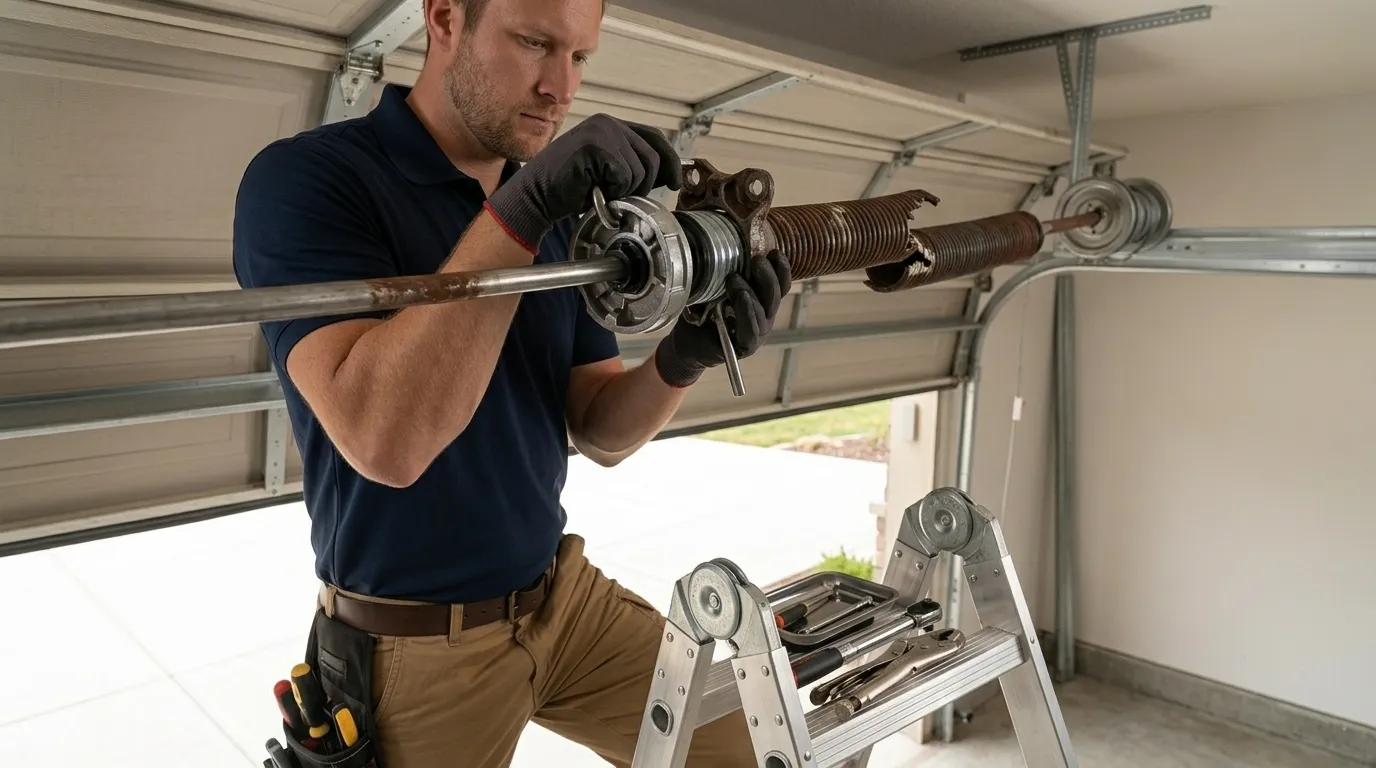
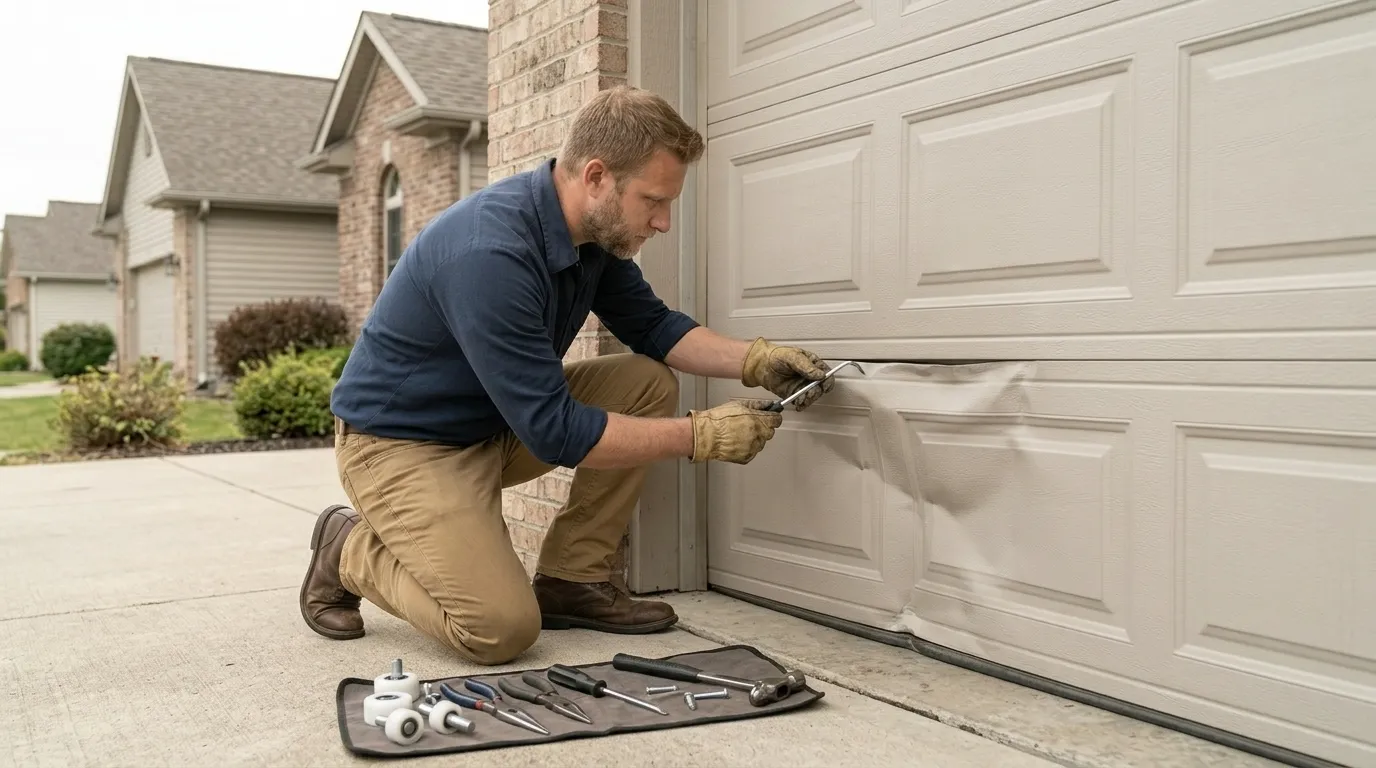
Kansas City, KS sits in a cold-severe climate band, and that shows up in the noise before it shows up anywhere else. Late fall, the first hard freeze stiffens the grease in old rollers and the torsion spring loses a little wind tension overnight - you'll hear a flat thud instead of a smooth roll when the door lifts. Deep winter, metal contracts, and a track that was fine in August can be a hair out of alignment by January, which sounds like a scrape on one side only. Spring brings the opposite problem: moisture gets into hinges and hardware that sat dry all winter, and you start hearing squeaks that weren't there before. Summer is usually the quiet season here, which is exactly why a noise that shows up in July, when nothing should be stressing the hardware, is worth paying attention to. If a door only complains during temperature swings, that's the metal moving, not necessarily a failing part. If it complains every single time regardless of season, that's wear, and it's not going to fix itself.
How Local Conditions Play In
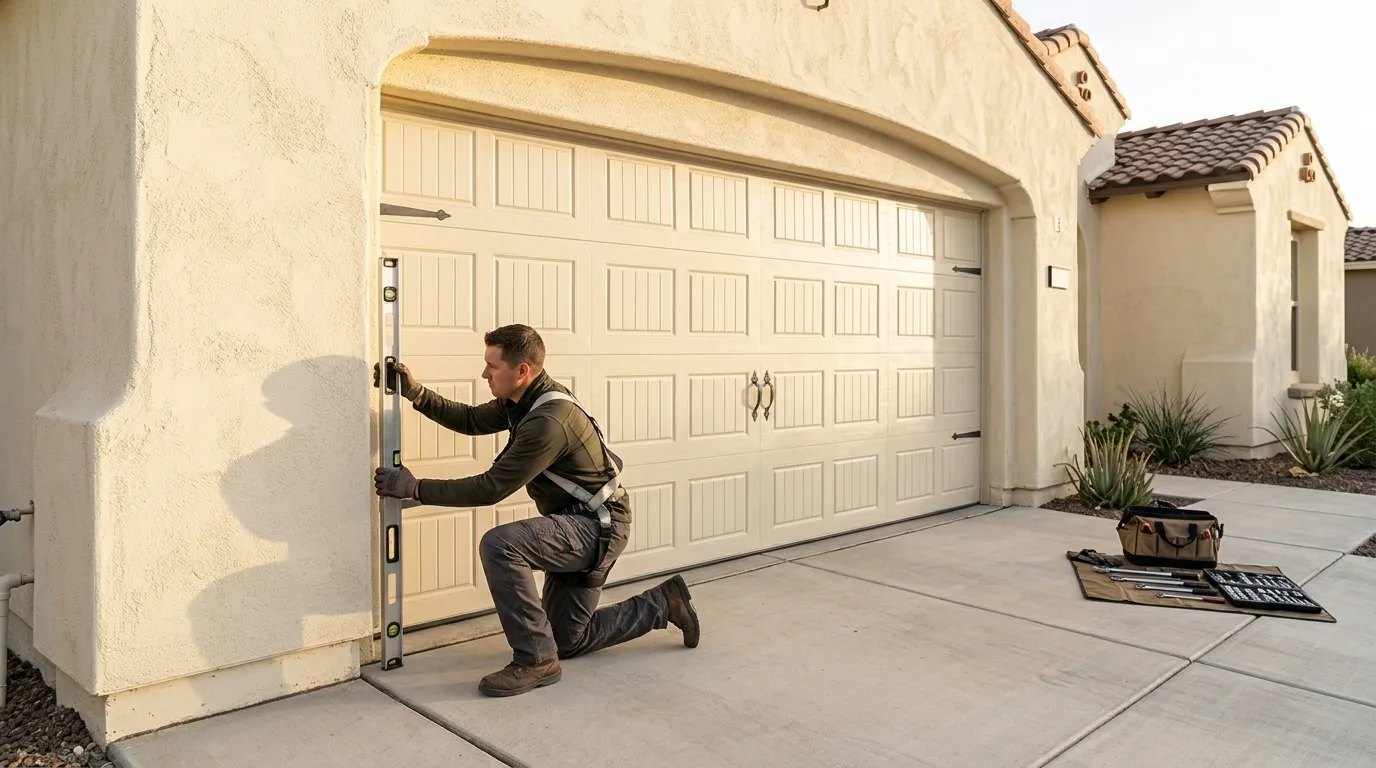
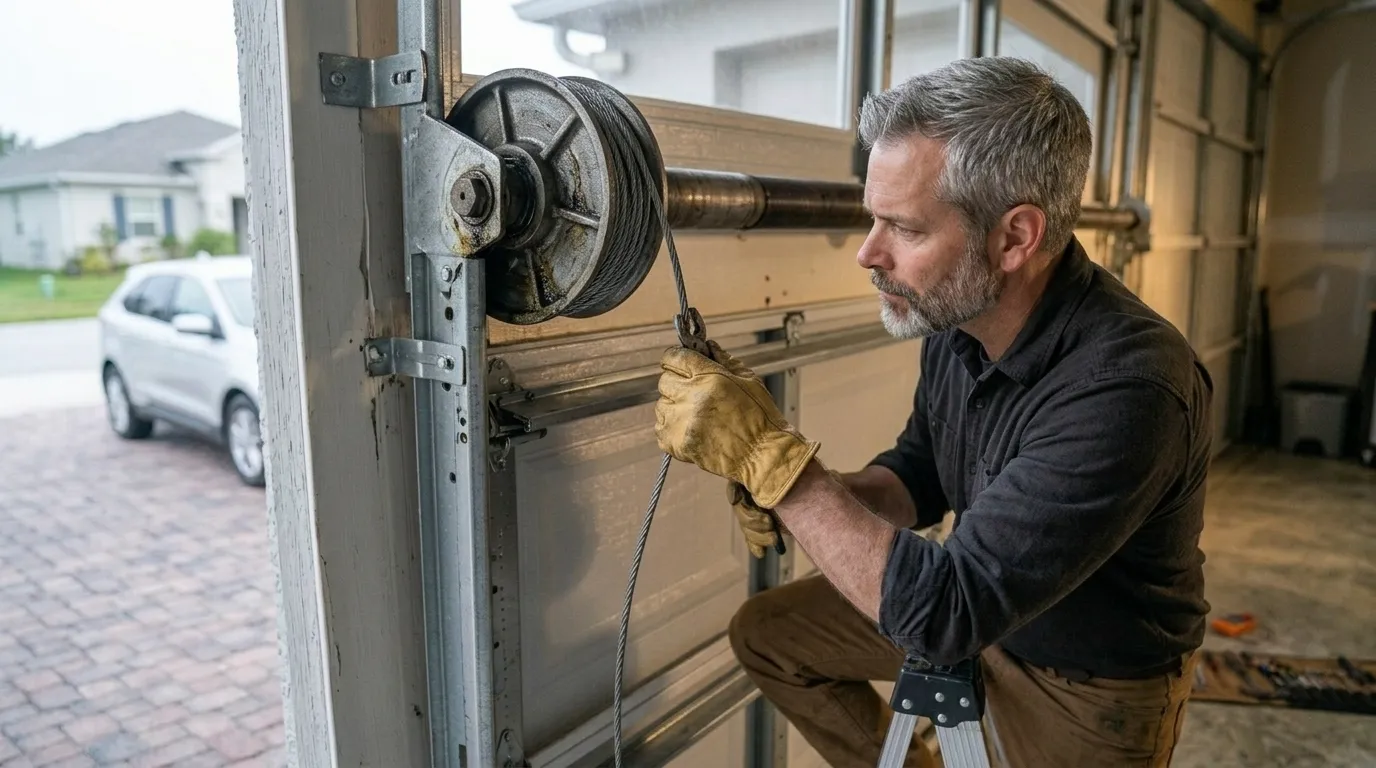
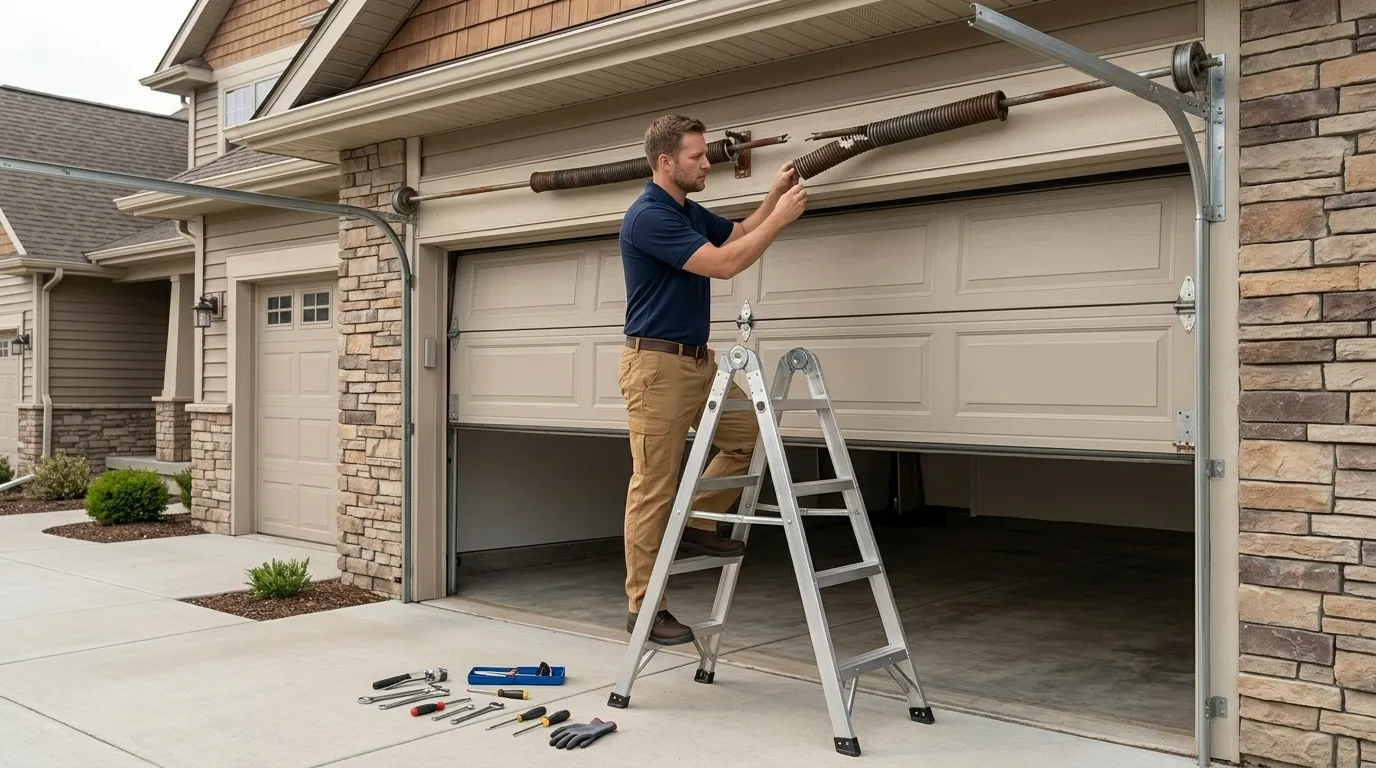
Housing on this side of Kansas City, KS went up mostly between 1950 and 2004, with the median build year at 1973, and across the fifteen named areas that make up the service territory the stock leans hard into 1960s and 70s construction. That matters for noise diagnosis because doors and openers from that era used different hardware than what goes in today - steel doors on side-mounted torsion springs, chain-drive openers, tracks with less tolerance for the freeze-thaw cycling that comes with a cold-severe climate. A grinding sound on a door from that generation is more often a dry or pitted roller bearing than anything electronic. A rhythmic bang on lift is usually a spring that's lost tension gradually over decades of cold winters, not a sudden failure. Newer doors, where they exist in this mix, tend to make different complaints - a motor whine or a sensor click - because the hardware itself is younger and the moving parts are plastic-and-nylon rather than all steel. Knowing roughly when your house was built narrows down what's actually making the noise before anyone even opens the panel.
What You Pay
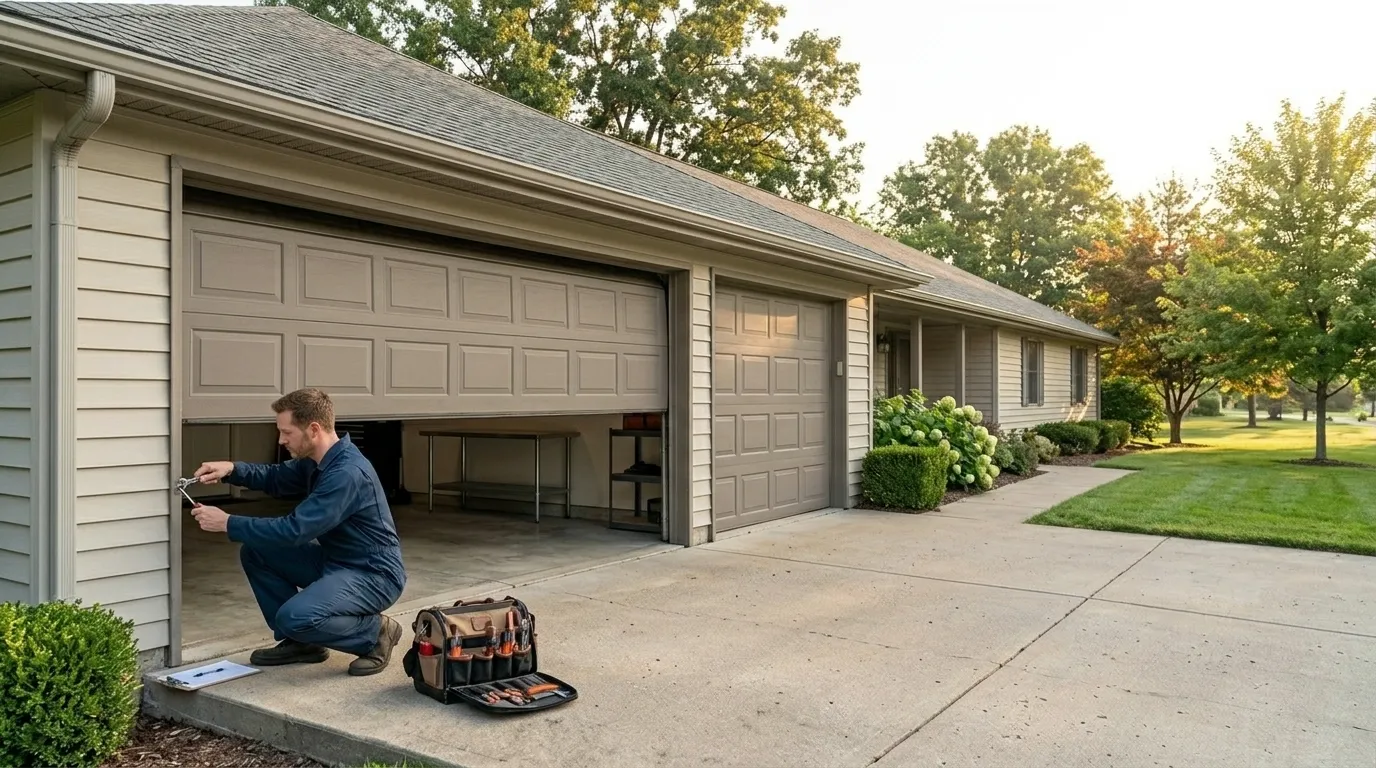
We don't have a set price to quote you here, and anyone who gives you one without seeing the door is guessing. What we can say is that in a service area with a median household income of $89,385, we see plenty of owners choosing to replace a chain-drive opener from the 1970s outright rather than keep patching it, once the repair bill starts approaching a fair chunk of what a new unit costs. With 37,757 owner-occupied houses among the 67,367 households across this territory, a lot of these springs and openers are original to construction from decades ago, and parts for some of that older hardware aren't always sitting on a shelf - sometimes a repair means a short wait on a part rather than a same-day fix. That's the one limitation worth being upfront about: newer doors get serviced faster because the parts are common; a steel door on original 1970s hardware sometimes takes an extra day. Either way, get the actual door looked at before you decide whether it's a repair or a replacement question.