Season by Season
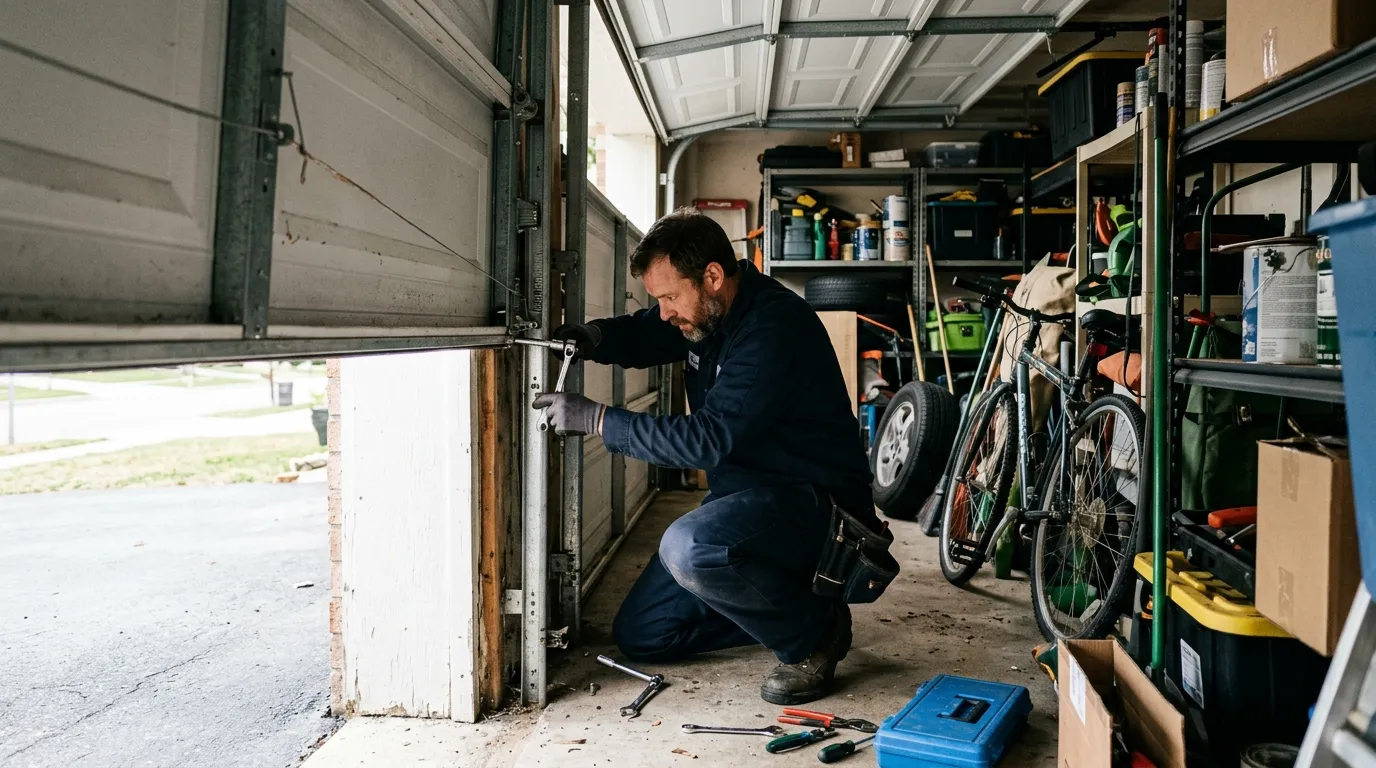
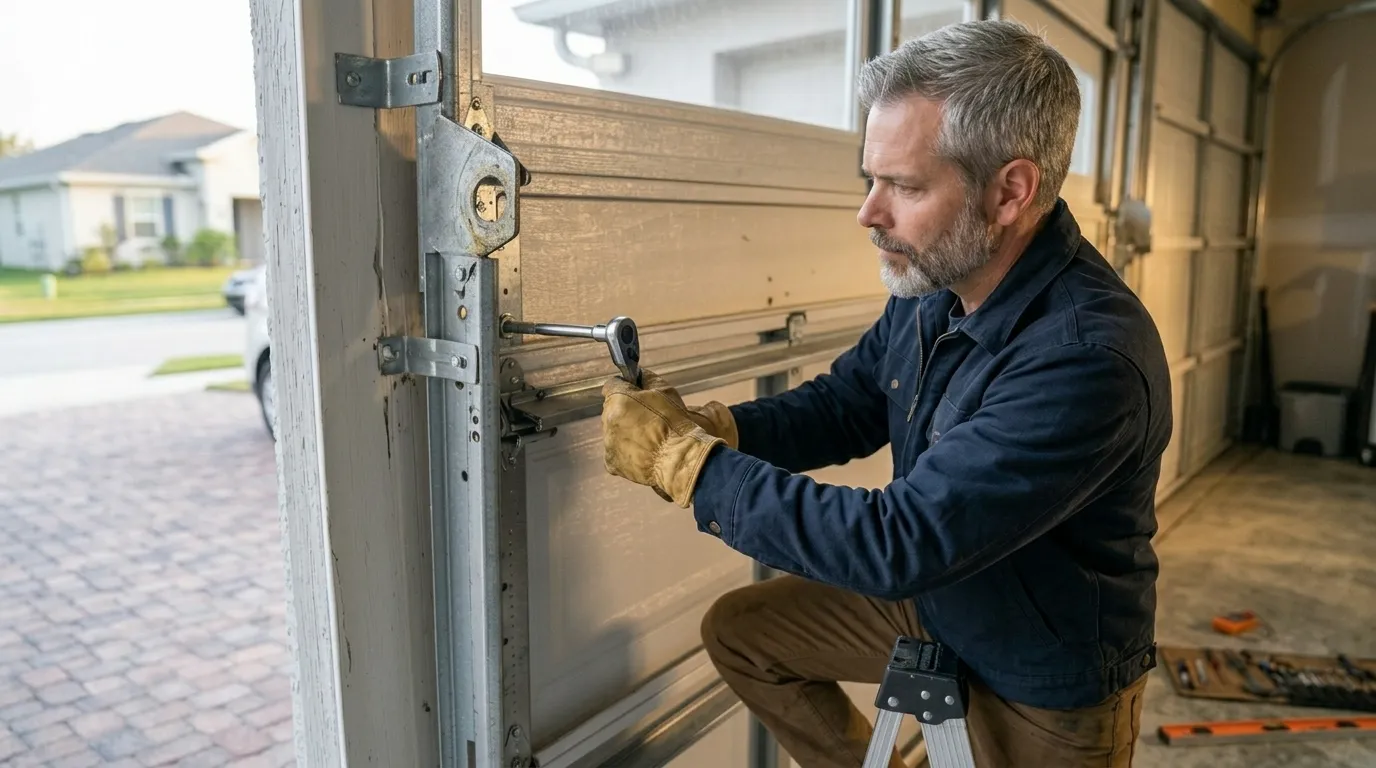
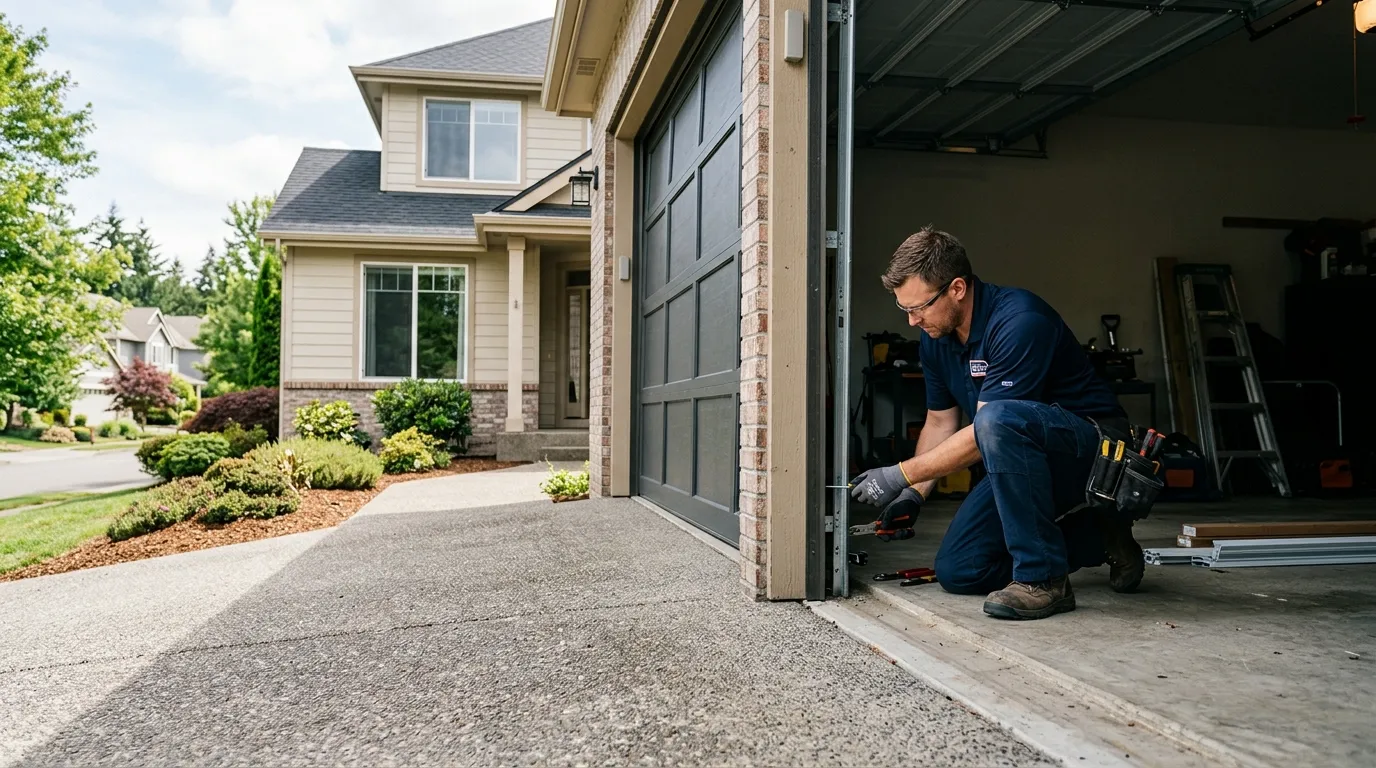
Kansas City, KS sits in a cold-severe climate band, and that matters more for a garage door than most people think. Winter cold snaps shrink steel panels and stiffen lubricant in torsion springs and rollers, so a door that rolled smooth in October can bind or groan by January. Cold makes brittle plastic idler wheels crack and makes weak springs snap outright - spring failure calls cluster in the coldest stretches of the year. Come spring, freeze-thaw cycling works on concrete slabs and door tracks, and a door that was slightly out of plumb in December can be noticeably worse by April. Summer heat swings the other way: metal expands, and a track that was tight in winter can rattle loose. None of this is dramatic weather - it's just the seasonal push and pull that a cold-band climate puts on moving steel parts, year after year. A door built for milder climates, or installed without that in mind, wears these cycles harder. If your door already struggles in one season, expect it to struggle more in the opposite one, not less.
How Local Conditions Play In
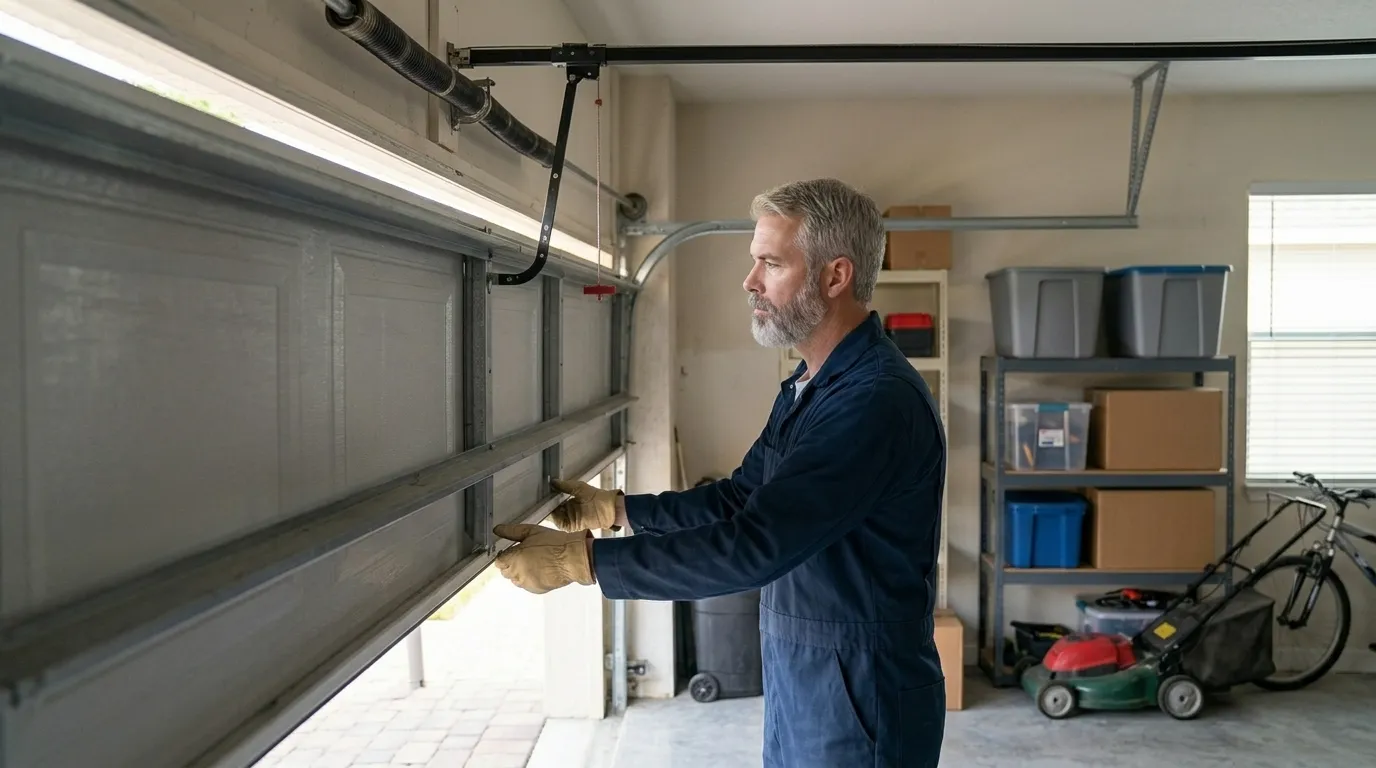
Housing across this service area was mostly built between 1950 and 2004, with a median build year of 1973, and the stock leans heavily 1960s-70s across the fifteen named neighborhoods we work in, around close. That era matters for garage doors specifically. A lot of these houses still carry their original steel sectional door, or a direct replacement installed decades ago on the same track and header framing built for that door - meaning older extension spring setups, narrower tracks, and hardware sized for lighter doors than what's sold today. If your house falls in that 1960s-70s band, the question isn't just whether the door still opens - it's whether the track, header, and spring anchor were ever built to support a heavier modern door, or whether a repair is patching hardware that was already marginal when it went. A door that's original to a 1973-era house has had fifty-plus years of cold-band cycling on the same springs, rollers, and cable. That's a different repair conversation than a door installed ten years ago.
What You Pay
What a repair costs versus a replacement depends on what's actually wrong, not on the age number alone - a single broken spring on sound hardware is a small job, while a bent track or worn-out cable system on an original 1960s-70s door often means the repair and replacement cost land closer together than people expect. We look at panel condition, track alignment, and how many original parts are still doing their job before we quote either path. We don't publish a flat price list because the range between a spring swap and a full door-and-opener replacement is wide, and guessing a number before we've seen the door does homeowners no favors. What we will tell you straight is whether the repair is buying you real years or just delaying the same call.