What Causes It Around Here
Most of the houses we get called to were built somewhere between 1950 and 2004, with the median build year landing around 1973. That matters because the track hardware from that era wasn't designed for the wear it's taking forty-plus years later. A lot of the neighborhoods across our service area - fifteen named pockets of mostly 1960s and '70s stock - still have original steel tracks mounted with hardware that's rusted, loosened, or bent from decades of freeze-thaw cycles.
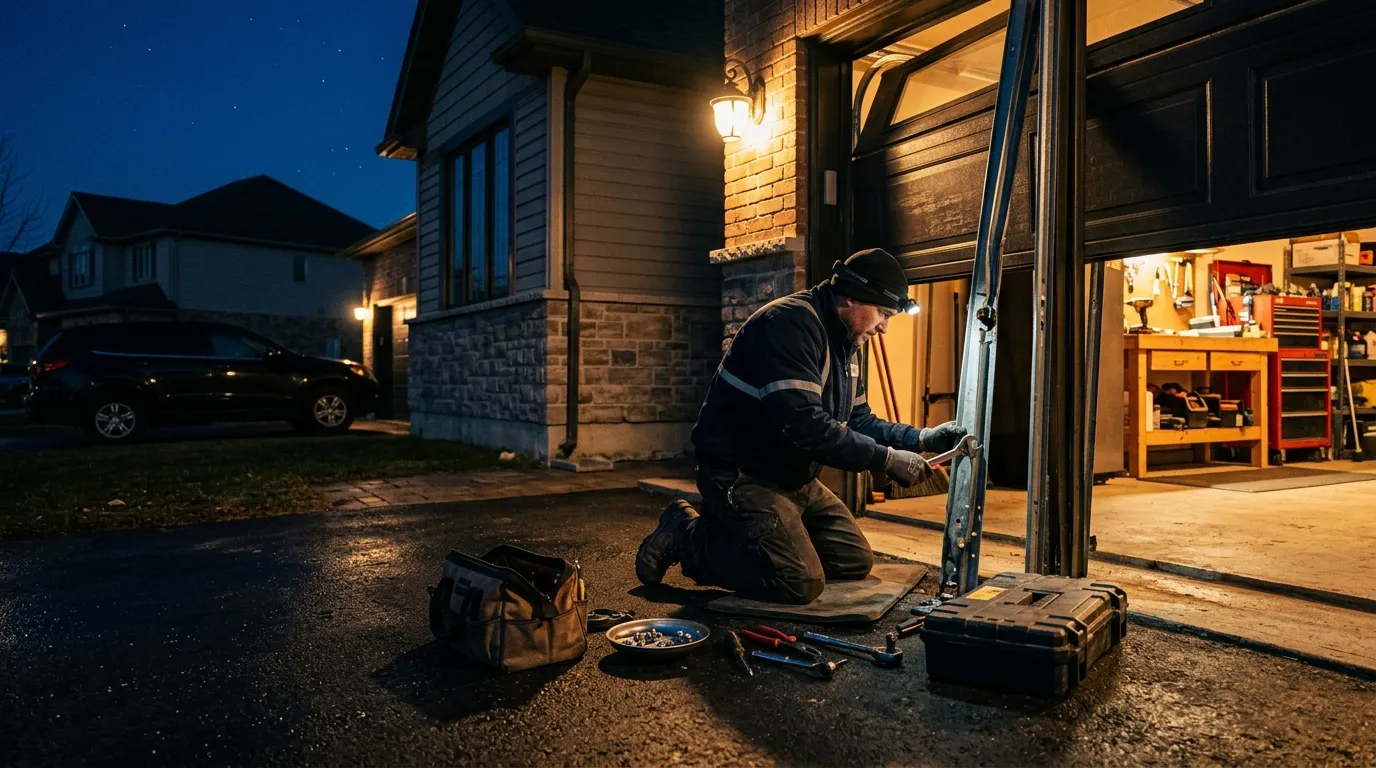
Kansas City, KS sits in a cold-severe climate band, and that's not a small detail. Winter cold makes garage door springs stiffer and rollers slower to move, so when a door gets forced open on a cold morning, something in the track system takes the hit - usually a roller popping out of the rail or a bent track section pulling away from the wall. Add a car bumping a door that's already a little loose, or a slammed-shut door on an old bottom bracket, and the door comes off the rail entirely.
We see this pattern often enough in this area's older housing that it's less a fluke and more a predictable failure mode tied to the age of the stock and the winters it's been through.
The Symptom
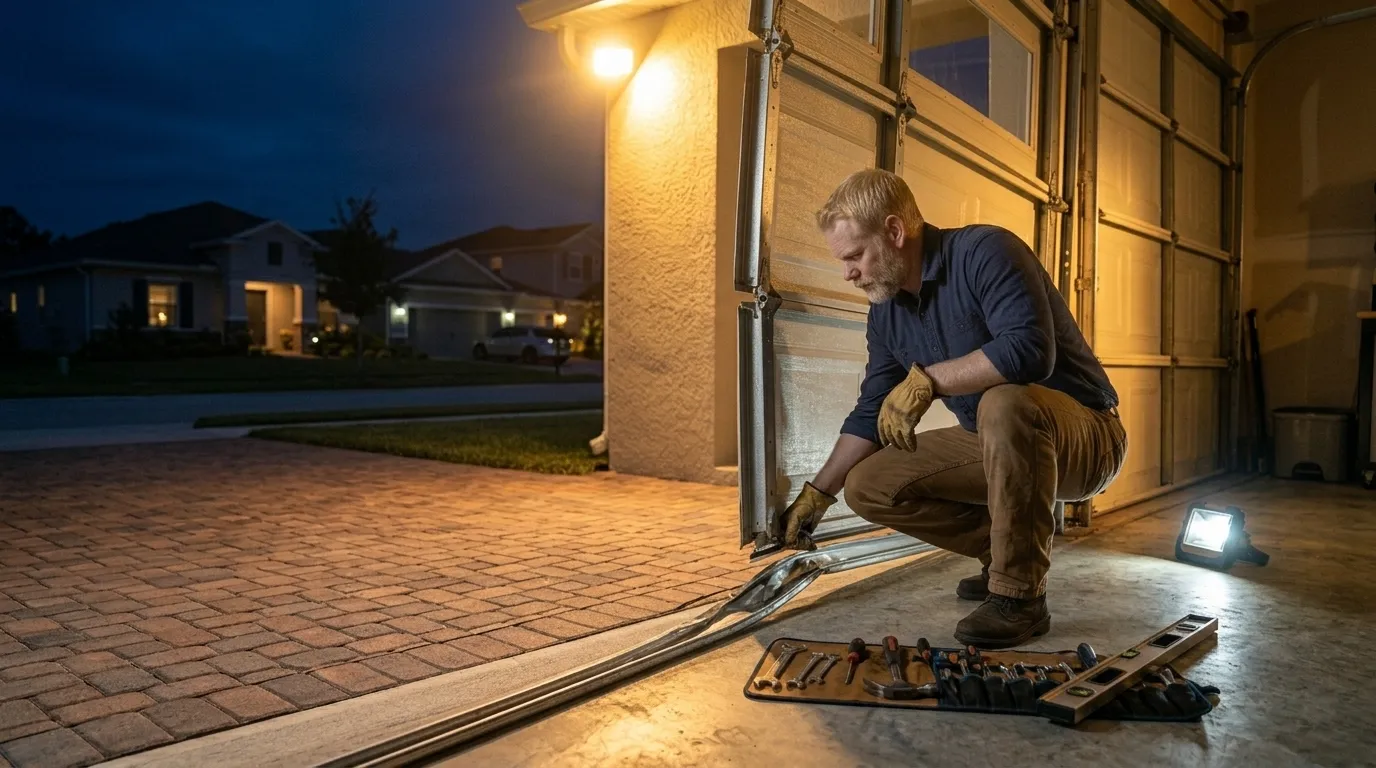
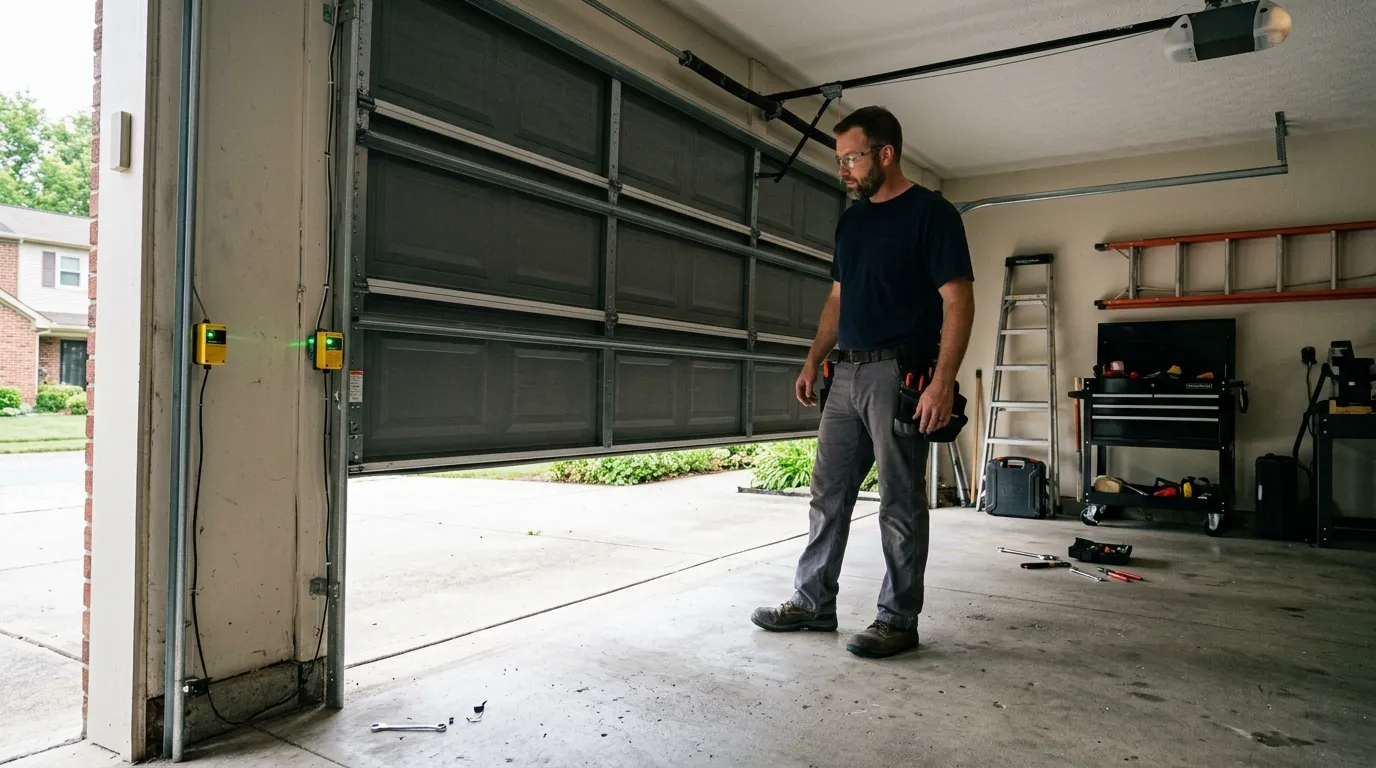
An off-track door usually announces itself before it fully derails. You'll notice the door running crooked, one side dropping lower than the other, or a grinding or popping noise as it travels. Sometimes it stops partway and won't go up or down at all. Other times it looks fine sitting shut but a roller has already slipped its groove, and the next open-close cycle is what pulls it loose for good.
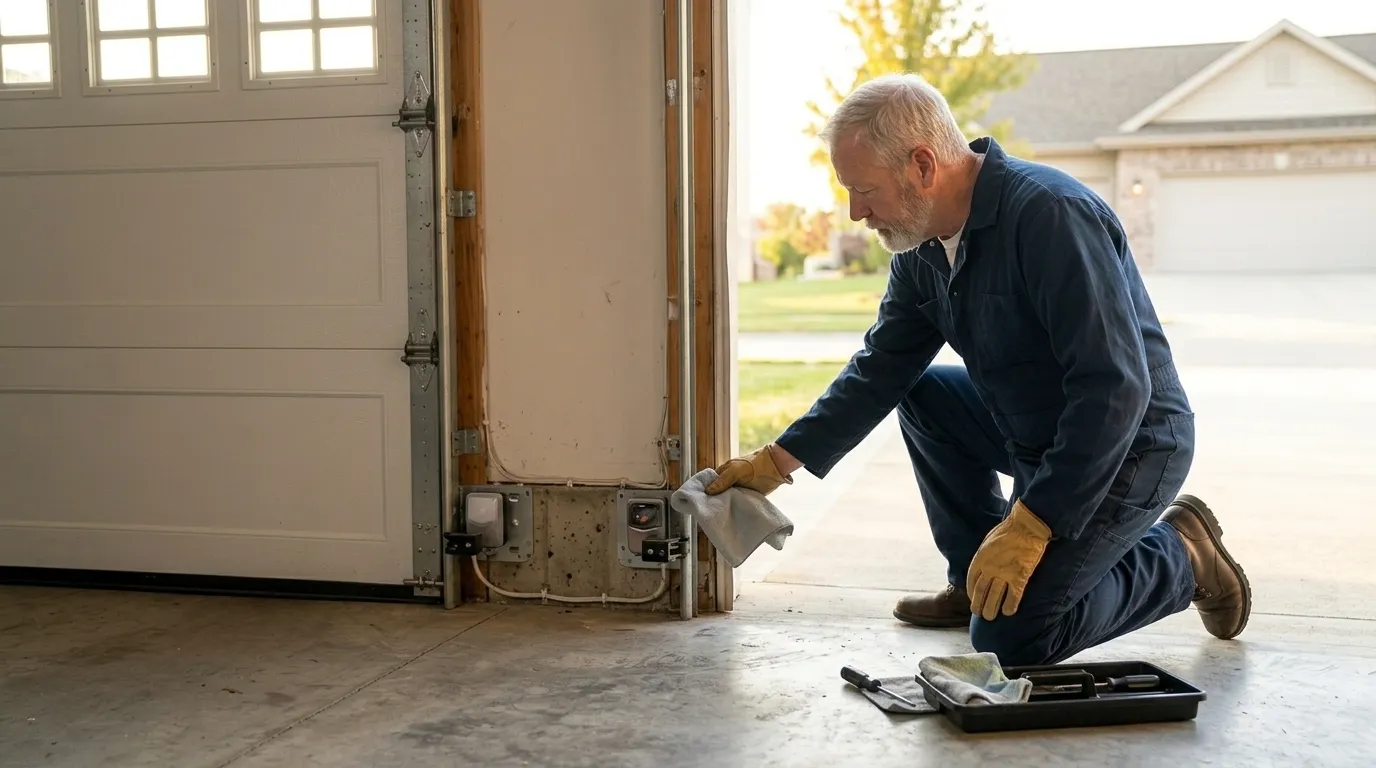
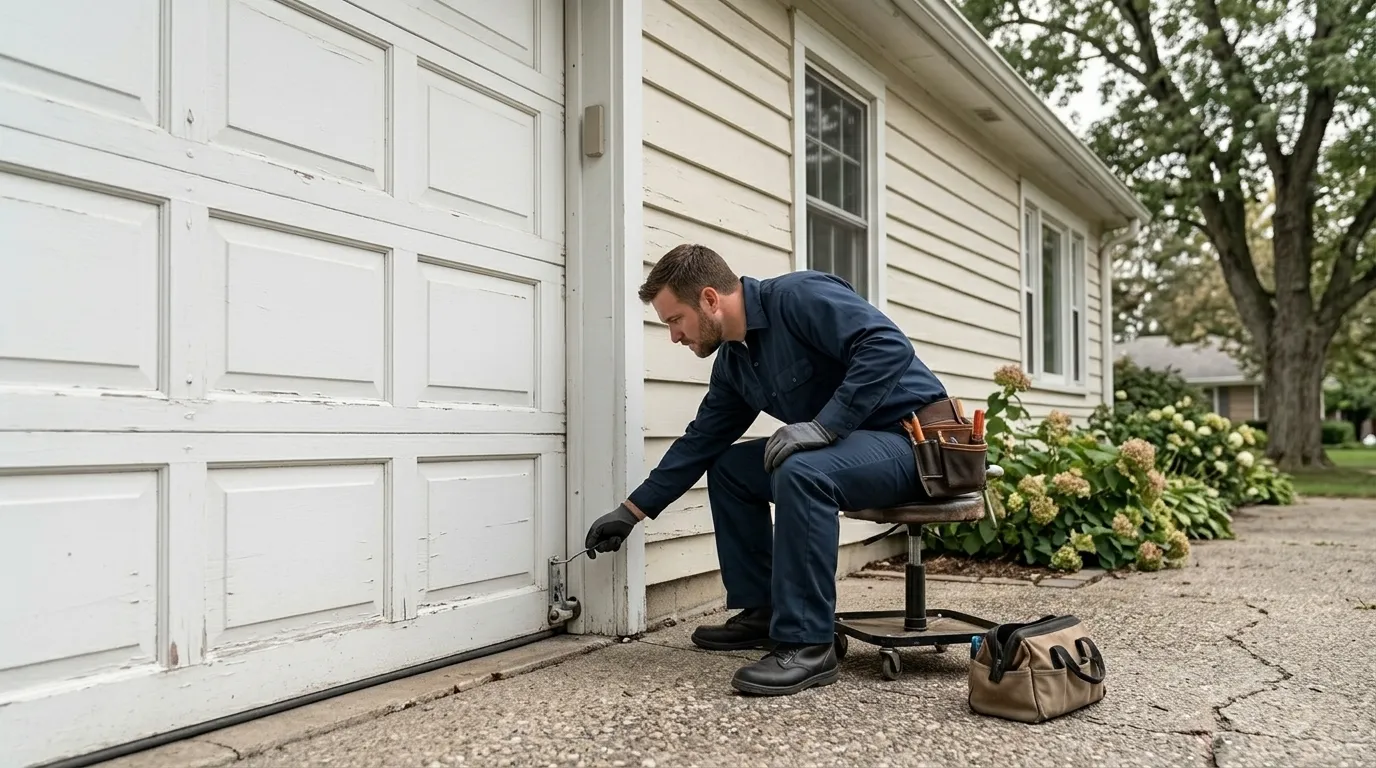
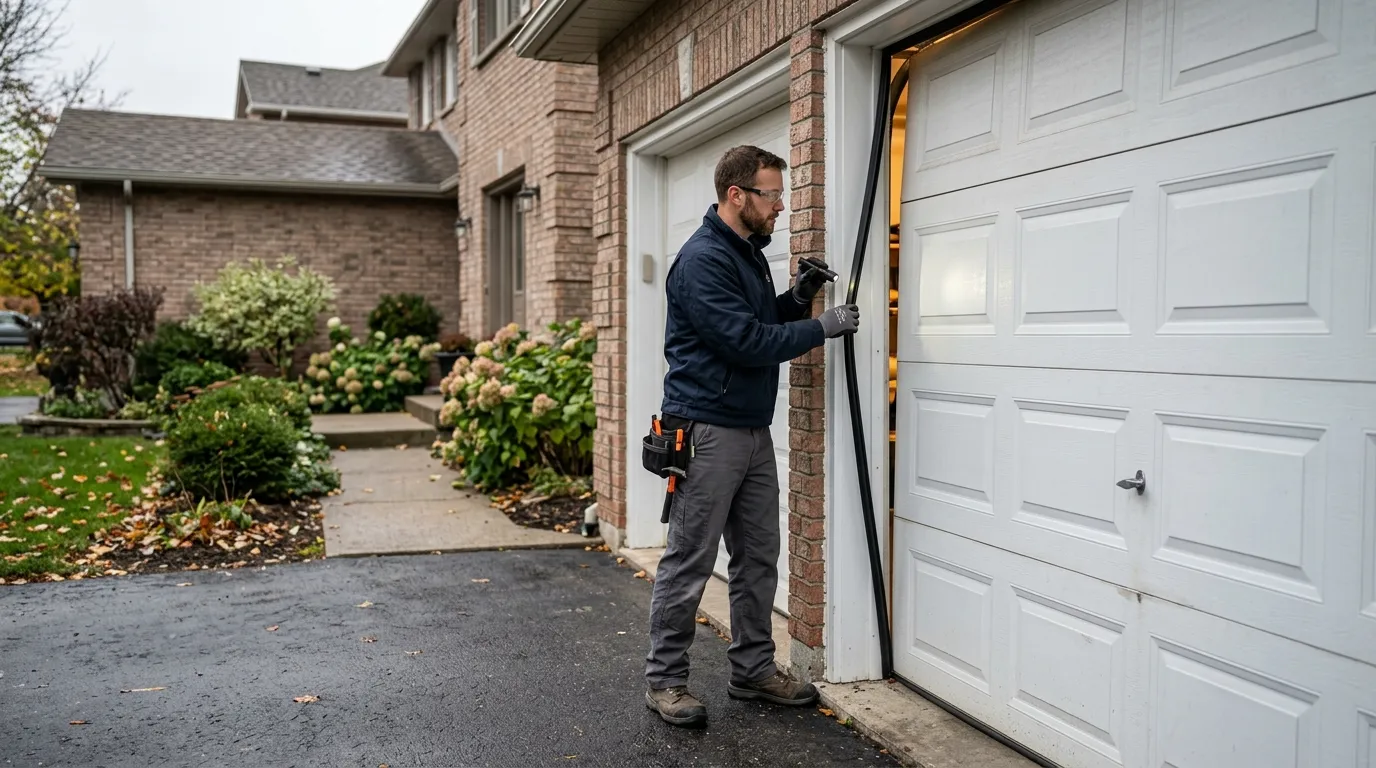
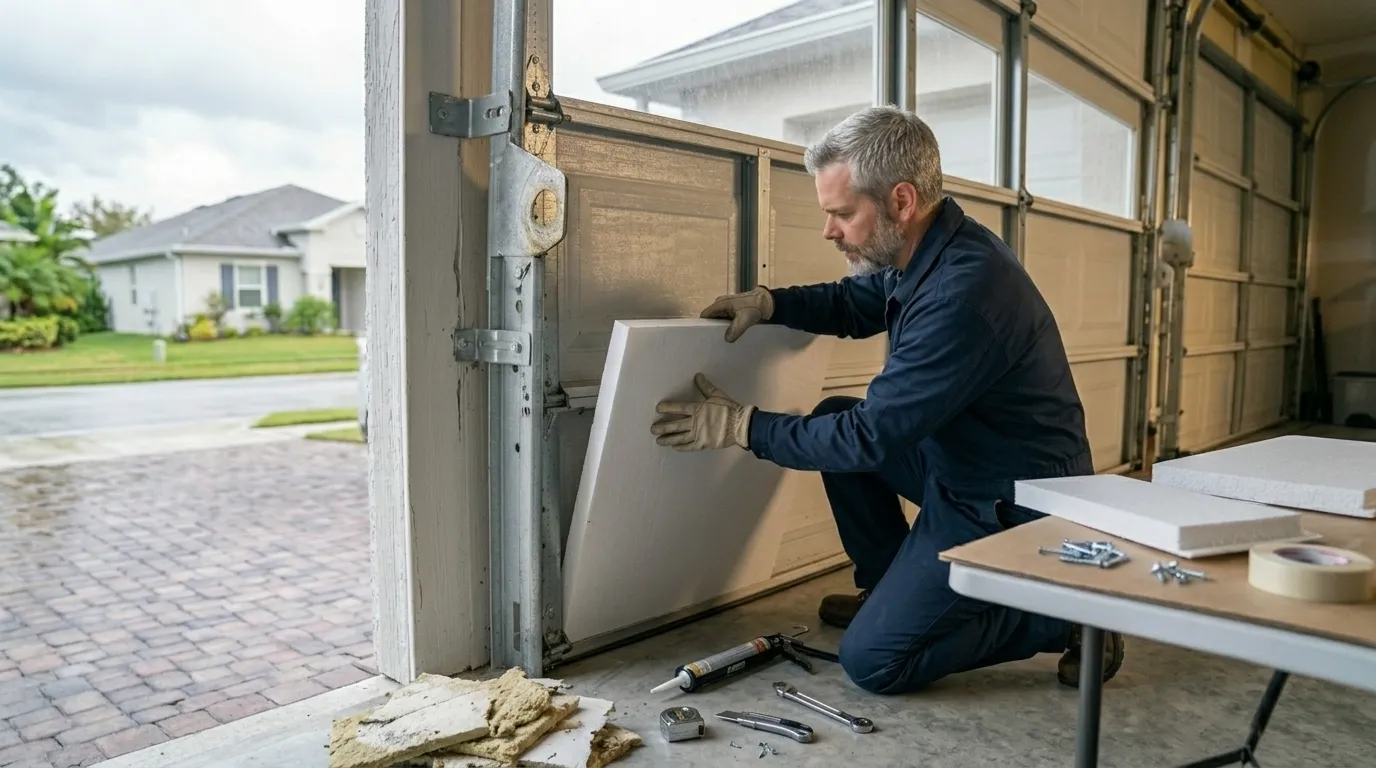
On older track systems common in this area's 1960s-70s housing, the tracks themselves can be bent or the mounting brackets pulled from the framing, especially where wood has swelled and shrunk with cold-weather moisture over the years. If you see a gap between the roller and the track, or the door hanging at an angle, don't keep running the opener - that's how a bent track turns into a bent panel too.
How We Fix It
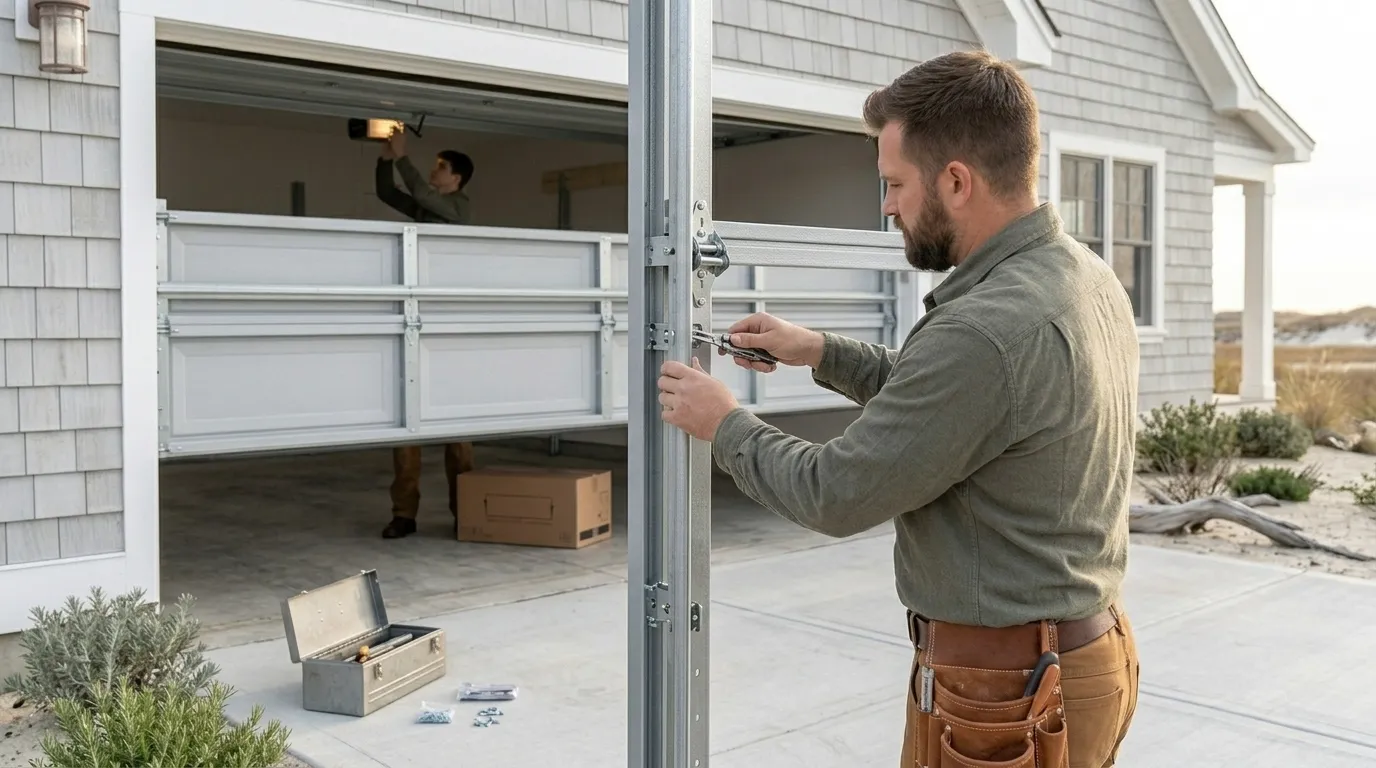
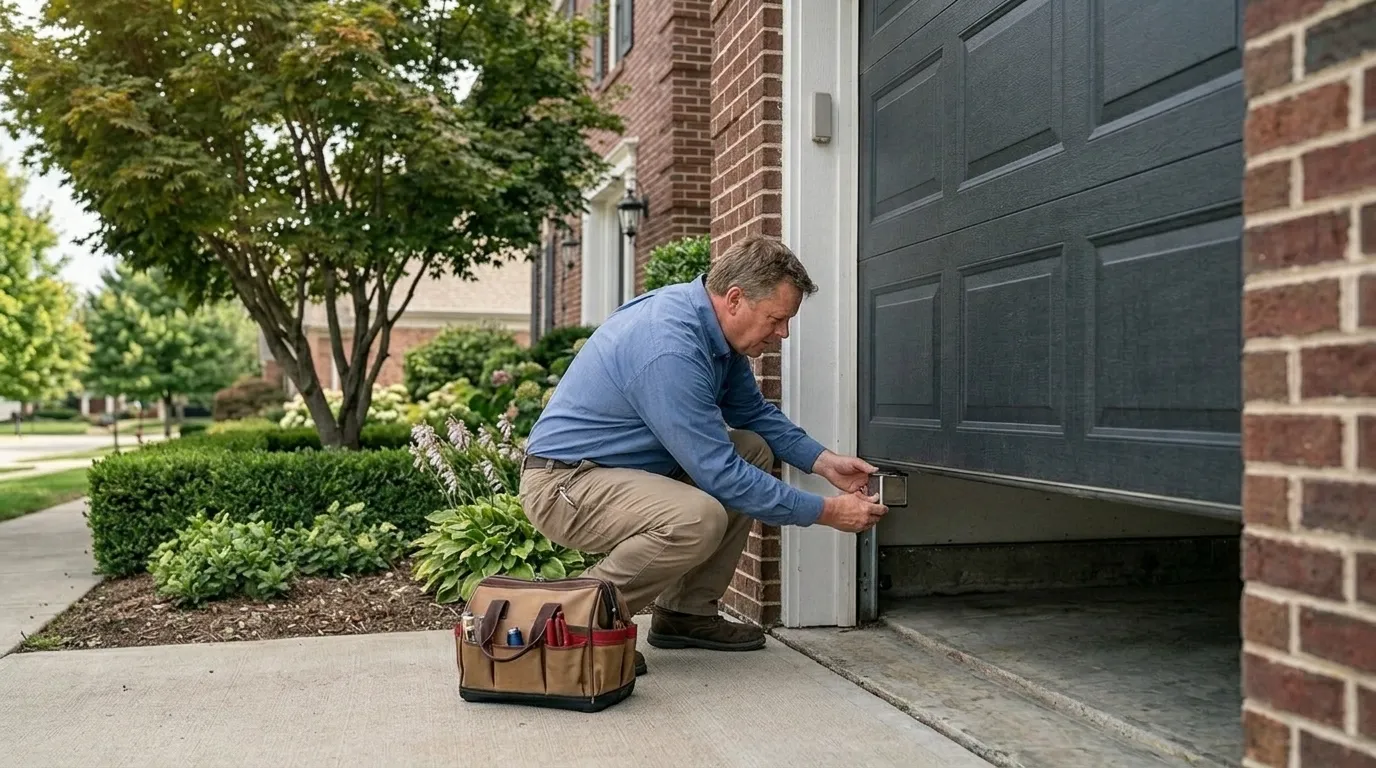
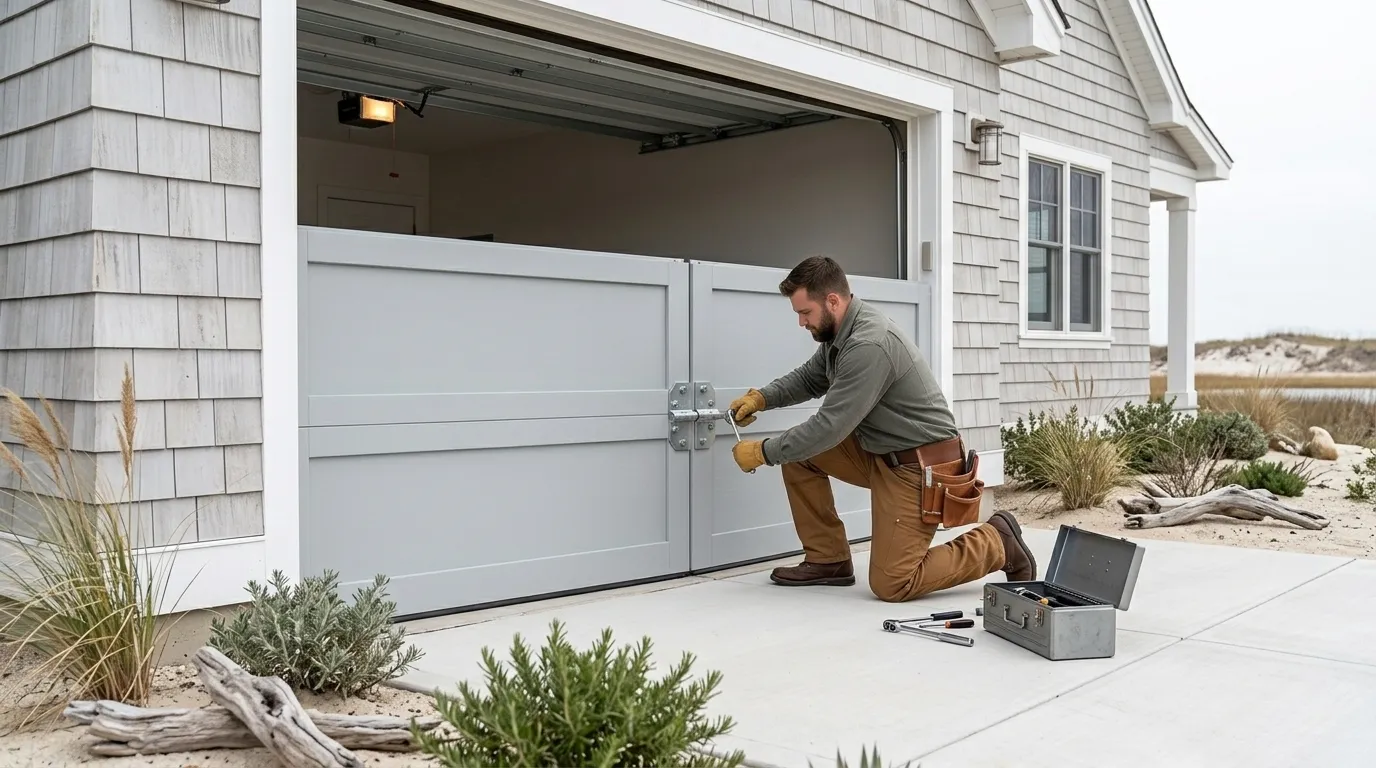
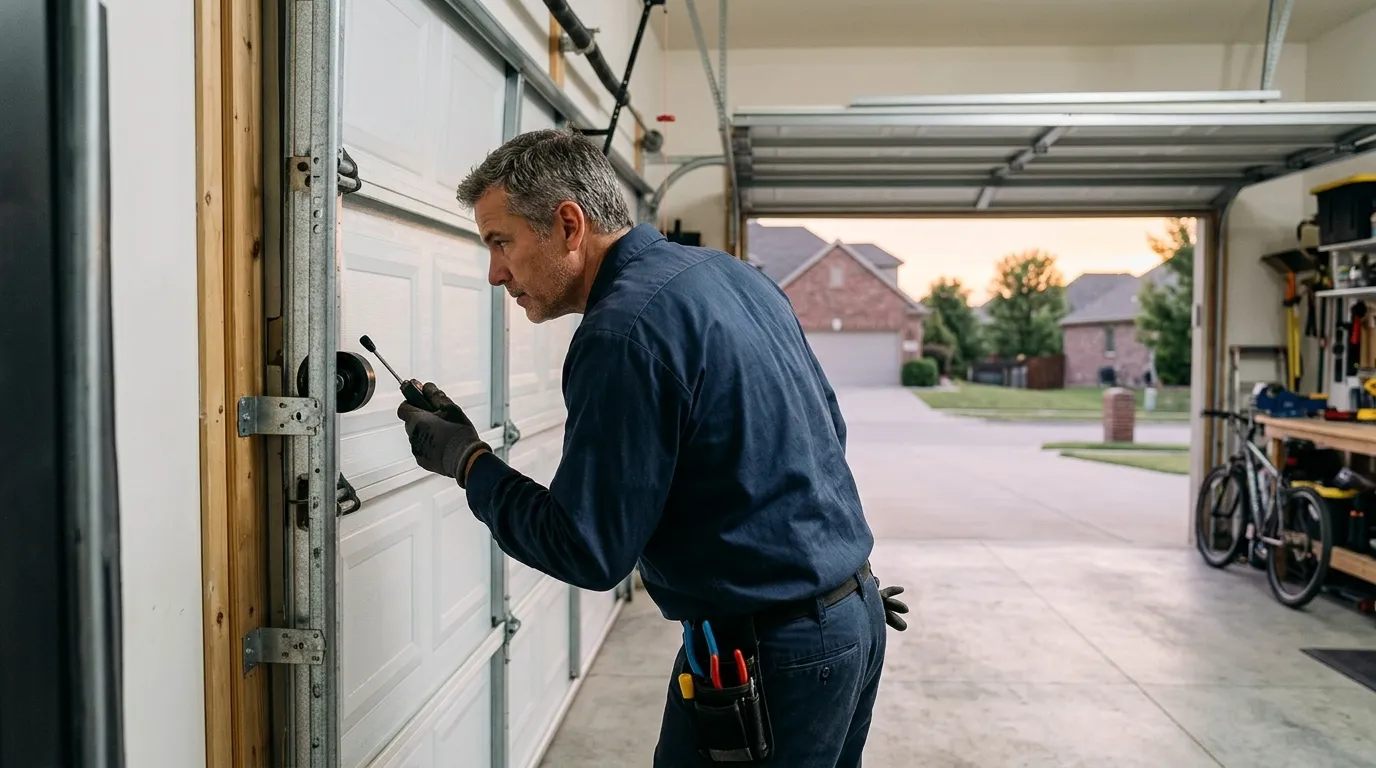
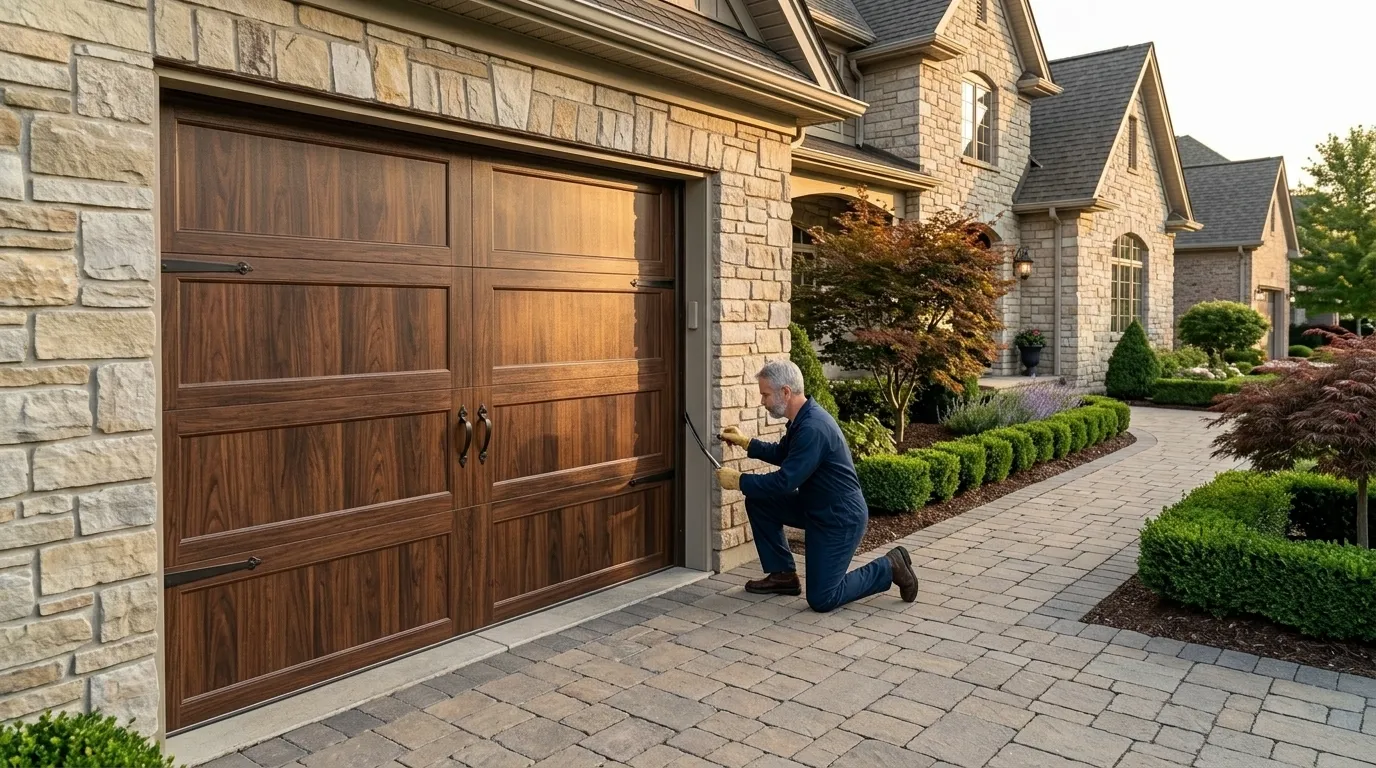
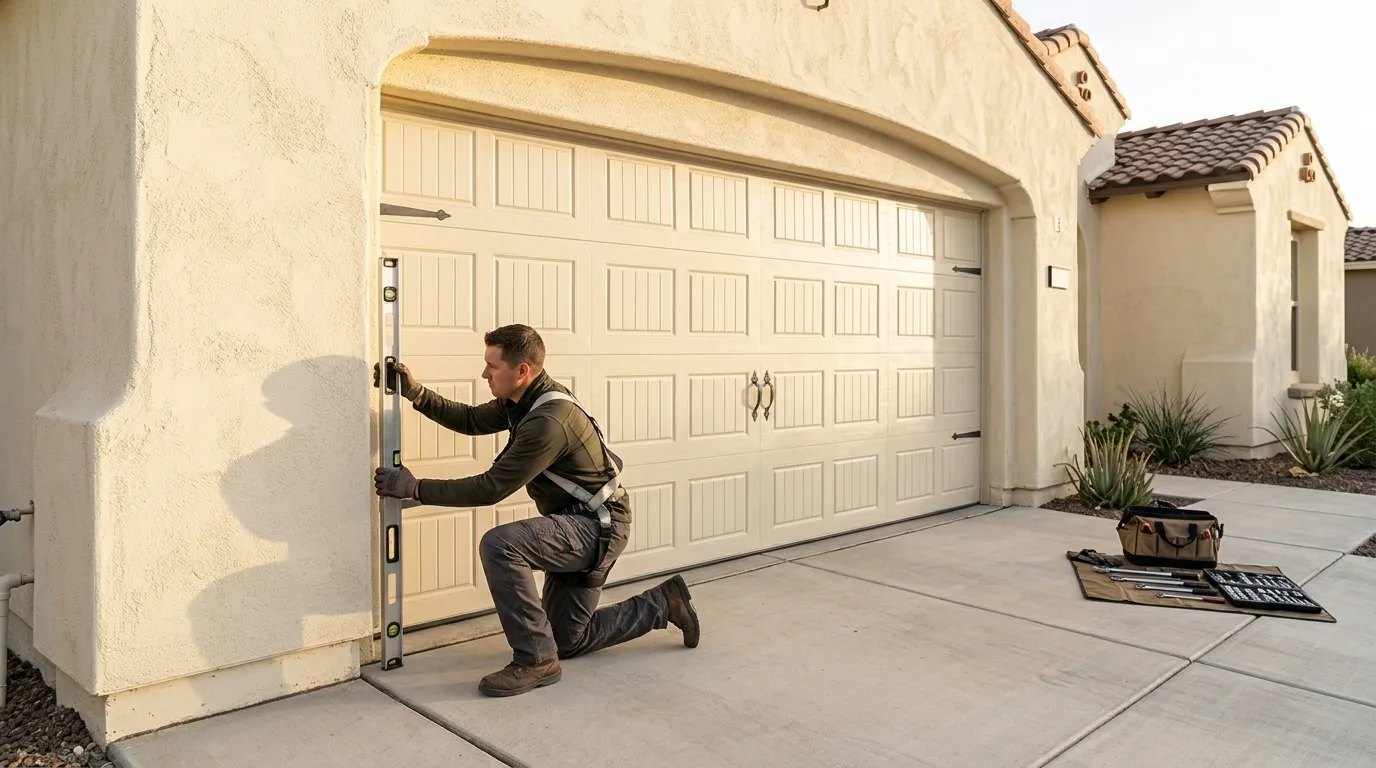
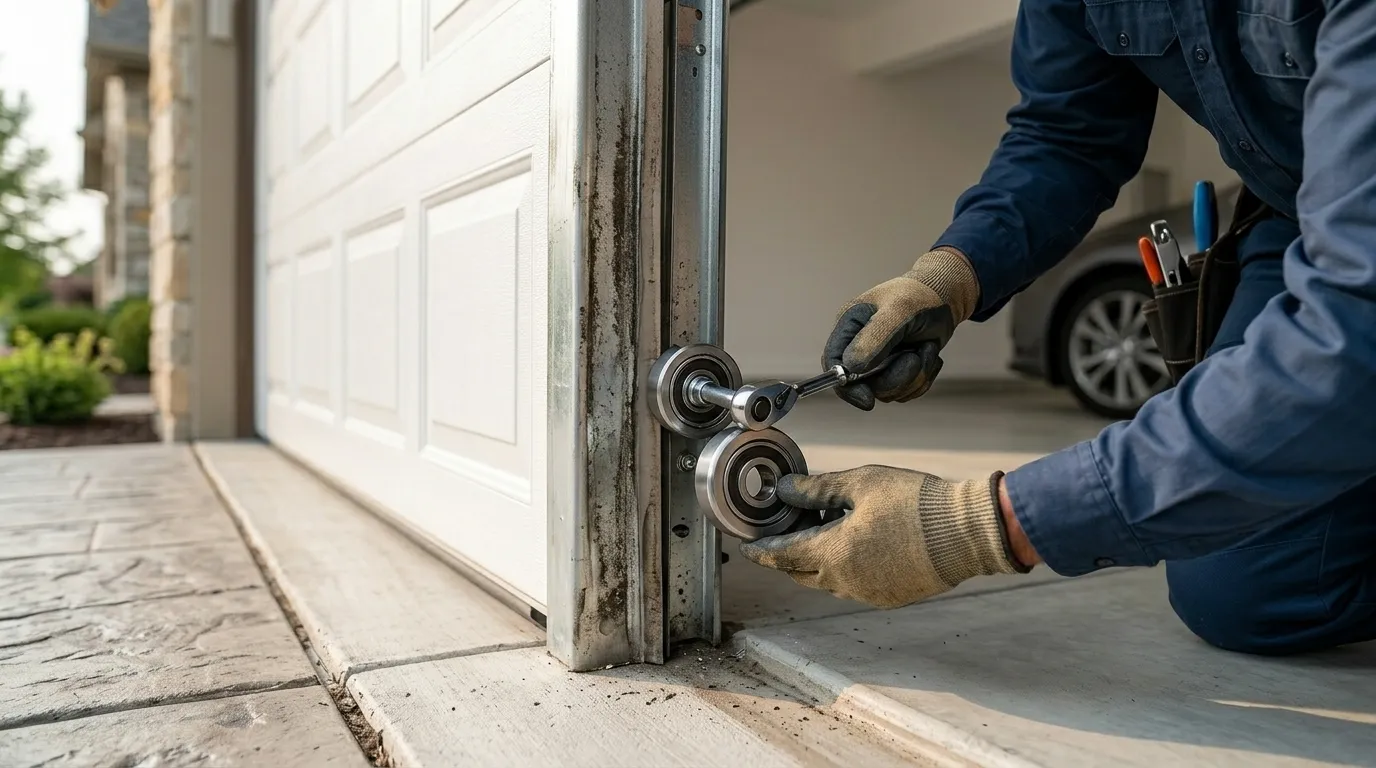
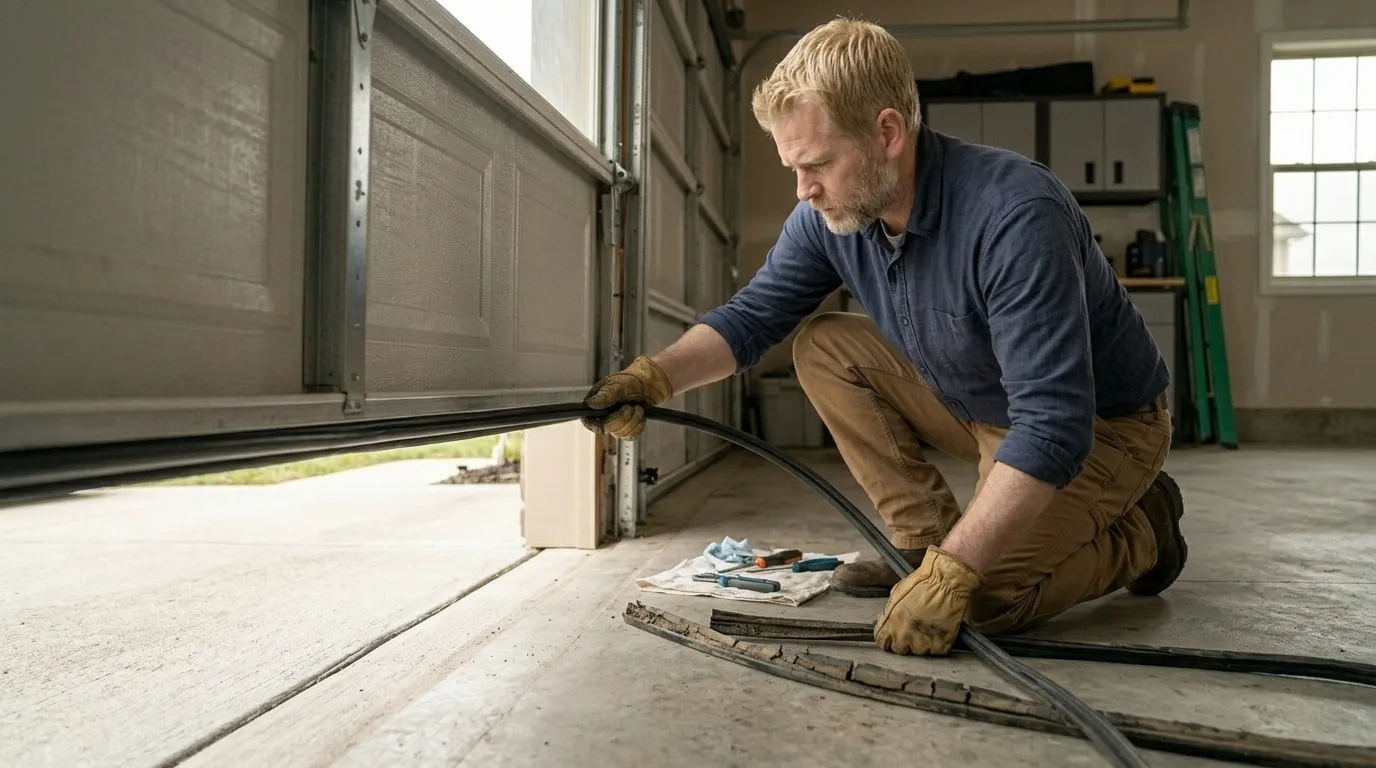
First we check whether the door is still on the rollers or has come off the track completely - that changes the approach right away. If it's still riding but crooked, we look at the track alignment, the mounting brackets, and whether the bottom bracket or roller has worn out. Bent track sections get straightened if the metal allows it, or replaced if it doesn't; there's no fixing a track that's kinked past a certain point.
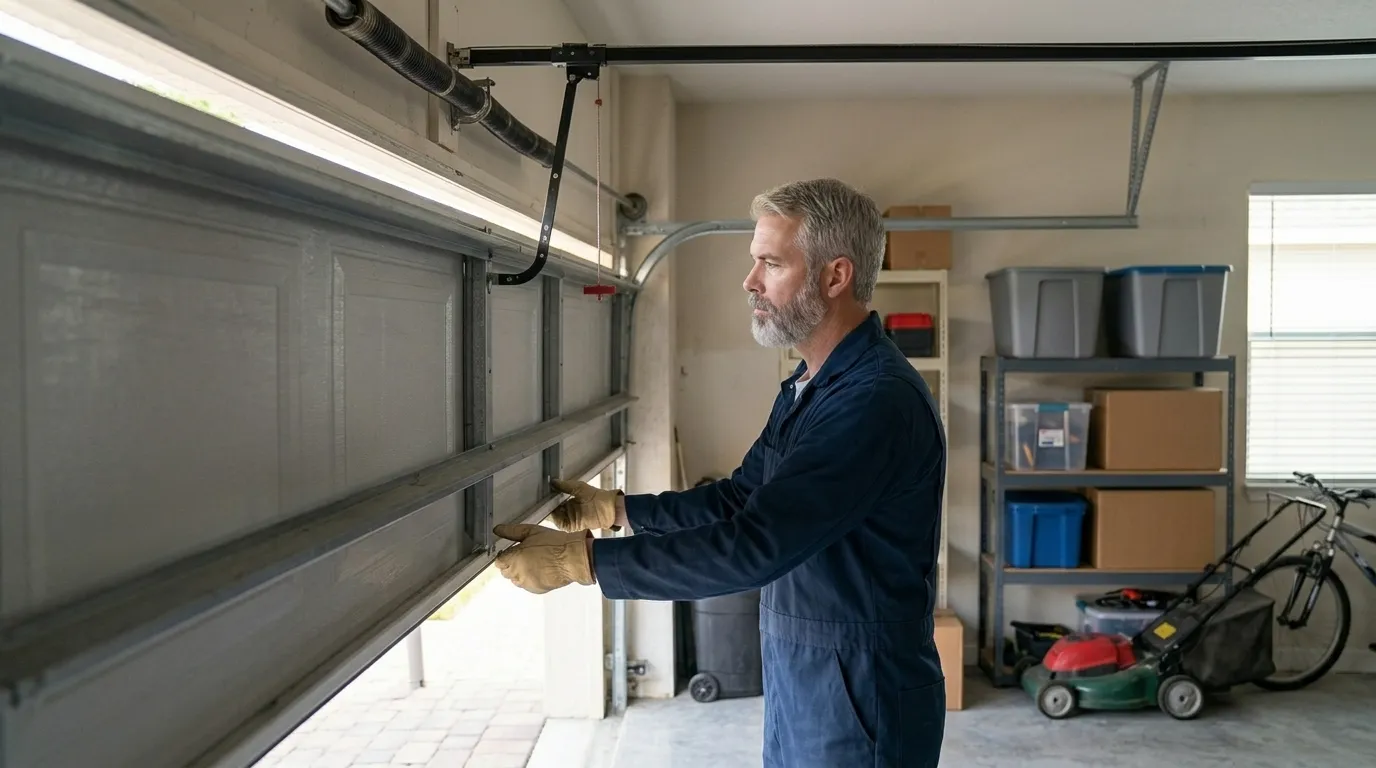
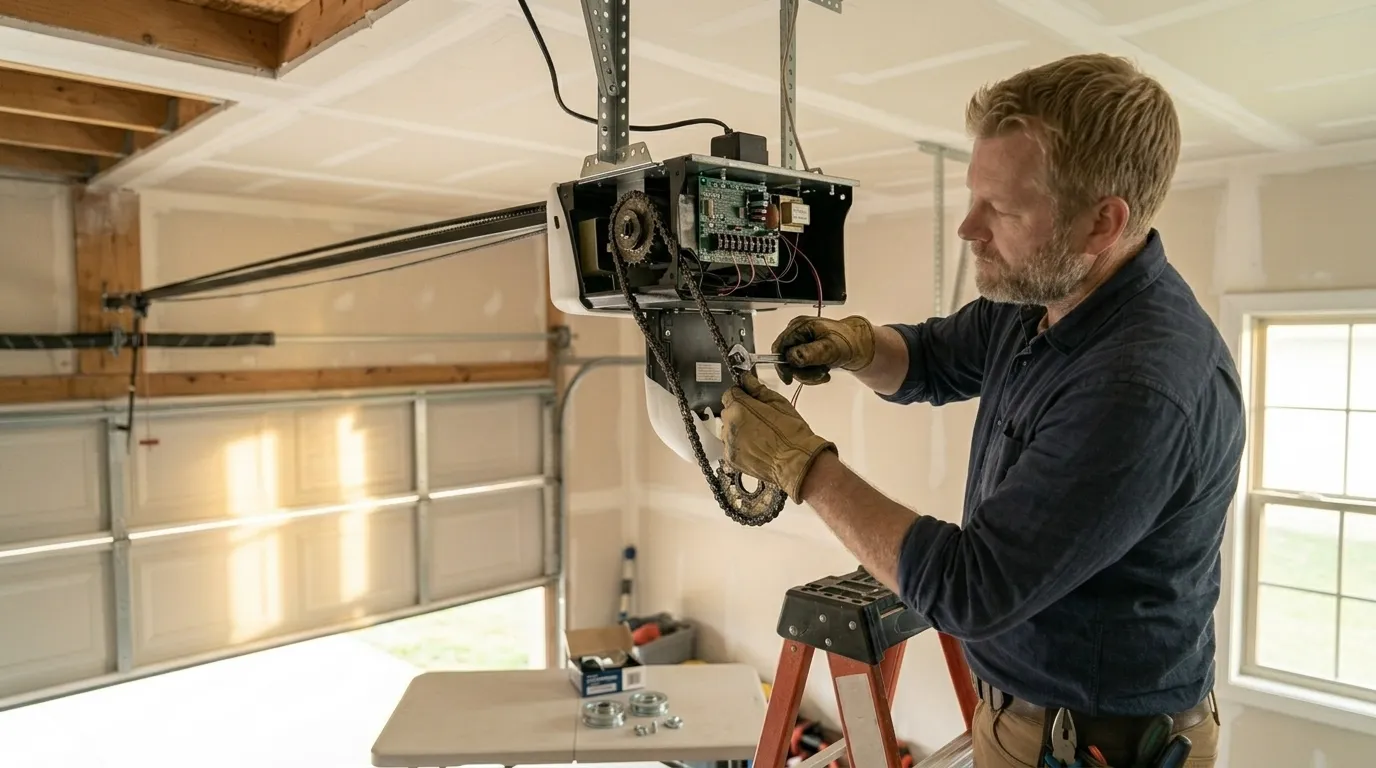
We also check the springs while we're in there. In this climate band, cold makes spring tension behave differently than it does in summer, and a spring that's fighting the door's weight is often part of why the track took the strain in the first place. We reset tension, check the cables and rollers for wear, and run the door through a full cycle before we call it done. If hardware from the original build era is too corroded or bent to hold alignment reliably, we'll say so and replace it rather than leave you with a door that's back off track in a month.