What Causes It Around Here
Most of the houses in this part of the metro went up between 1950 and 2004, with the median build year landing around 1973. That mid-century wave covers the 15 named areas we work in, and it means a lot of garages still have doors running on the original roller and track setup from the 1960s and 70s - steel rollers, steel track, no nylon anywhere in the system.
Steel rollers don't flex. They ride metal-on-metal in the track, and every winter that track goes through a hard freeze-thaw cycle thanks to the severe cold band this part of Kansas holds. Cold metal contracts, moisture gets into the track lip, and the roller stem starts working loose in its bracket. Add forty-plus years of daily cycles and you get galling on the roller edge, a bent track flange, or a stem that's worn its hole oval instead of round.
On newer builds with nylon rollers it's a different failure - the nylon tire cracks or flat-spots after enough freeze cycles, and the bearing inside seizes. Either way, the housing age in this stretch is the reason roller failure shows up as often as it does. A garage built in 1995 with the original steel rollers is right in the window where this starts to matter, and a lot of houses here are exactly that age.
The Symptom
It usually starts as a grinding or scraping noise right as the door passes a certain spot in the track - often near the bottom bracket where the roller takes the most weight coming off the floor. That's a roller with a flat spot or a chipped edge dragging instead of rolling.
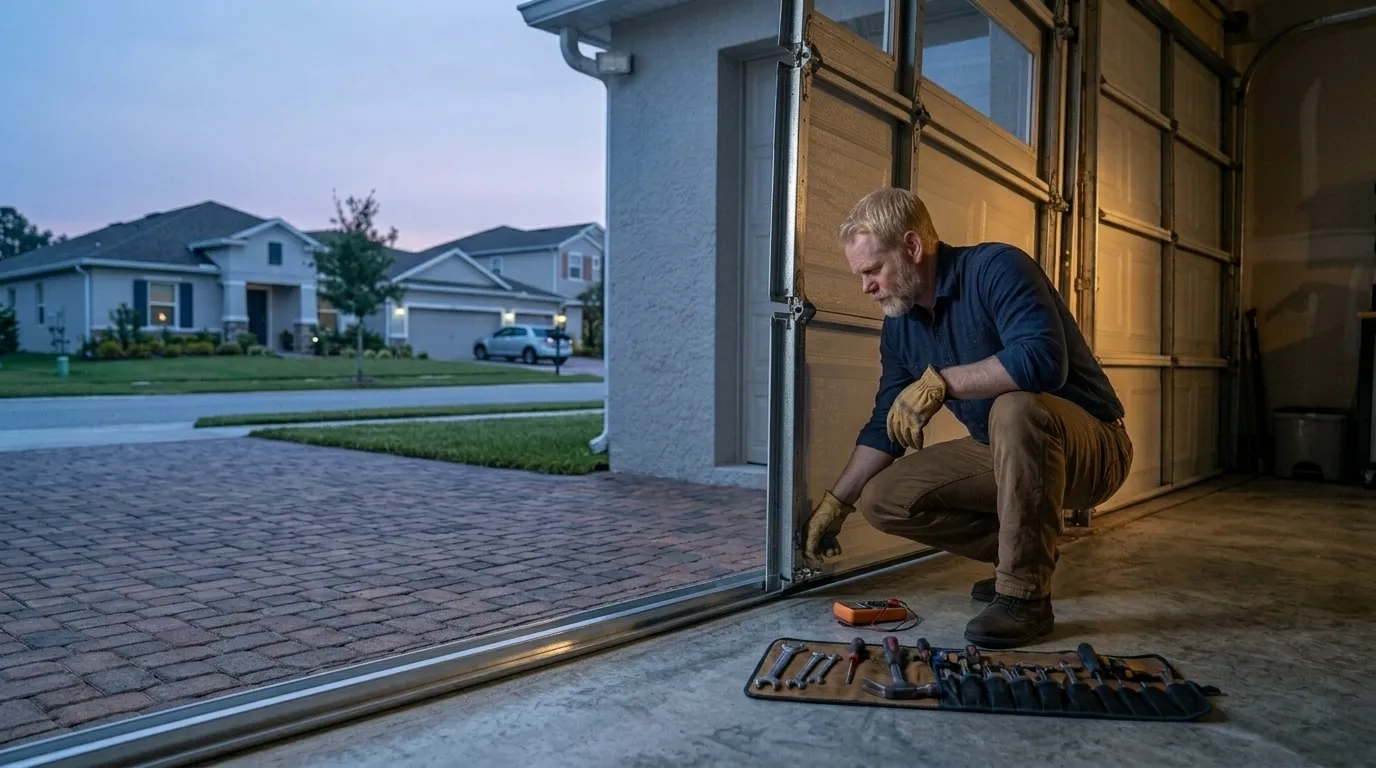
Next comes the jump. The door hesitates, jerks, or you see it wobble side to side as it travels, because a worn roller stem is letting the panel ride loose in the track instead of tracking straight. If you look at the track itself you might see shiny scrape marks or a section that's bent outward slightly - that's the track taking damage from a roller that's no longer rolling true.
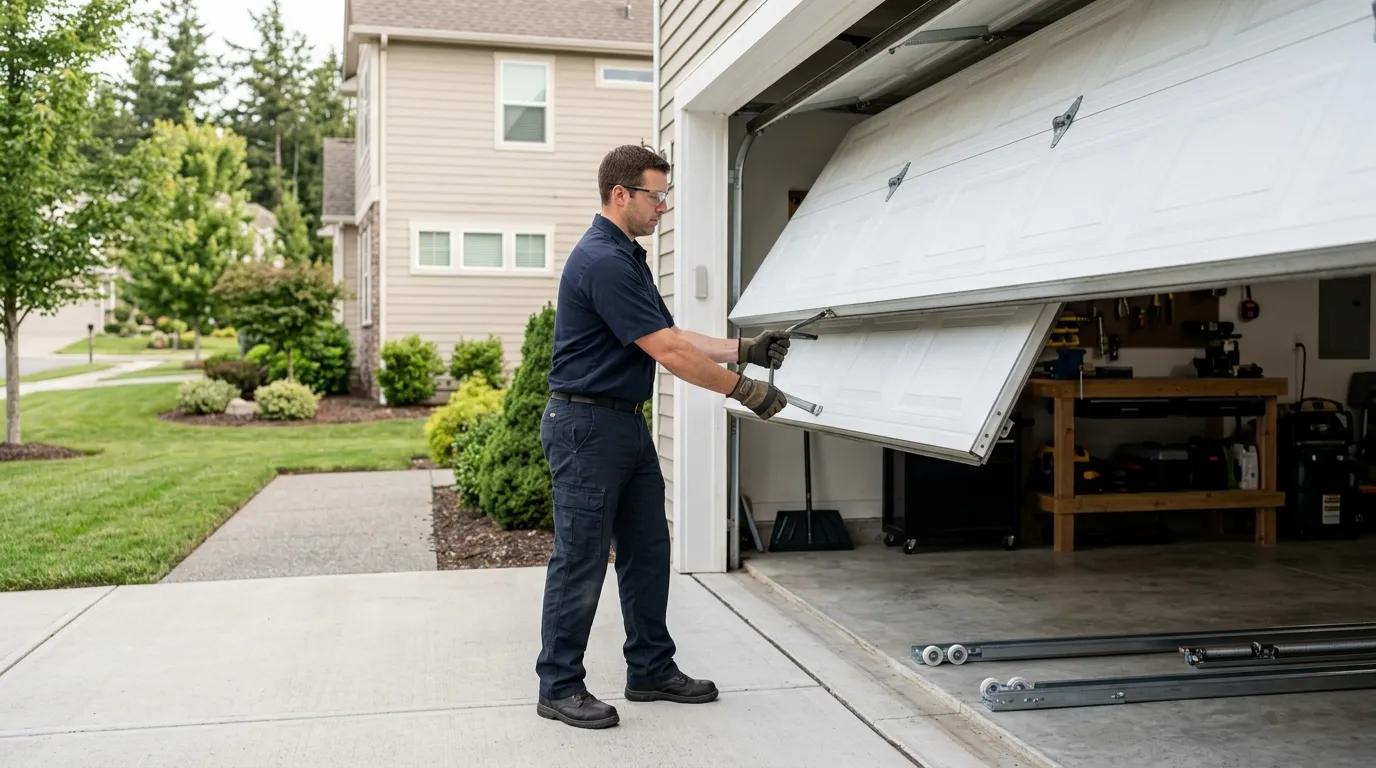
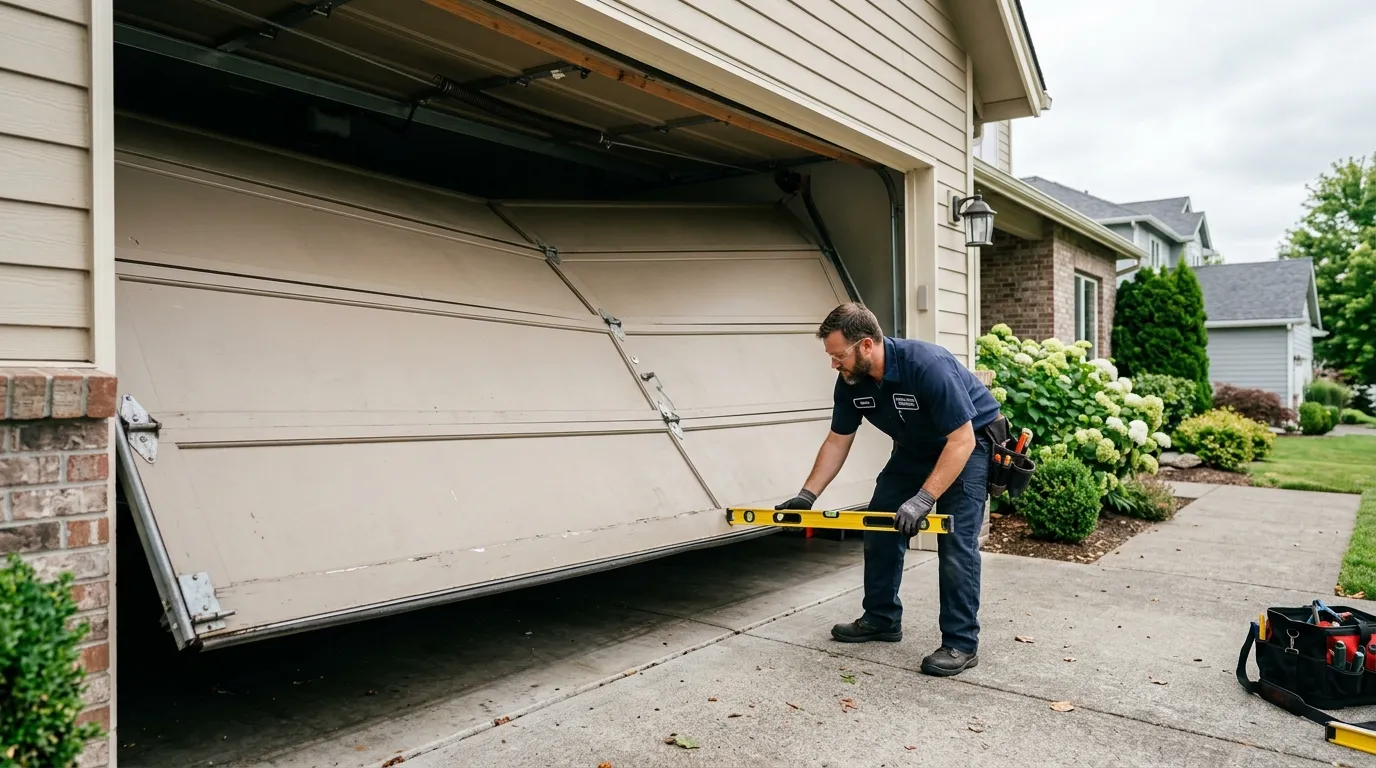
In the worst cases the roller stem snaps clean off, usually in cold weather when the metal is brittle and the door gets forced open anyway. When that happens the door can come off the track on that side, and you're looking at a stuck door rather than just a noisy one.
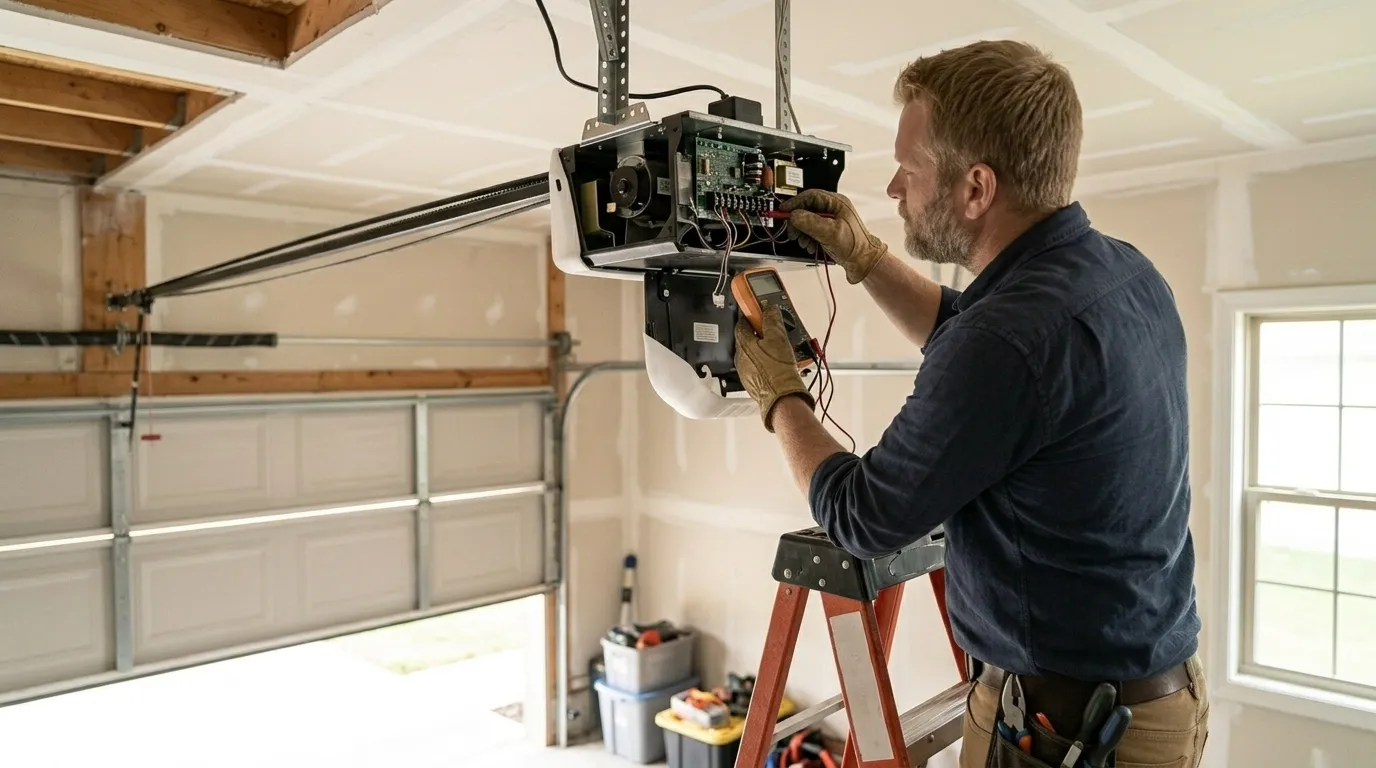
None of this is an opener problem, even though people usually call thinking it is. The opener is doing its job; it's just fighting a door that's dragging or binding because the rollers underneath it are done.
How We Fix It
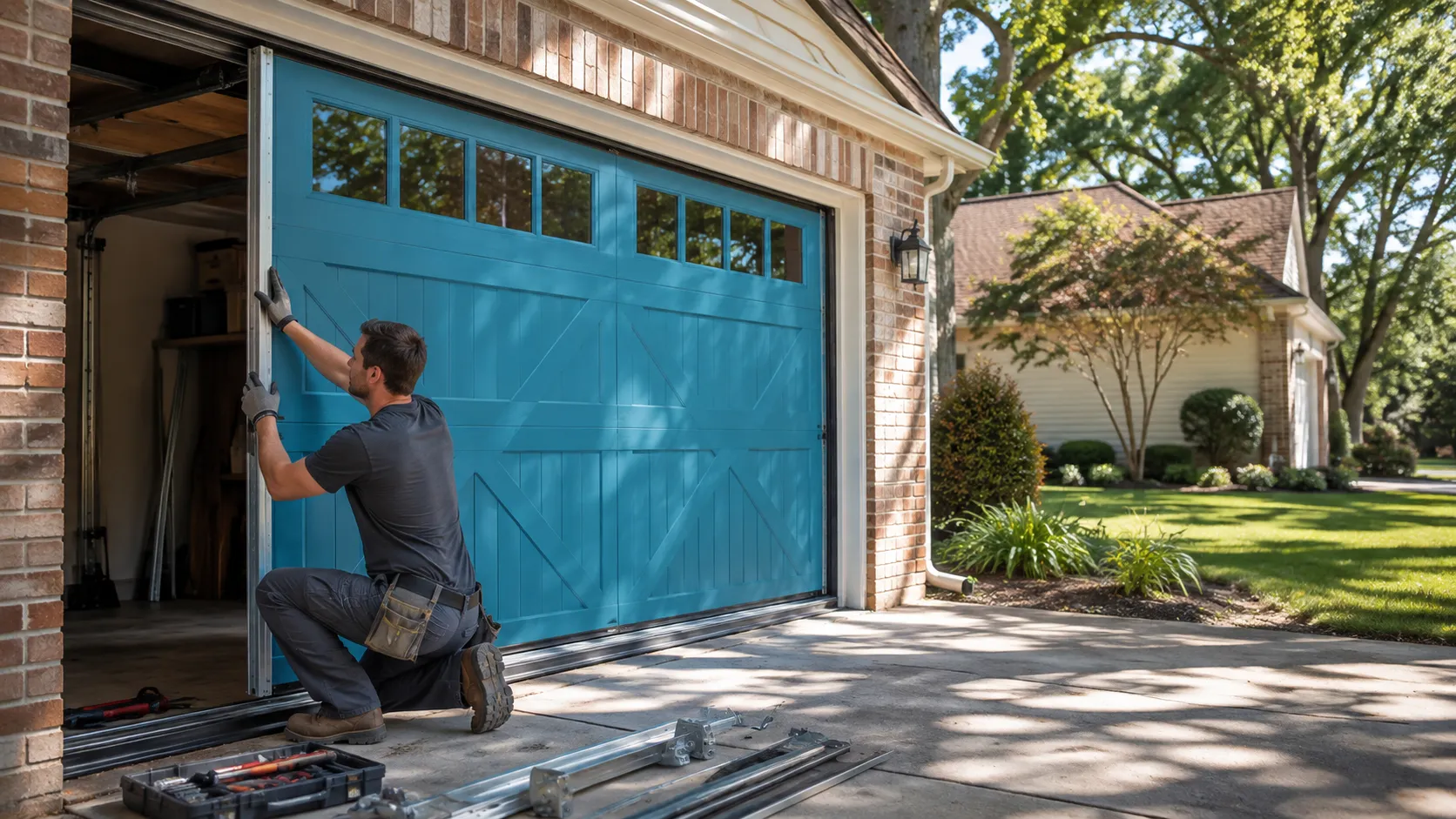
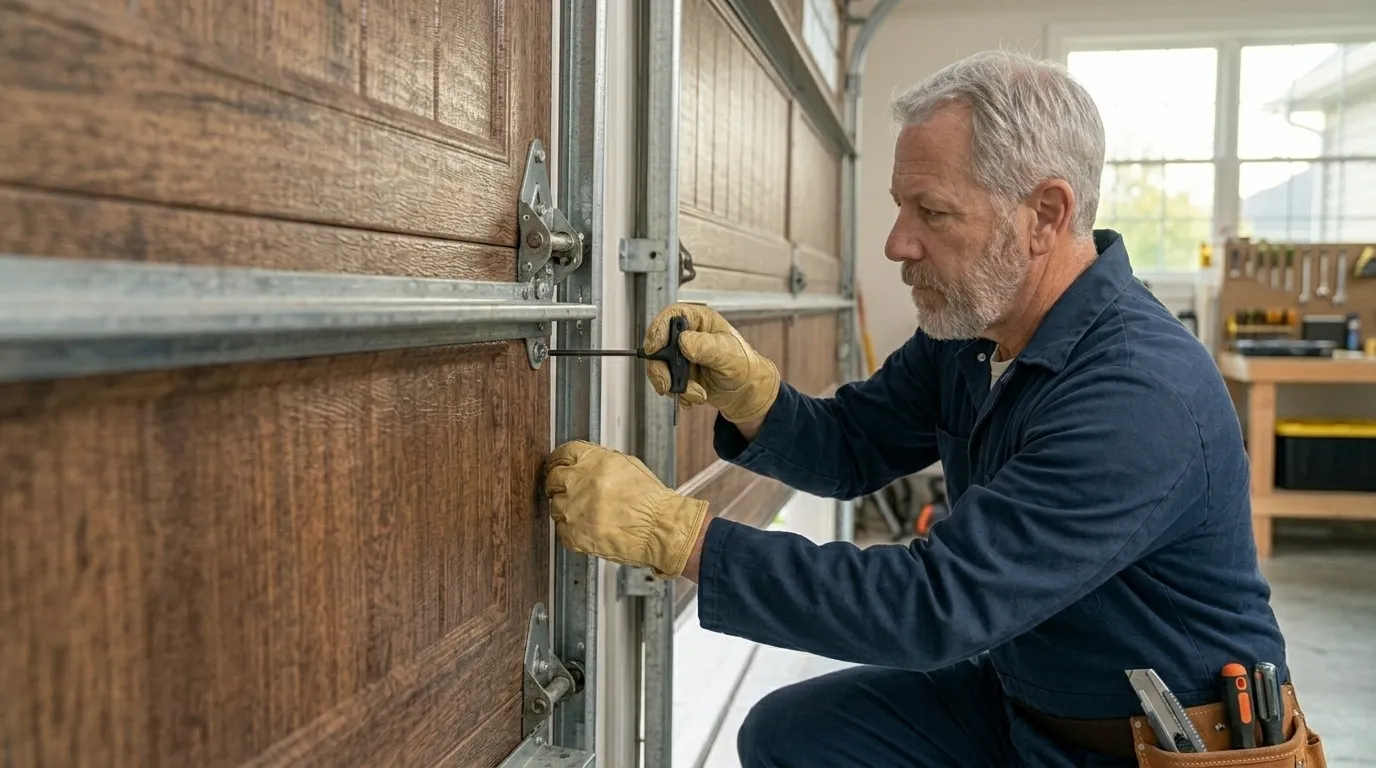
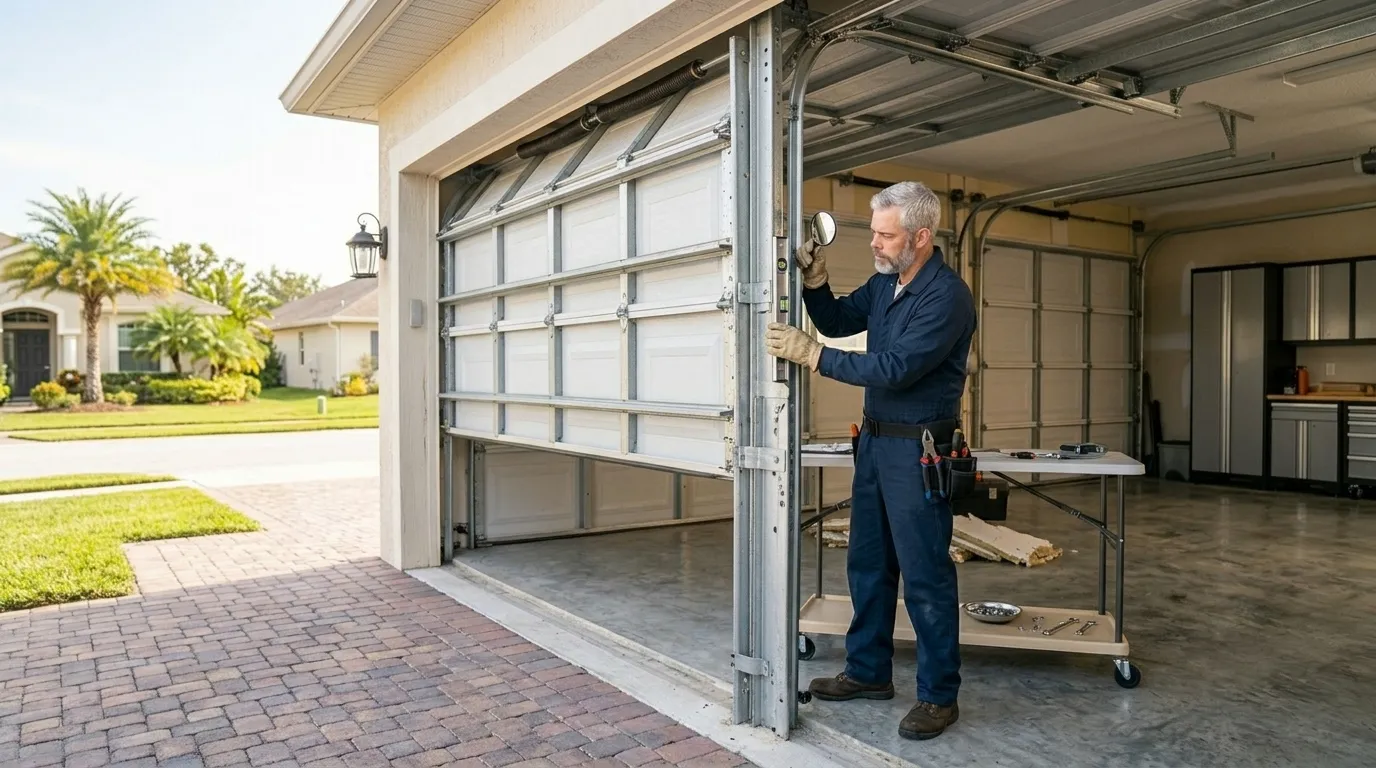
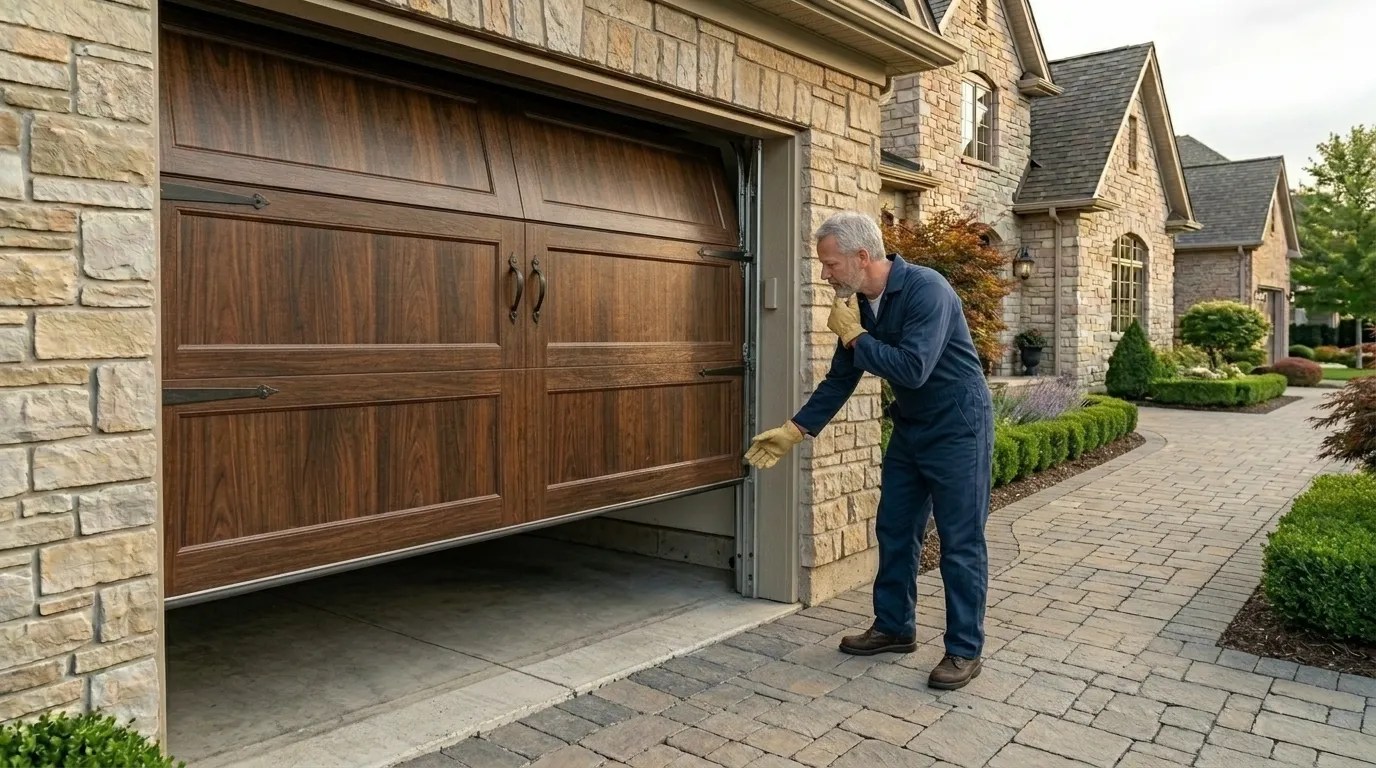
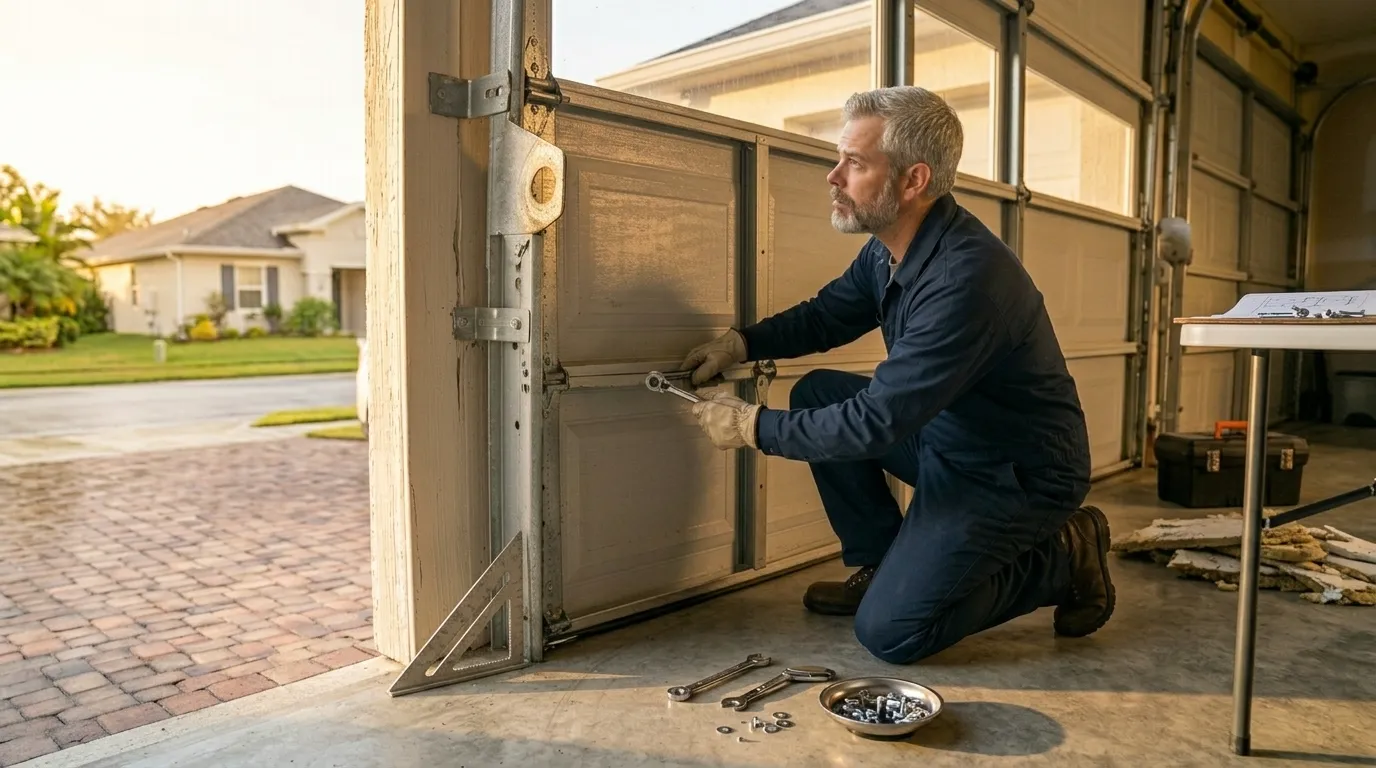
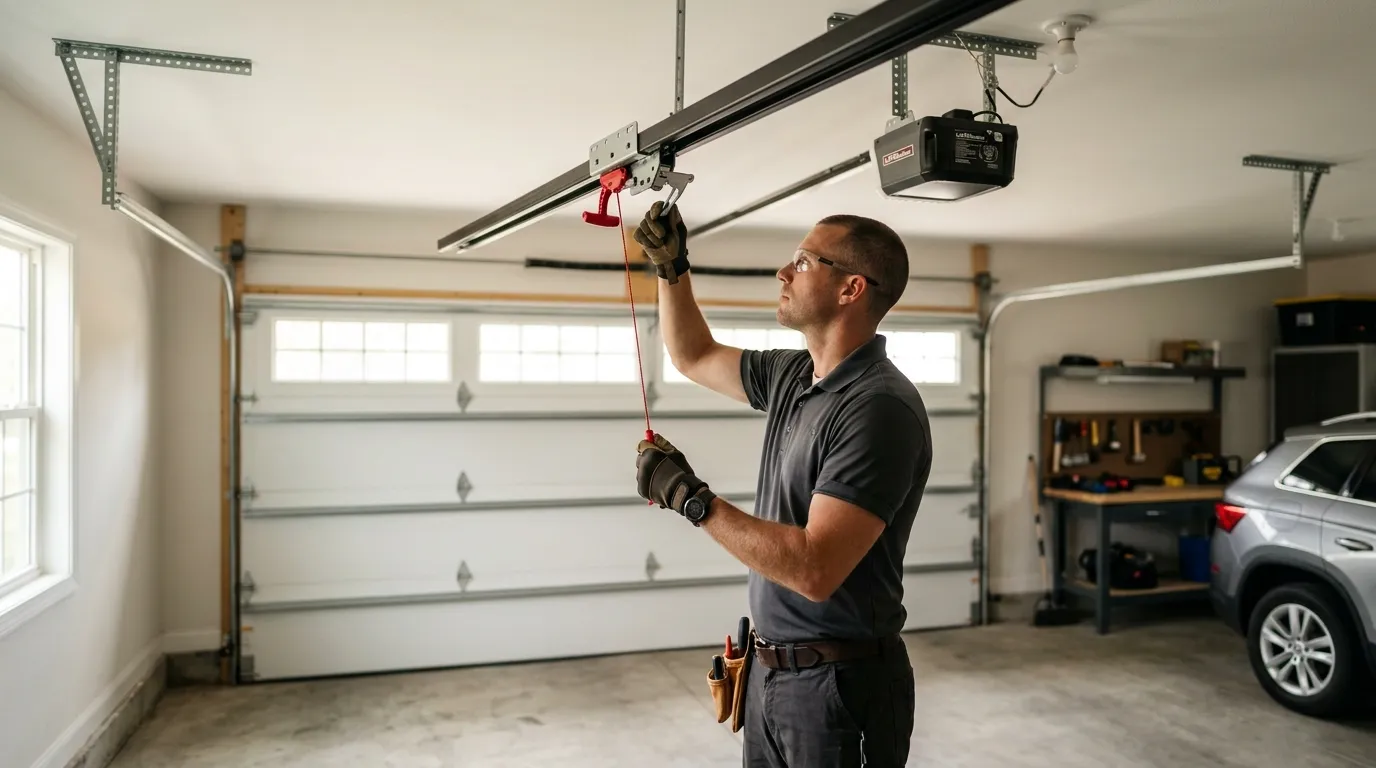
First we run the door by hand with the opener disconnected and watch every roller through a full cycle. That tells us which ones are chipped, flat-spotted, or loose in the bracket, and whether the track itself is still straight.
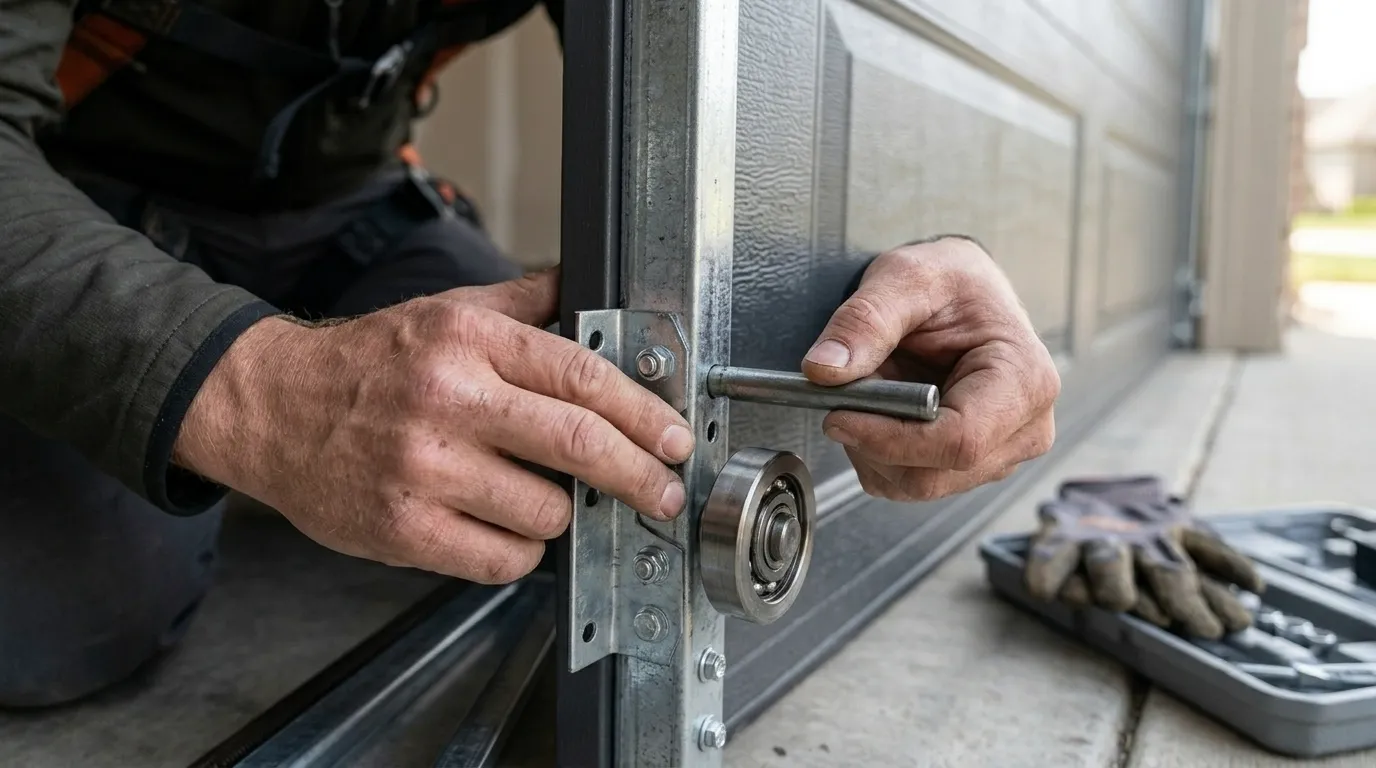
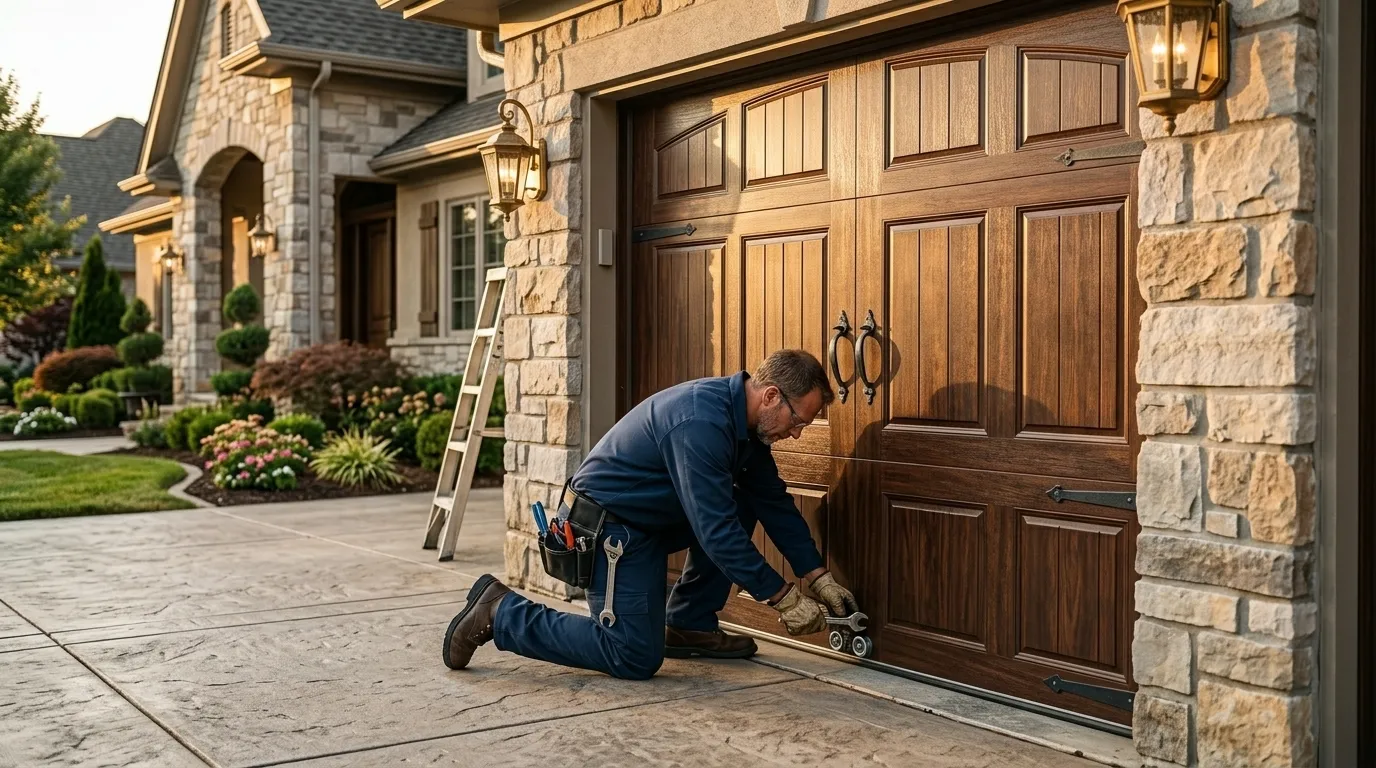
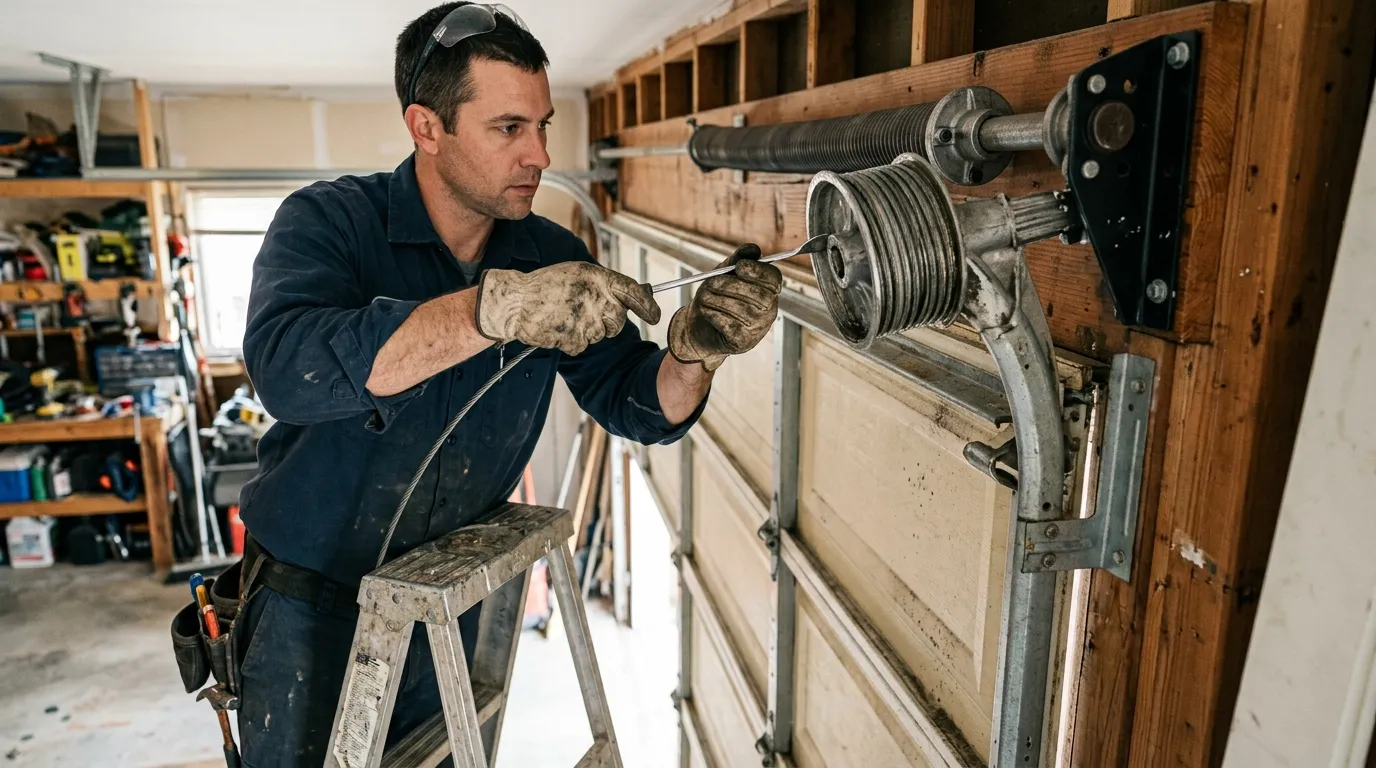
We replace with sealed-bearing nylon rollers on almost every job now - they run quieter and don't suffer the same metal-fatigue failure that steel rollers see after decades in a cold track. If your brackets are bent or the stem holes are worn oval, we replace the bracket too, because a good roller in a bad bracket just fails again.
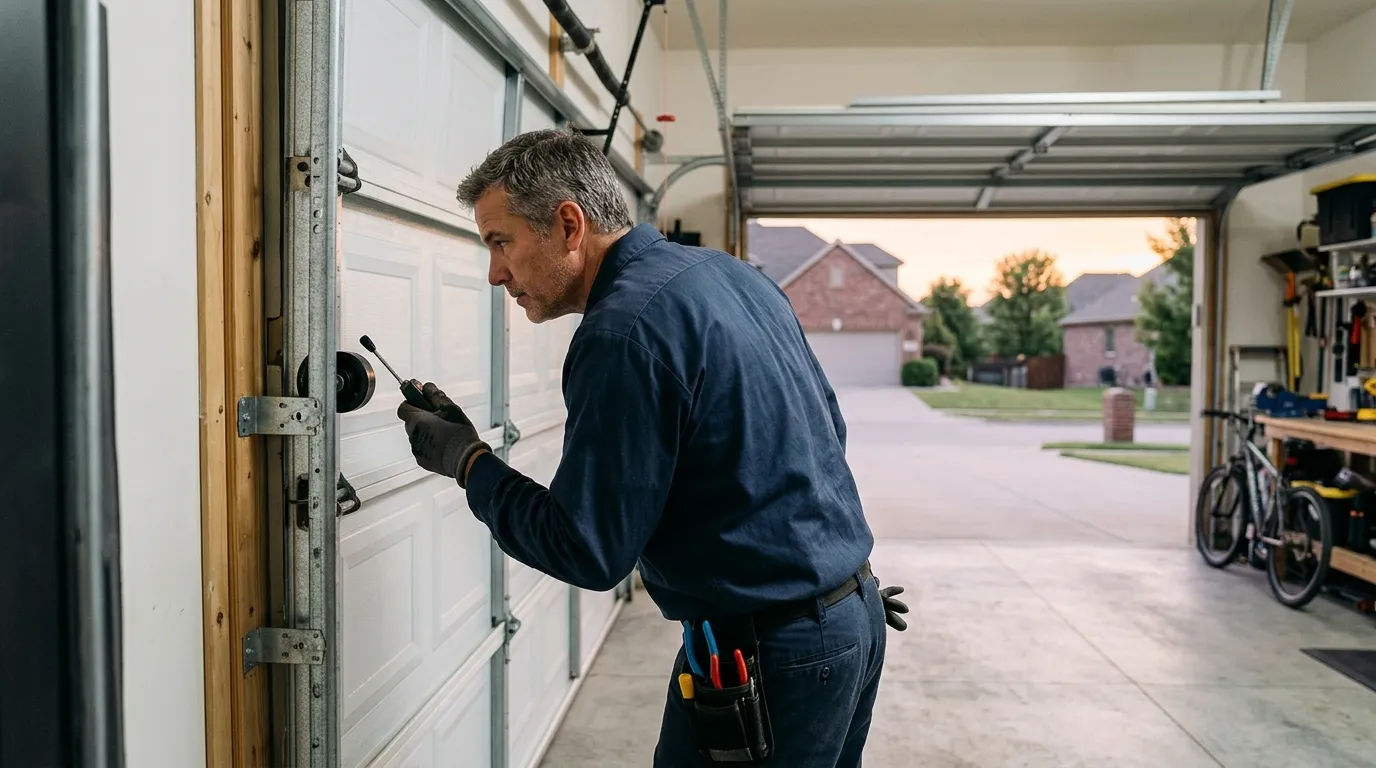
While we're in there we check the track alignment and re-shim or re-bolt any section that's pulled away from the jamb, since a roller job on a crooked track is a roller job you'll pay for twice. Last step is a full-cycle test under power, listening for anything that still catches, before we call it done.