What Causes It Around Here
Most of the houses in Kansas City, KS went up between 1950 and 2004, with the typical build year sitting around 1973, so a lot of the original garage doors installed back then are just now reaching the end of what steel and hardware can take. Across the 15 named areas of the city, the bulk of that stock is 1960s and 70s construction, which means single-layer, non-insulated doors that were never built for the cold snaps this region gets.
This city sits in a climate band the federal data marks as cold and severe, and that swing from summer heat to hard winter cold is what splits old wood jambs, pulls lag screws loose in track brackets, and warps thin steel skins over the years. A door that was fine for the first three decades starts fighting you in year forty. If you live between here and five miles out, you're in the same 1960s-70s housing band and the same cold-climate wear pattern, so the timing lines up house to house.
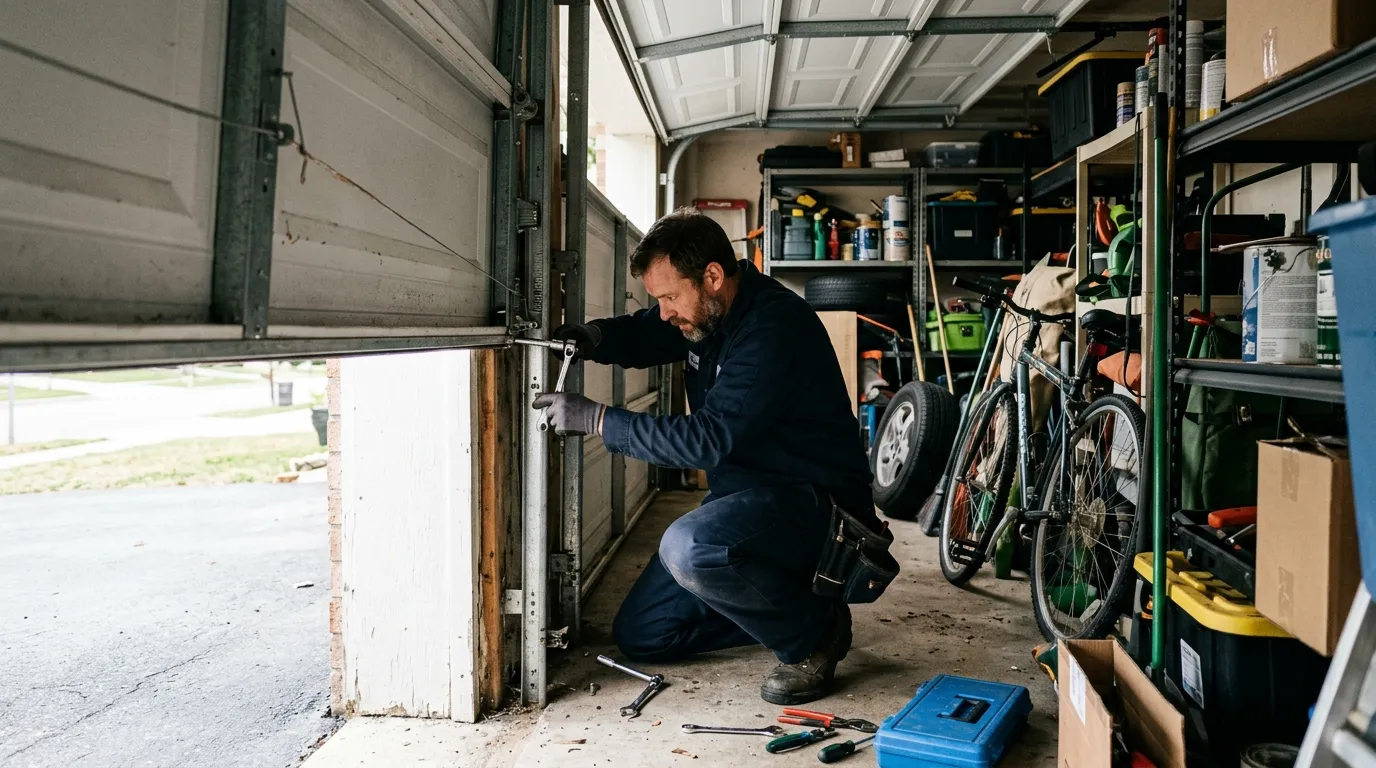
We're not saying every old door needs to go. Plenty of original doors on solid track and good rollers still run fine. But when the panel is bowing, the seams are separating, or the bottom section has gone soft from years of freeze and thaw against a slab that's shifted a little, that's not a repair problem anymore. That's an install call.
The Symptom
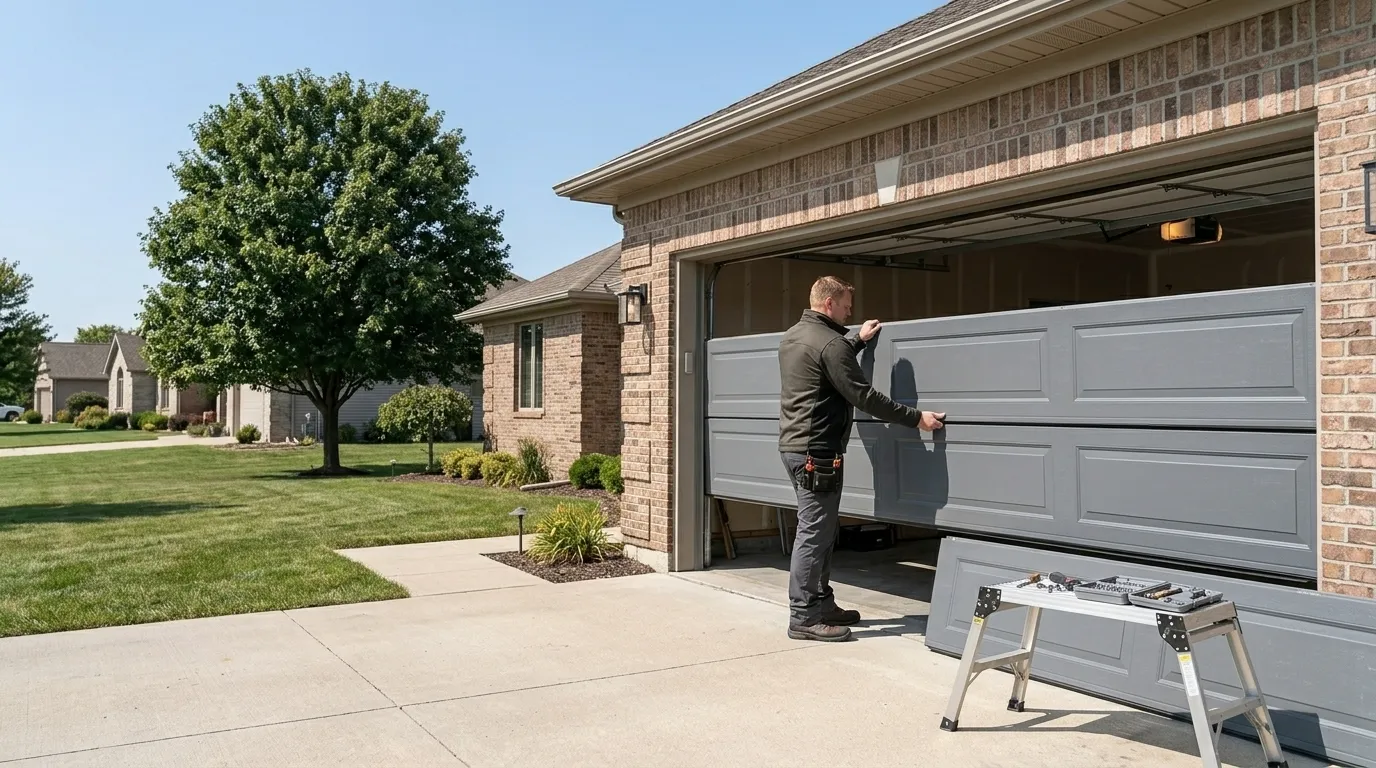
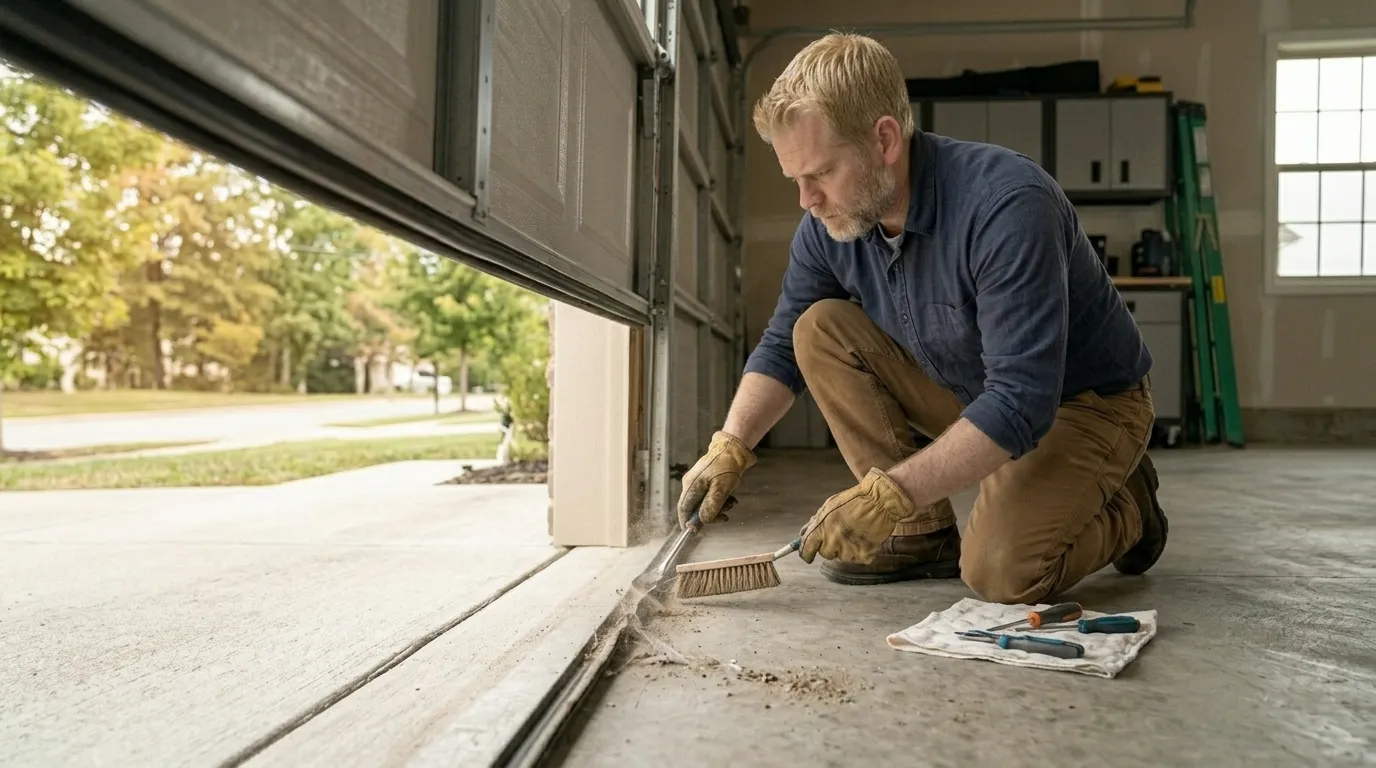
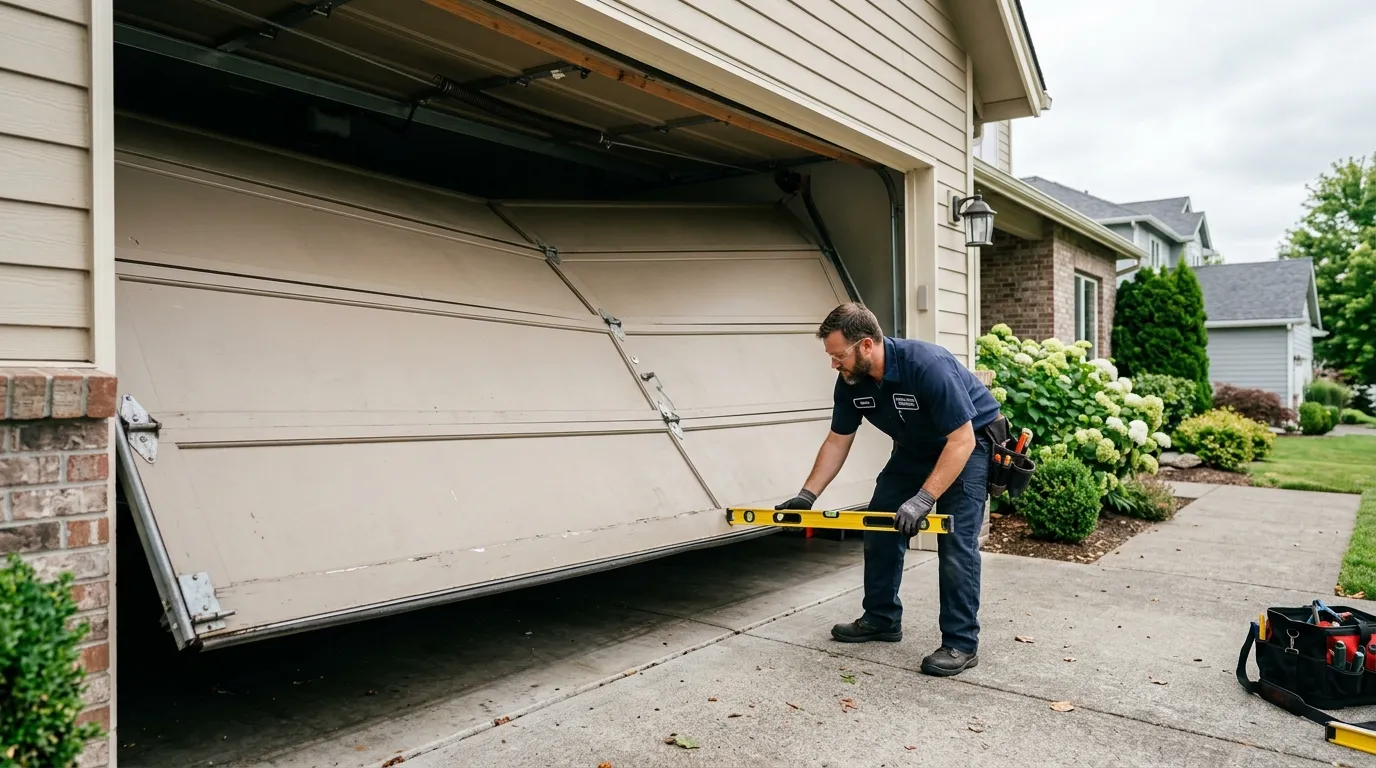
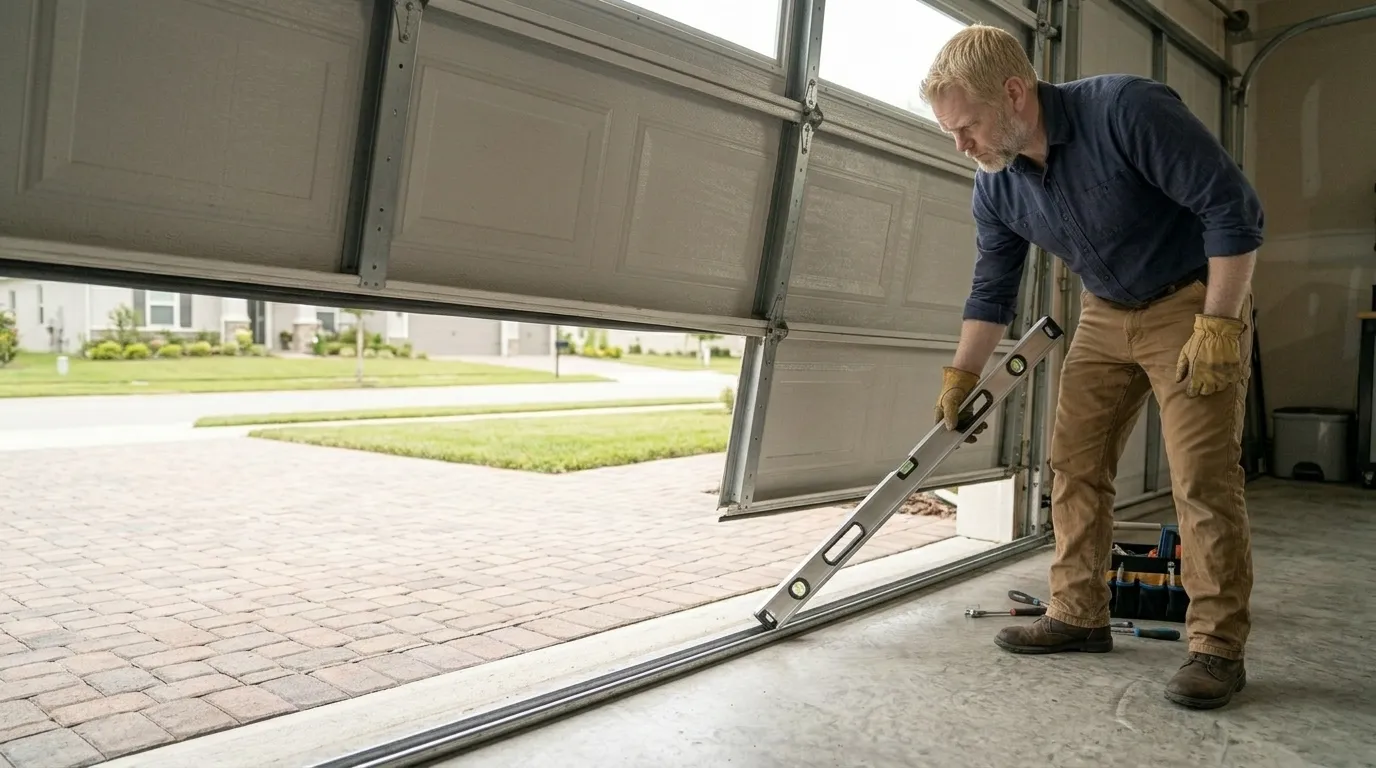
You know the door is done, not just cranky, when it stops closing flush against the slab even after track adjustment, when daylight shows under one corner and not the other, or when the panels themselves are pulling apart at the seams instead of just the hardware wearing out. With 37,757 owner-occupied houses across the service area, we see the same pattern over and over: a door installed when the house was built, never replaced, now cracking at the bottom panel where decades of freeze-thaw meet a foundation that's settled unevenly.
Cold makes it worse in winter specifically. A steel door with no insulation contracts hard on a single-digit night, and if the panel's already fatigued, that's when a seam finally gives or a hinge tears loose from thinned metal. If your opener is straining, reversing on its own, or running louder than it used to, that's often the door fighting the track rather than the opener failing outright.
We won't try to sell you a new door if a properly adjusted track and a spring swap will get you another decade. But once the panel structure itself is the problem, no amount of adjustment fixes that.
How We Fix It
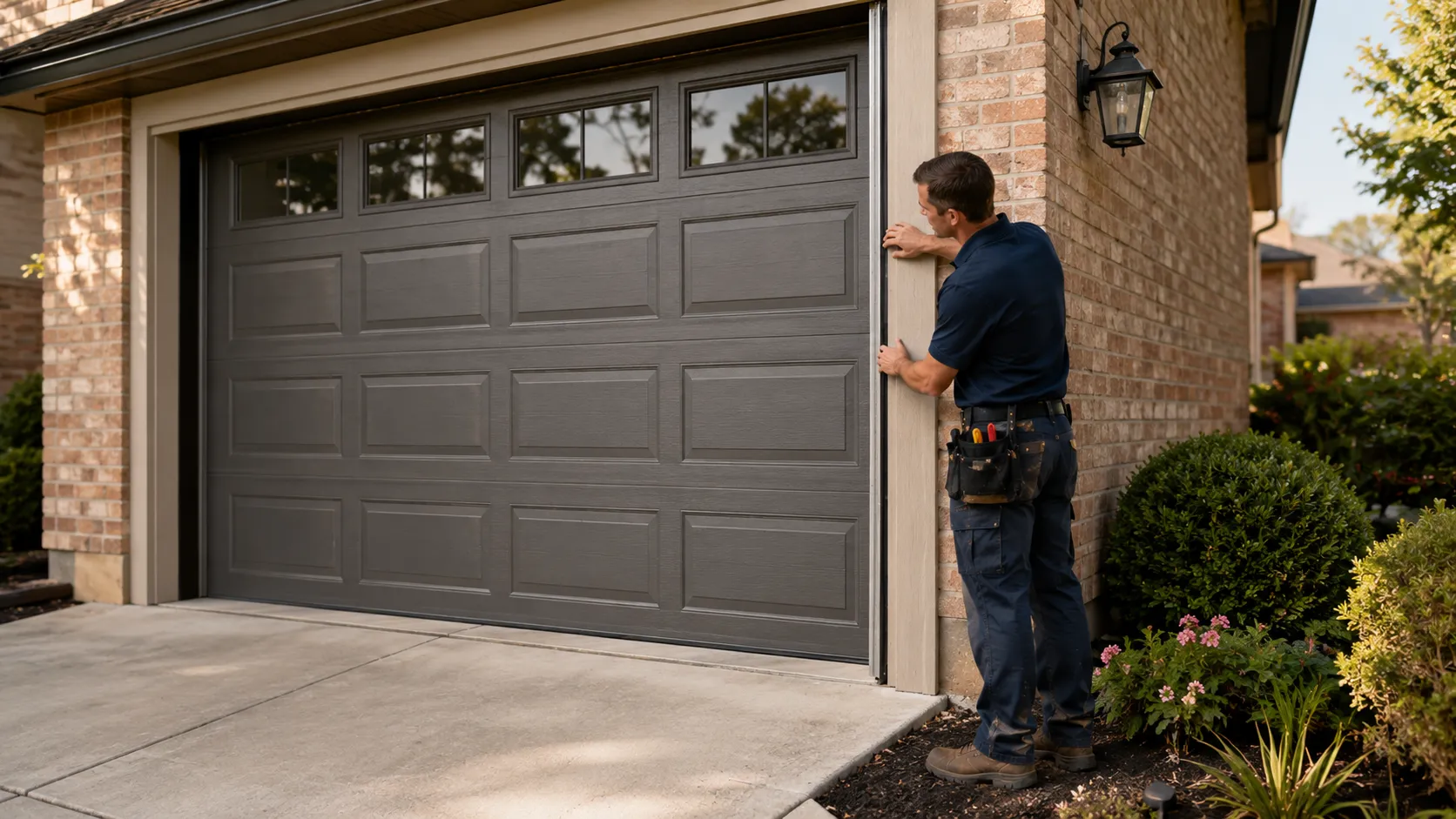
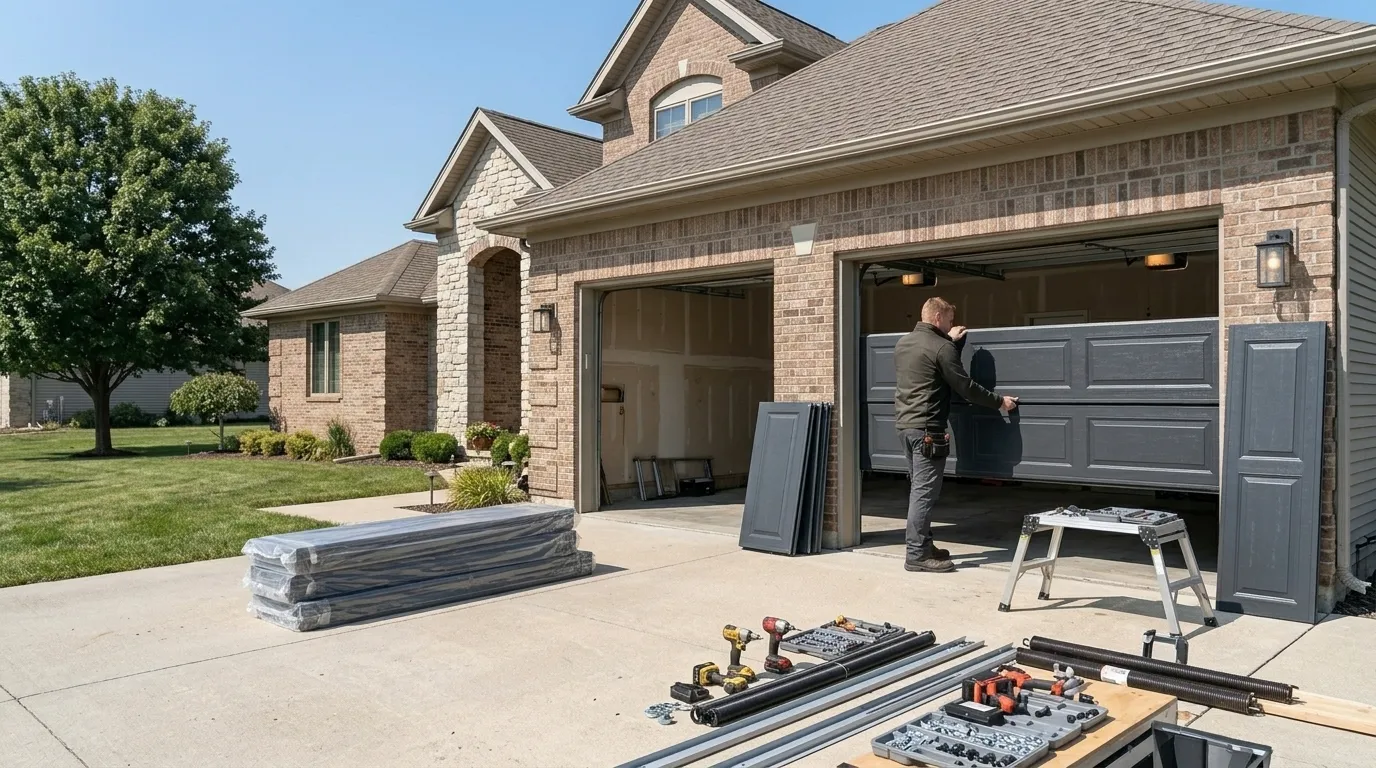
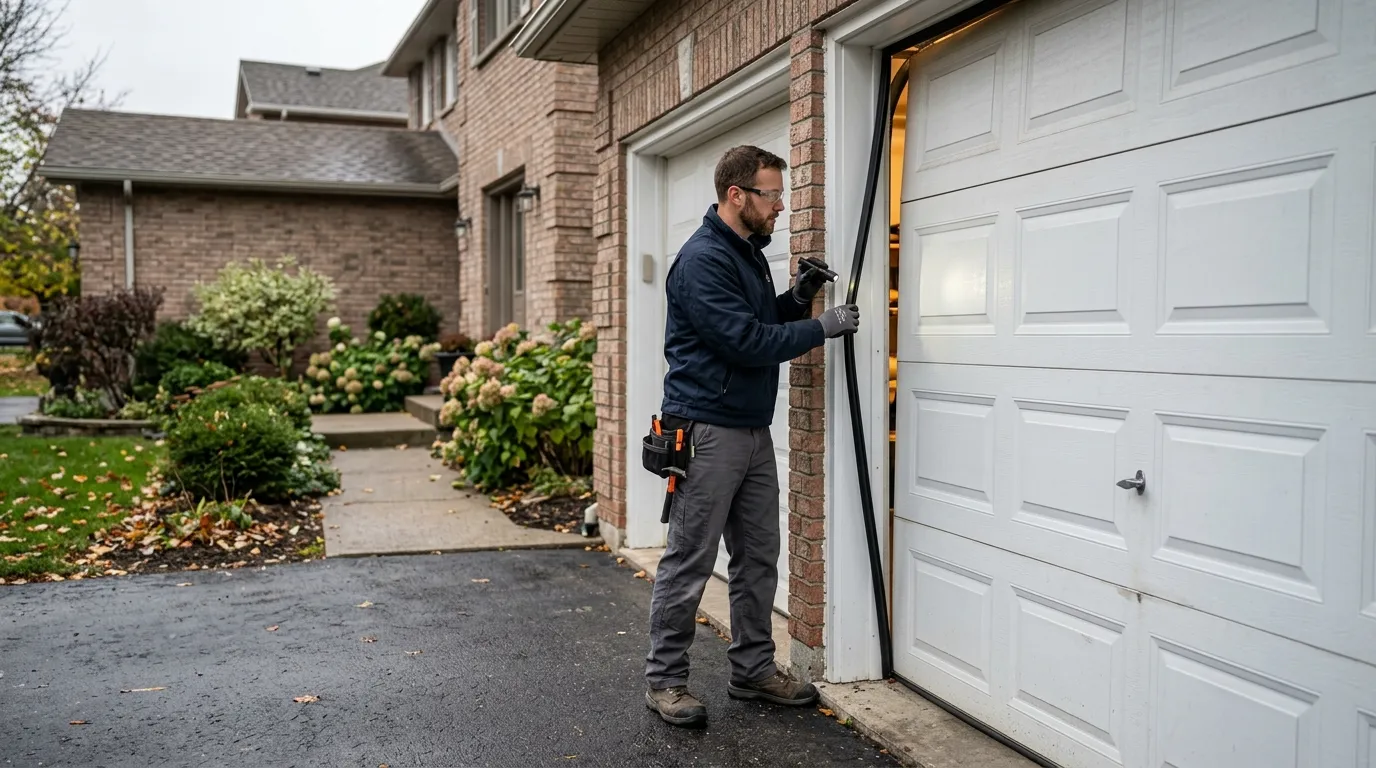
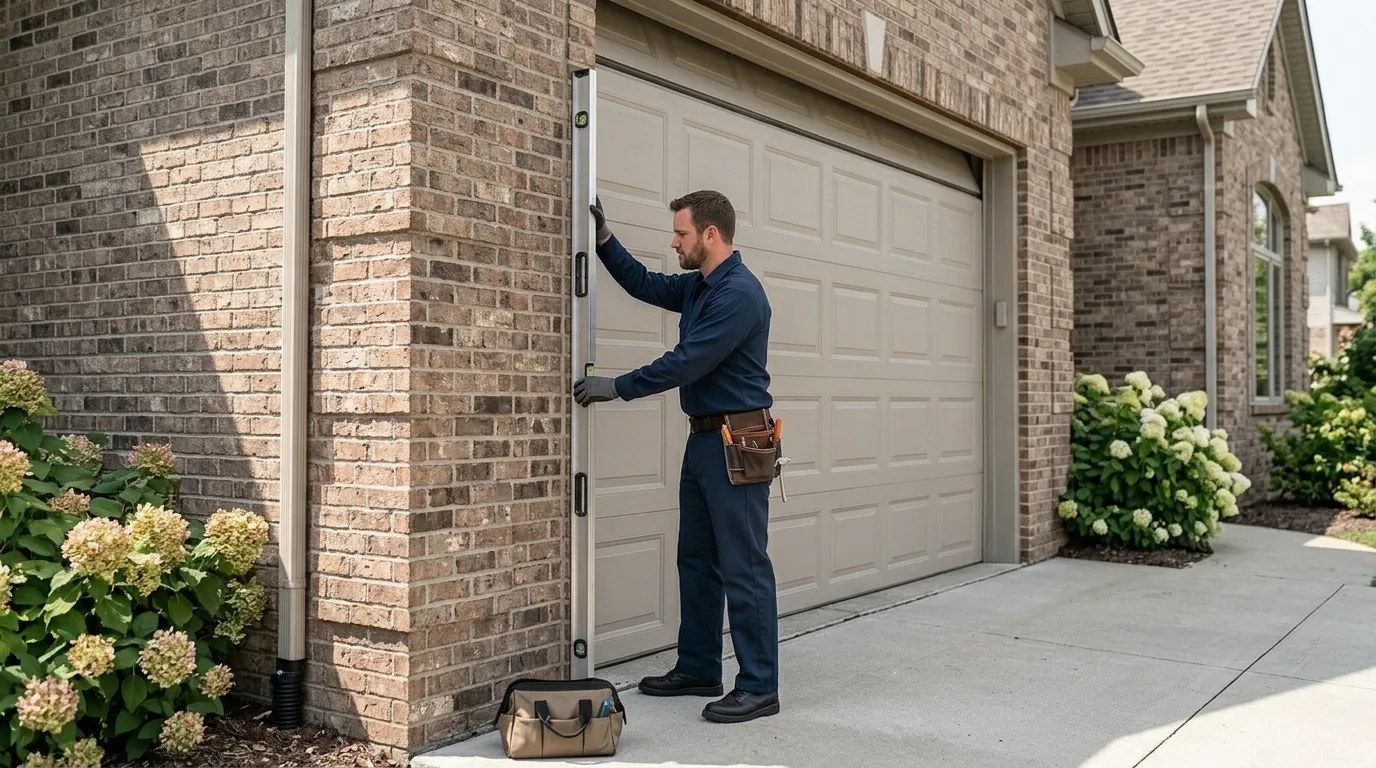
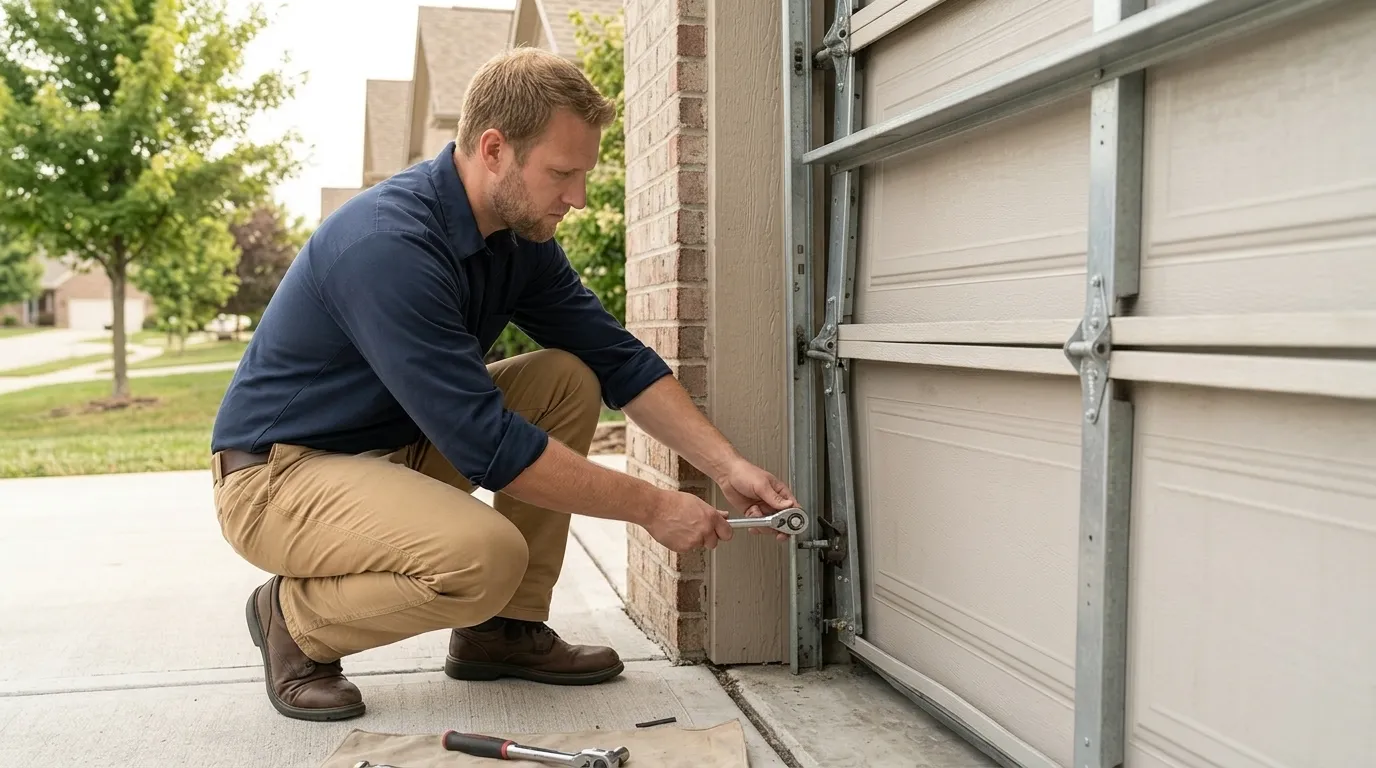
We start by measuring the actual opening, not assuming it matches a standard size, because houses built in this city's main construction era don't always sit square after fifty-plus years. We check the jambs, the header, and the slab for the kind of settling that's common with freeze-thaw cycles here, and we correct for it before the new door goes in rather than forcing a square door into an out-of-square frame.
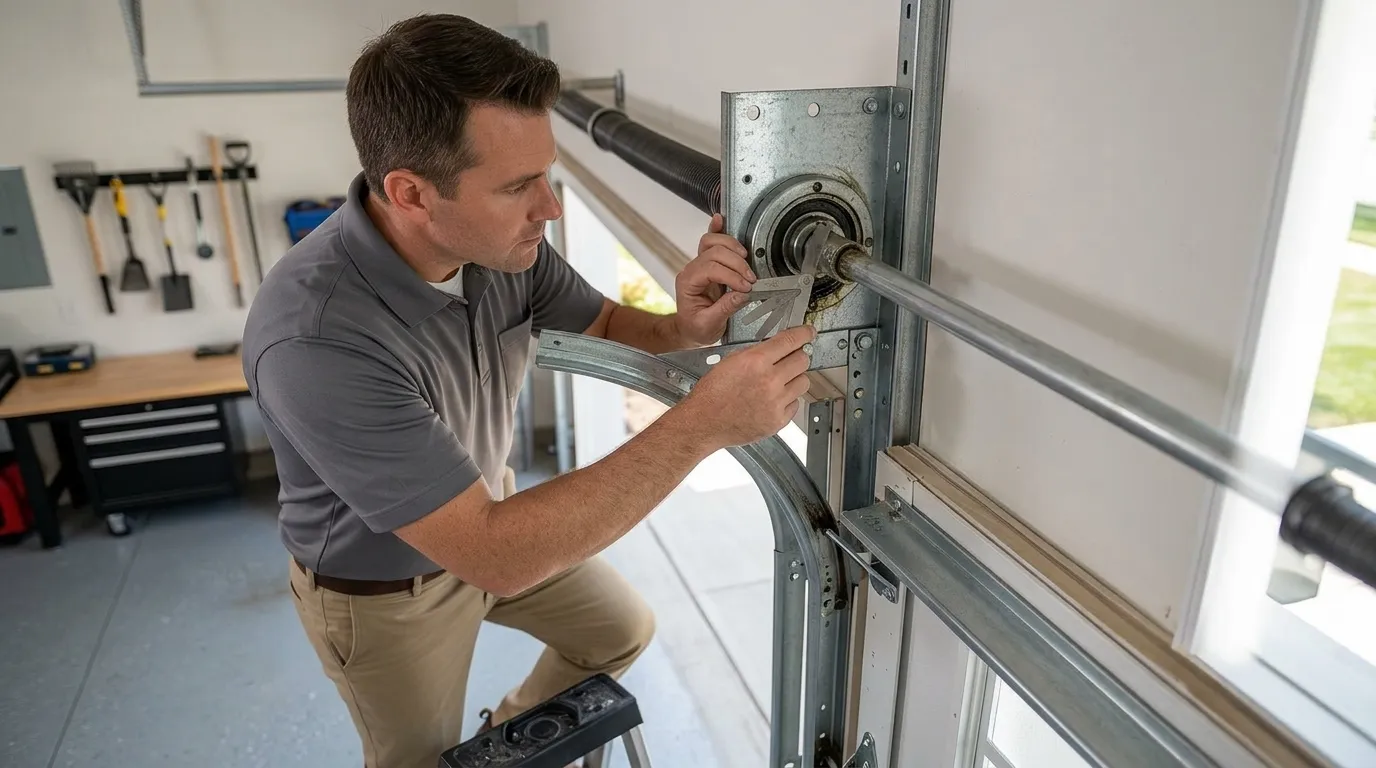
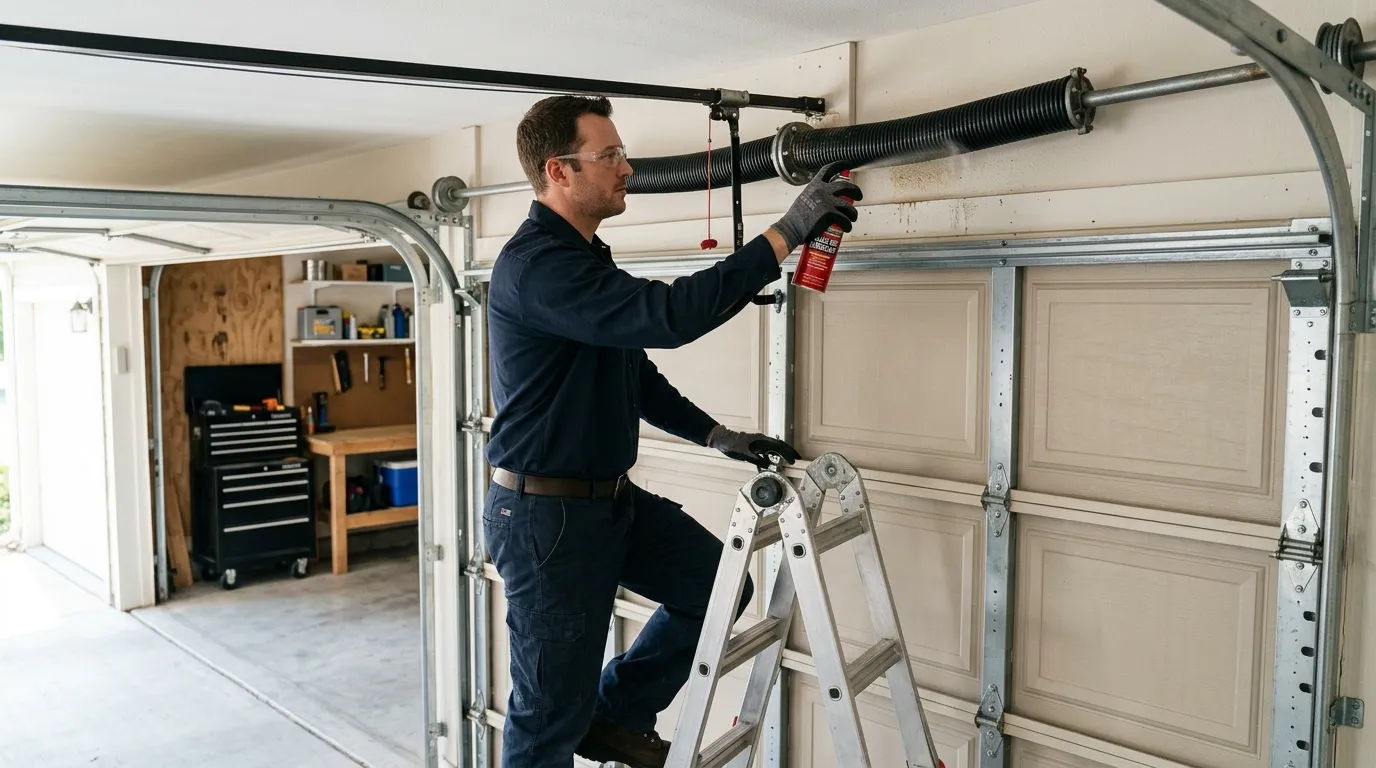
For this climate, we lean toward insulated panel doors on newer installs, since a solid steel skin alone doesn't hold up as well through the swing from summer heat to hard winter cold that this region gets. We set new track, new rollers, and springs sized to the door's actual weight rather than reusing old hardware that was matched to a different door.
Once it's hung, we run the door through a full cycle test, check balance by hand with the opener disconnected, and only reconnect the opener once the door holds position on its own. That balance step is where a lot of shortcut installs fail later, and it's not one we skip.