What Causes It Around Here
Most of the housing stock in this service area went up between 1950 and 2004, with the median build year sitting around 1973 - and a lot of that is concentrated in 1960s and '70s construction spread across the 15 named neighborhoods we work in. Doors from that era were built with lift cables sized for lighter steel sections and older opener hardware. Fifty-plus years later, those cables are well past their design life even on doors that have had a spring or opener swapped out along the way.
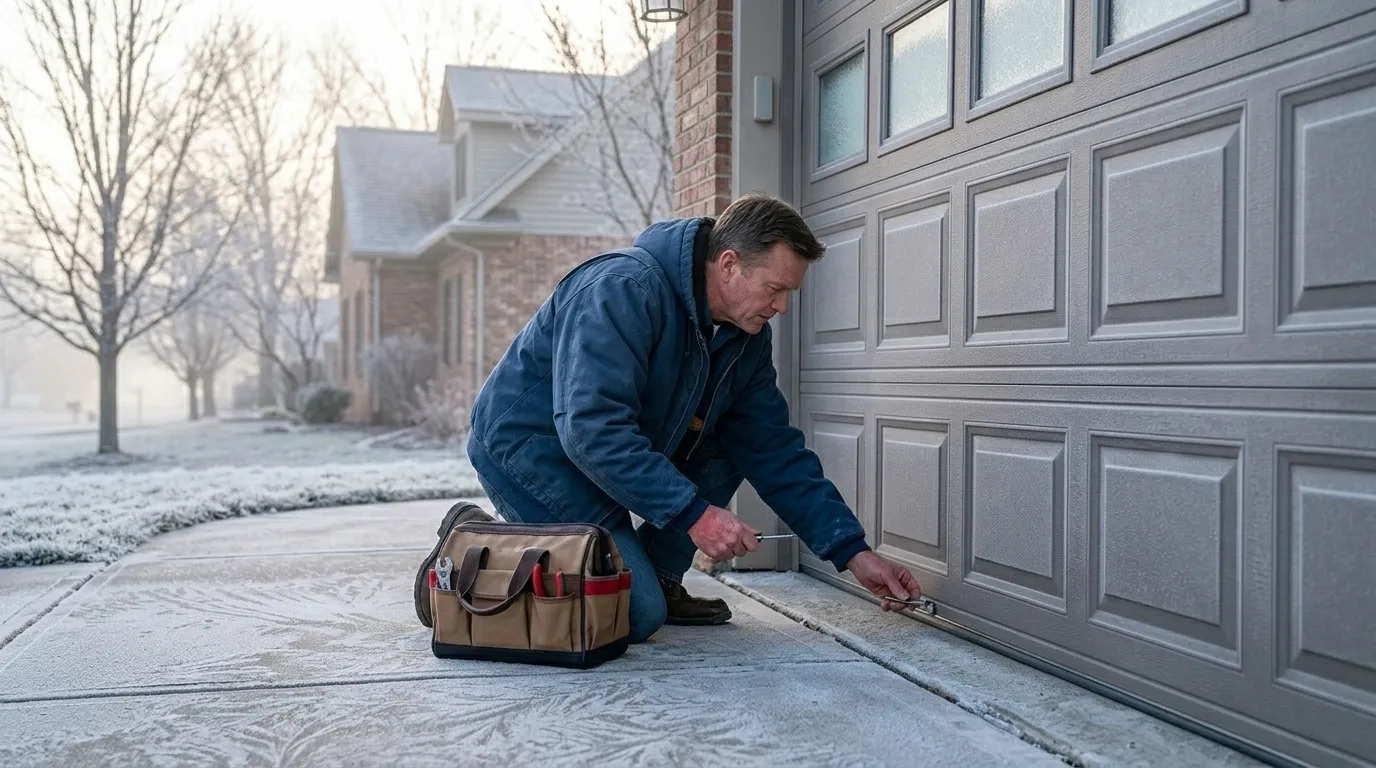
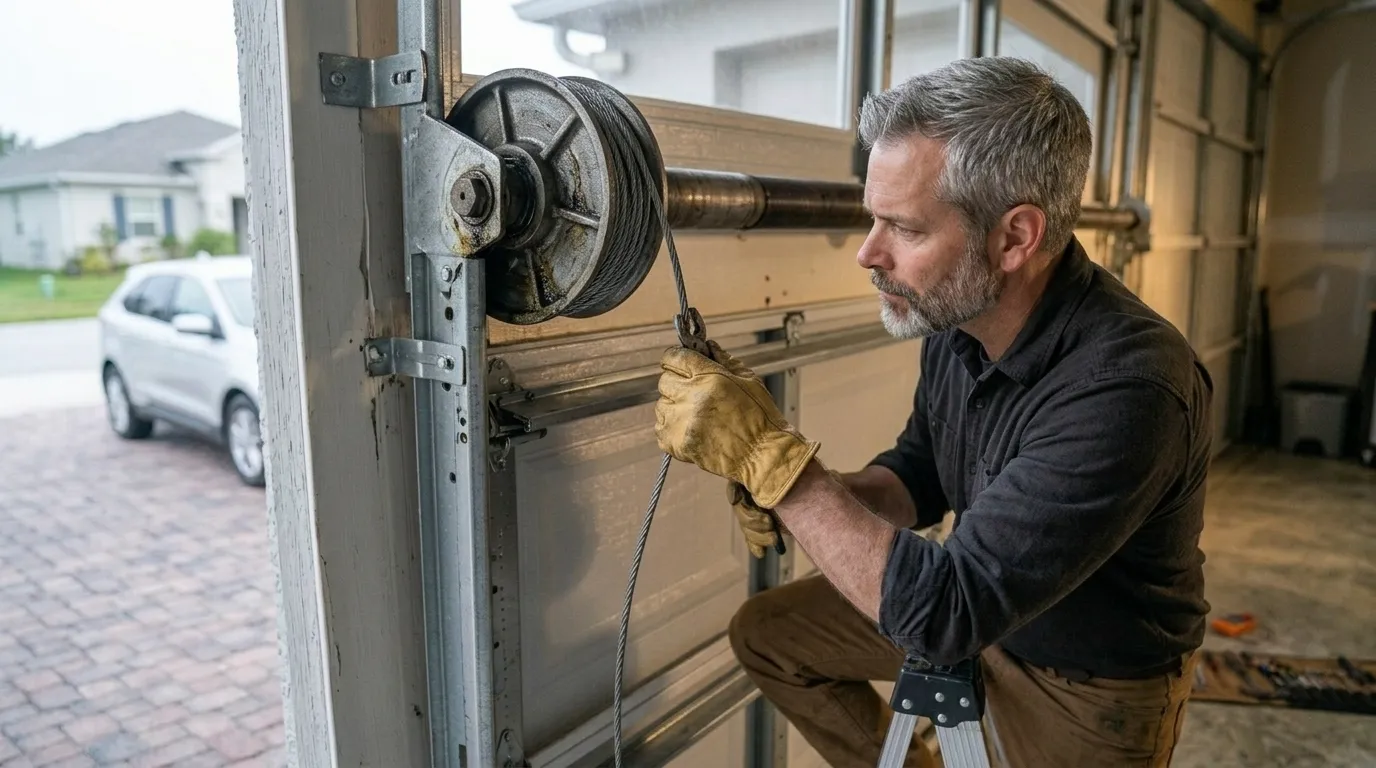
The other piece is the cold. This area sits in a severe cold climate band, and lift cables take the brunt of it. Galvanized wire strands contract in deep cold, and the constant expand-contract cycle through a Kansas winter works micro-fractures into the strand faster than it would in a mild climate. Add road salt and moisture tracked in off a driveway, and the drum end of the cable - the part that's hardest to inspect without pulling the door apart - corrodes from the inside out.
We see this most on doors that are original to houses in that 1960s-70s band: single cable drums with no fail-safe, worn track alignment pulling the cable off-center, and cable that was never replaced when the springs were serviced last. It's a wear pattern tied directly to the age of the housing stock here, not a defect in any one door.
The Symptom
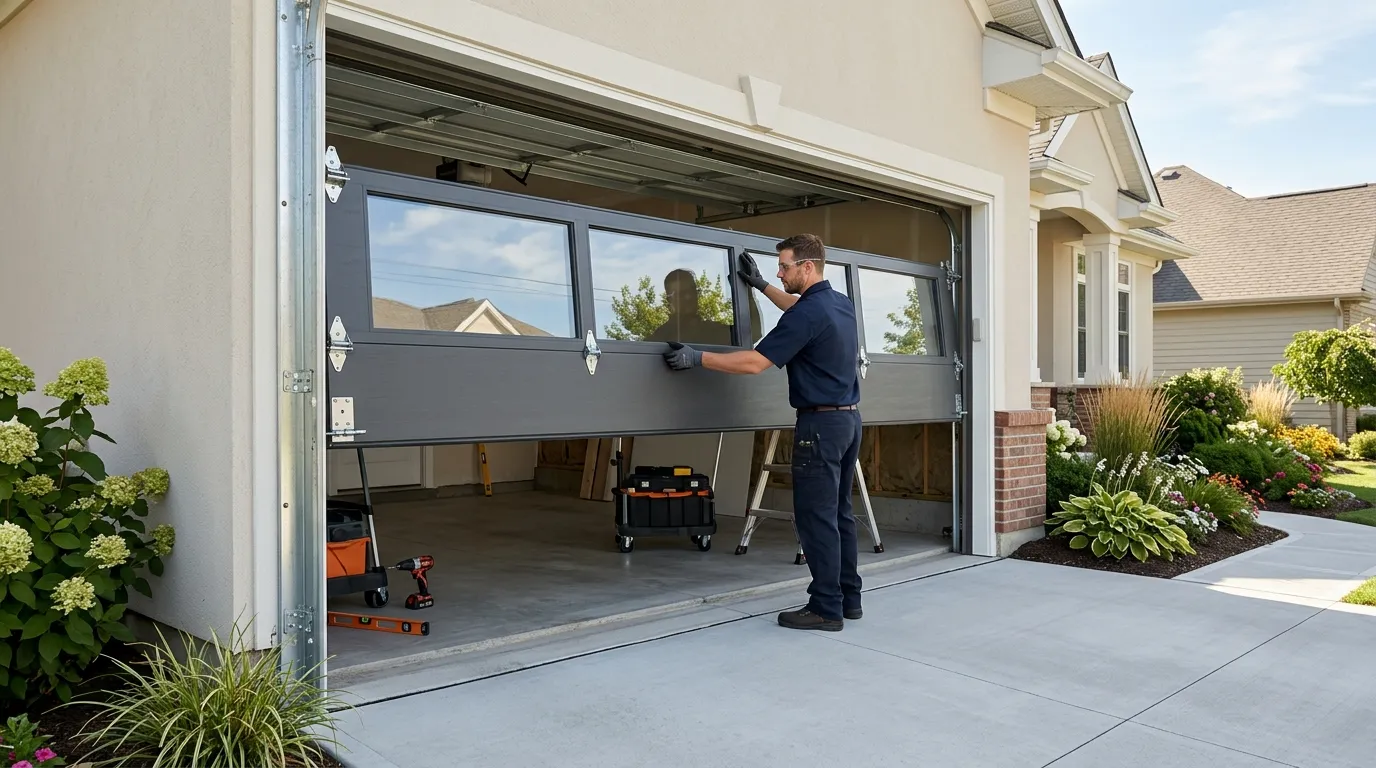
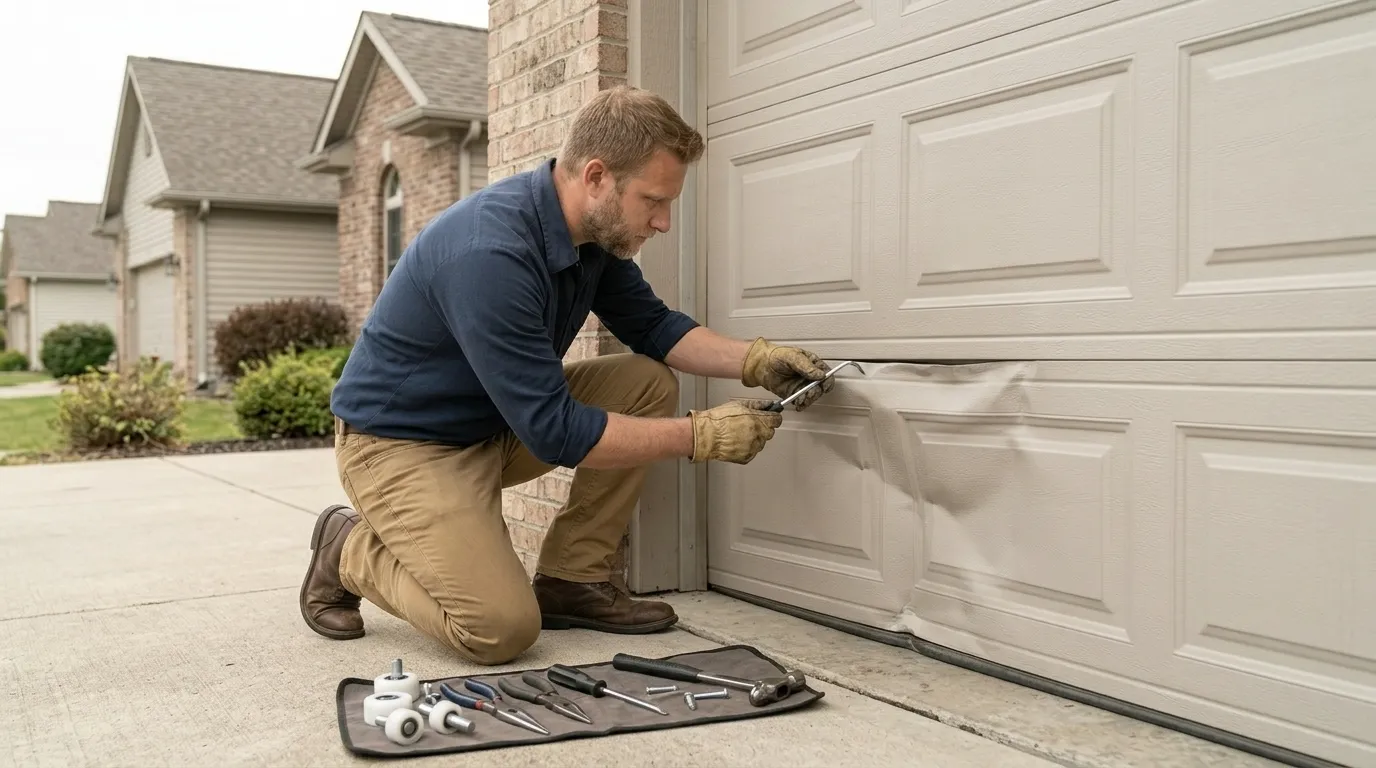
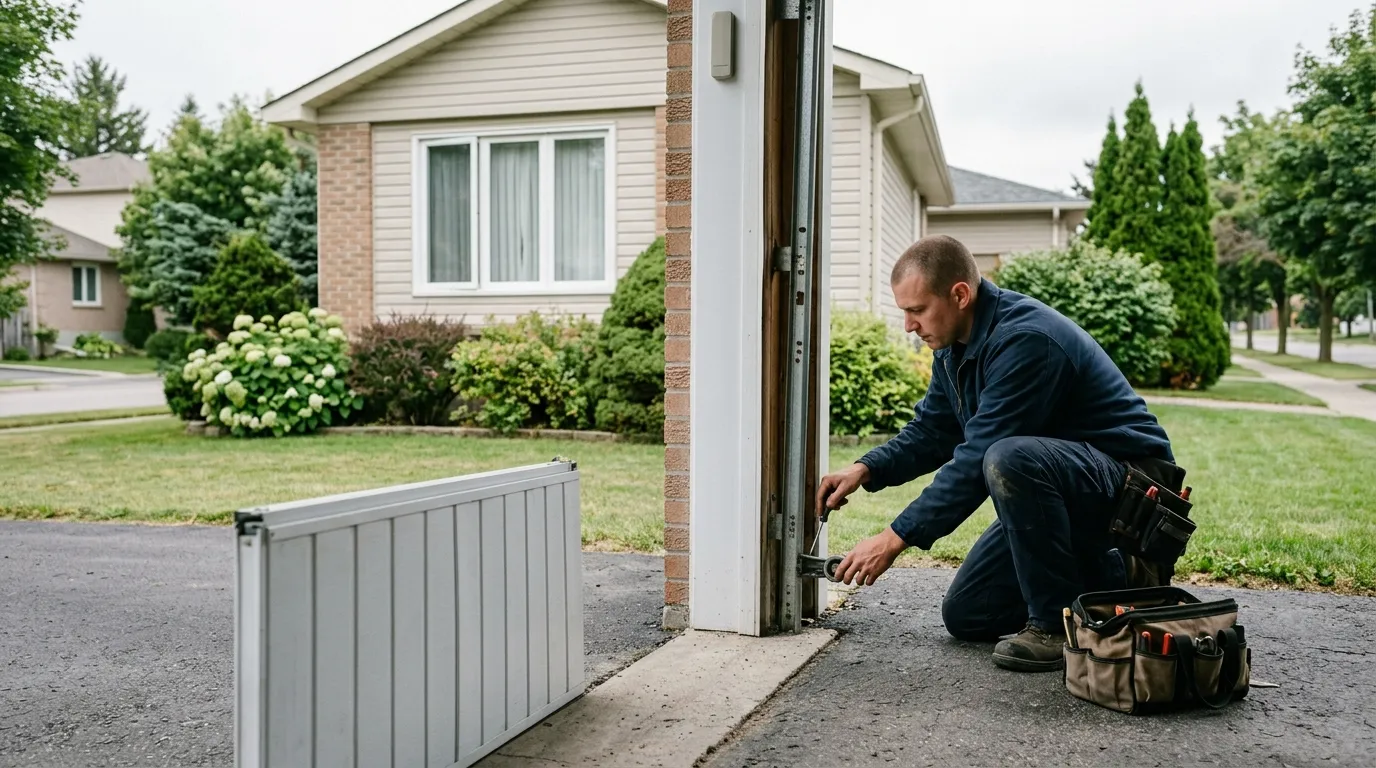
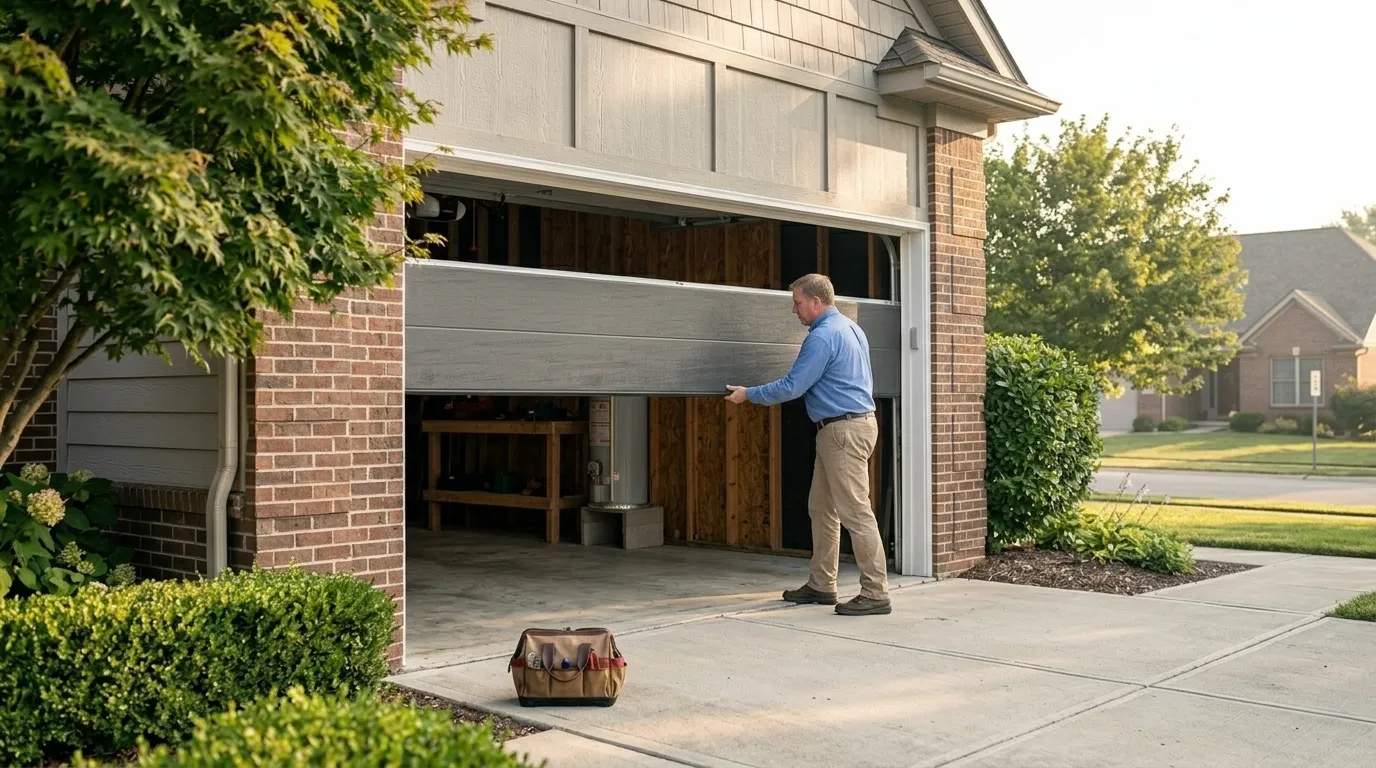
A cable failure on a garage door rarely looks the same twice. Sometimes it's a loud bang and the door drops hard on one side, hanging crooked with the low corner touching the floor. Sometimes it's slower: the door starts riding unevenly, one side lagging behind the other on the way up, or the cable visibly frays and kinks near the drum before it lets go entirely.
If you catch it early, you'll notice the door groaning or shuddering partway through its travel, or a section of cable that's gone from tight, smooth wire to something furred and uneven. Once a strand starts to separate, the rest of the cable is on borrowed time - it's not a part that gets better on its own.
A door that's dropped on one side under tension is not safe to force open or close by hand. The opposite spring is often still fully loaded, and a door hanging off one cable can shift without warning. If you're in that spot, leave the door where it is and call rather than trying to walk it down.
How We Fix It
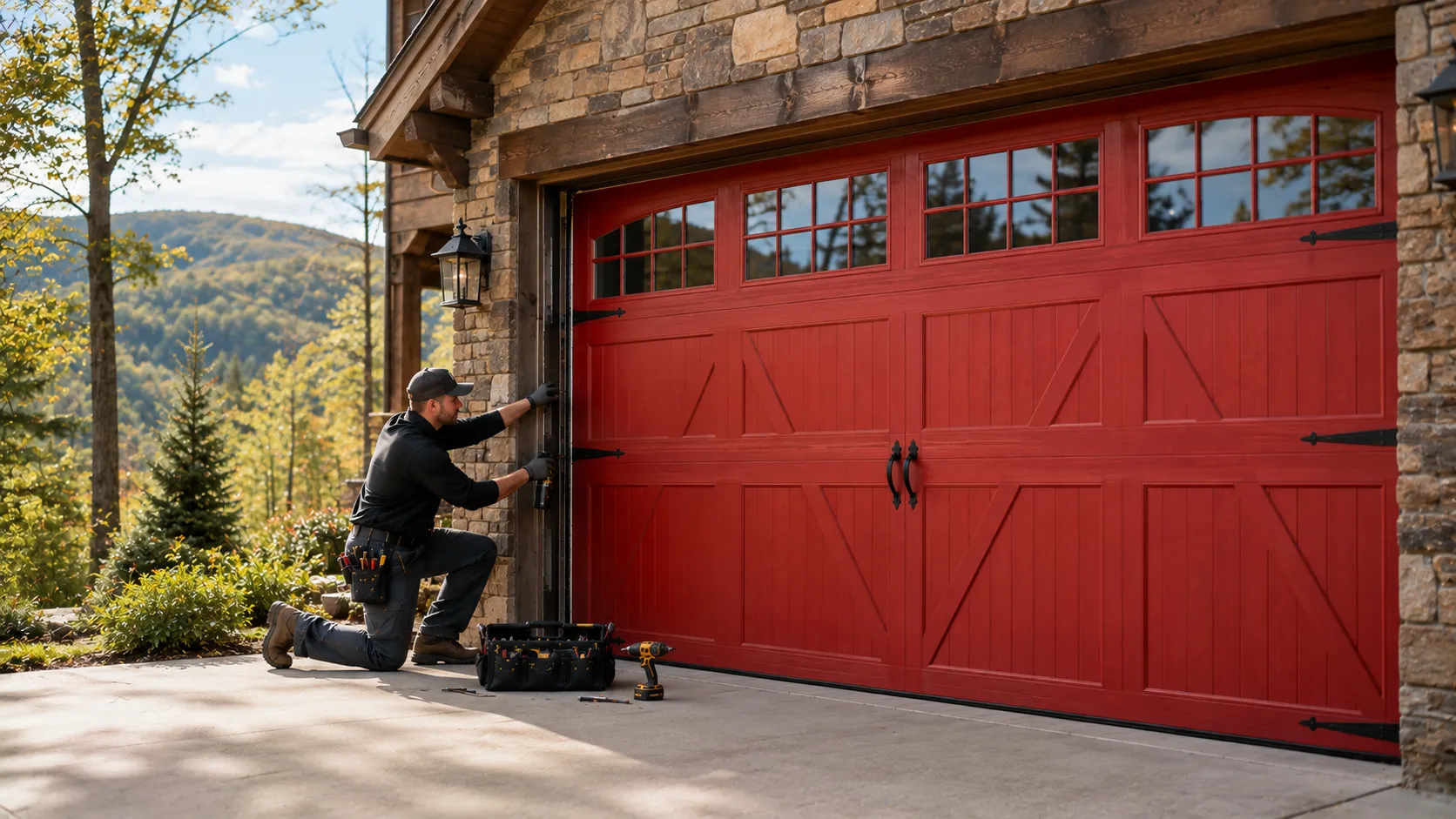
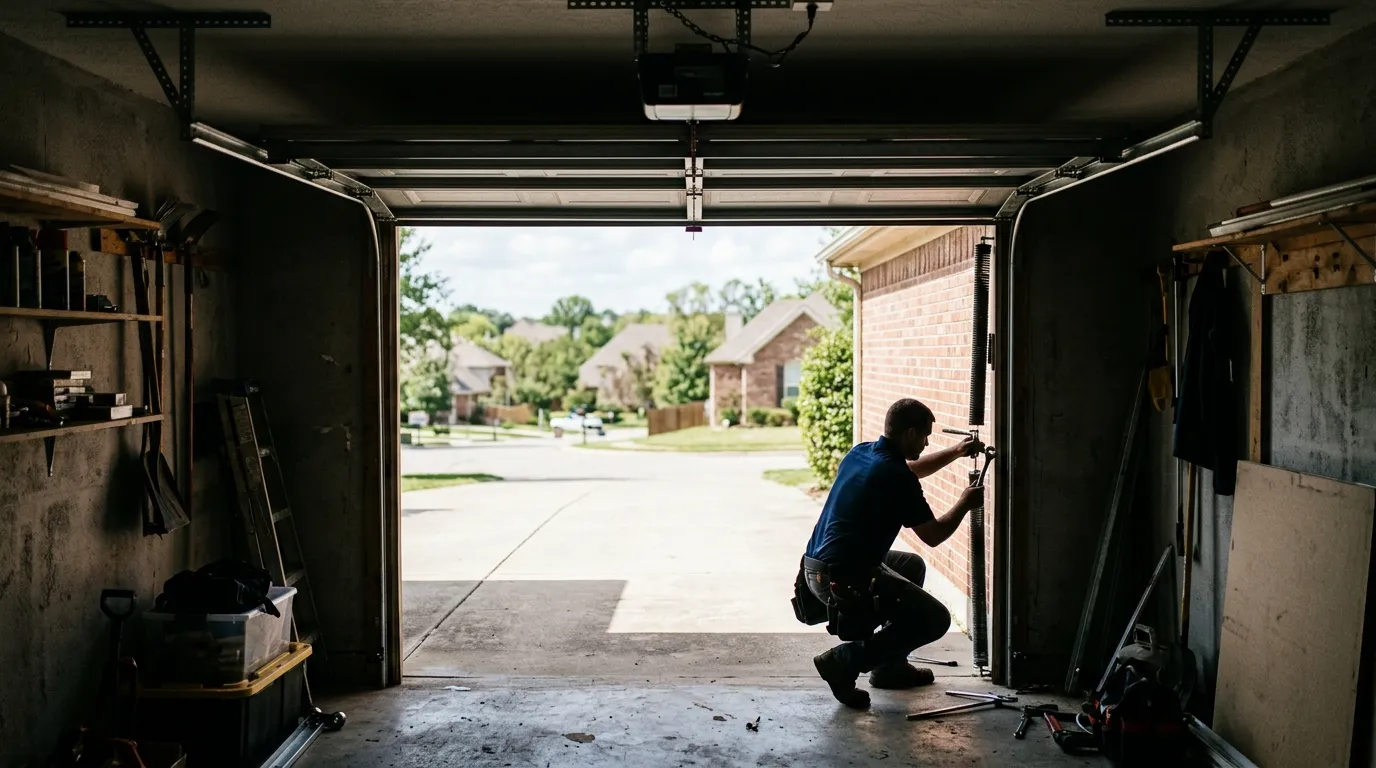
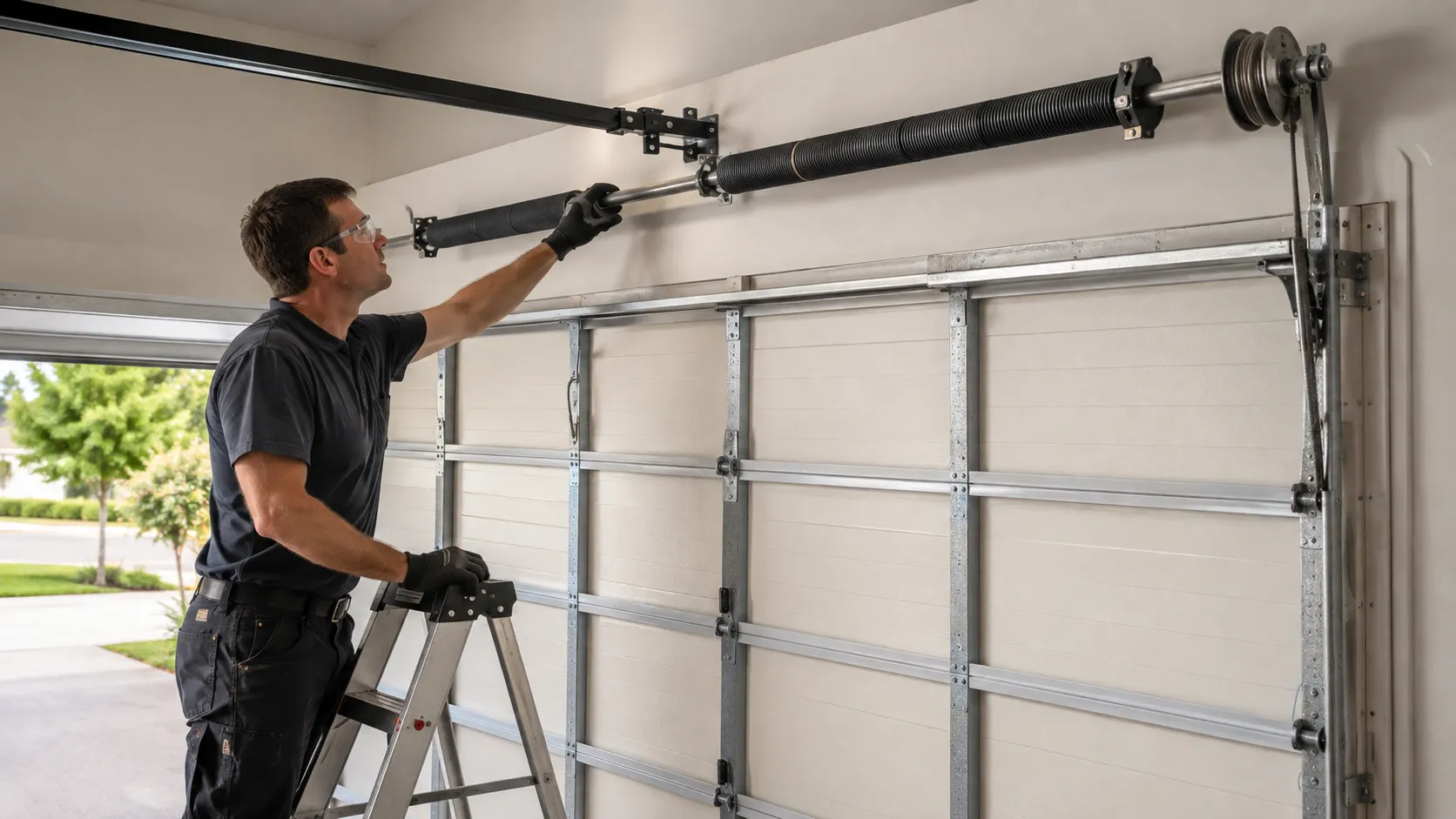
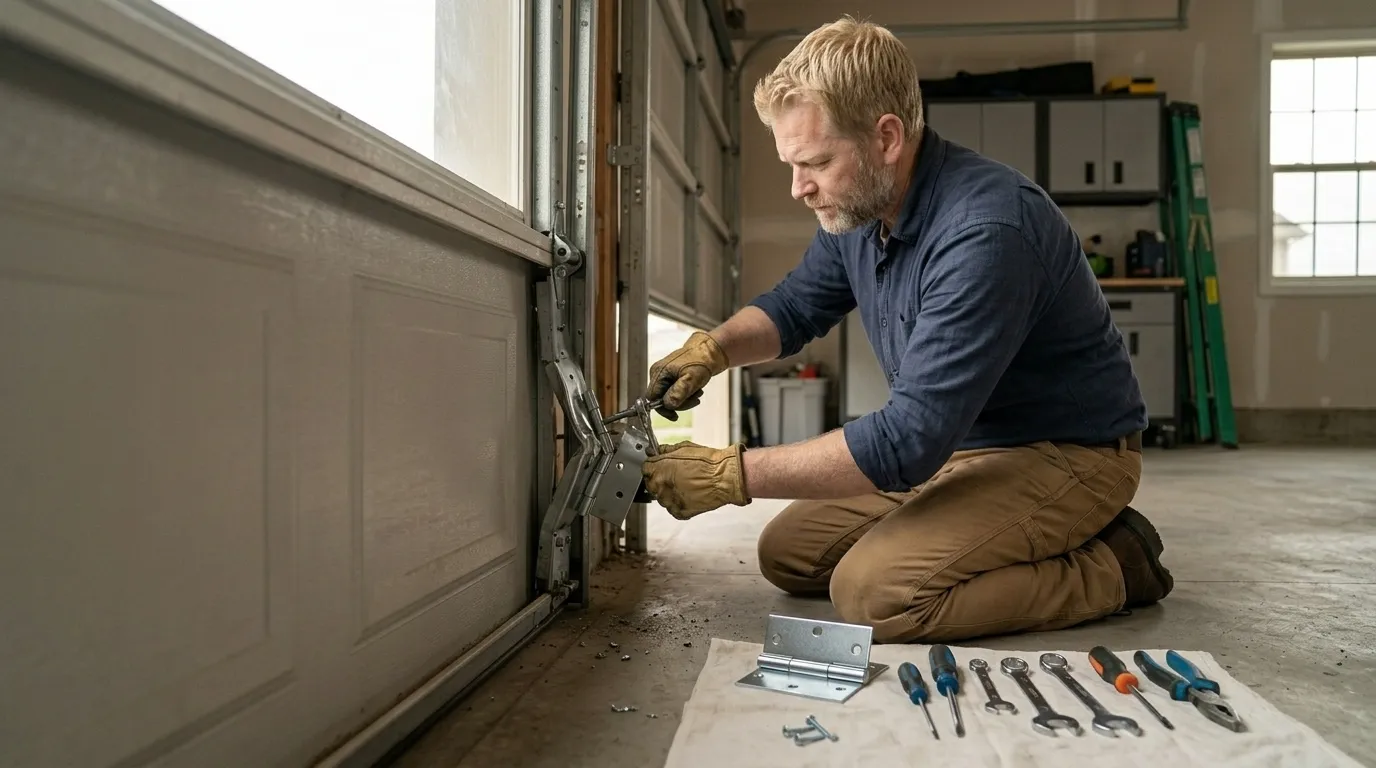
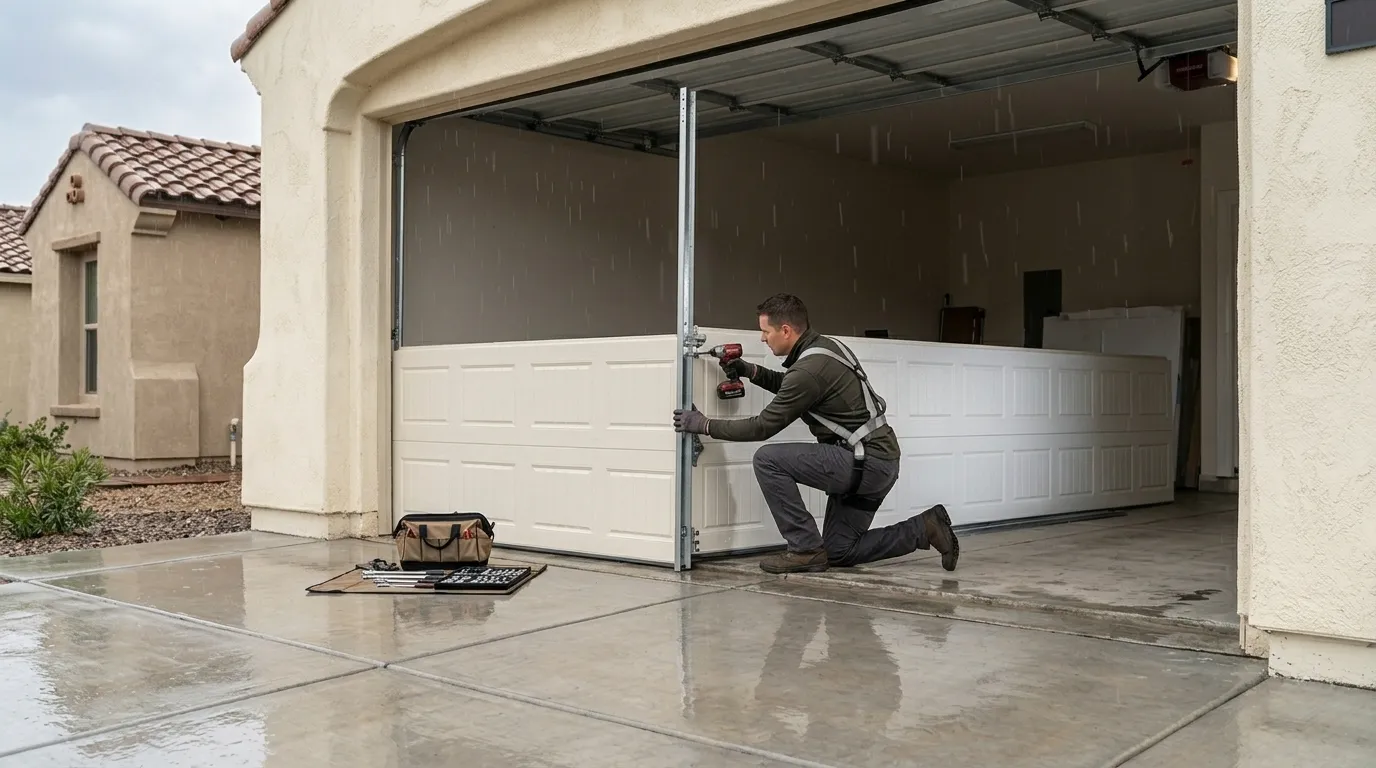
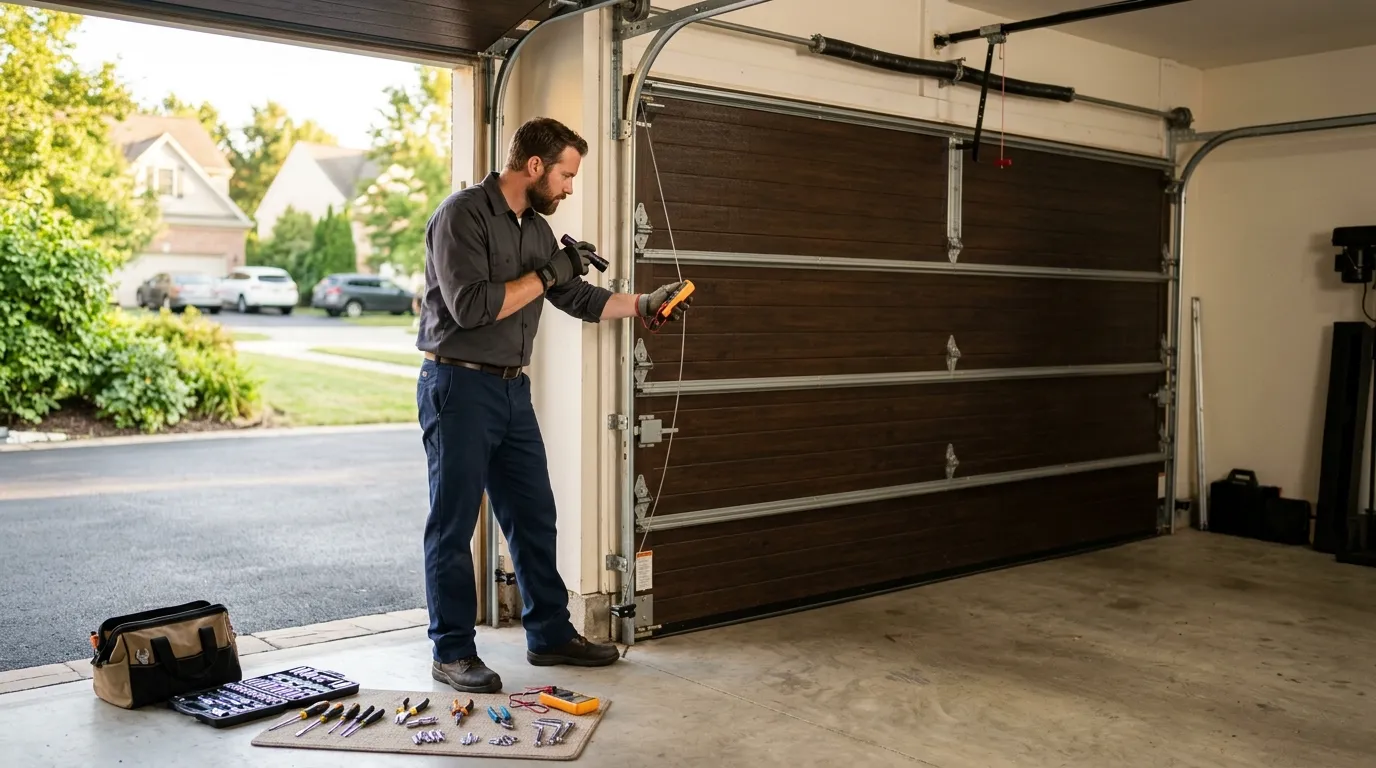
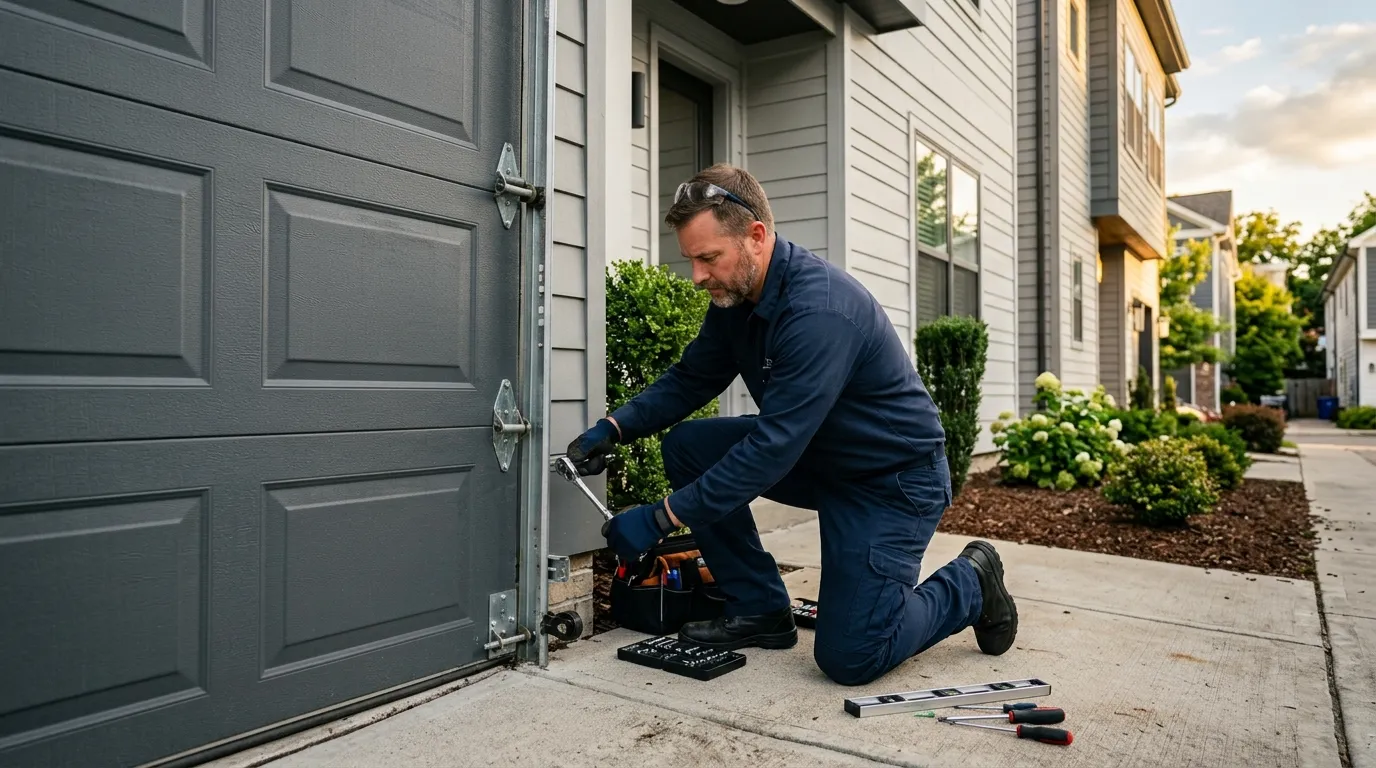
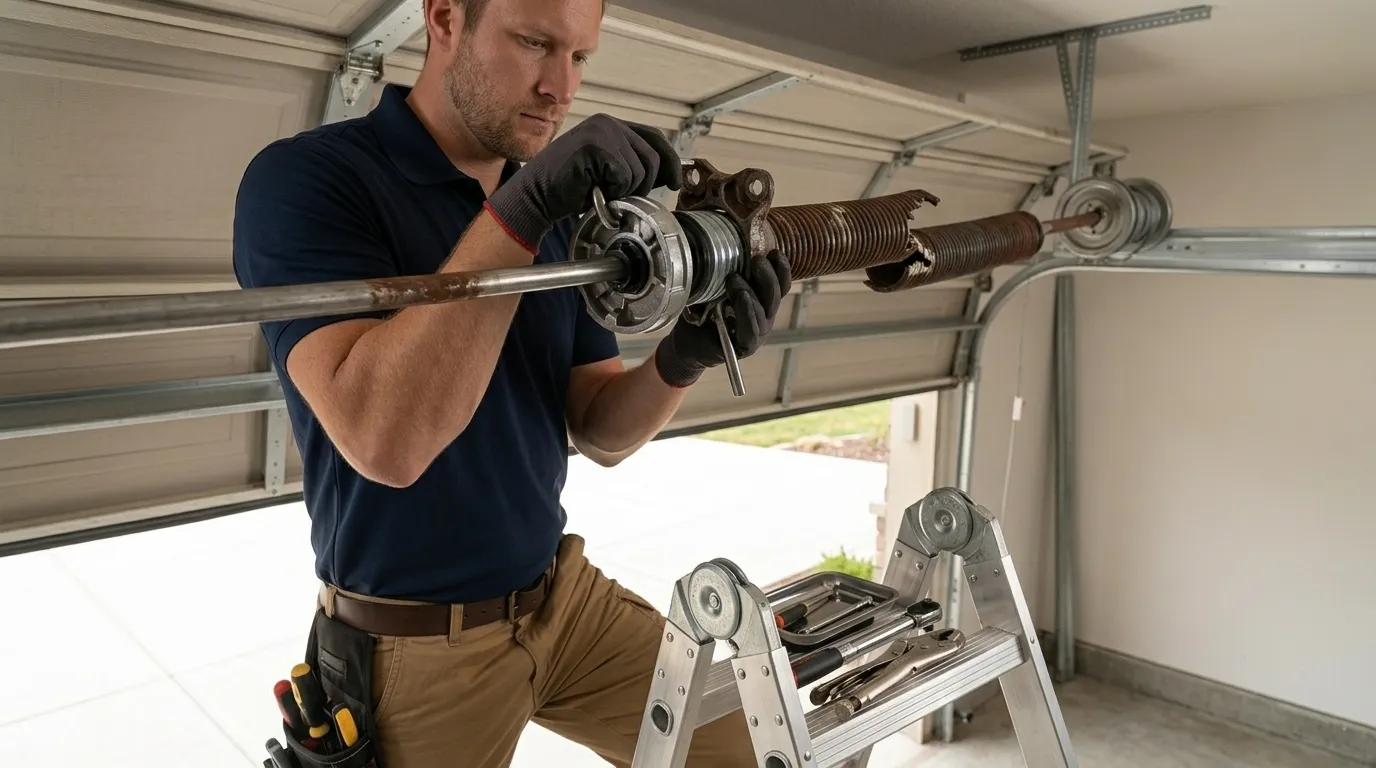
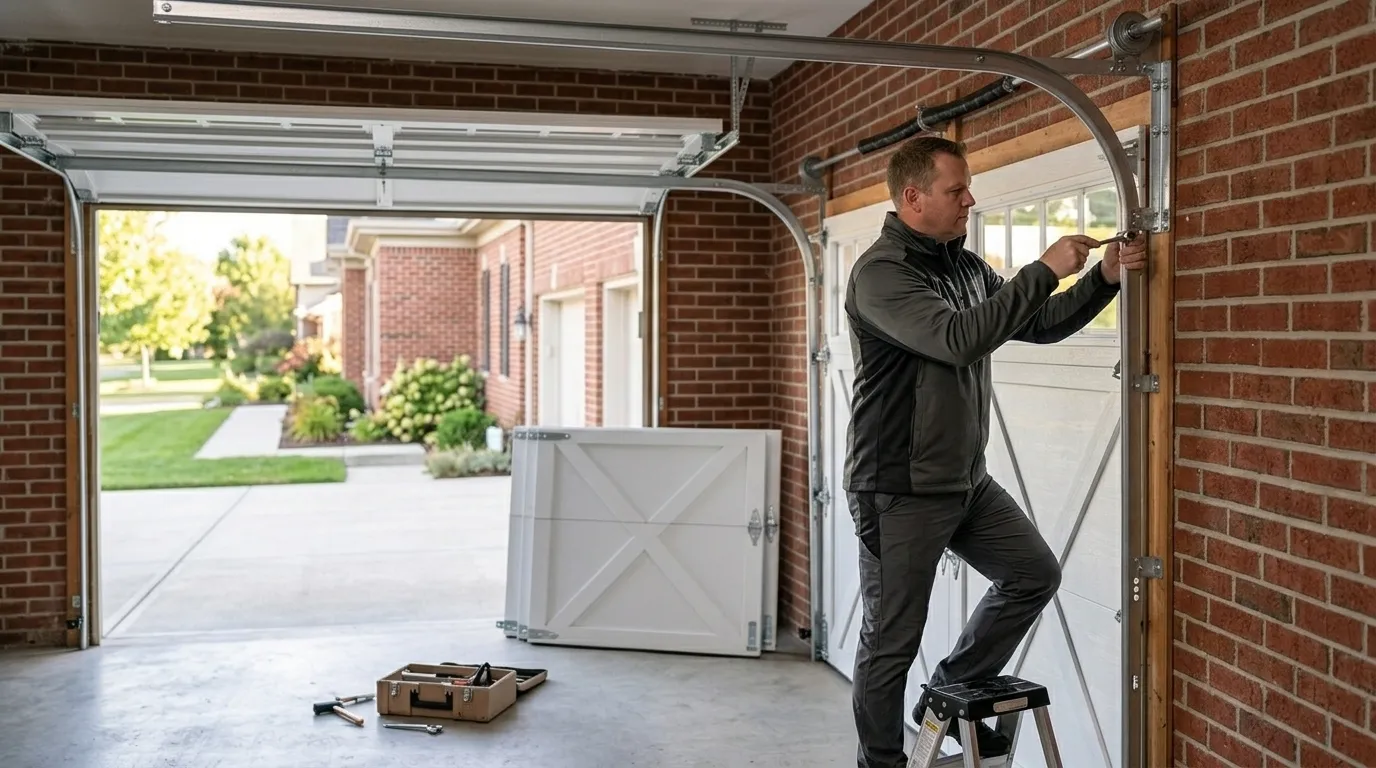
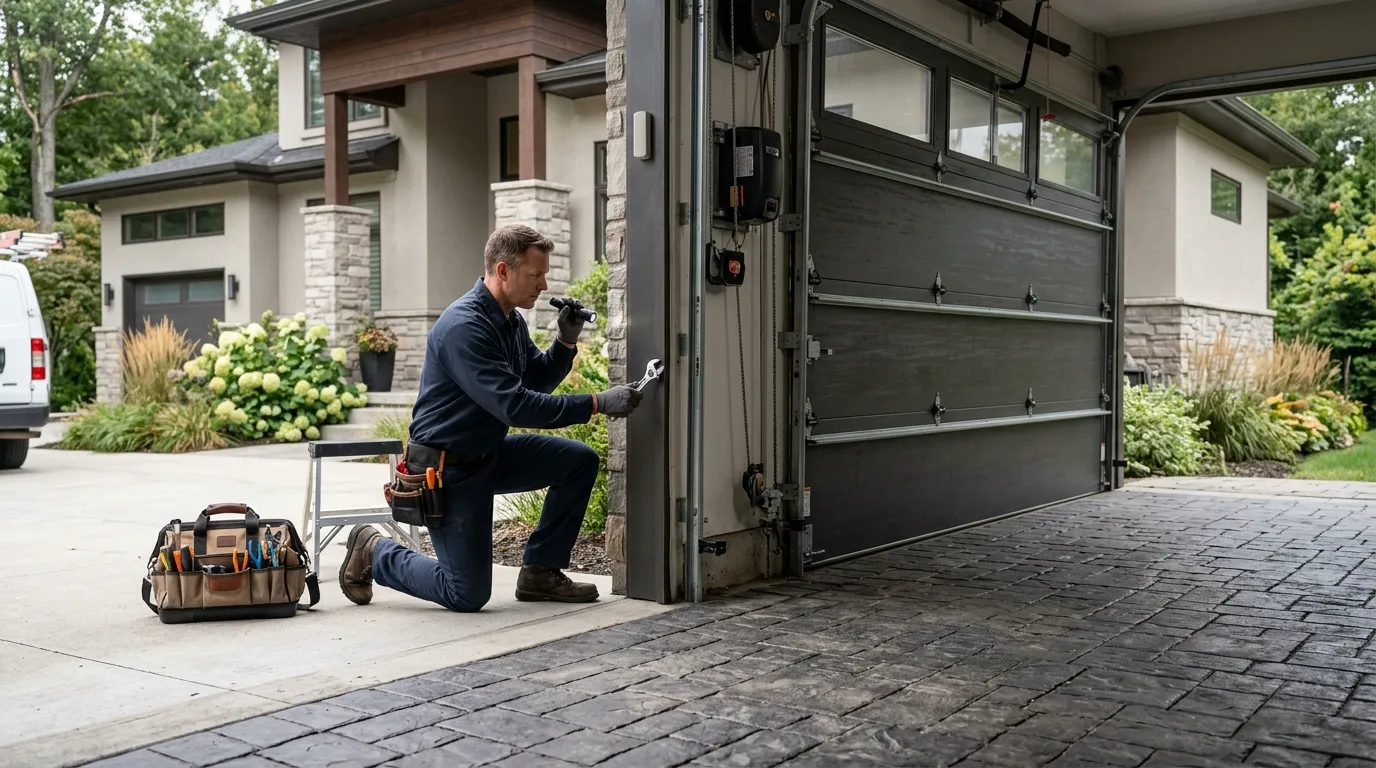
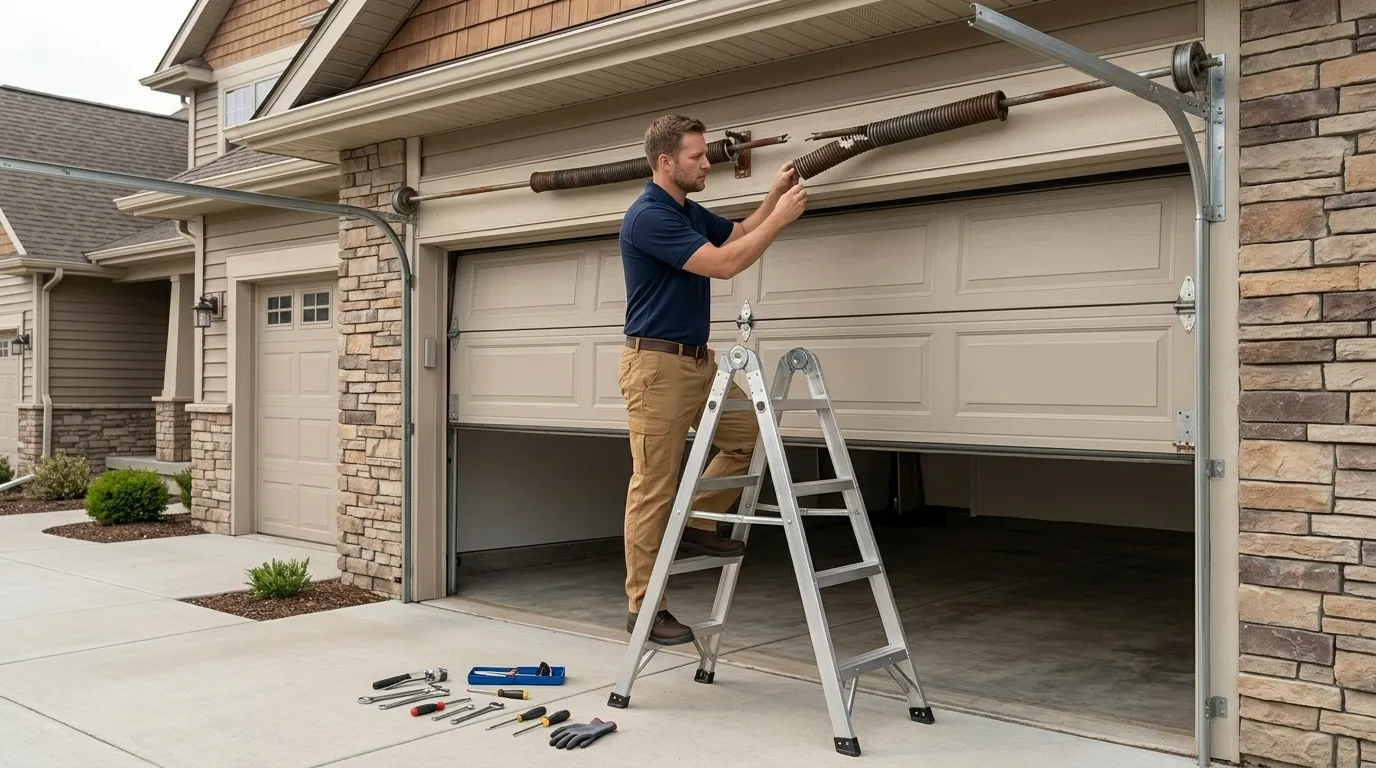
We start by relieving spring tension safely - this is the step that turns a bad DIY attempt into an ER visit, and it's not something to shortcut. With the door secured, we pull the failed cable, check the drum and bottom bracket for wear or damage from the drop, and check the track alignment, since a cable that snapped from misalignment will just snap again if the track isn't corrected first.
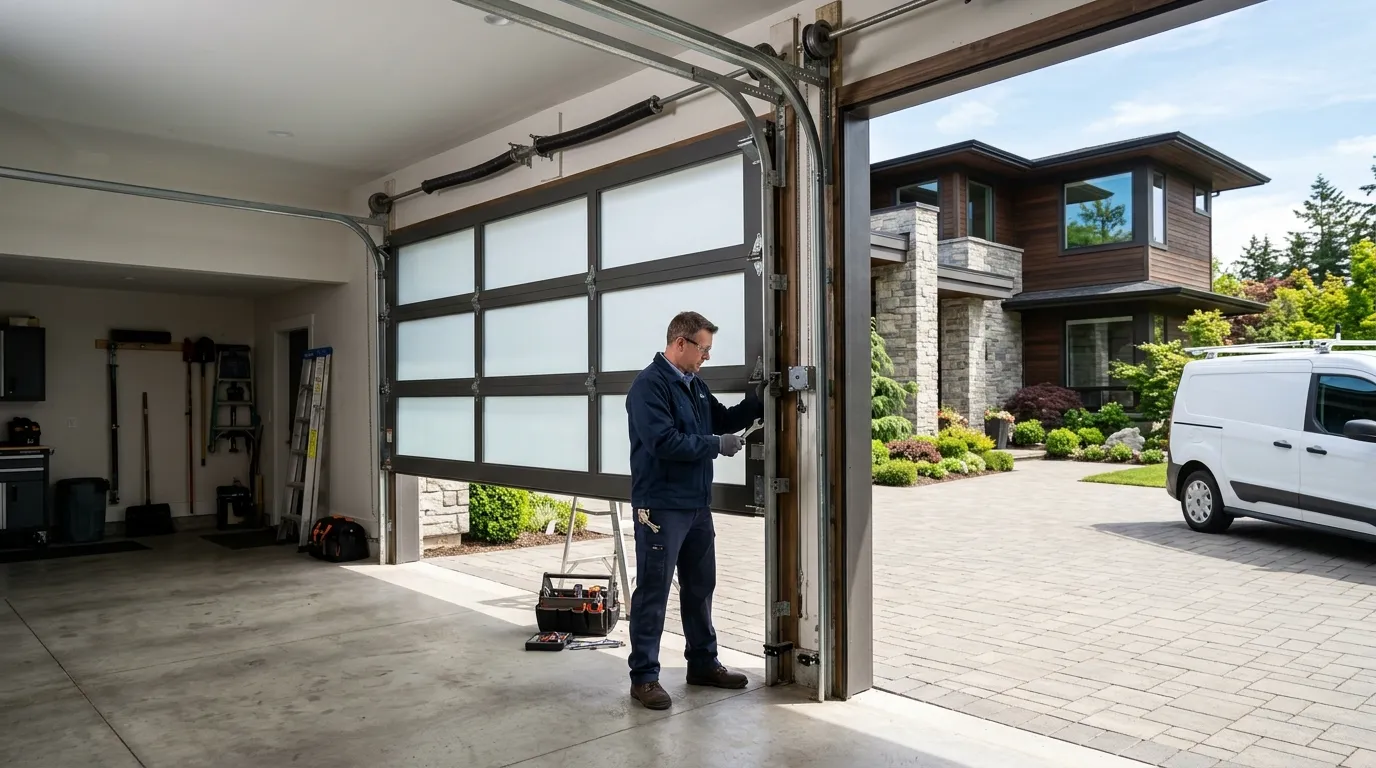
We replace with cable rated for the door's weight and size rather than whatever's closest on the shelf, and on doors from the older end of the local housing stock, we check whether the drums themselves are original and worn enough to be the real cause. Cable is inexpensive; the labor is in doing the teardown and reassembly safely and getting the drum-to-track geometry right so the new cable doesn't wear the same way in another decade.
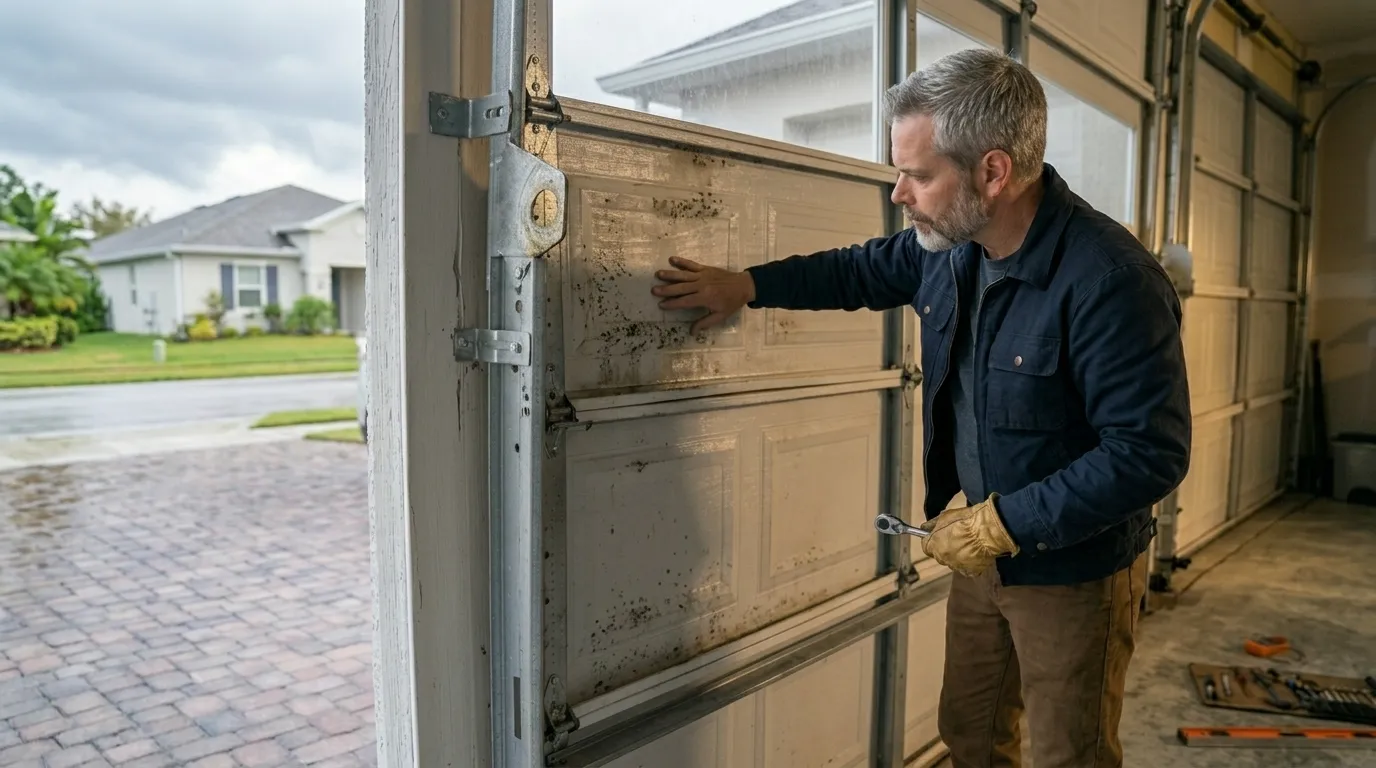
One limitation worth saying plainly: if the door itself is heavily rusted, warped, or the track is bent beyond adjustment, a cable swap won't fix the underlying problem, and we'll say so rather than sell a repair that won't hold.