What Causes It Around Here
Most of the housing stock in this service area went up between 1950 and 2004, with a median build year of 1973. That means a lot of doors and torsion springs installed decades ago on hardware that was never rated for constant winter swings. Across the 15 named areas we work in - from close in, out through - the bulk of the homes are 1960s and '70s construction, and the original garage door hardware on a lot of those houses has never been touched.
This area sits in a severe cold climate band, and that matters more for garage doors than people expect. Torsion springs lose tension faster when steel goes through repeated freeze-thaw cycles, and the coil that was fine at 40,000 cycles ten years ago is the one that snaps on a 15-degree morning. Panels on older steel doors warp slightly with cold, which throws off the roller alignment in the track. None of this is dramatic - it's just wear, accelerated by age and by the swings this region gets every winter. A door that's 45 to 55 years old, on the original spring, is not an if-it-breaks question. It's a when.
The Symptom
The door won't open, or it opens six inches and stops. You hear a bang from the garage - that's usually the torsion spring letting go, and it's loud enough that neighbors ask about it. The opener runs but the door doesn't move, which usually means the spring already failed and the opener isn't strong enough to lift the door's full weight on its own.
Sometimes it's quieter: the door drifts closed on its own, or one side drops faster than the other when you hit the button, which points to one spring going while the other is still holding. On older doors with worn rollers, you'll get a grinding or a shudder partway through the cycle instead of a smooth pull. Cold mornings make all of this worse - steel contracts, lubricant thickens, and a door that was merely stiff in October can seize up entirely once the temperature drops. If your door has gone quiet after being noisy for weeks, that's not a good sign. It usually means something is close to letting go.
How We Fix It
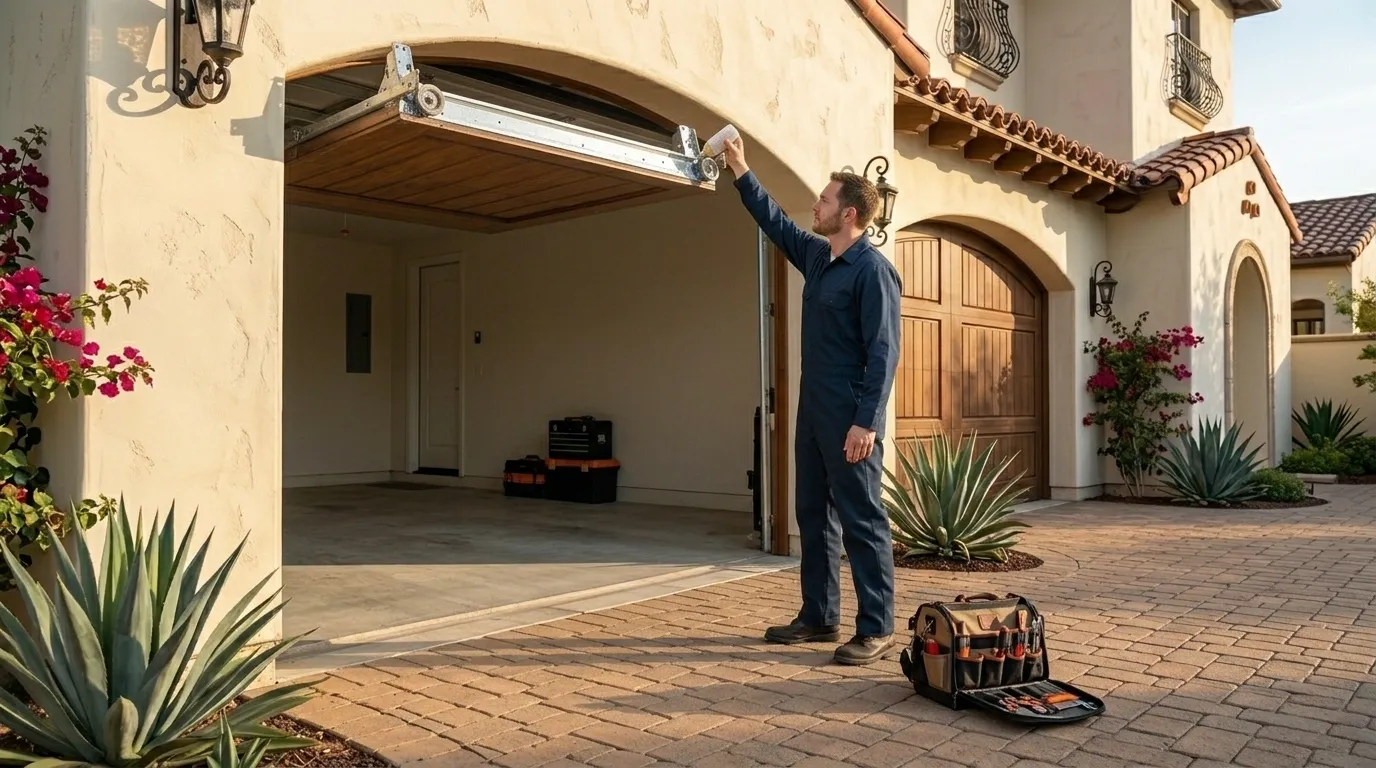
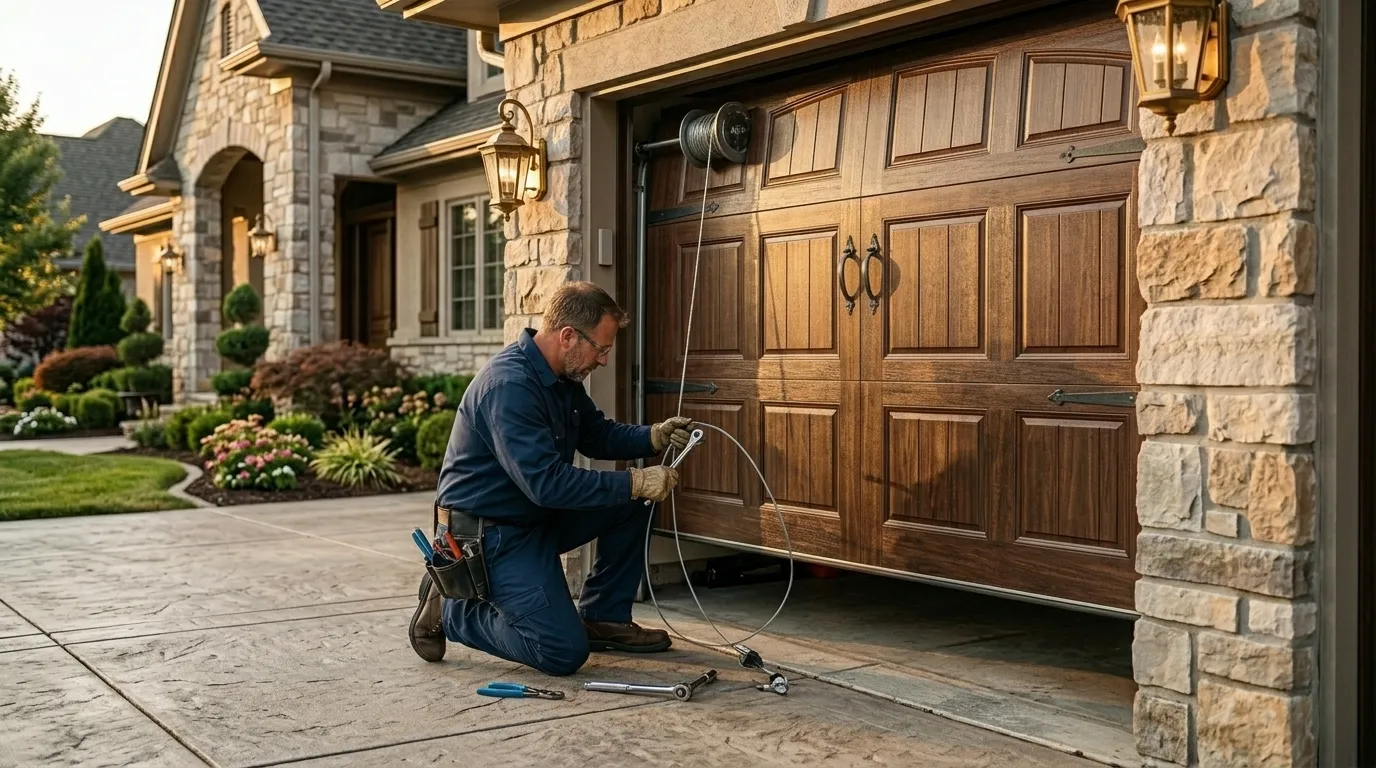
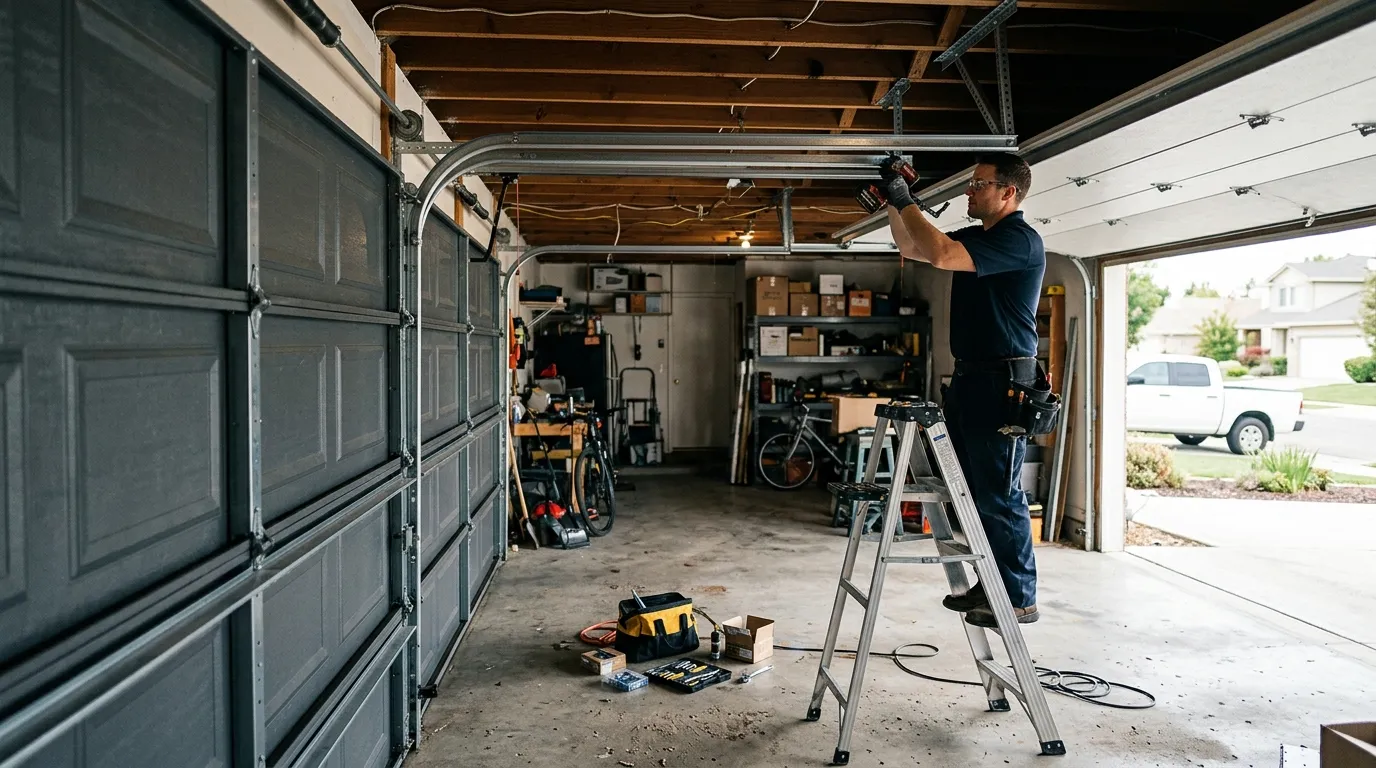
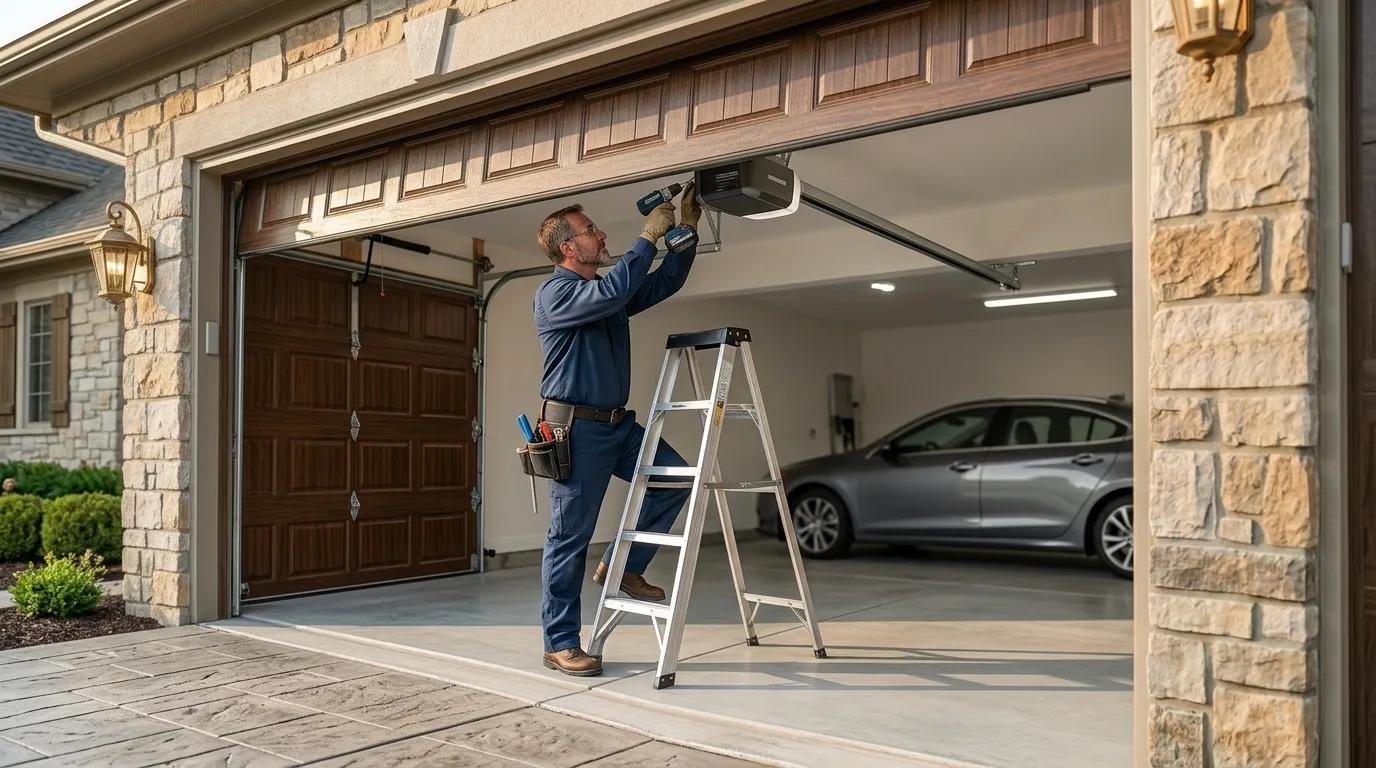
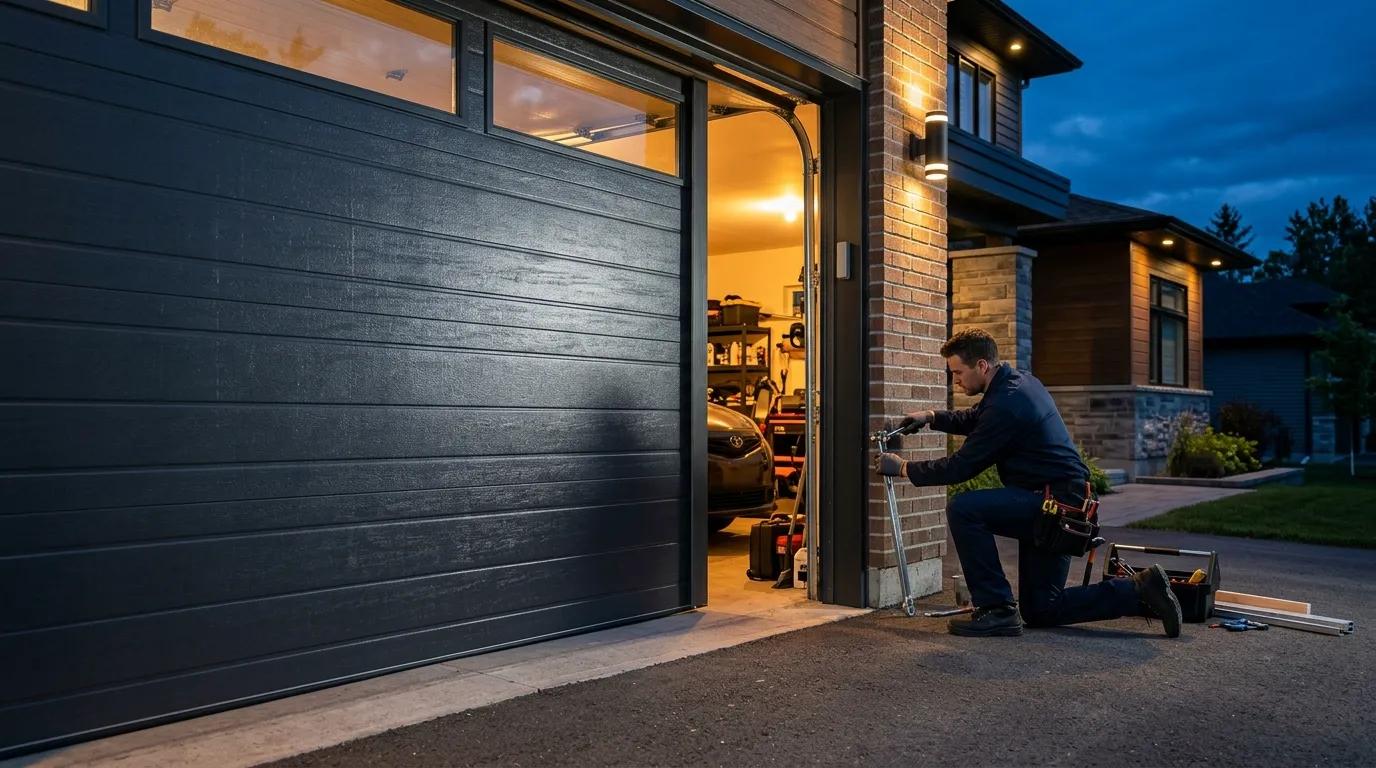
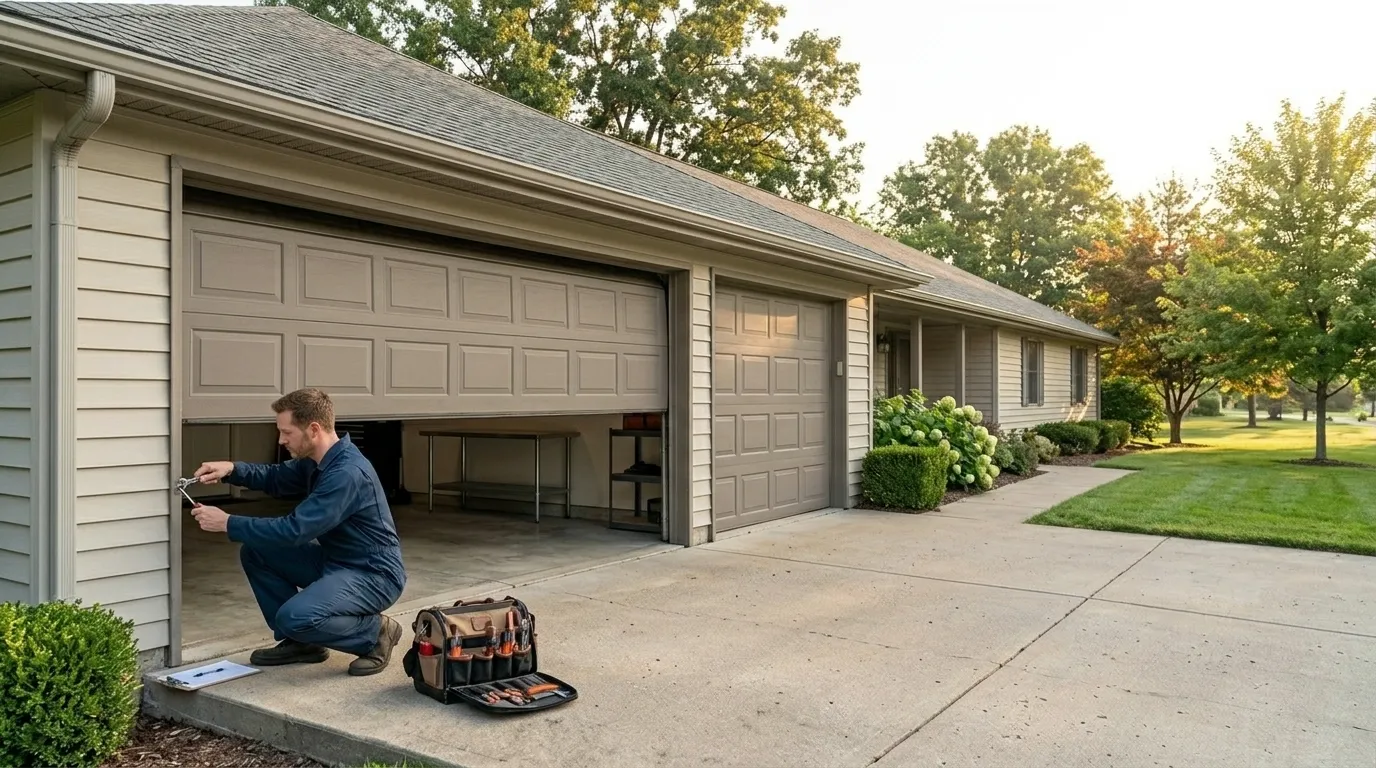
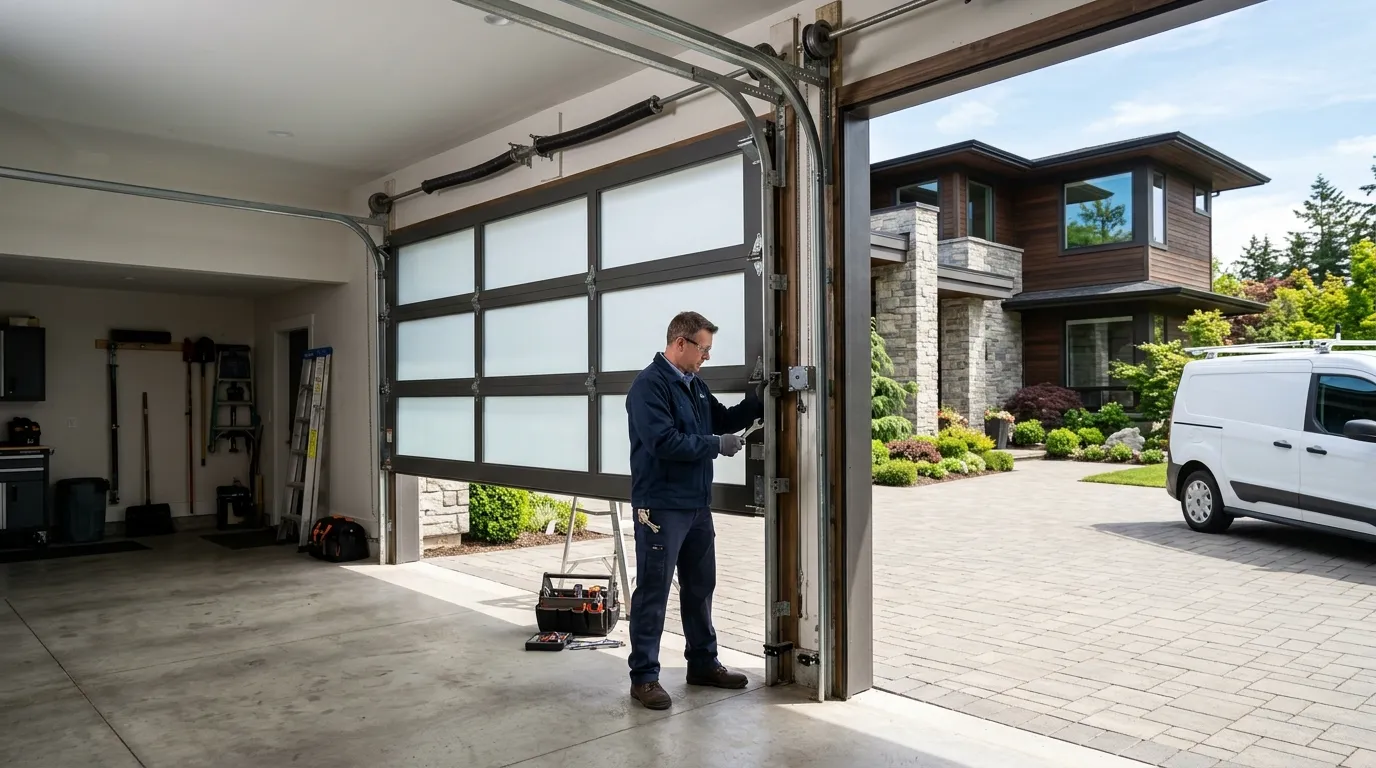
For a broken torsion spring, we measure the door's weight and cycle it against the right wire size and inside diameter - matching what's already there isn't always right if the original spring was undersized for the door, which happens more than you'd think on older builds. We replace both springs on a two-spring setup even if only one broke, since the other one is on the same clock and cold weather doesn't spare it.
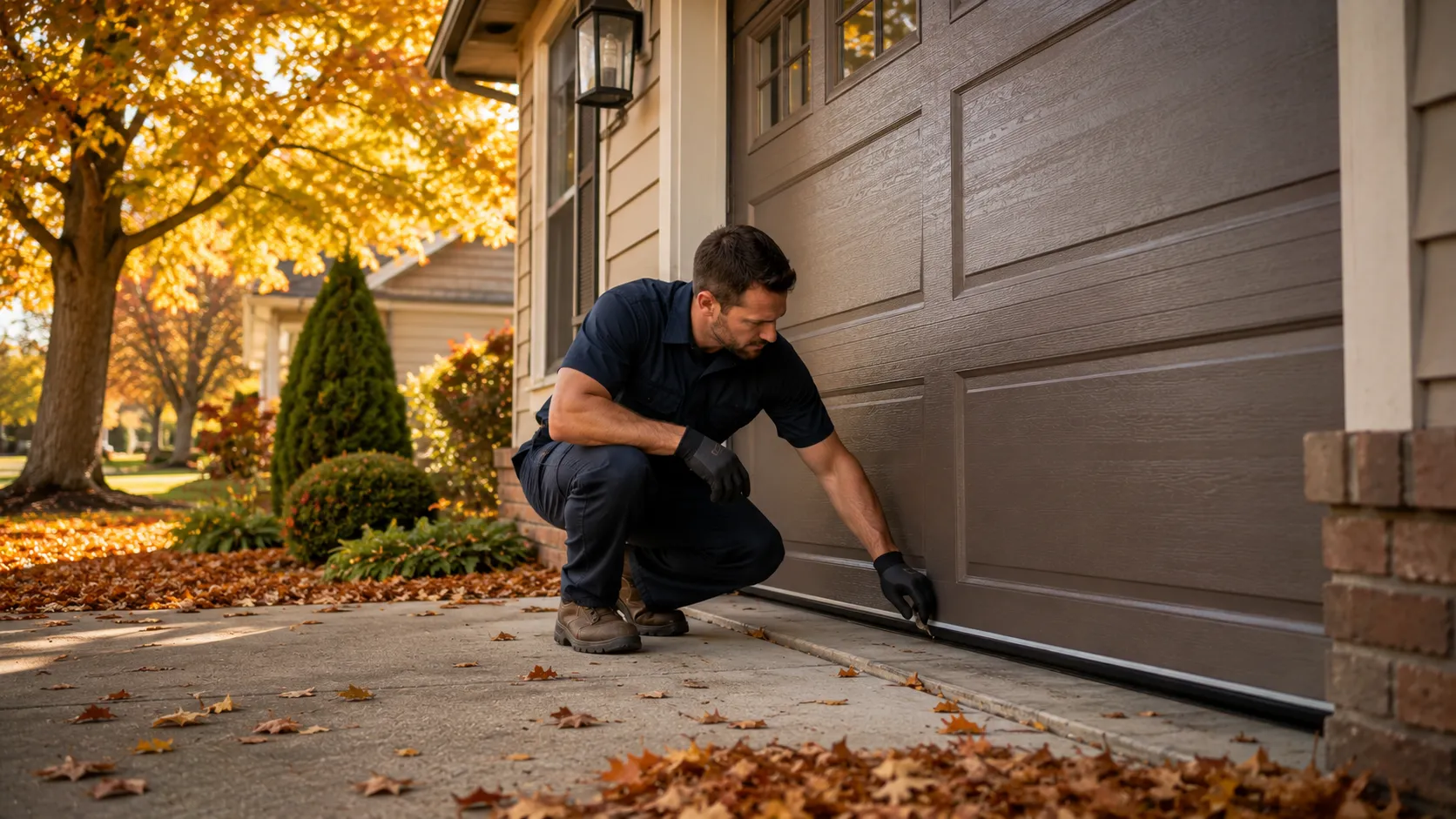
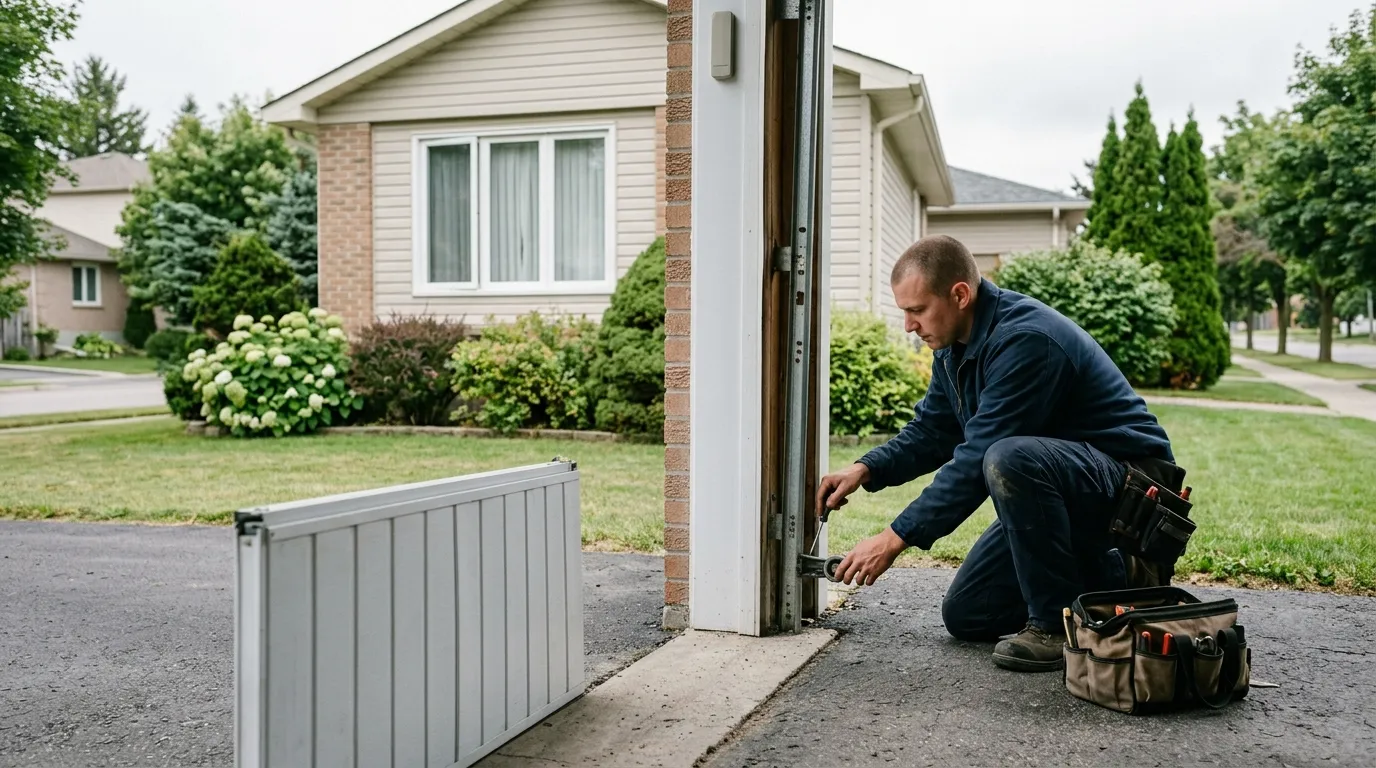
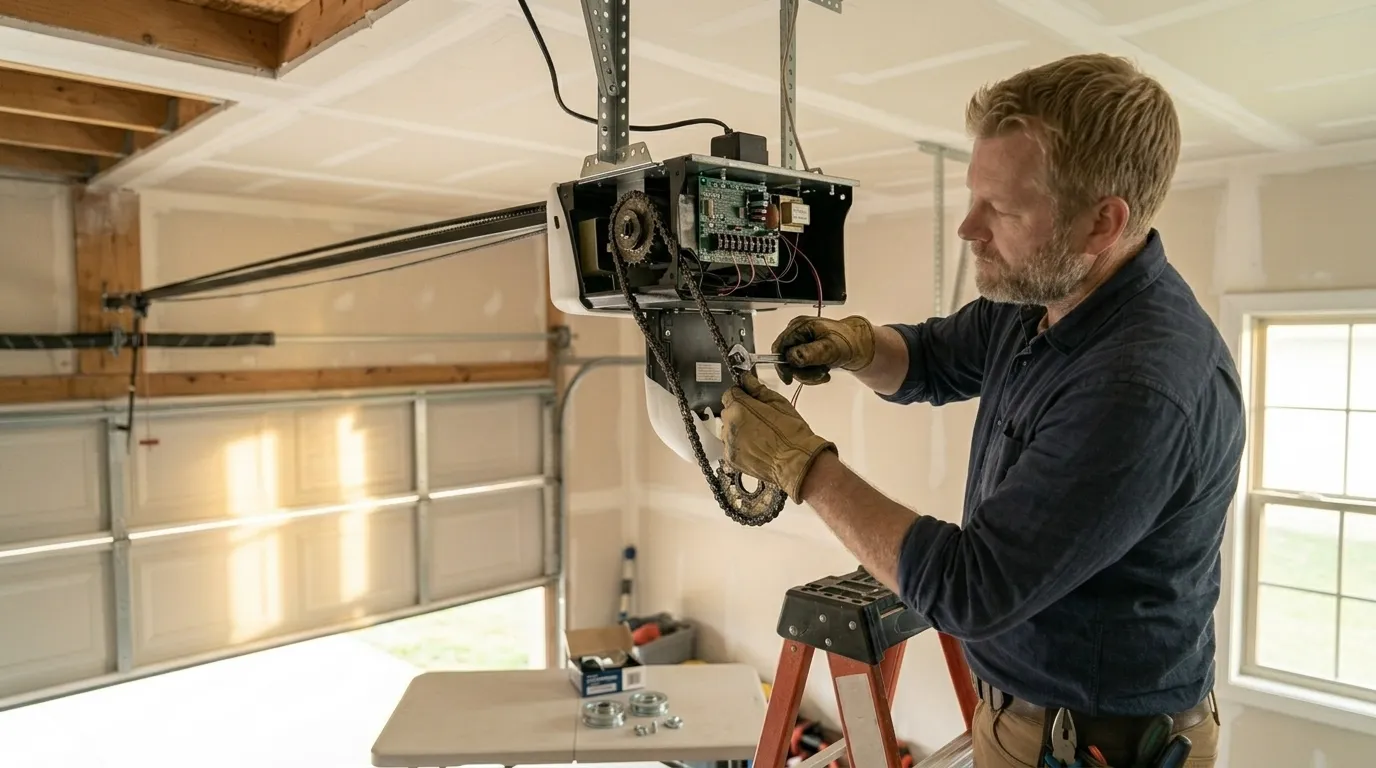
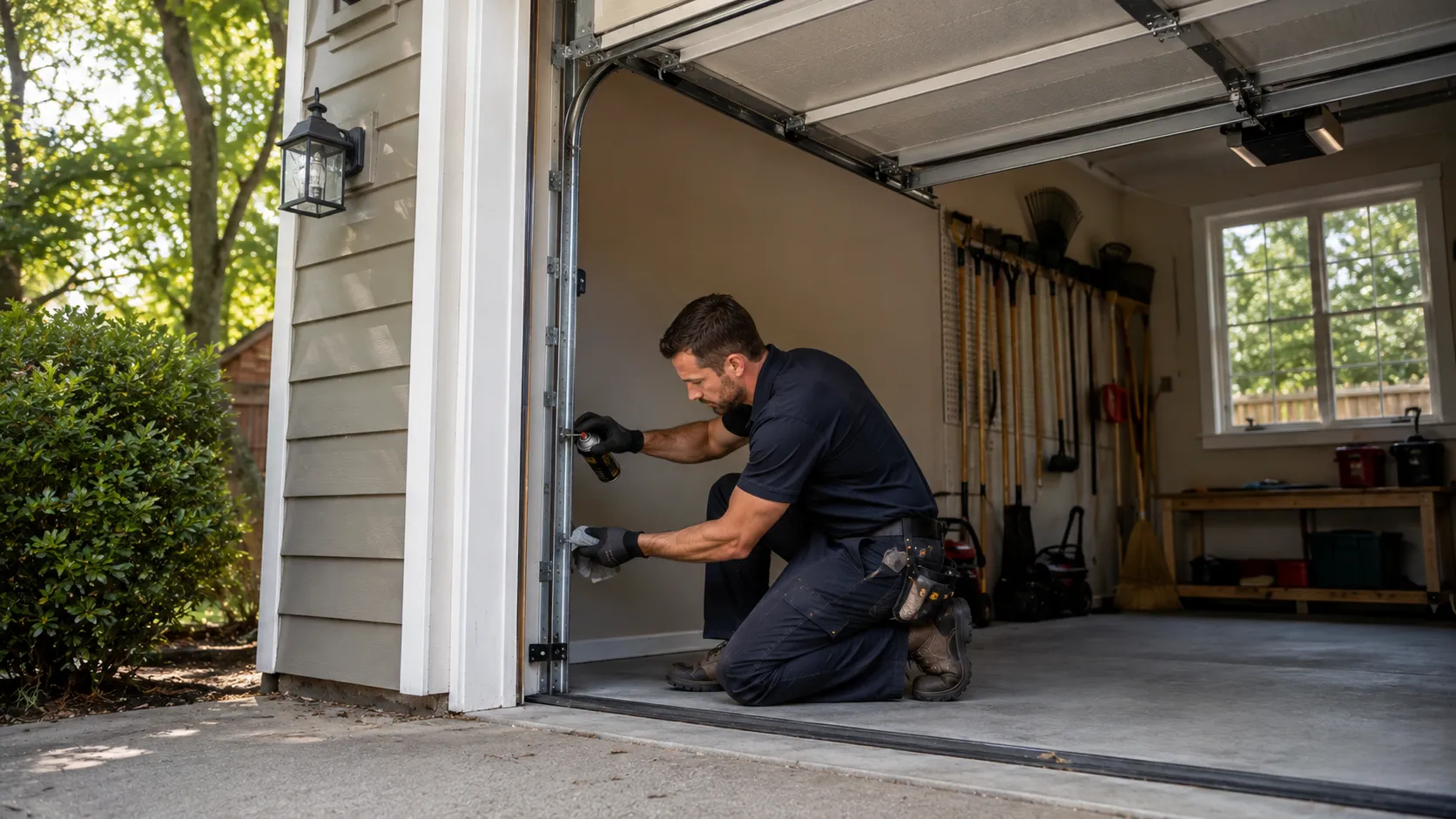
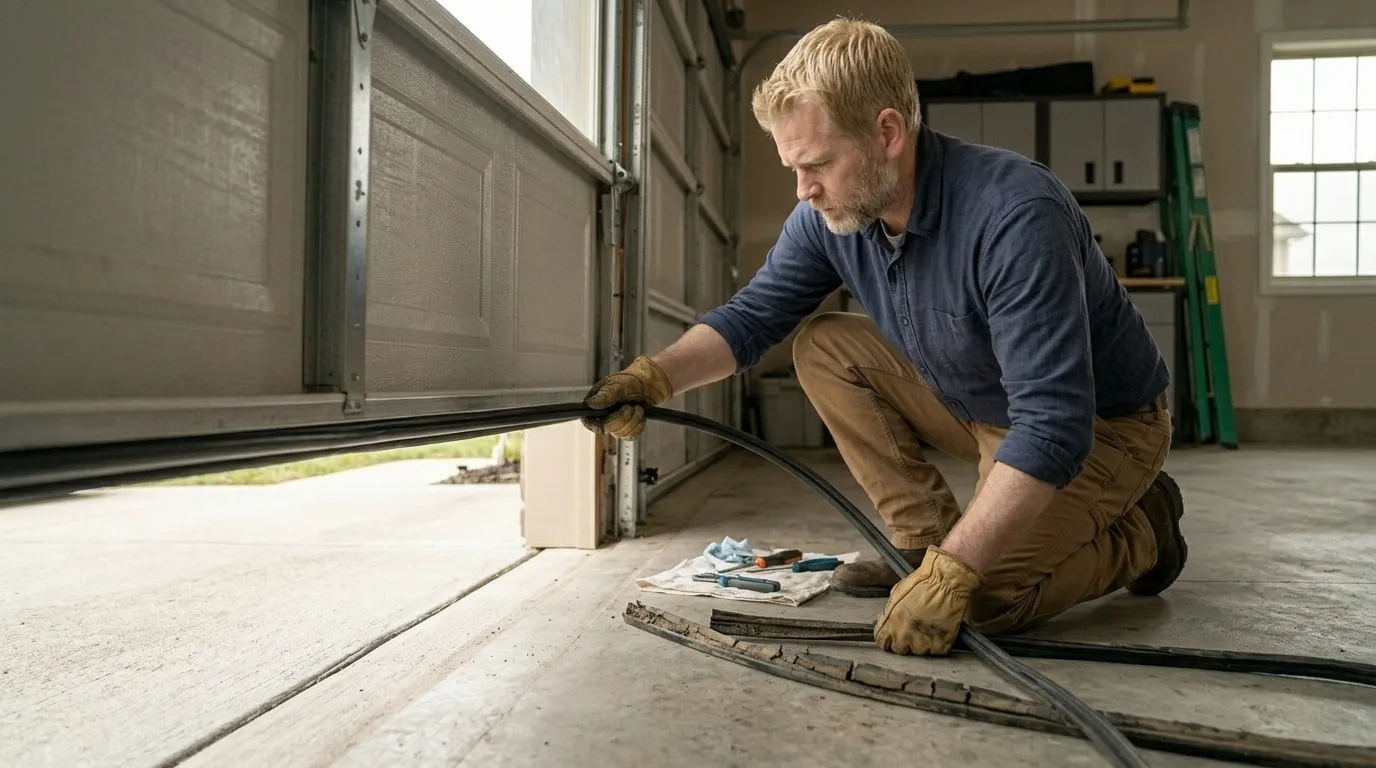
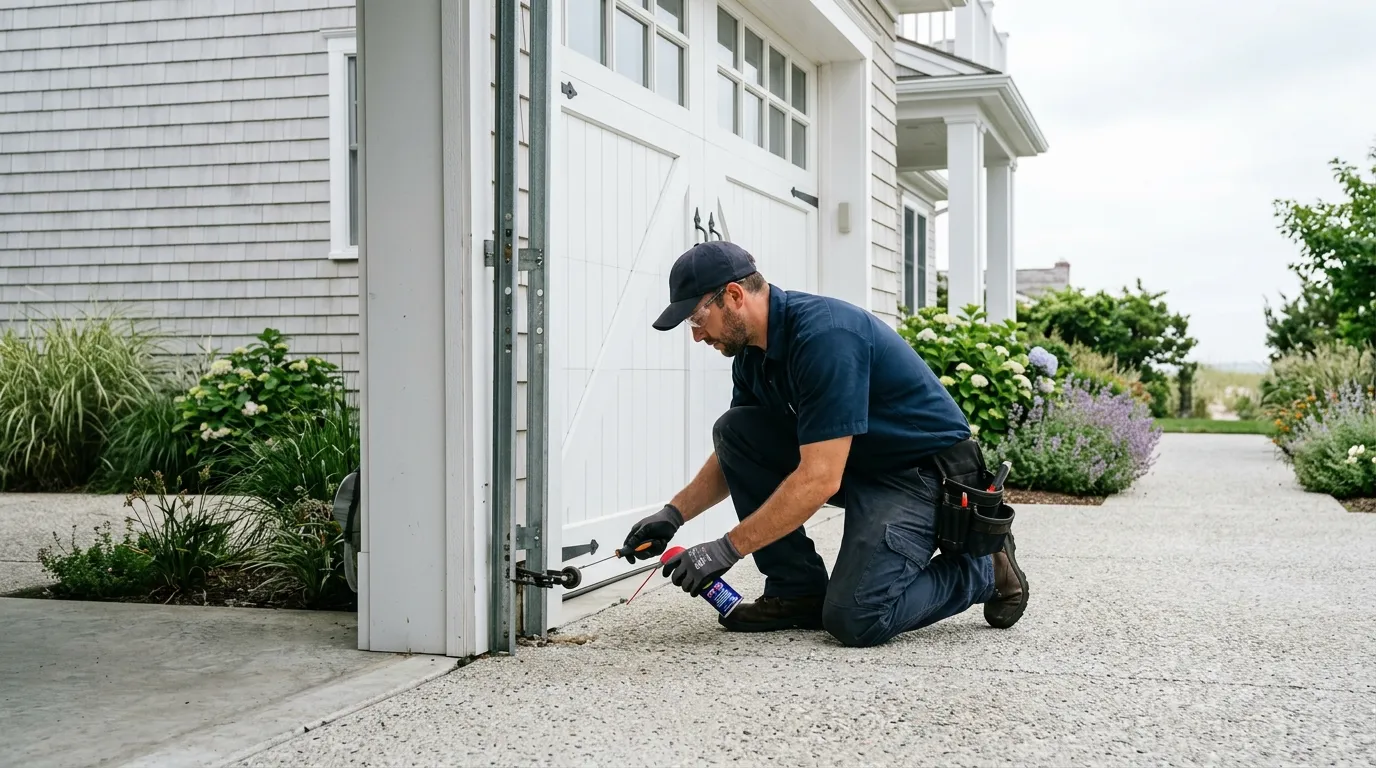
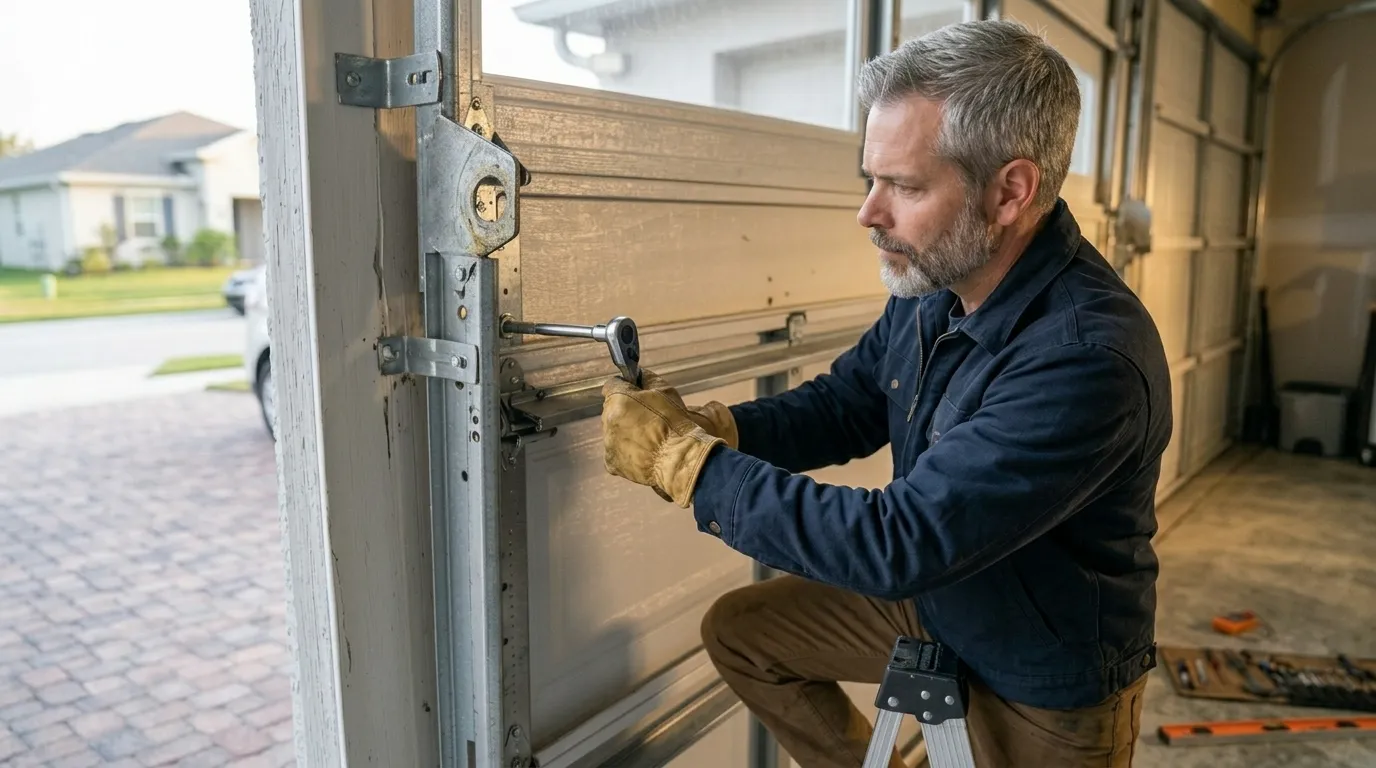
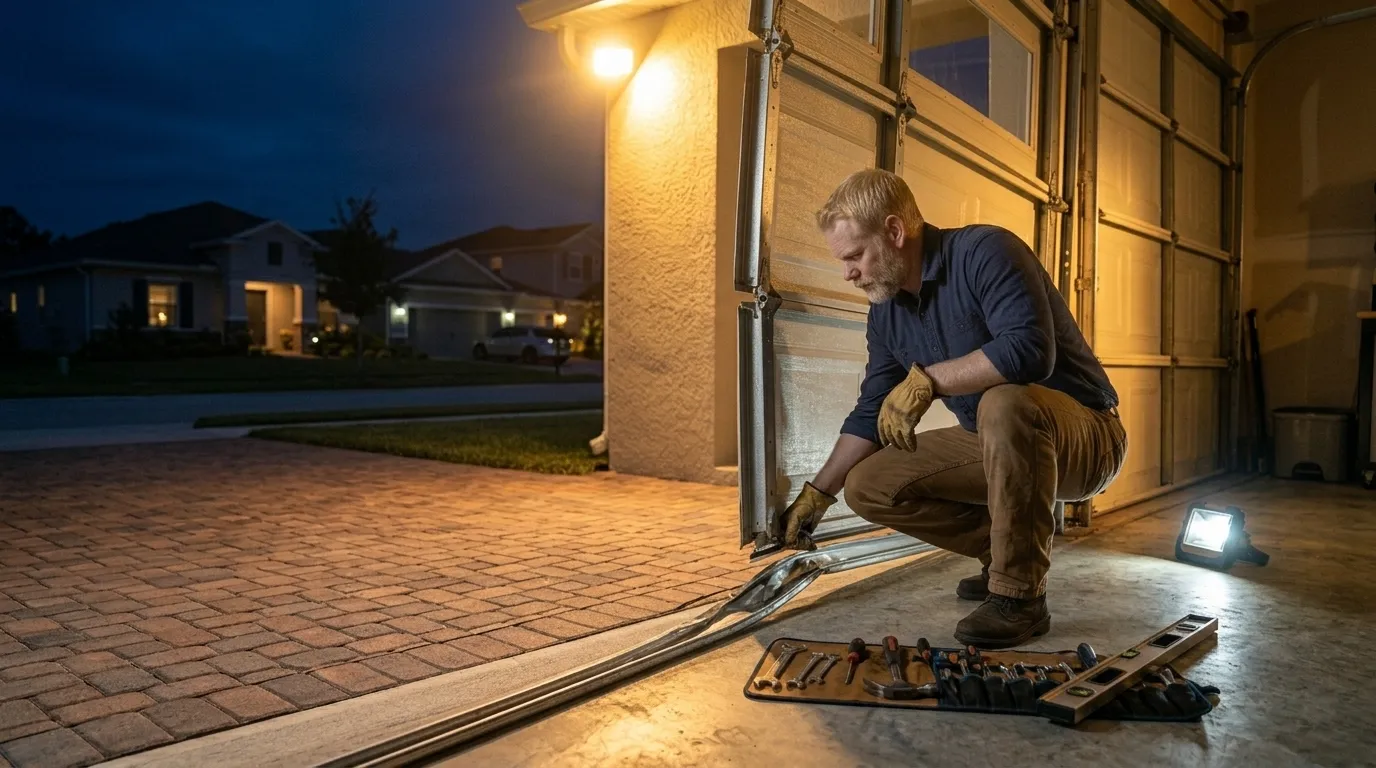
For off-track or misaligned doors, we check the rollers, the track bolts, and the cable drums before we just force the door back into the track - forcing it is how you turn a $ repair into a bent track replacement. On opener issues, we check the drive gear and the force settings before assuming the motor itself is bad; a lot of "dead" openers just have a stripped gear or a limit switch knocked out of adjustment.
Every job gets tested through a full open-close cycle, cold garage or not, before we call it done.