What Causes It Around Here
Most of the housing stock in this service area went up between 1950 and 2004, with the median build year landing around 1973. Across the 15 pockets that make up the territory, the bulk of that stock is 1960s and 70s construction. That matters for panels because doors installed in that window were built to different width and hinge-spacing standards than what ships today. A dent that would be a quick swap on a newer door can turn into a hunt for a matching section on a door that's fifty years old.
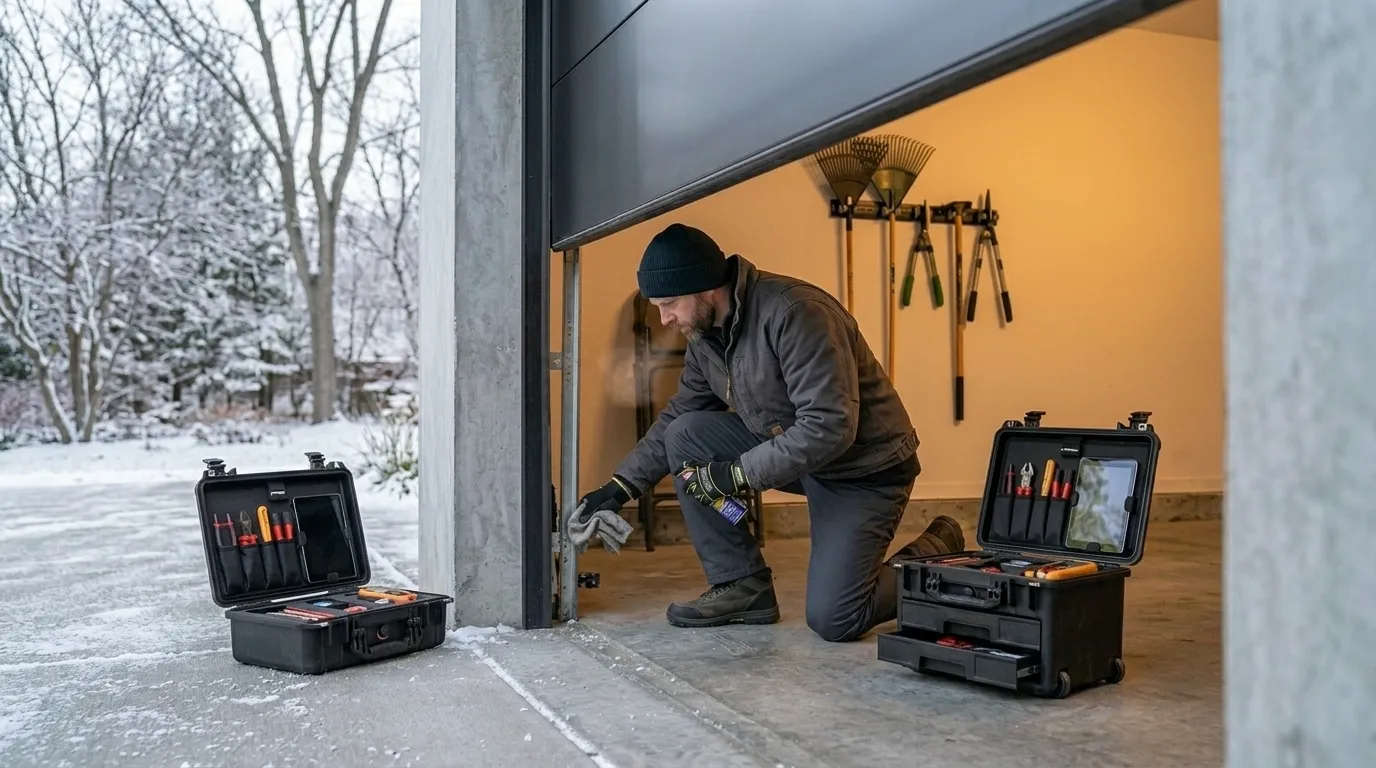
On top of the age issue, this area sits in a cold-severe climate band. Steel panels contract hard in deep cold and expand again once the sun hits them, and that cycle works on old seams and foam-fill bonds until a crack starts at a hinge point or a bottom corner. Add a bumped car, a stuck ladder, or a kid's bike, and a panel that was already brittle from decades of freeze-thaw gives out. It's rarely one big event - usually it's age plus a small knock that finishes the job.
That combination - older stock, harsh winters, mismatched hardware from repair to repair over the years - is why panel failure shows up so often on service calls out here, more than it would in a newer subdivision with uniform doors.
The Symptom
The most common call is a single panel with a crease across the middle, usually at bumper height, where a car mirror or a trailer hitch caught it backing out. Right behind that is a bottom panel that's rusted through at the corners, water having sat against old steel for years. Cold-weather cracking shows up differently: a hairline split running along a seam, usually on the side that gets the most sun-to-shade swing, where the panel has flexed thousands of times over its life.
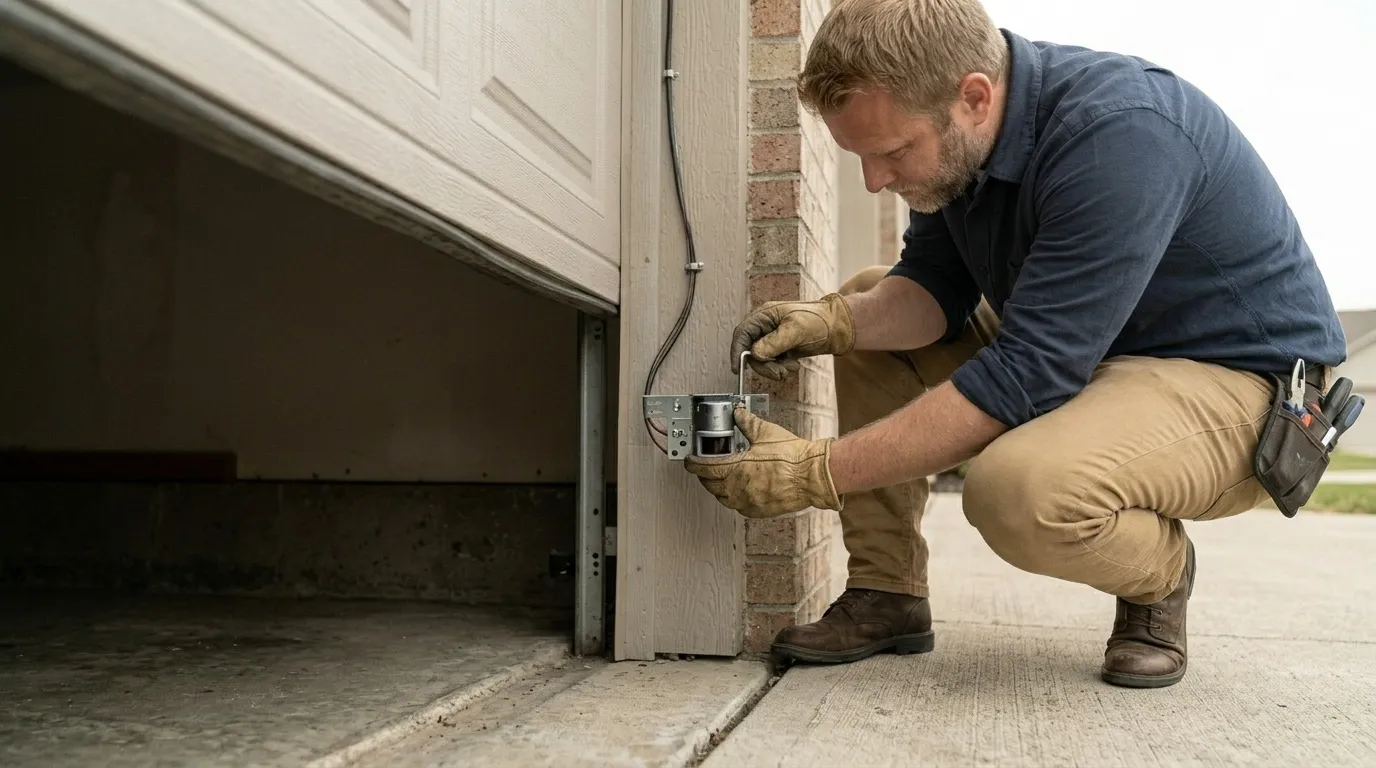
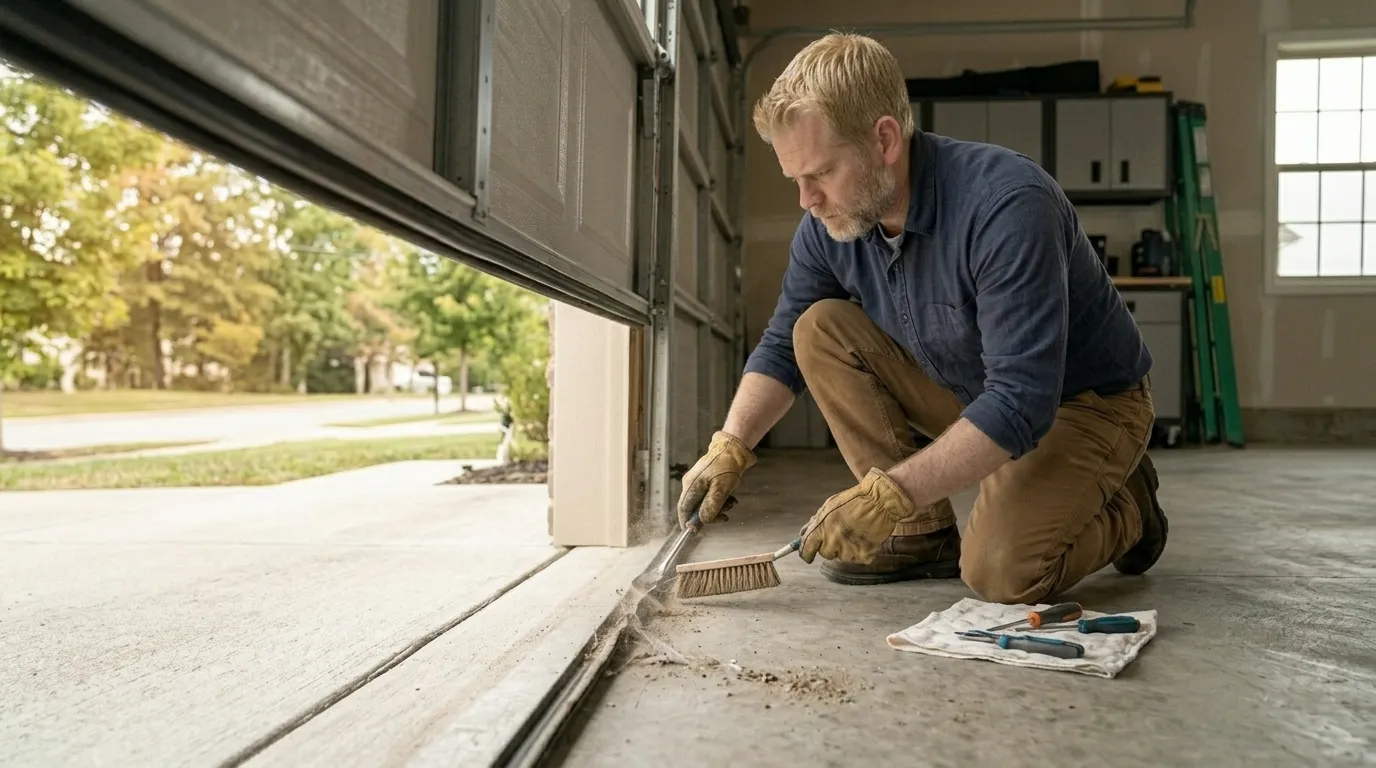
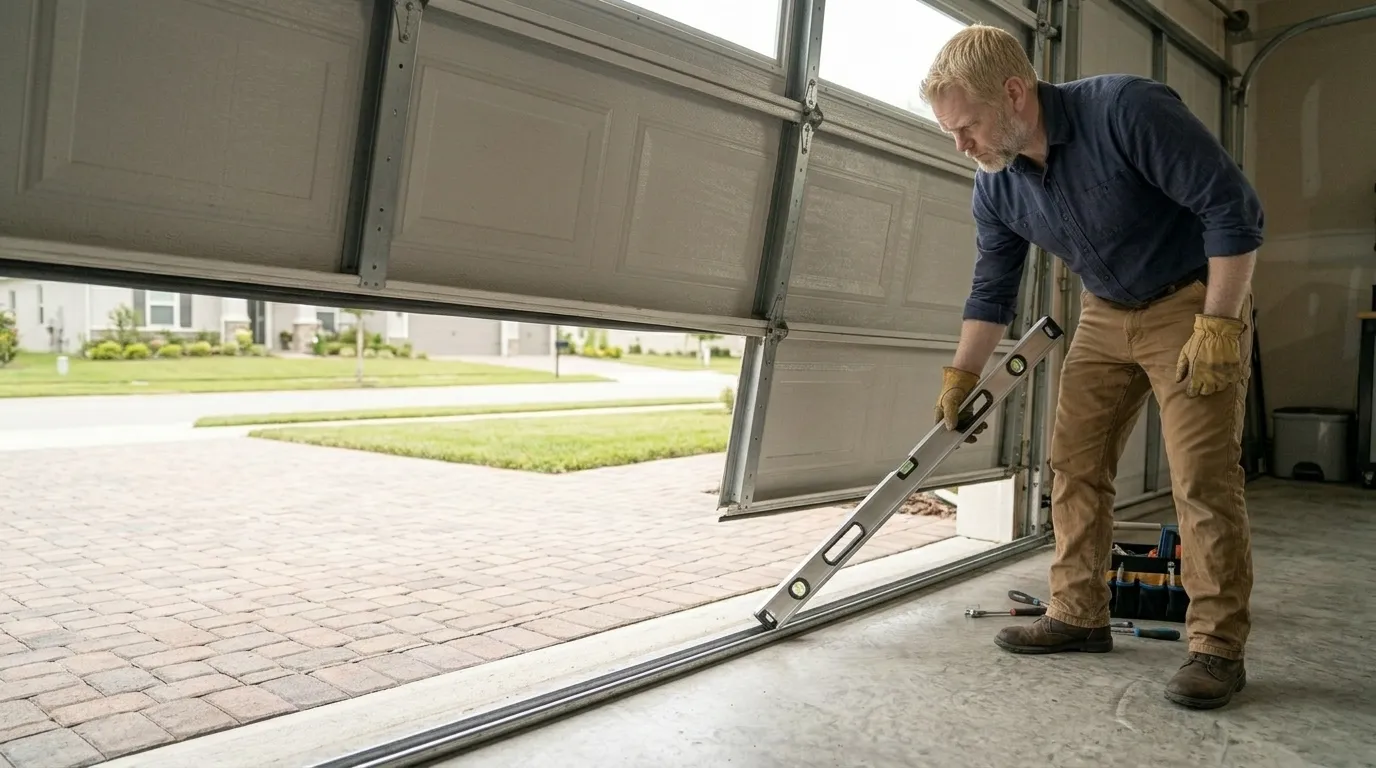
Sometimes the symptom isn't visible damage at all - it's a door that won't seal at the bottom corner, or a track that binds because a warped panel is pulling the whole section out of square. On older doors with no insulation, a bowed panel is easy to spot from inside the garage: daylight around the edge that wasn't there last year.
If you're seeing a crack that runs vertically through more than one panel, or the door has started sagging on one side, that's usually past a single-panel fix. We'll tell you straight if that's the case rather than sell a patch that won't hold through another winter.
How We Fix It
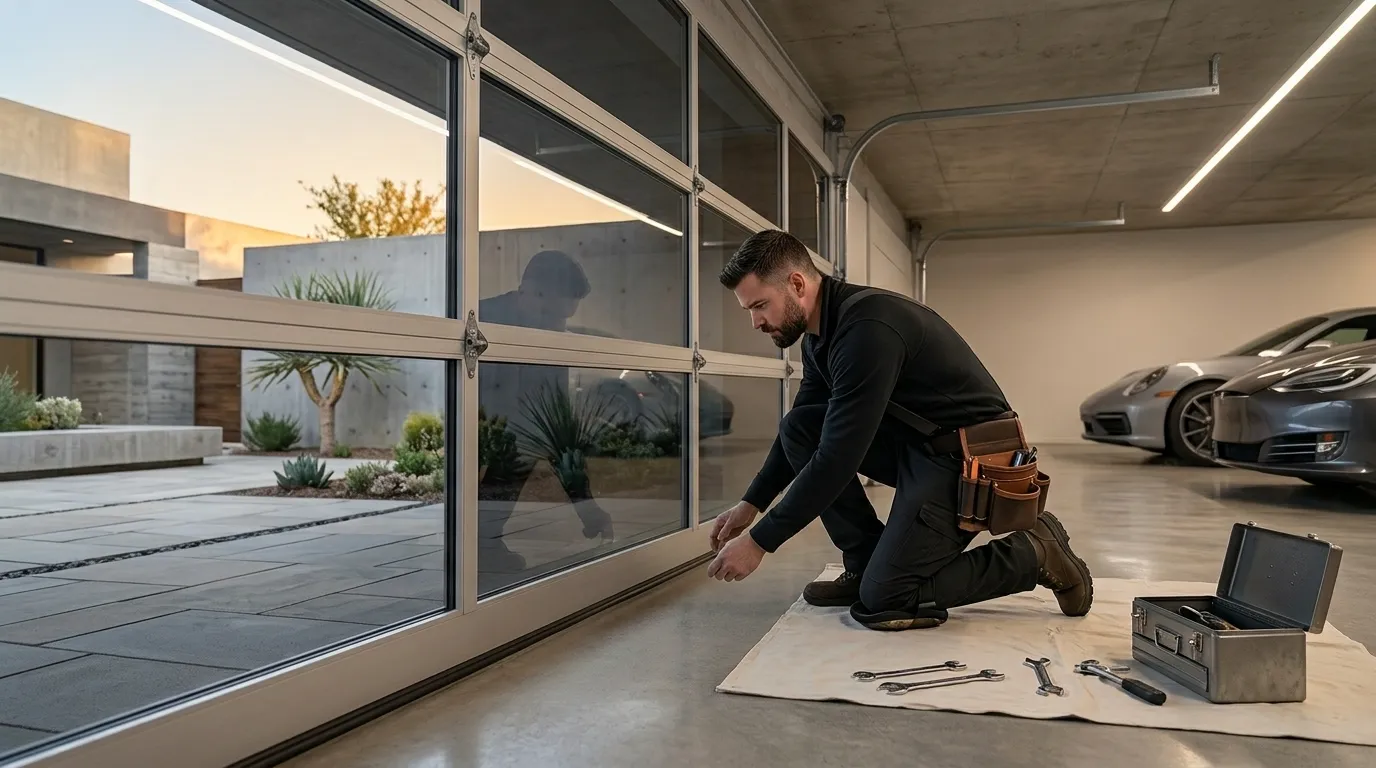
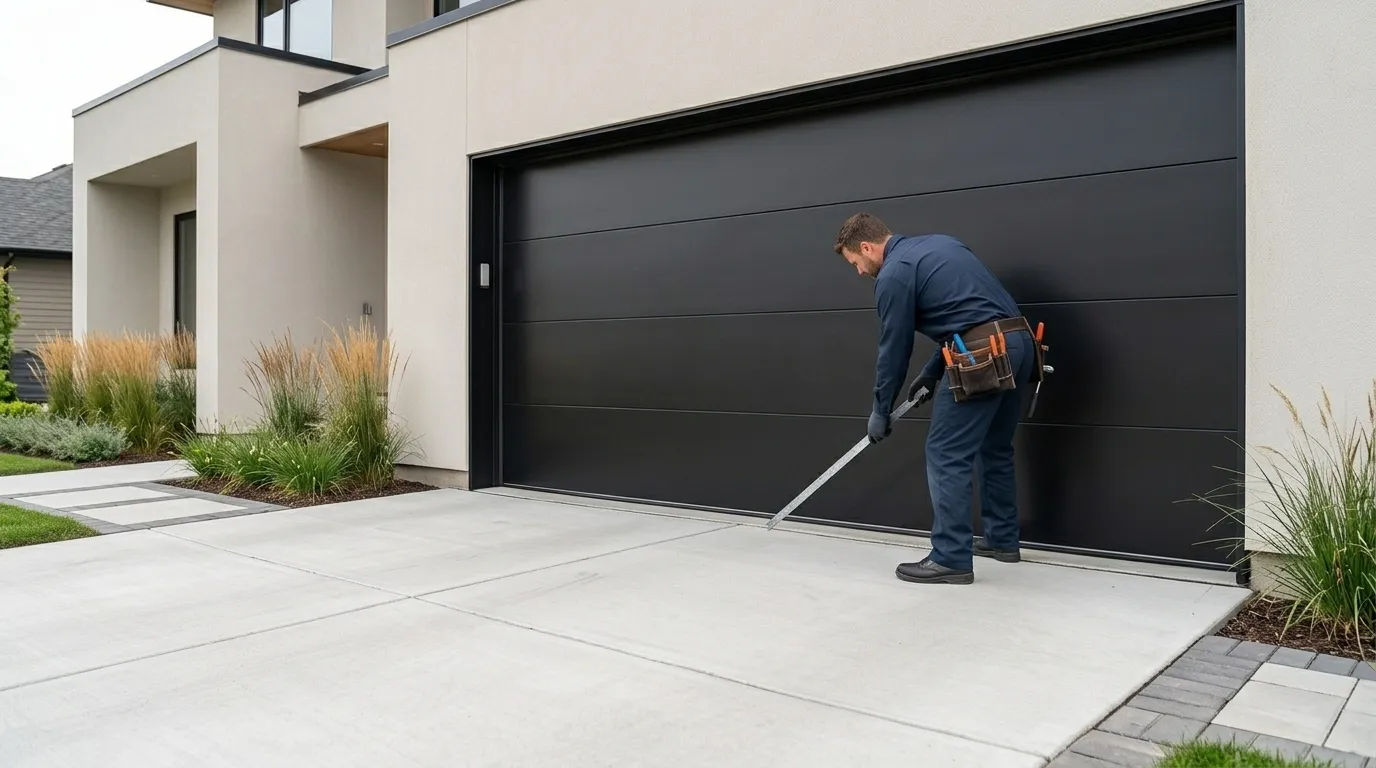
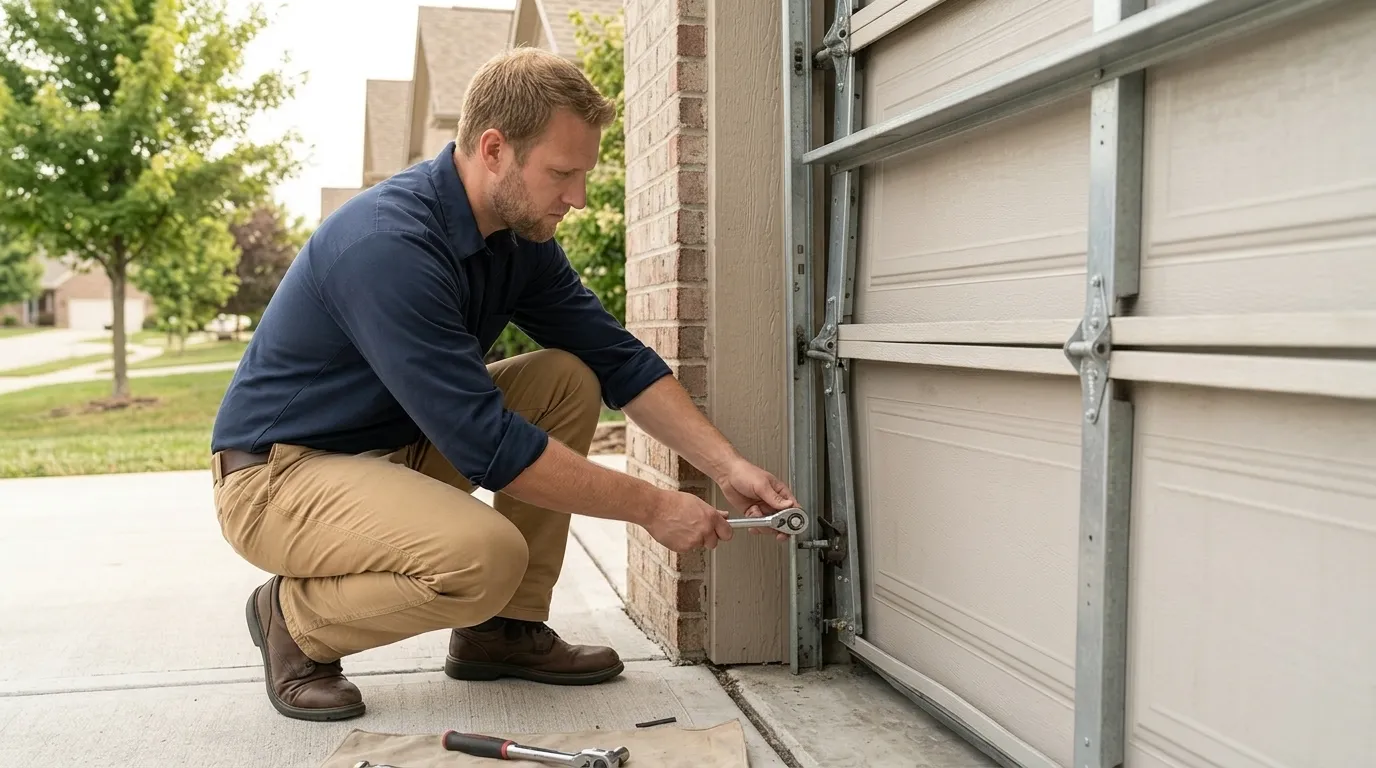
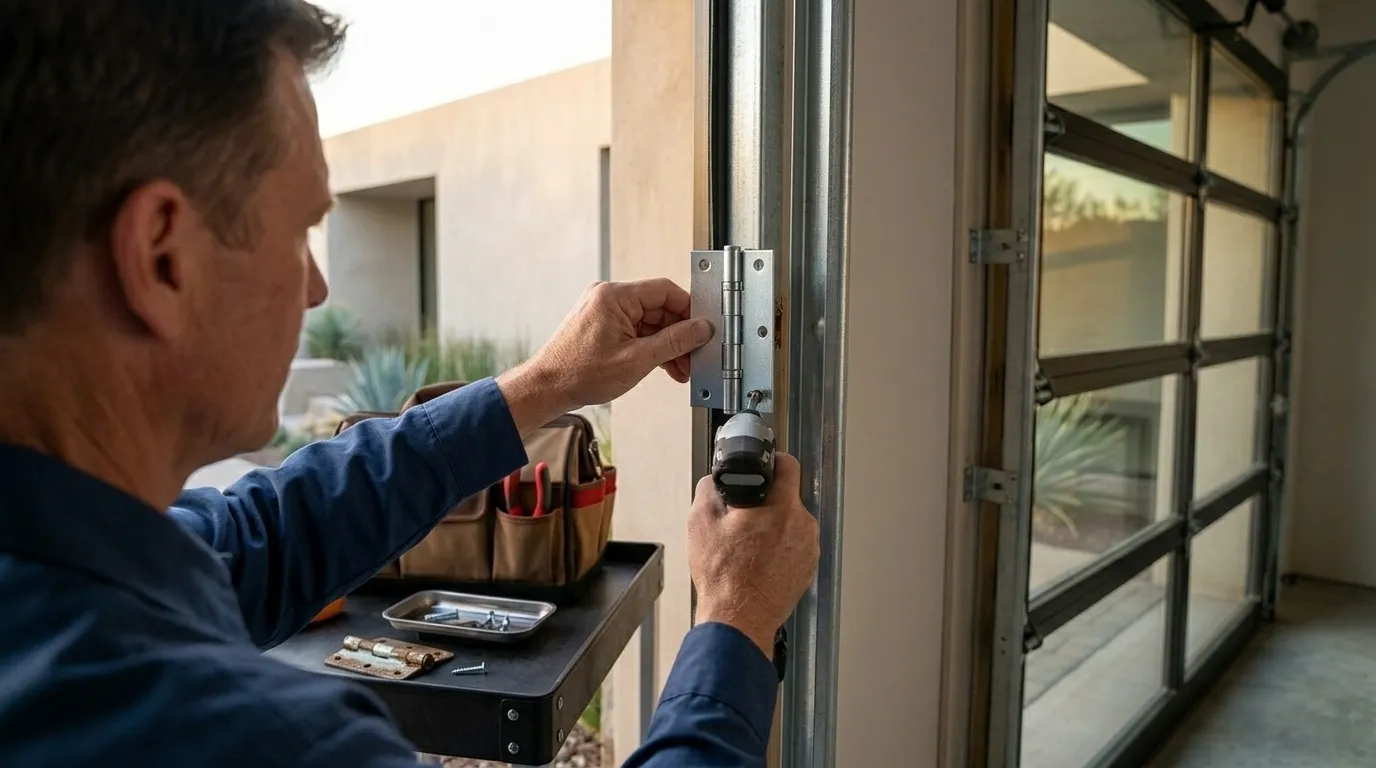
First step is measuring the exact panel - width, rib profile, whether it's insulated, and the hinge and roller bracket spacing, since older doors in this area often used hardware that's since changed sizes. We check whether a matching replacement panel is still available from current suppliers before we promise anything.
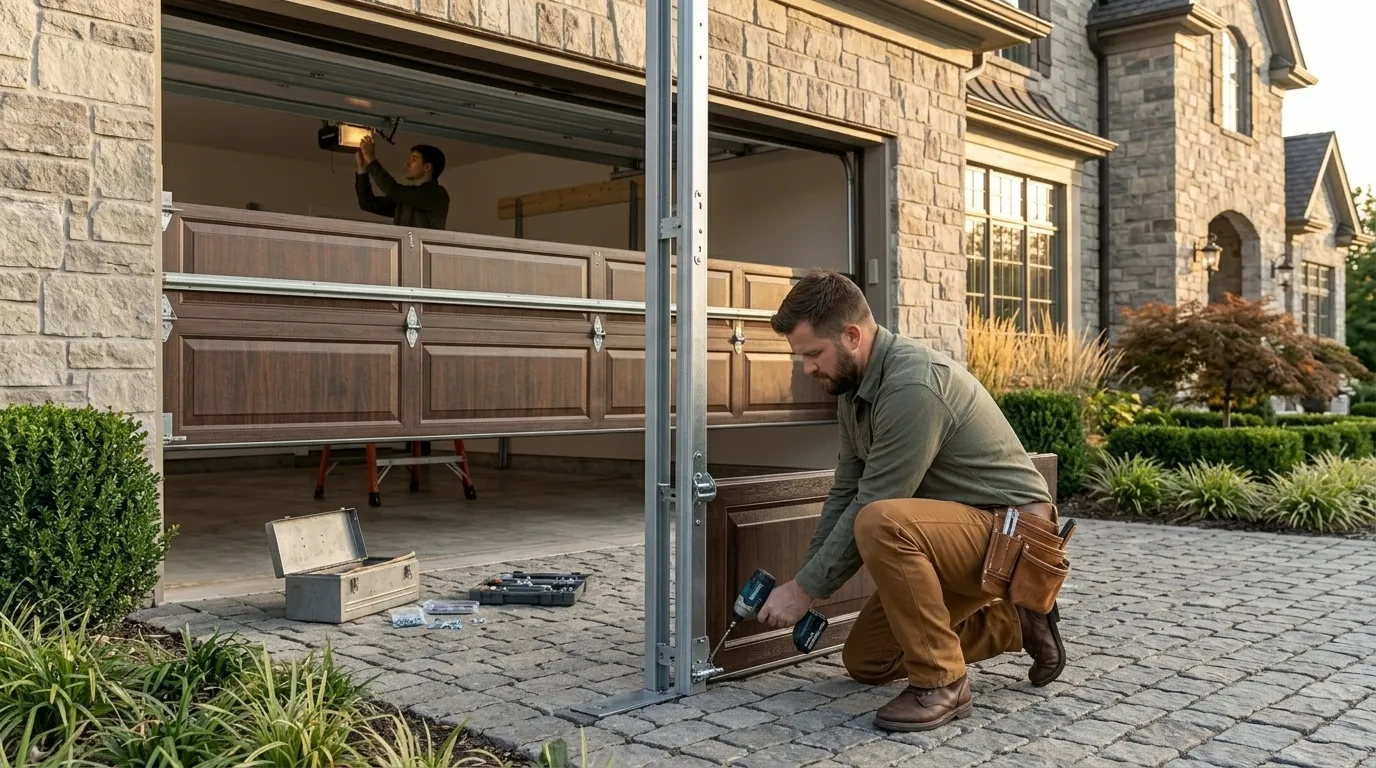
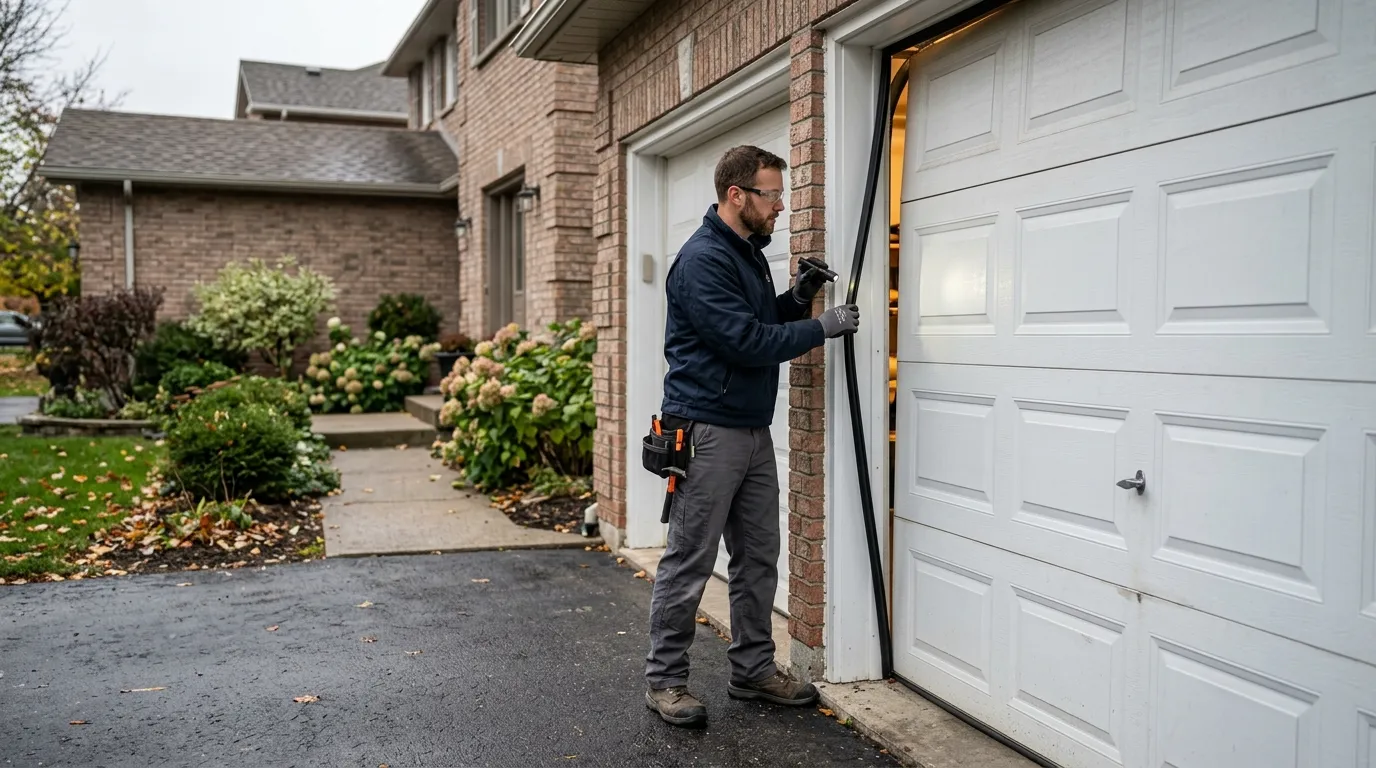
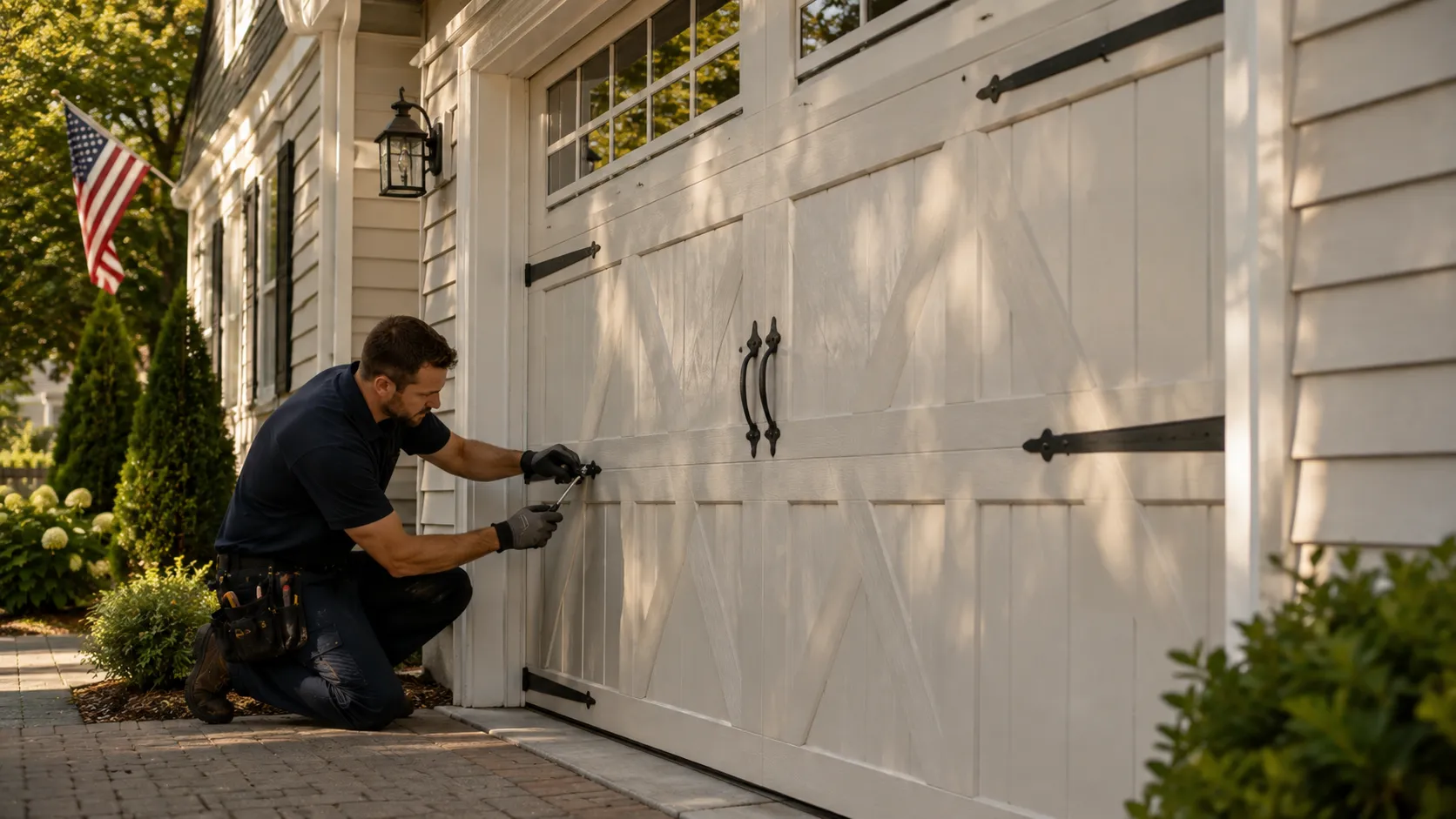
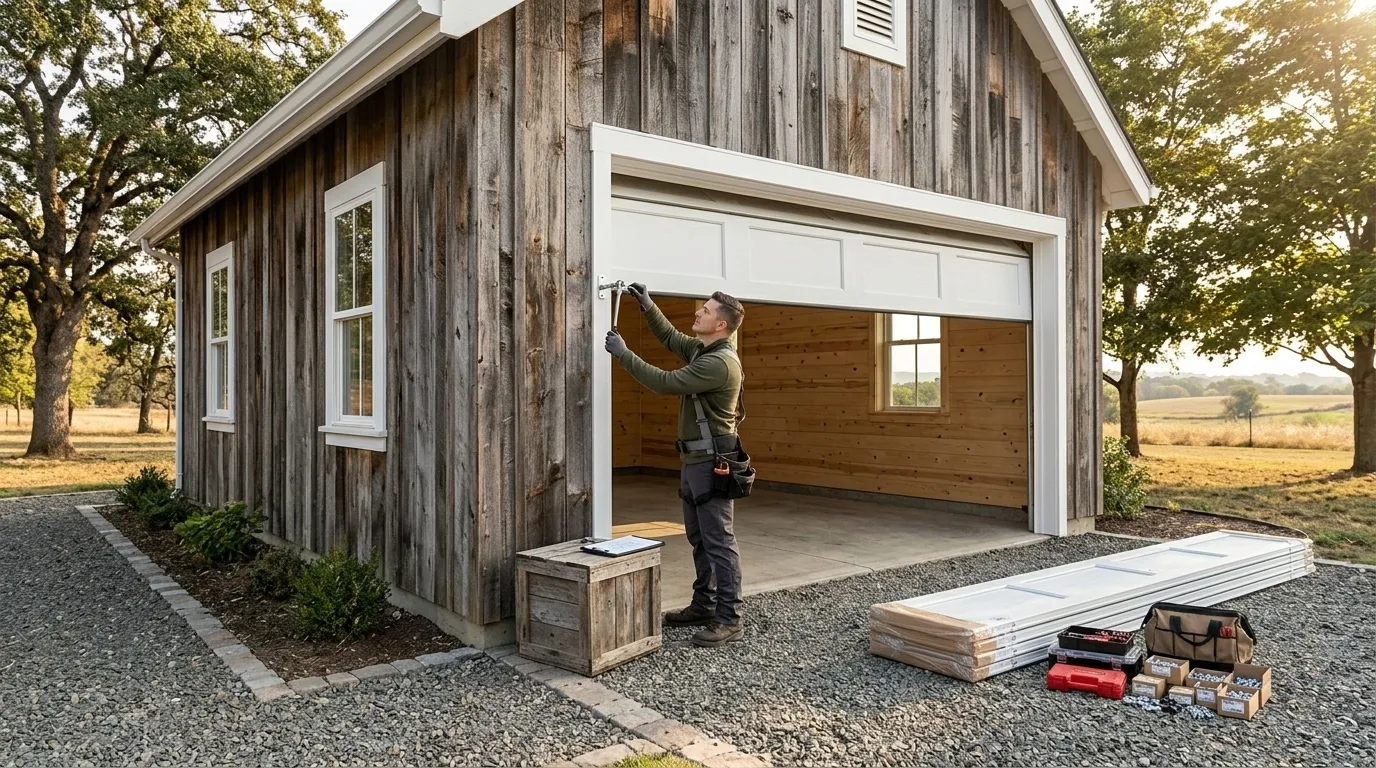
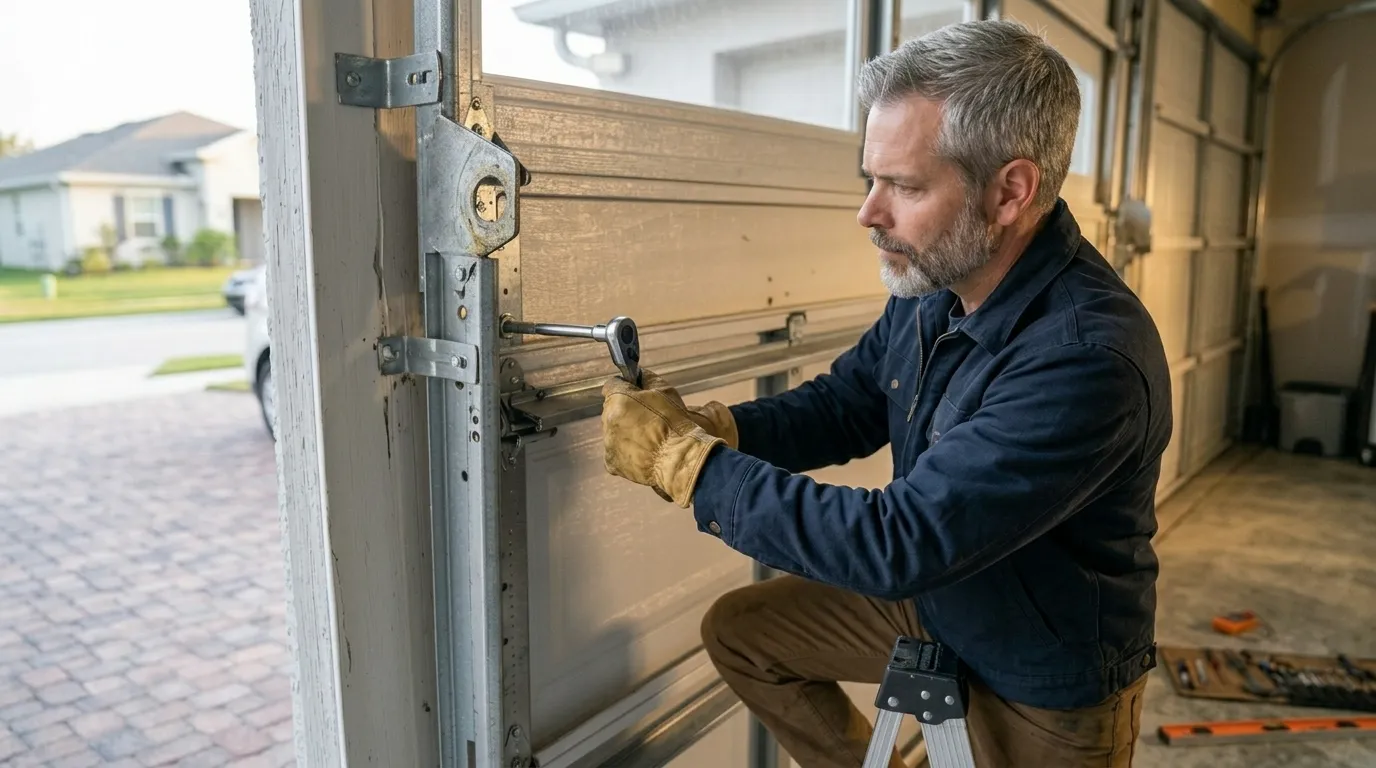
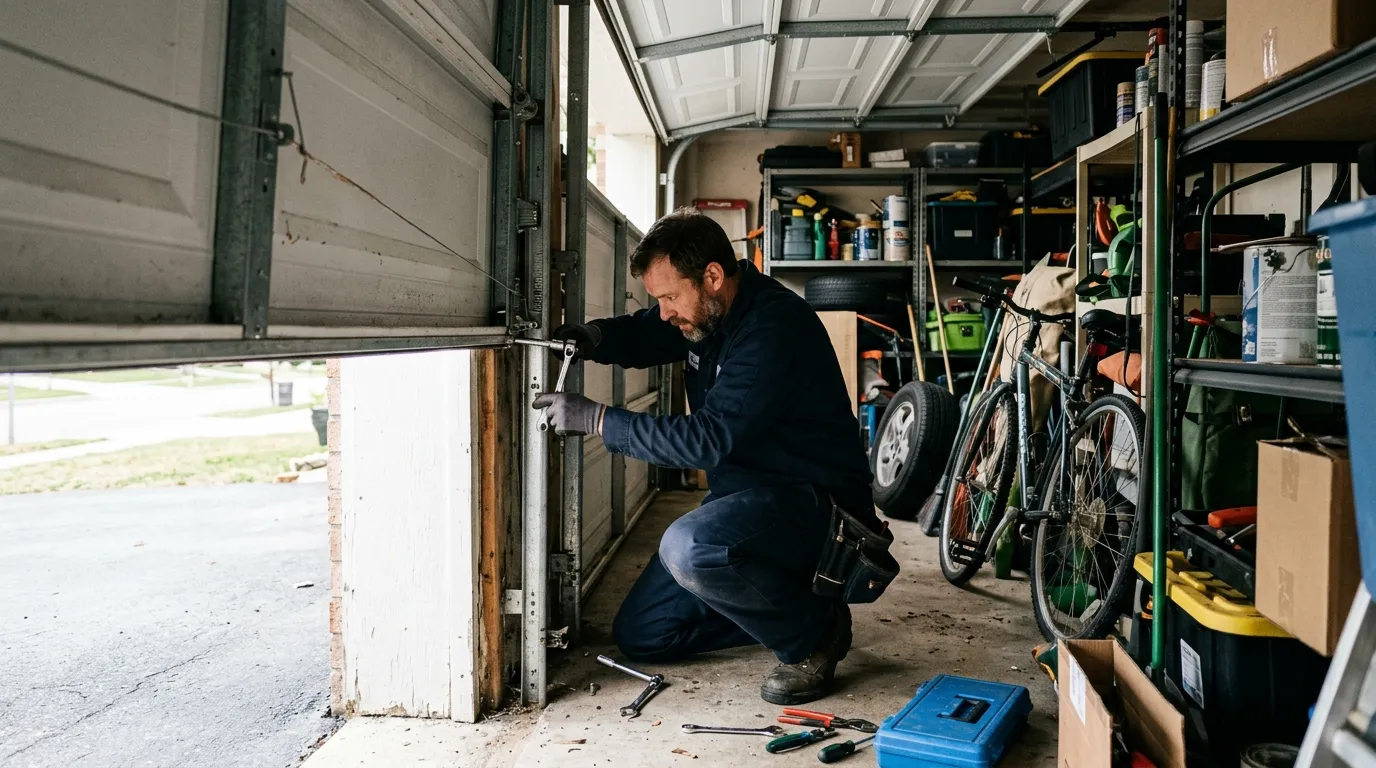
If a match exists, we pull the damaged section, transfer the hardware over, and set the new panel into the existing track without touching the rest of the door. If the panel's discontinued, we'll walk you through what a close match looks like versus what a full door replacement runs, and let you decide - we're not going to install a mismatched panel without telling you it's mismatched.
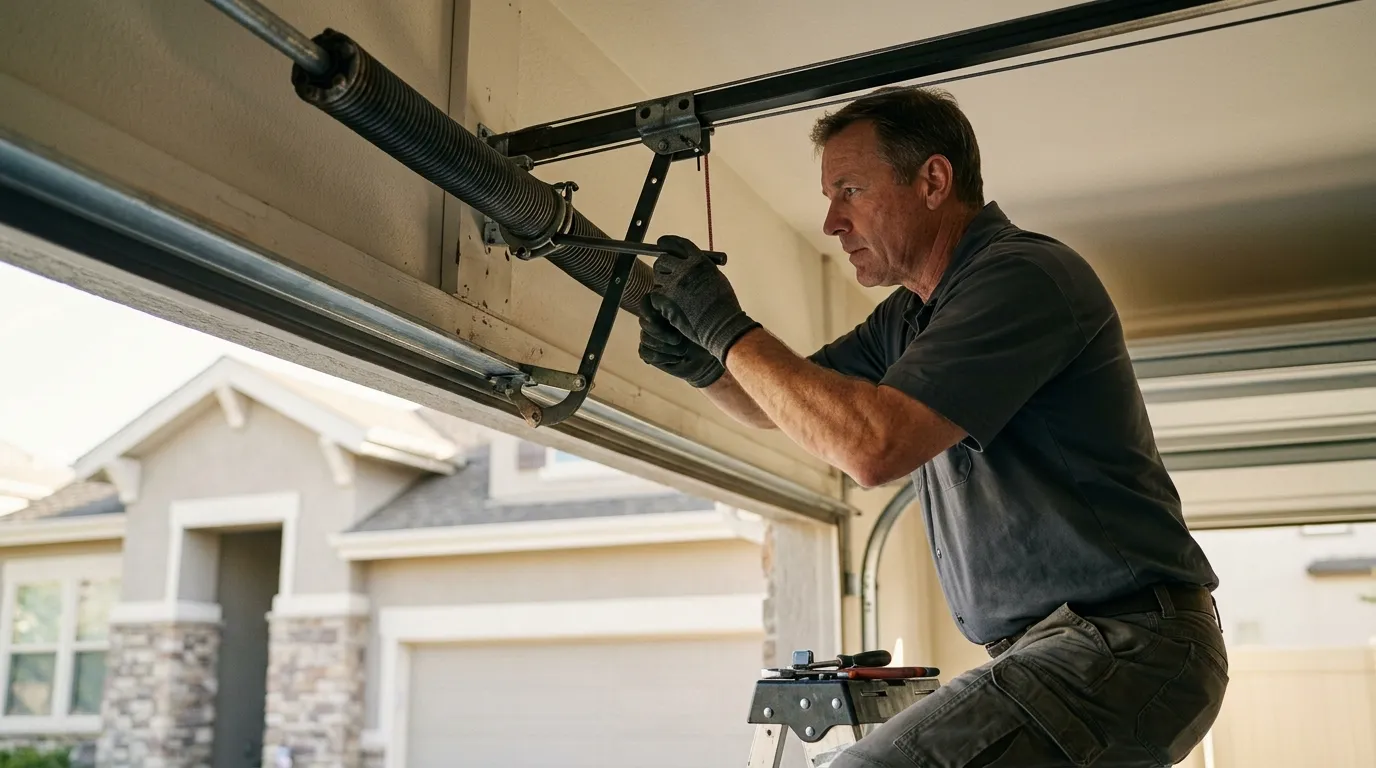
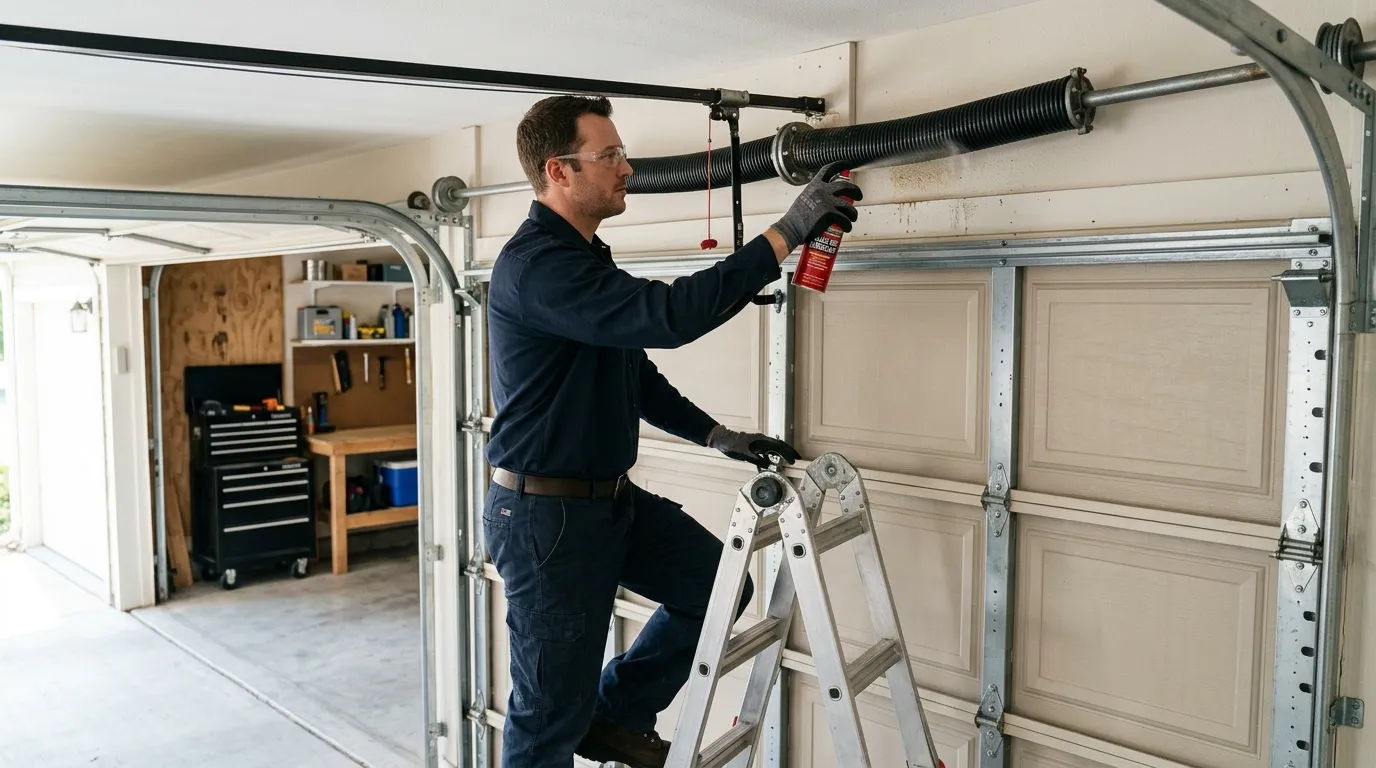
Either way, we check the door balance and spring tension before we leave, since swapping the weight of one panel section can shift how the door sits on the springs, especially on older torsion setups common on doors from this era. A rushed panel swap that skips that check is how you end up with a door that closes crooked six months later.