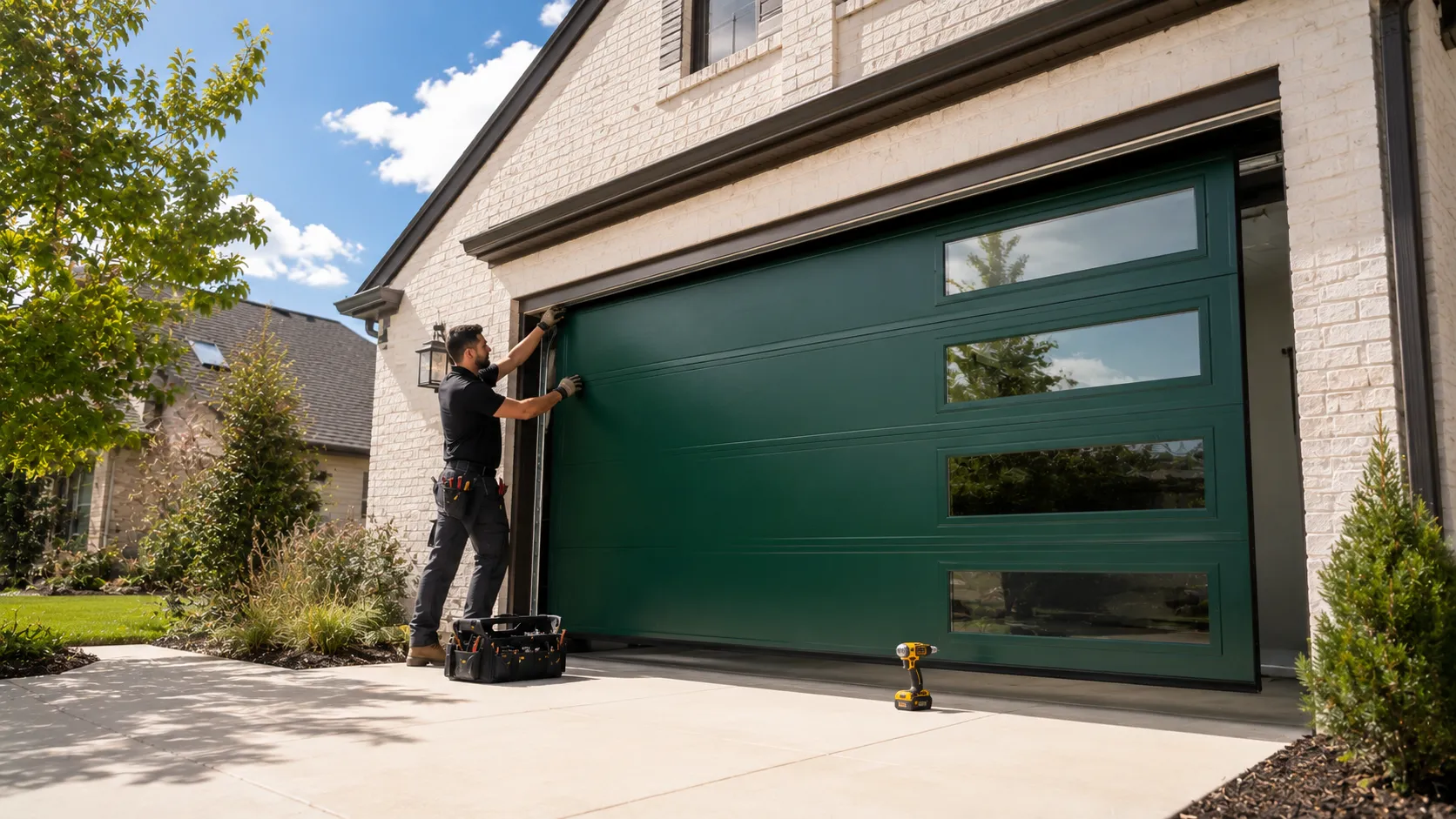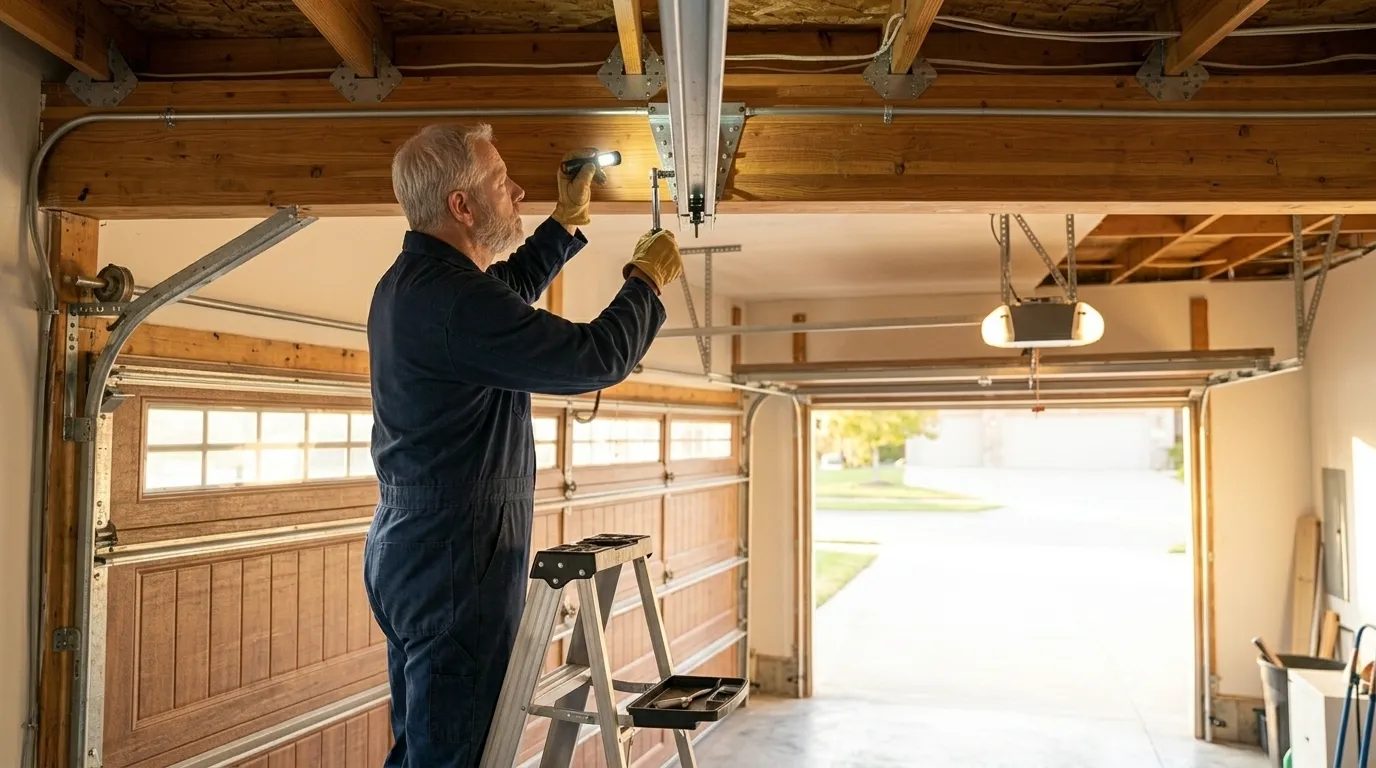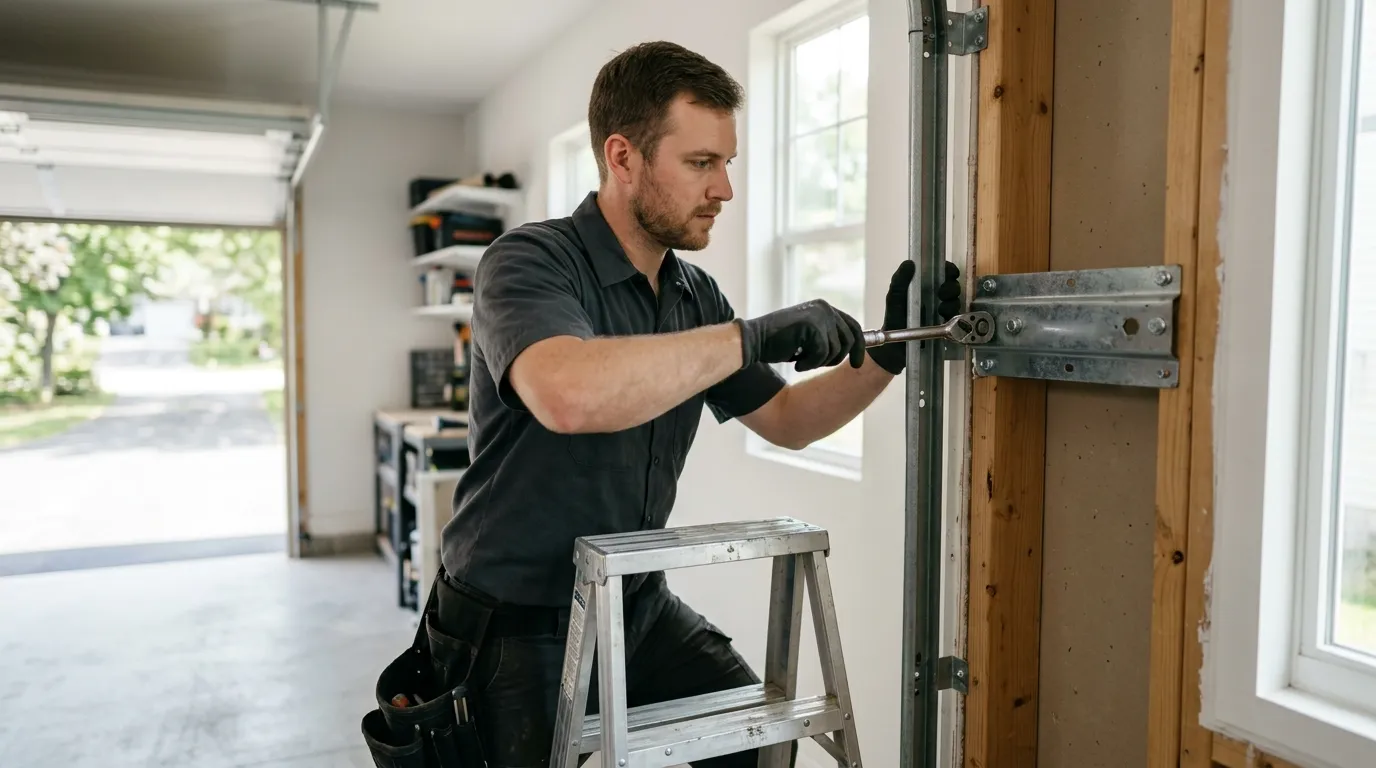
How We Fix It
Kansas City's garage door stock skews to houses built across 1950 through 2004, with a median around 1973. Prairie Village sits well ahead of that curve - the median home here went up in 1959. That fourteen-year gap matters more than it sounds like it should. A door and opener installed to fit a 1959 frame usually got replaced once, sometimes twice, by owners who didn't always upsize the track or swap the spring for the same reason - budget, or the fact that the old hardware still limped along.
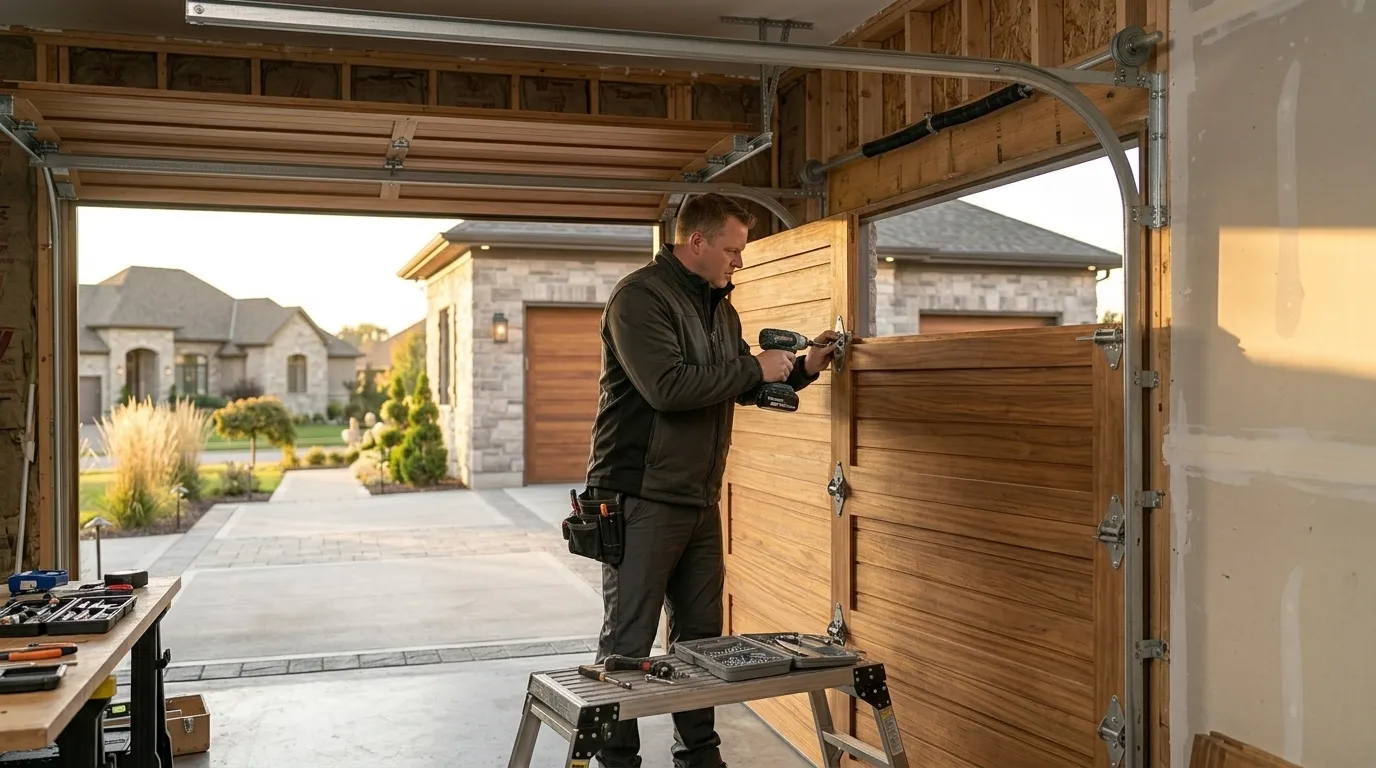
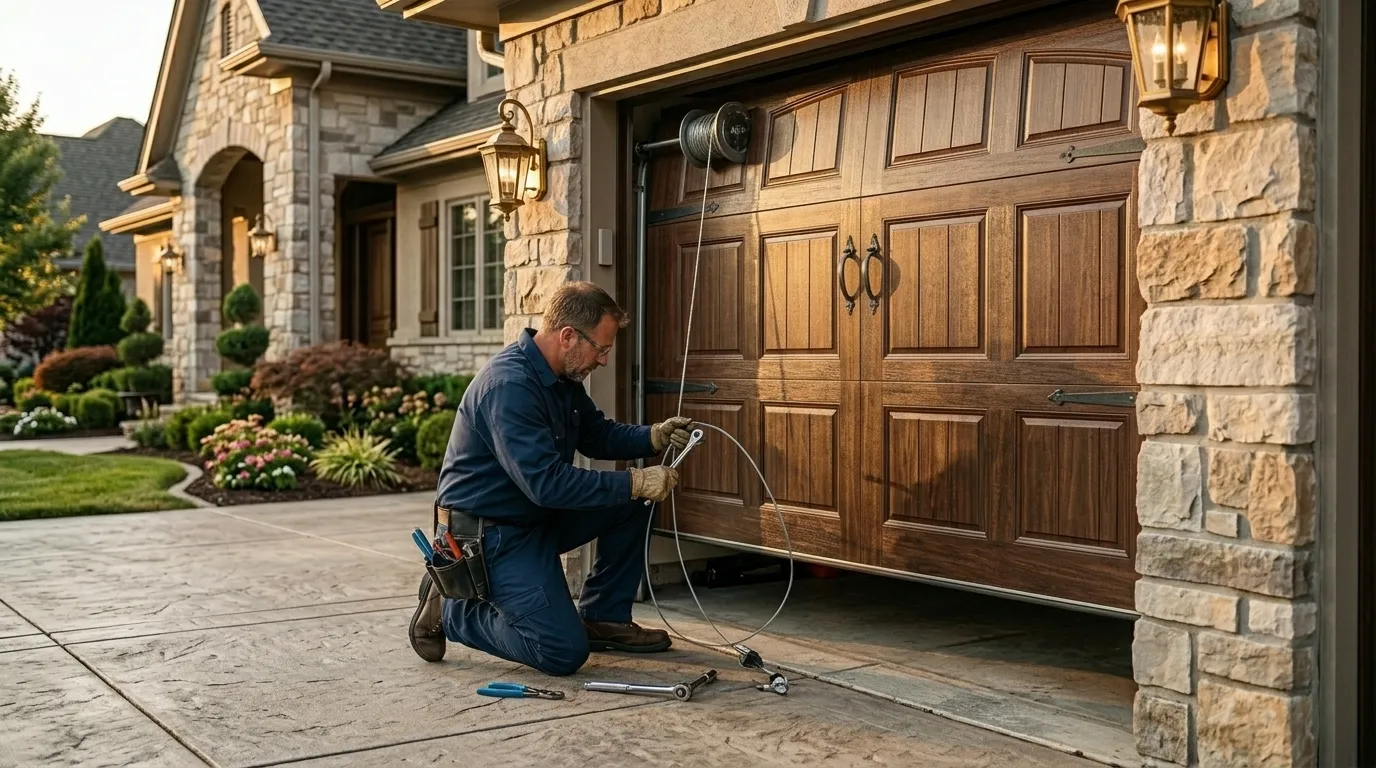
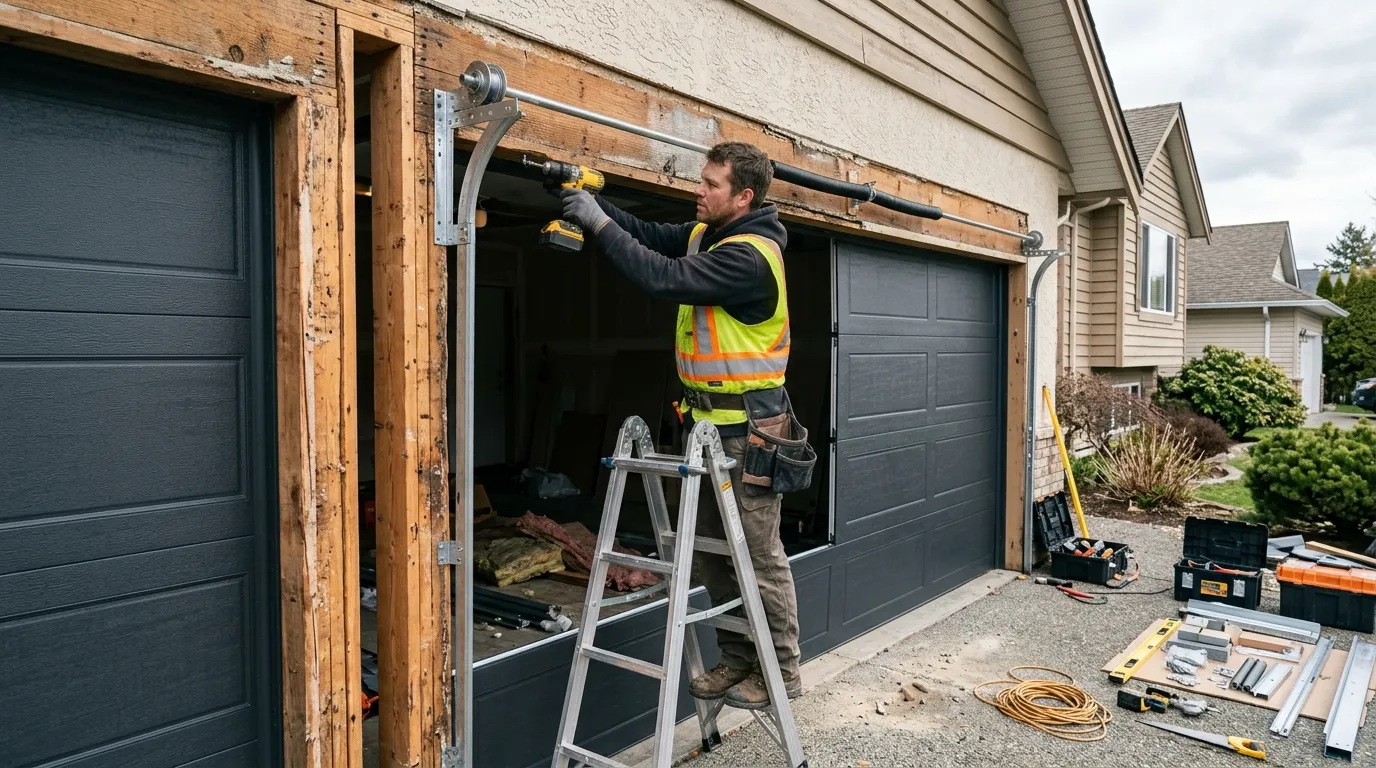
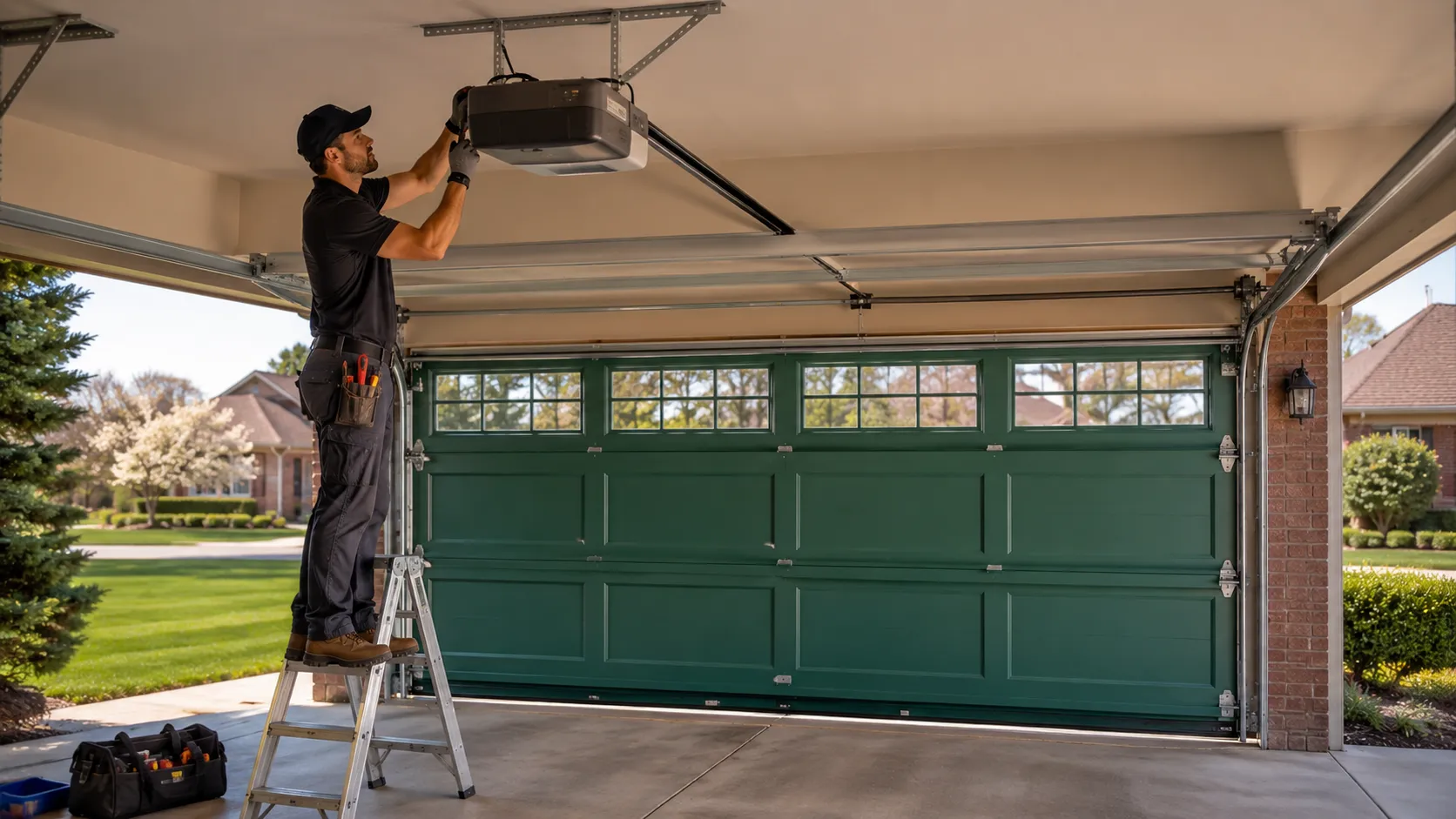
When we get a call from Prairie Village, we come in expecting older jamb widths, older header clearances, and a decent chance the torsion spring is undersized for whatever door got hung on it later. We check the drum-to-cable match before we touch anything, because a mismatched drum on an older jamb is one of the more common ways a cable jumps its track. We travel out from Kansas City for the call - there's no branch in Prairie Village, so we're driving the eleven miles in with the truck stocked for exactly this kind of mismatch, not guessing once we're on-site.
We don't force a repair on hardware that's fighting the opening. If the frame's been reworked twice already and the track geometry is off, we'll say so and price the fix straight, not the patch.
Parts We Carry
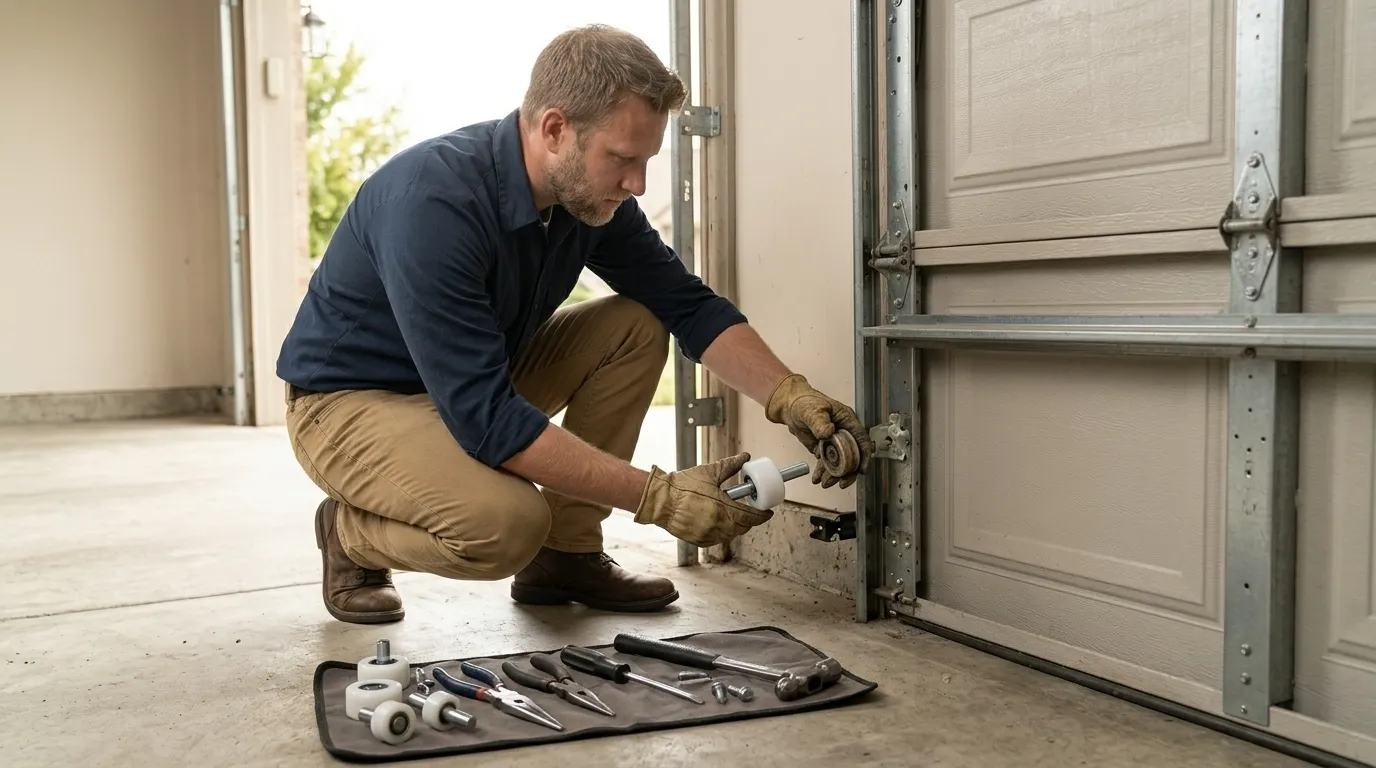
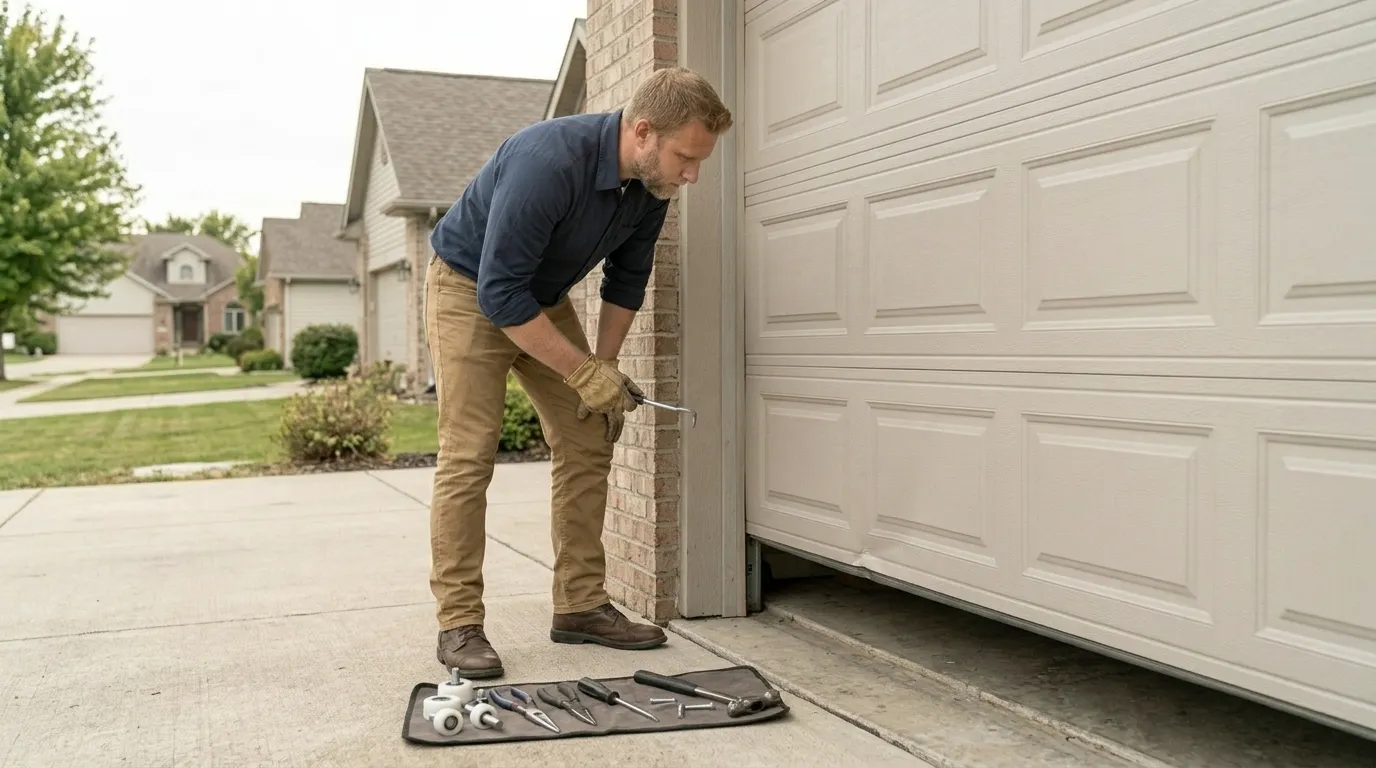
For a 1959-era opening, the parts that actually fail are predictable: torsion springs sized for a door that's since been swapped heavier, rollers worn from decades of use on original track, and cable that's outlived two openers. We carry standard torsion springs and extension springs sized to common older openings, plus rollers, cables, and hinges that fit both original hardware and the retrofit doors installed on top of it.
We don't stock every obsolete part on the truck - a handful of the oldest one-piece doors around Kansas City's older neighborhoods used hardware nobody manufactures anymore, and if Prairie Village's stock includes one of those, we order it rather than force a substitute that won't sit right in the track. That's the honest limitation: same-day is common, not guaranteed, when the part is genuinely discontinued.
What we don't see much of in this area is the newer insulated steel doors that dominate construction after 2000 - Kansas City's broader median build year (1973) already tells you this region trends older, and Prairie Village trends older still. So the parts truck for a Prairie Village call leans toward standard-width torsion hardware and classic roller sizes rather than the wider high-cycle springs newer double-wide doors need.
Getting It Booked In
We run the Prairie Village call out of Kansas City, roughly eleven miles by the route we take, so we ask a few questions up front - door age if you know it, whether the opener's original or replaced, and what the door's doing (won't open, opens crooked, makes noise) before the truck rolls. That lets us load the right spring size and rollers instead of guessing.
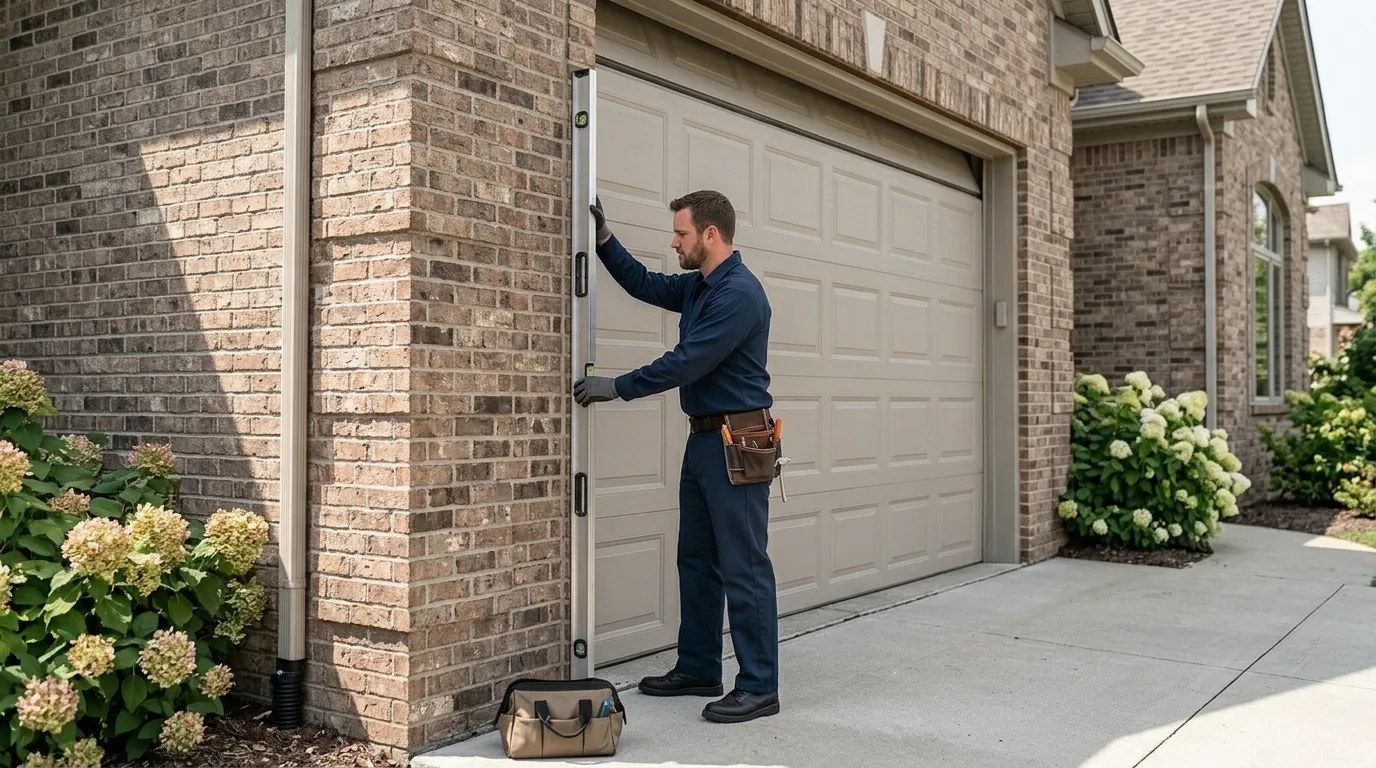
With around 10,054 households in Prairie Village, we're not the only company that's driven this route, but we do treat the call differently than a newer-build suburb: we check jamb width and header clearance before quoting a fix sight-unseen, because a 1959 opening doesn't always take the same part a newer one does.
If you're not sure whether it's worth fixing versus replacing, tell us the door's age and what's failed - that's usually enough to give you a straight answer before we're even on-site.