Time on the Job
Lansing is a small town by the numbers - about 3,632 households, not the tens of thousands you'd count across the wider Kansas City service area (which runs north of 67,000). That size matters for how the work shows up. In a town this compact, the calls tend to repeat: the same handful of opener models, the same spring sizes, the same handful of builders' door lines from the 1980s and 90s. We're not guessing what's behind the panel when we pull up - we've seen the pattern enough times across a town this size to know what's likely before we open the truck.
We come out of Kansas City, about 12 miles south, so we're not sitting in Lansing waiting on calls. What that means practically: we batch appointments and we're upfront about the drive when you book, rather than promising a same-hour arrival we can't back up from that distance.
What Causes It Around Here
The area-wide housing stock across our service territory runs 1950 to 2004, median build year 1973 - a lot of original one-piece doors and older torsion hardware on the mid-century side of things. Lansing skews newer than that average: median year built here is 1987. That's a real difference. It means fewer of the antique doors and dying hardware we see in the older pockets, and more sectional steel doors from the late 80s and 90s opener era - chain-drive units, some belt drives added later, and torsion springs sized for lighter insulated panels rather than the heavier solid slabs from decades earlier.
The climate band here is the same cold-severe zone as the rest of the region, so freeze-thaw cycling on cable and roller hardware is still the main driver of wear, regardless of build year. What differs by decade is which part fails first: a 1987-built door is more likely to lose an opener circuit board or a nylon roller than to need a full spring and drum replacement, which is more common on the pre-1970s stock elsewhere in the territory.
Can You Do This Yourself
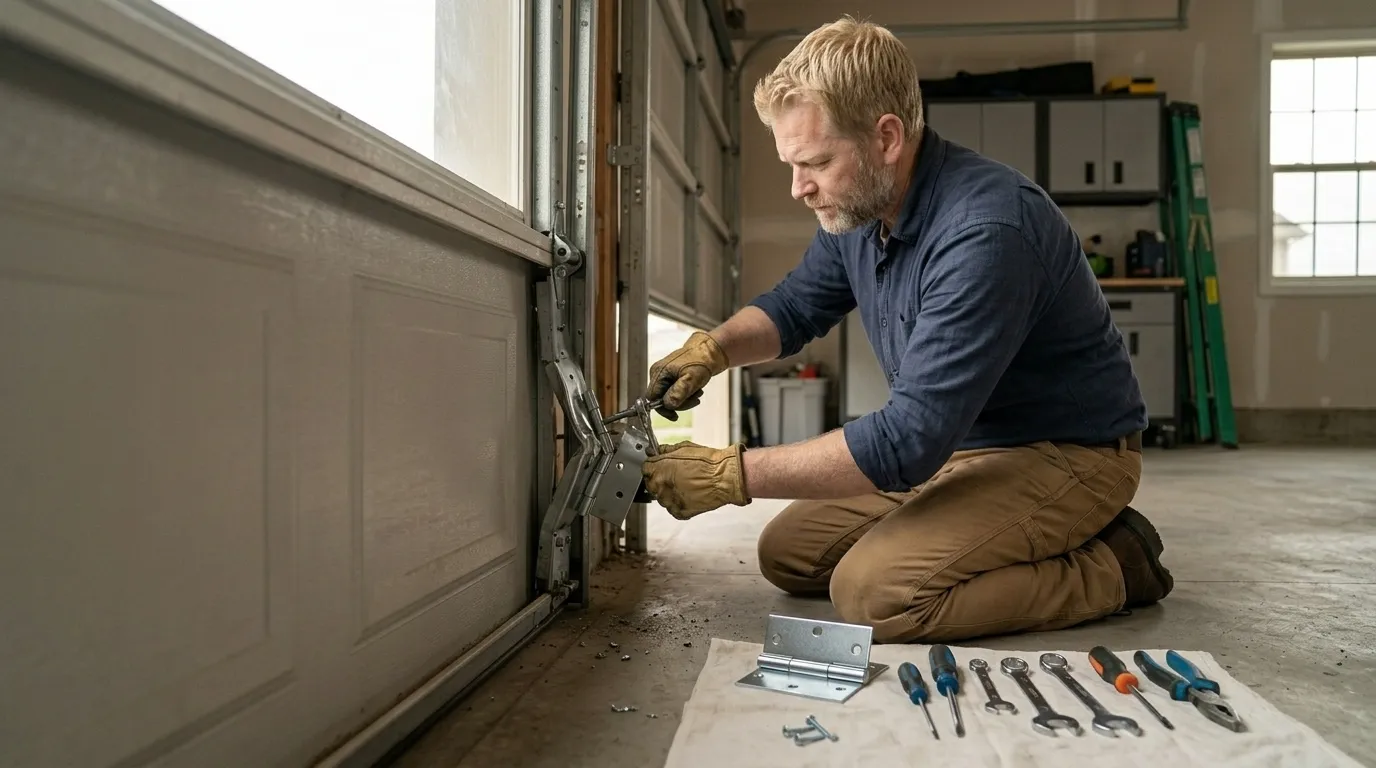
Sensor alignment, a loose track bolt, or a dead remote battery - those are reasonable for a homeowner to check before calling anyone. A torsion spring is not. The spring on a residential door is wound under enough tension to break bones or worse if the winding bars slip, and that risk doesn't change because the door is newer or the town is smaller. If your door won't open and you can see the spring is broken or stretched wrong, leave it alone and call.
One honest limit: if the opener board is original to a 1987-era install, we may not be able to get an exact replacement part quickly. Some of those boards were discontinued years ago, and depending on the brand, we may need to move you to a compatible modern opener rather than repair the original unit. We'll tell you that up front rather than let it drag out.
Getting It Booked In
We schedule Lansing calls out of Kansas City, so when you book, we'll give you a window rather than an exact hour - the 12-mile drive is predictable but traffic on the way isn't. Tell us the door brand and roughly how old the opener is if you know it; for a town with this much housing built in the 1980s and 90s, that one detail often tells us which part is likely to be on the truck already versus what needs ordering.