Time on the Job
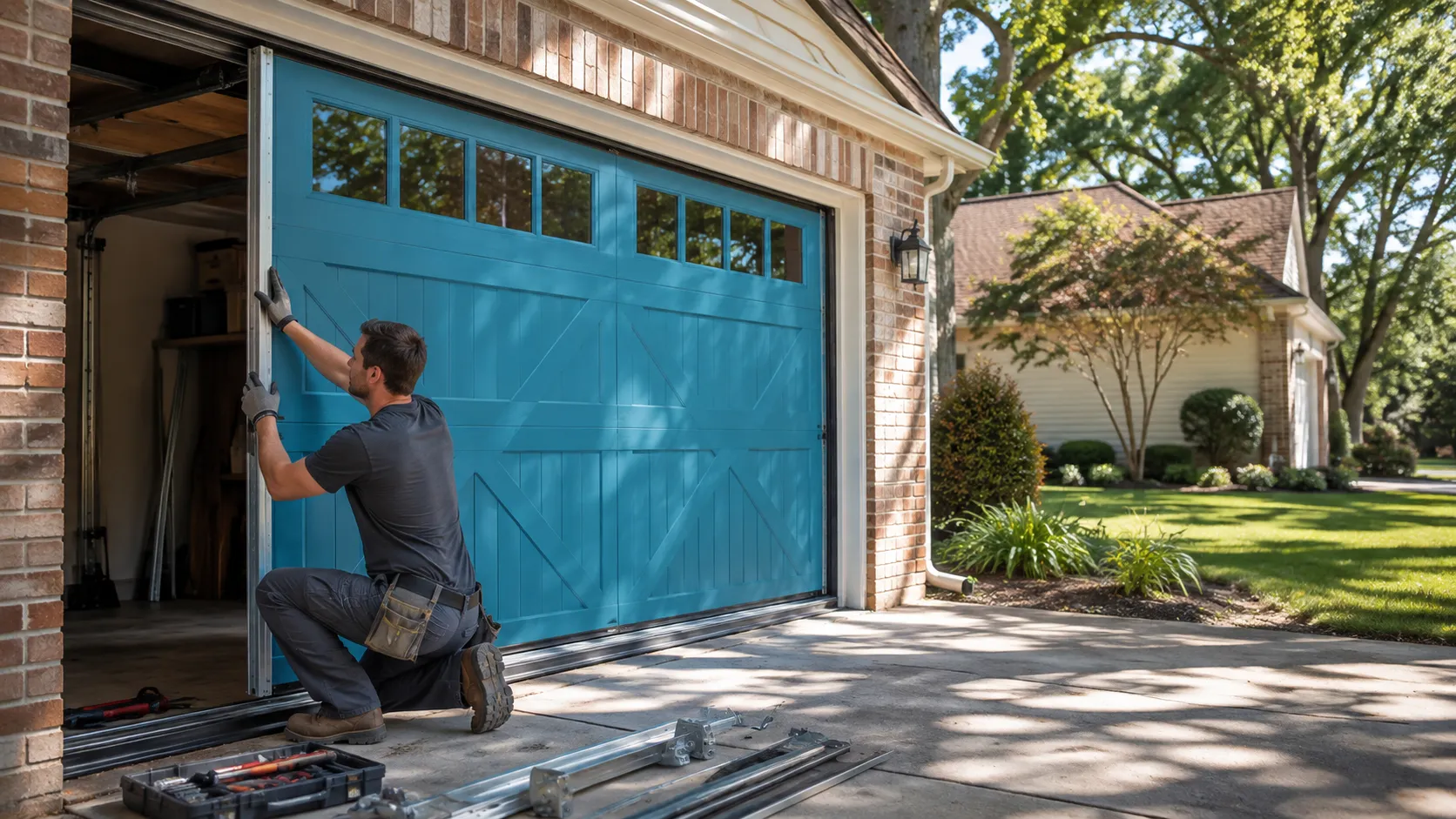
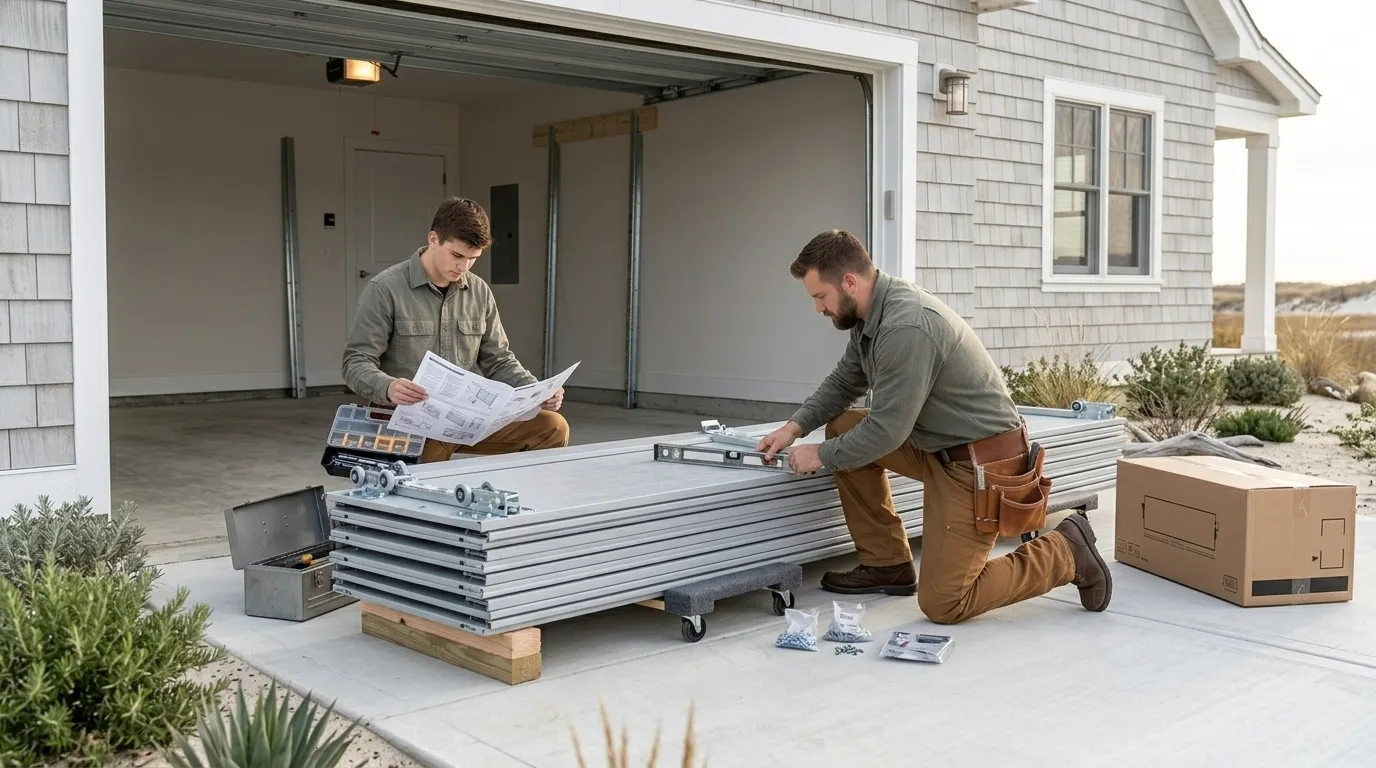
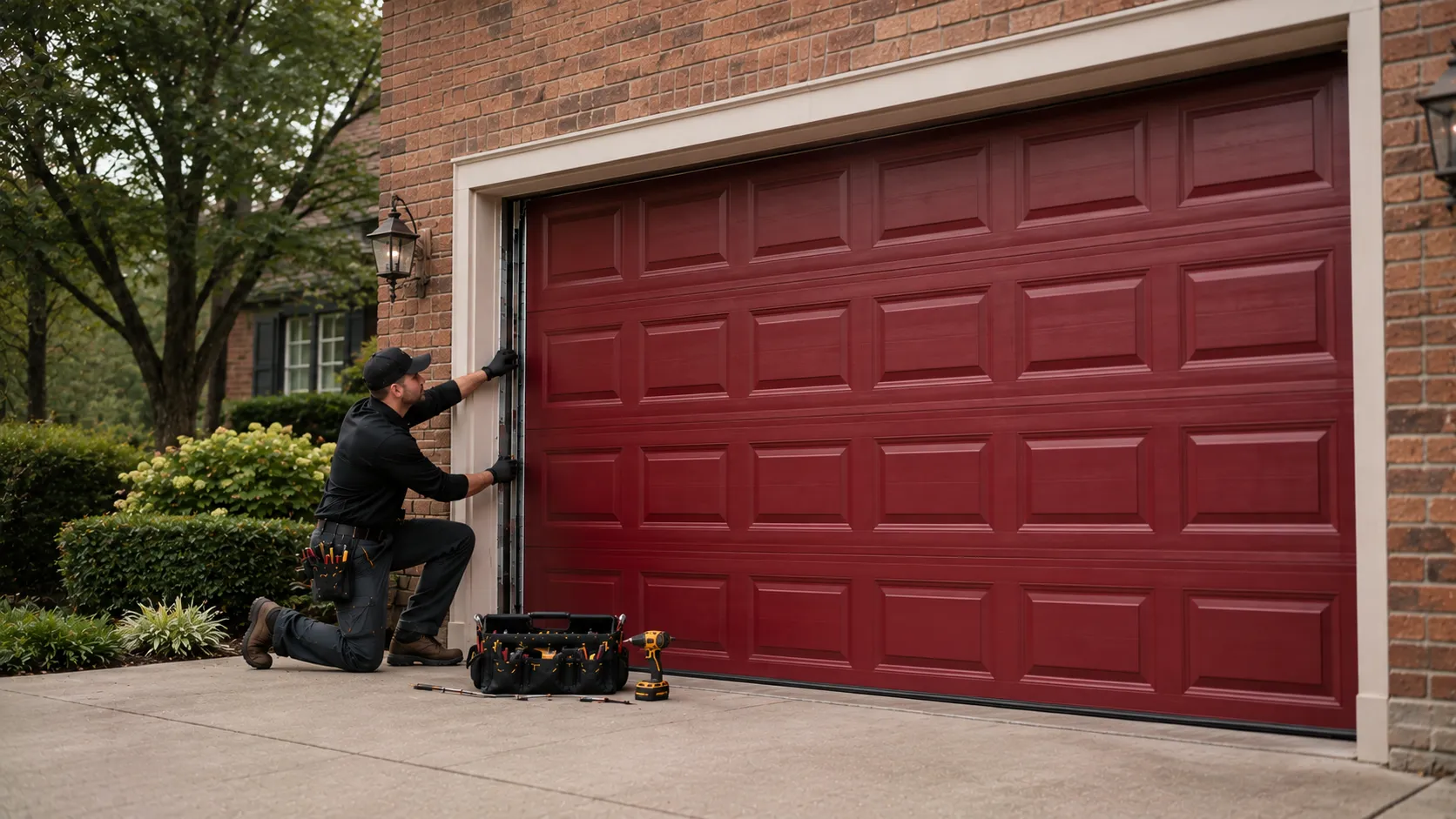
Most homes in Lansing went up in the 1980s - the median build year here is 1987, well past the older 1950s stock that anchors a lot of the wider Kansas City service area (median 1973, spanning 1950-2004). That later build date matters for panel work because it lines up with the shift to steel sectional doors: wide double-car openings, embossed steel or hardboard-faced panels, sectioned into three or four horizontal runs rather than the single-panel wood or fiberglass slabs you'd find on an older door. A cracked or dented panel on a Lansing door is almost always one section of that multi-panel steel run, not a whole-door swap - which turns the job into a targeted panel replacement instead of a full install, as long as the manufacturer's profile is still being made.
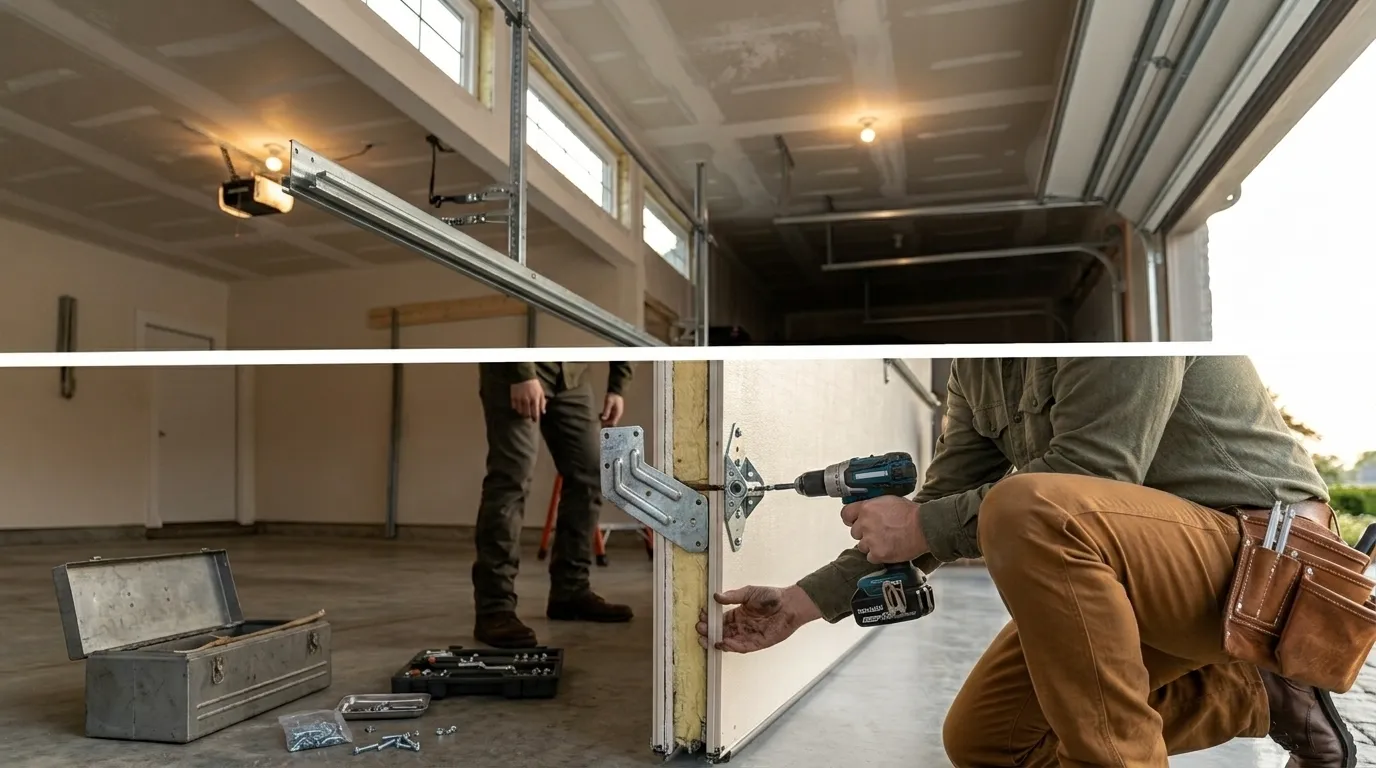
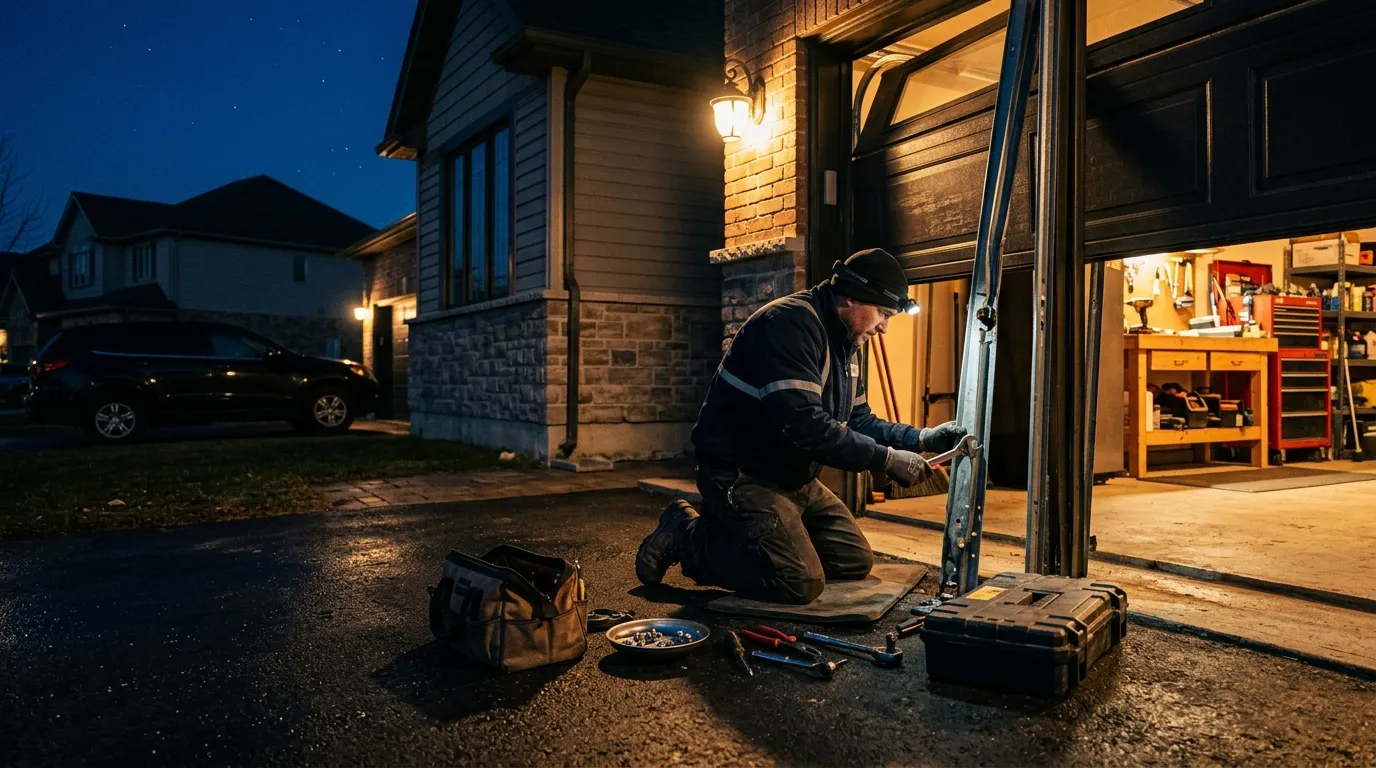
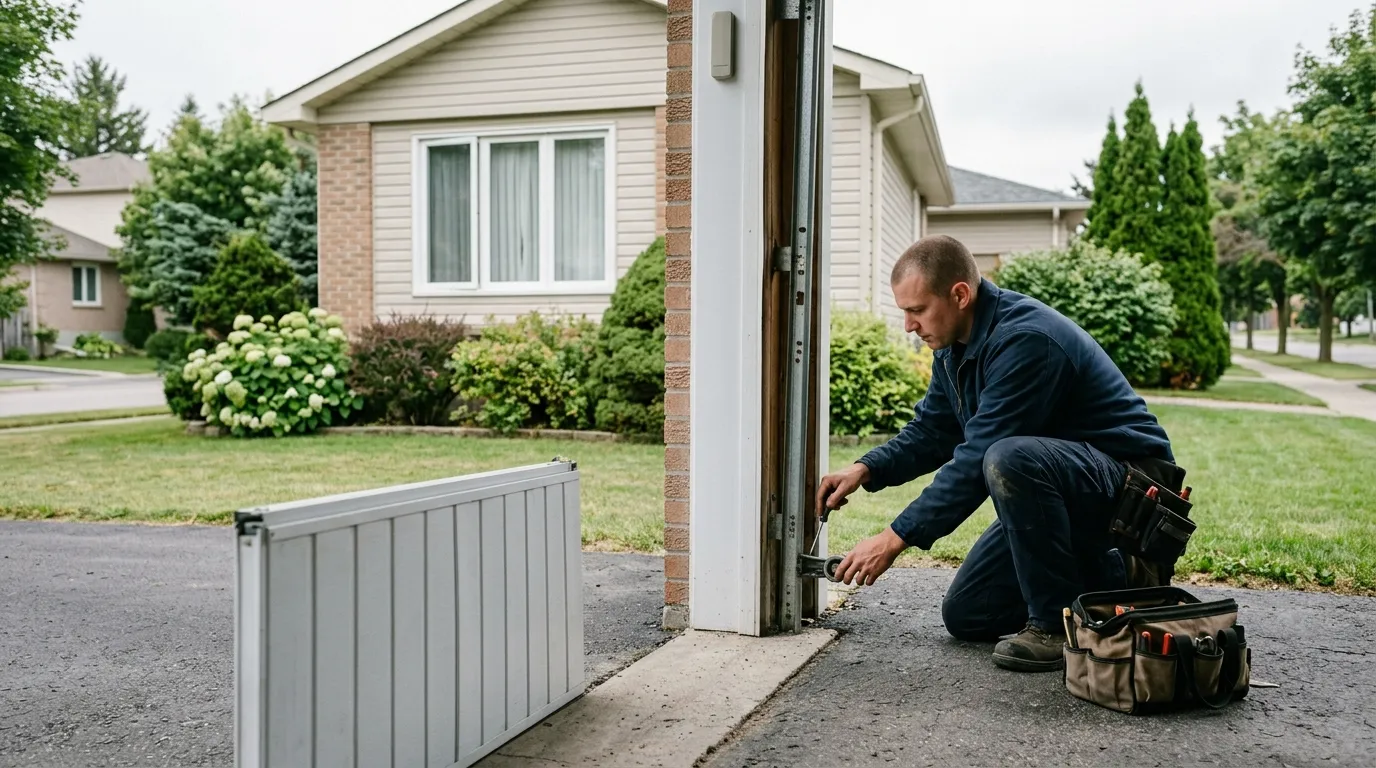
A single-panel swap on a door like this is usually a same-visit repair once we're on site with the right section. Matching an exact embossing pattern or colorway from a late-80s door can take longer - some of those profiles have been discontinued, and if that's the case we have to order the replacement panel before we can finish the job. We won't pretend otherwise.
What Causes It Around Here
Kansas winters run cold enough to matter for a steel door (climate band: cold, severe), and that cold is what turns small problems into cracked panels. Water gets behind an embossed steel skin through a ding or a loose seam, freezes overnight, and expands the seam wider. Over a few cycles the panel face separates from its foam or hardboard backing, and what started as a scuff becomes a bulge or a crack that won't sit flush anymore.
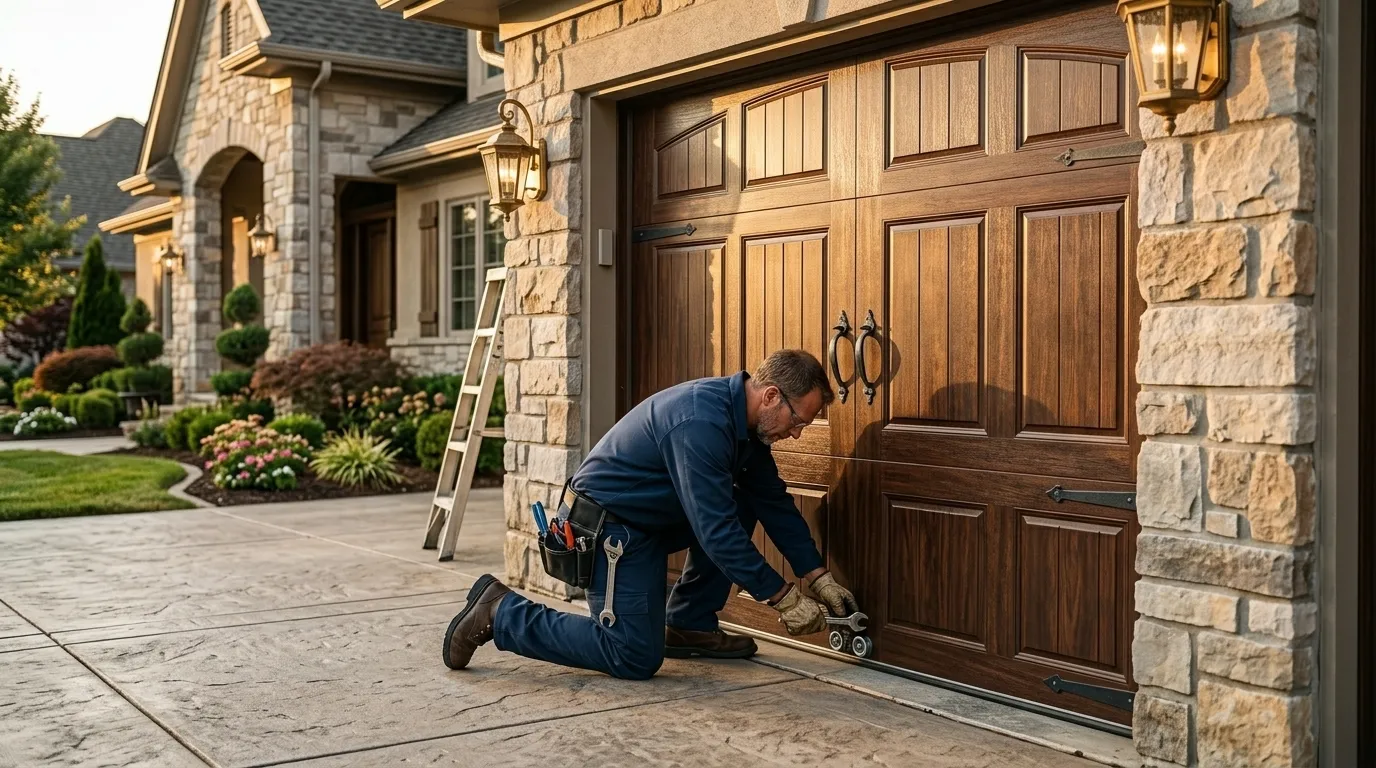
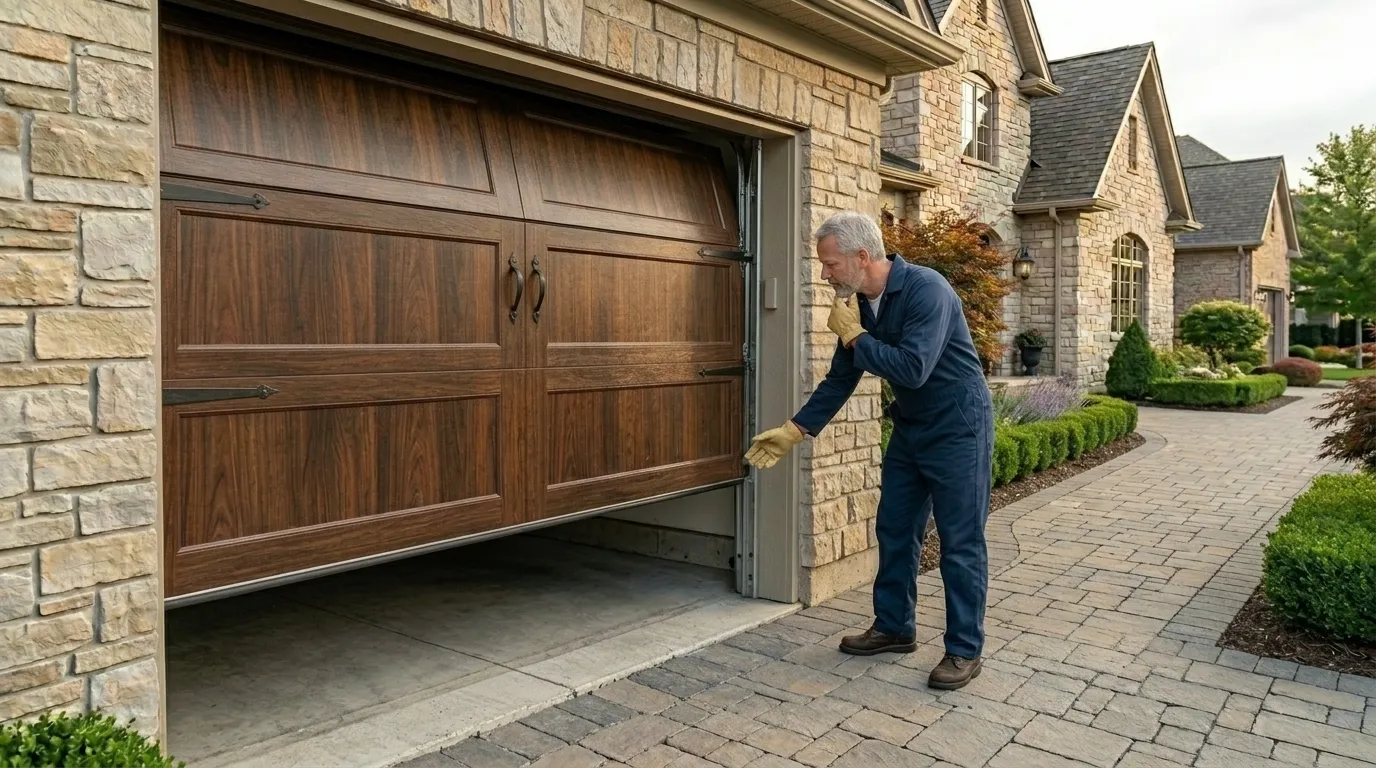
The other common cause is impact - a car bumper, a trailer hitch, a snow blower backed in too fast - hitting the bottom or second panel. On a 1980s-era steel door, the bottom section takes the brunt of most driveway mishaps because it's the one closest to whatever's backing in or pulling out. Once a panel is bowed, the door doesn't sit true in its tracks, which puts extra strain on rollers and hinges nearby even if they weren't part of the original hit.
Can You Do This Yourself
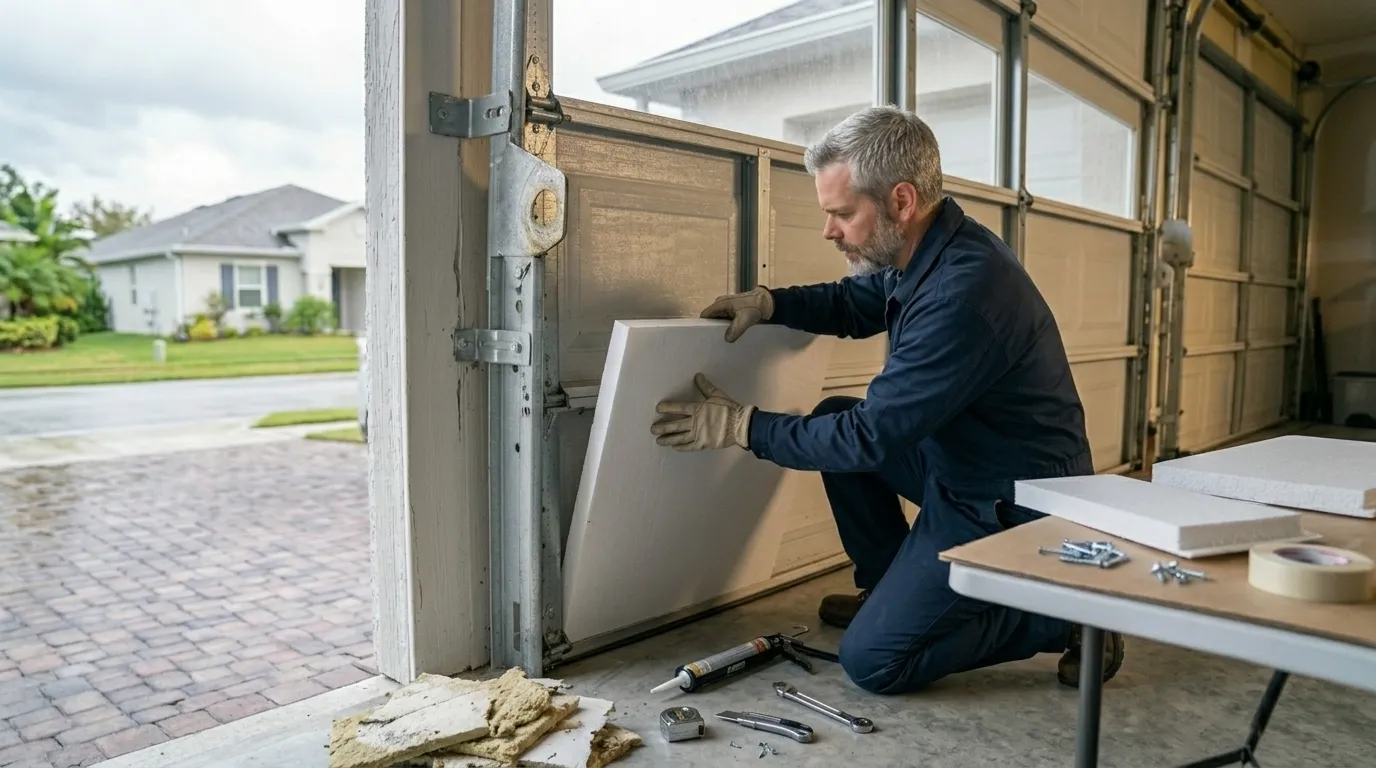
A cosmetic scuff or a shallow dent you can live with is a fine DIY-skip - not everything needs a new panel. But swapping the section itself is a two-person job at minimum on a double-wide door, and the fasteners and seals on an insulated steel panel from this era aren't always the same as what's sold at a hardware store today. Get the gauge or seal wrong and the new panel won't sit flush against its neighbors, which shows up as a gap that lets in cold air and water.
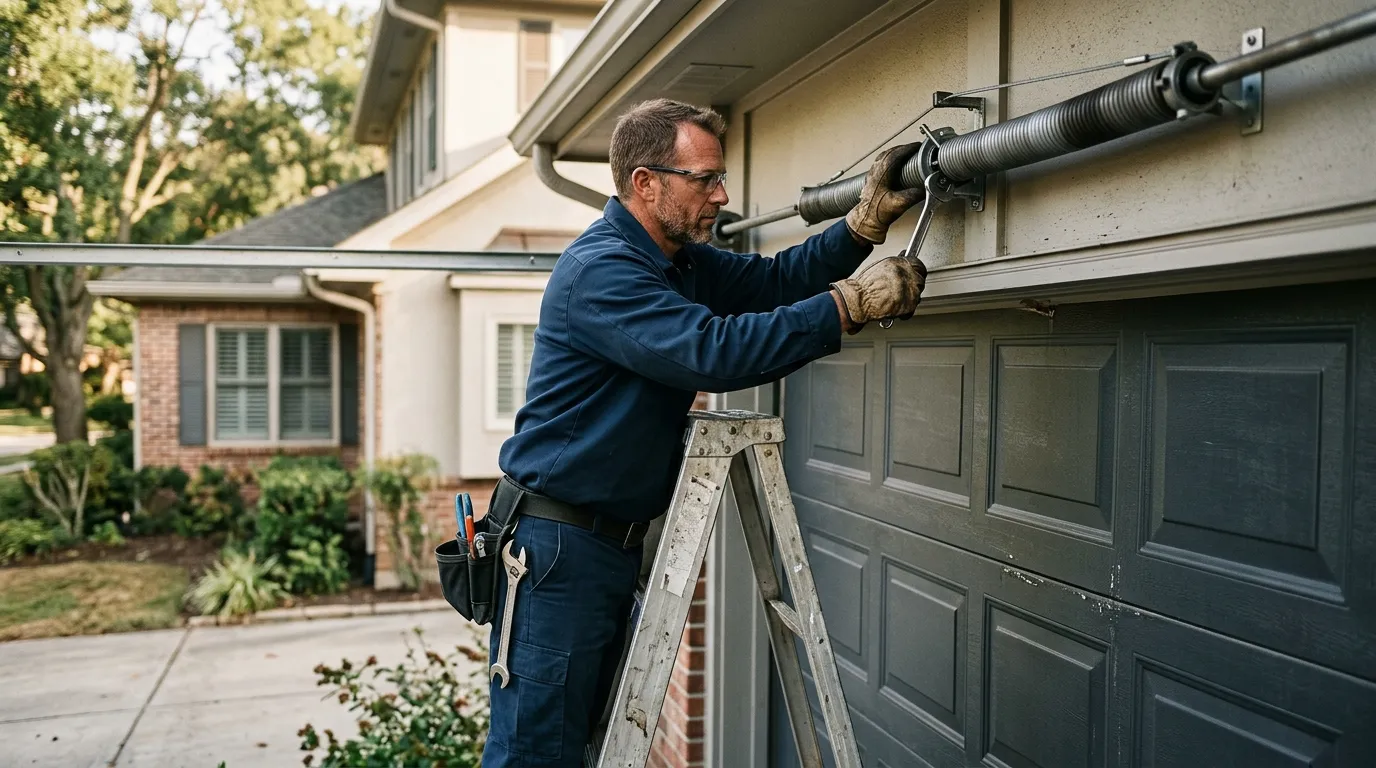
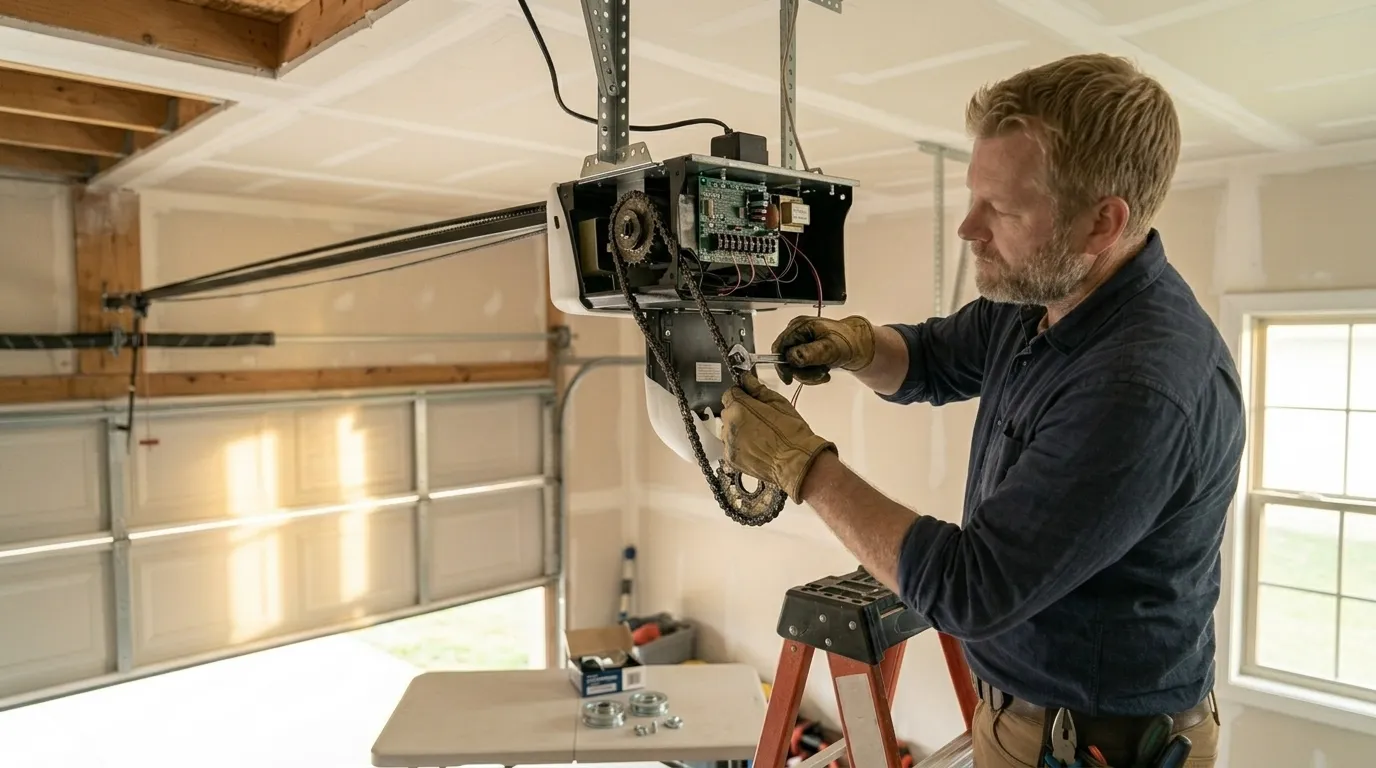
We'd also flag the spring risk directly: if the door is on a torsion system and you're removing more than one panel, or the door won't stay up on its own once a section's out, that's not a job to finish solo. We're honest that a lot of single-panel swaps are within reach for someone comfortable with a drill and a level - we just won't tell you the whole thing is simple when the balance or the seal is off.
Getting It Booked In
We run out of Kansas City, and Lansing sits about 12 miles out, so we book panel jobs here around a single trip rather than multiple partial visits. That means having the panel or a firm order in hand before we come out, whenever the profile isn't something we carry on the truck. See our Lansing area page for what else we cover nearby, or the Kansas City panel replacement page for the full rundown on how we handle this service across the metro.
At a median household income of $100,871, most Lansing homeowners we talk to would rather pay for a matched panel than settle for a visible patch - and given the door is usually only a few decades old, matching is often still possible. We'll tell you upfront if a particular profile isn't.