Time on the Job
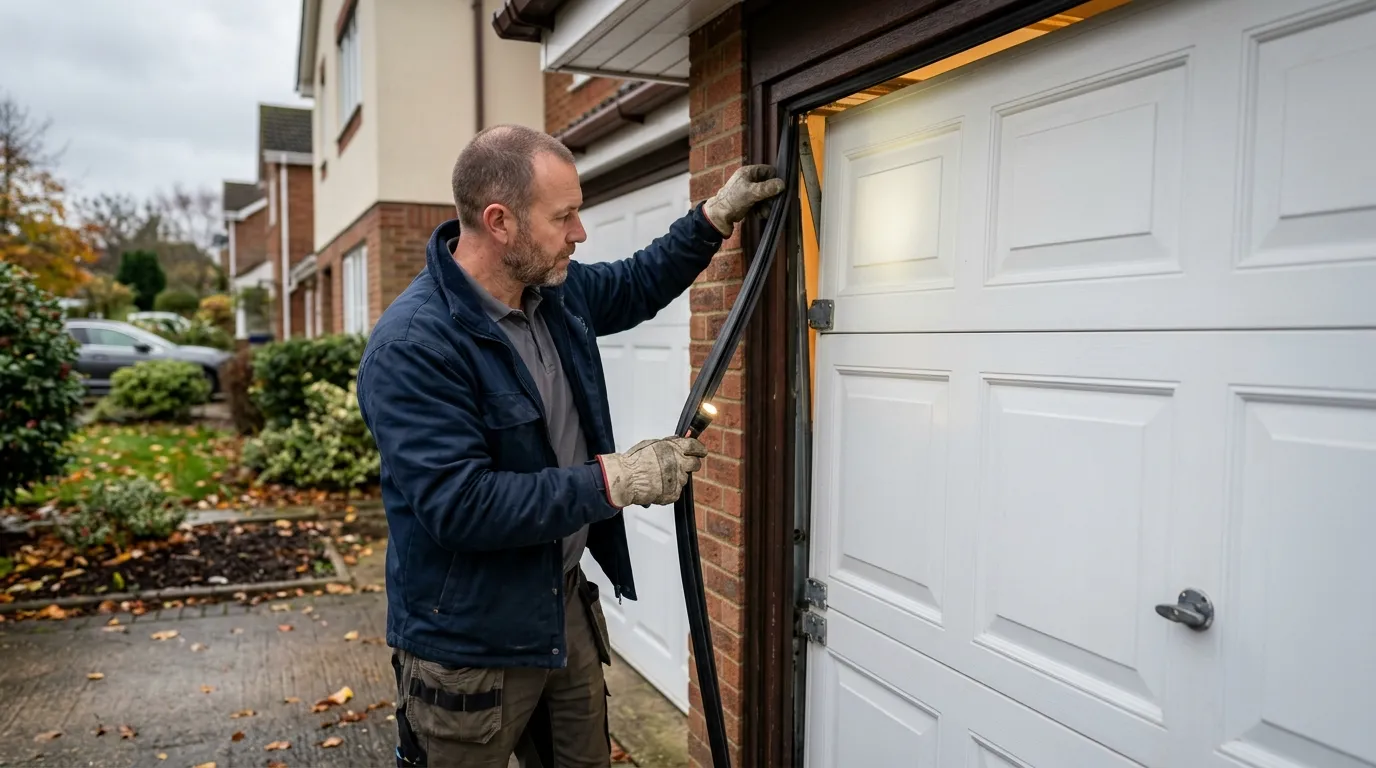
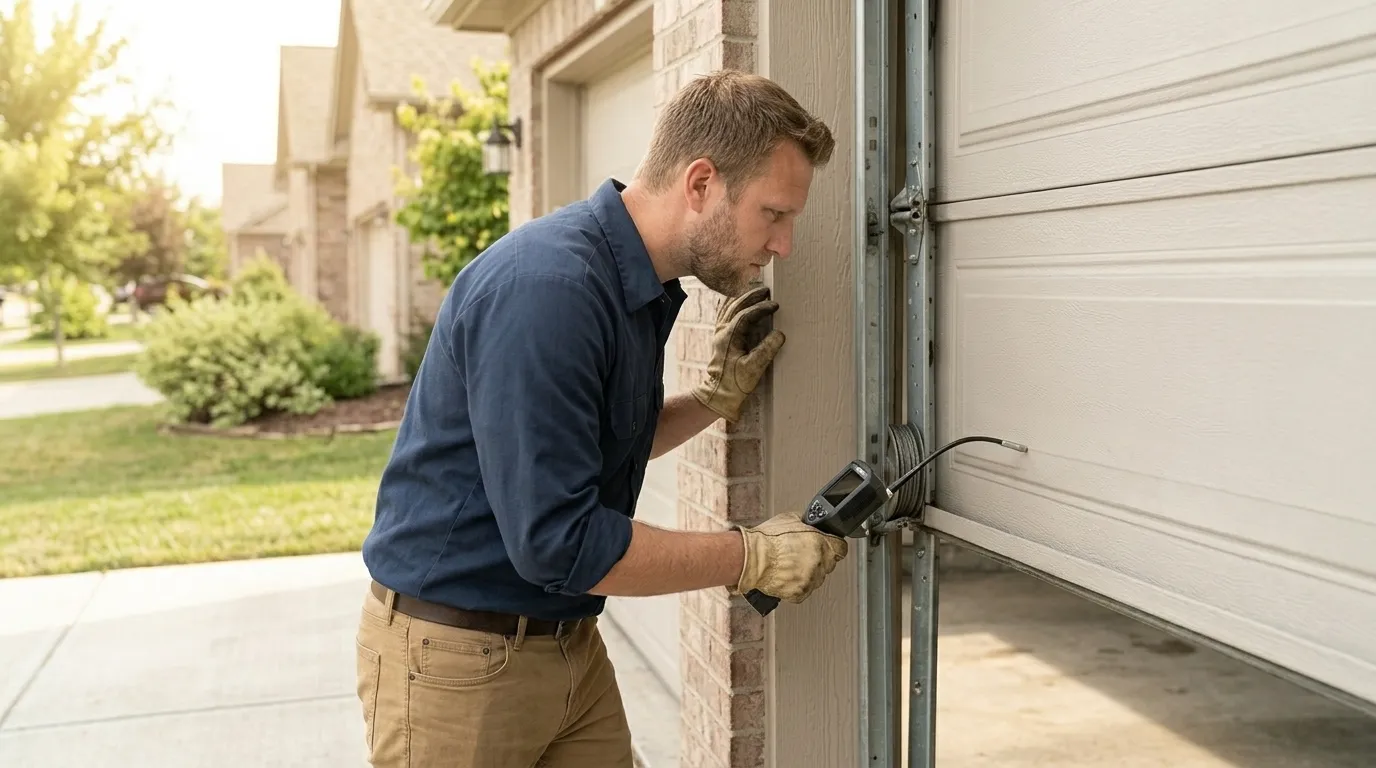
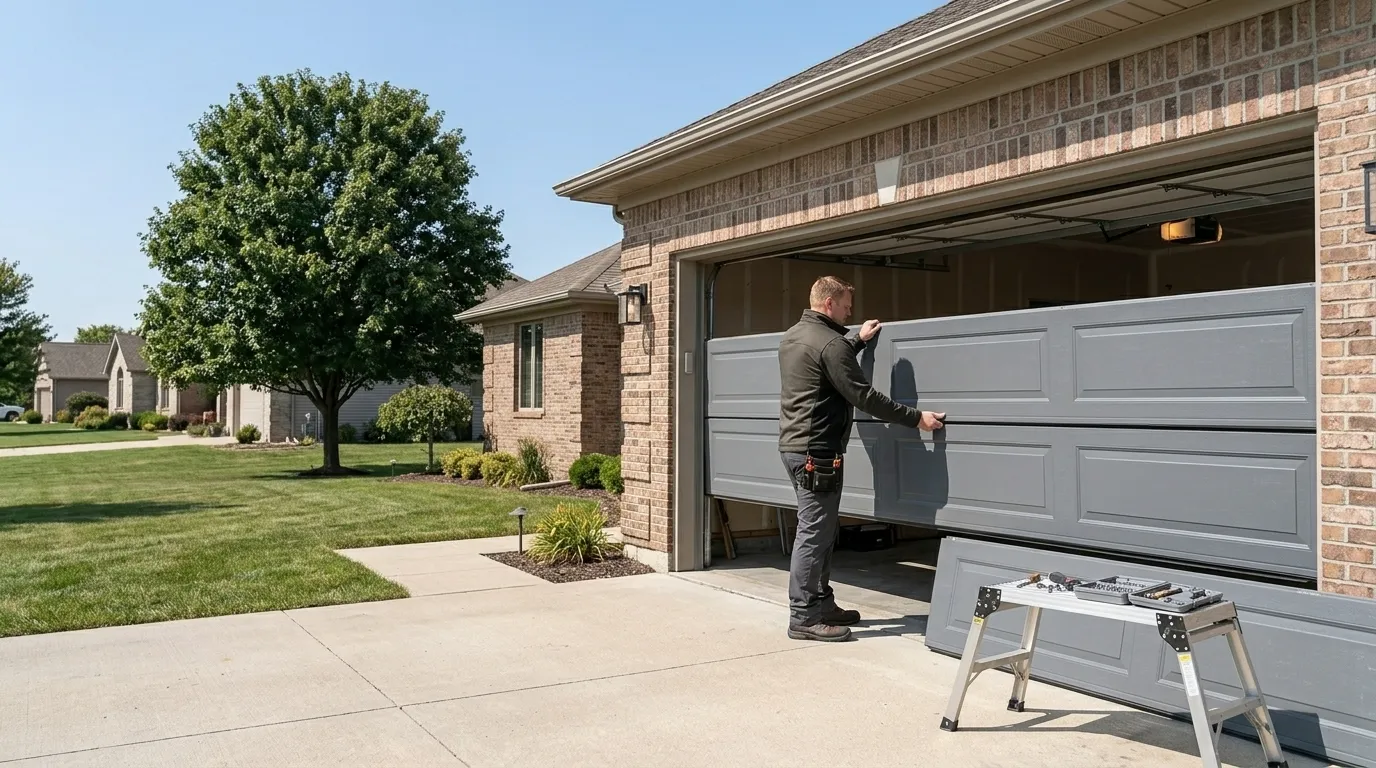
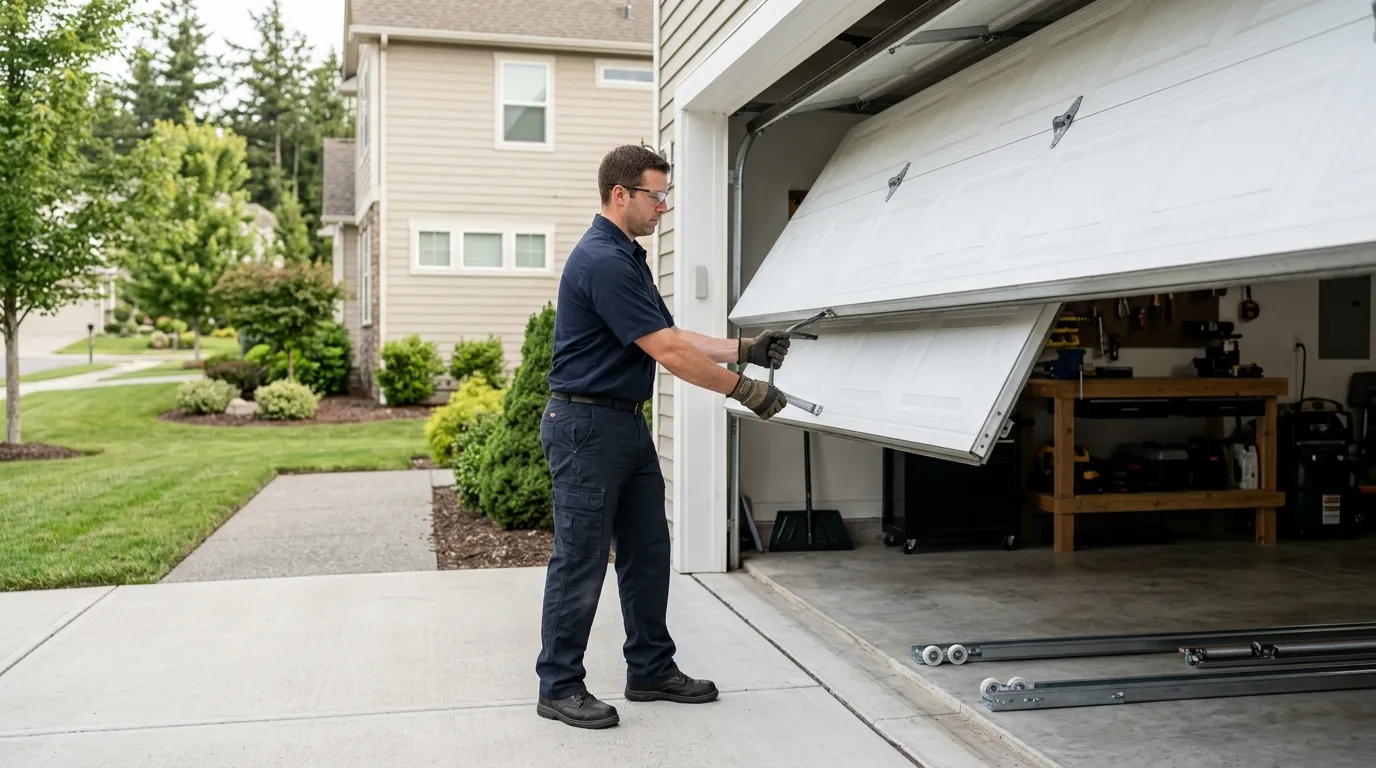
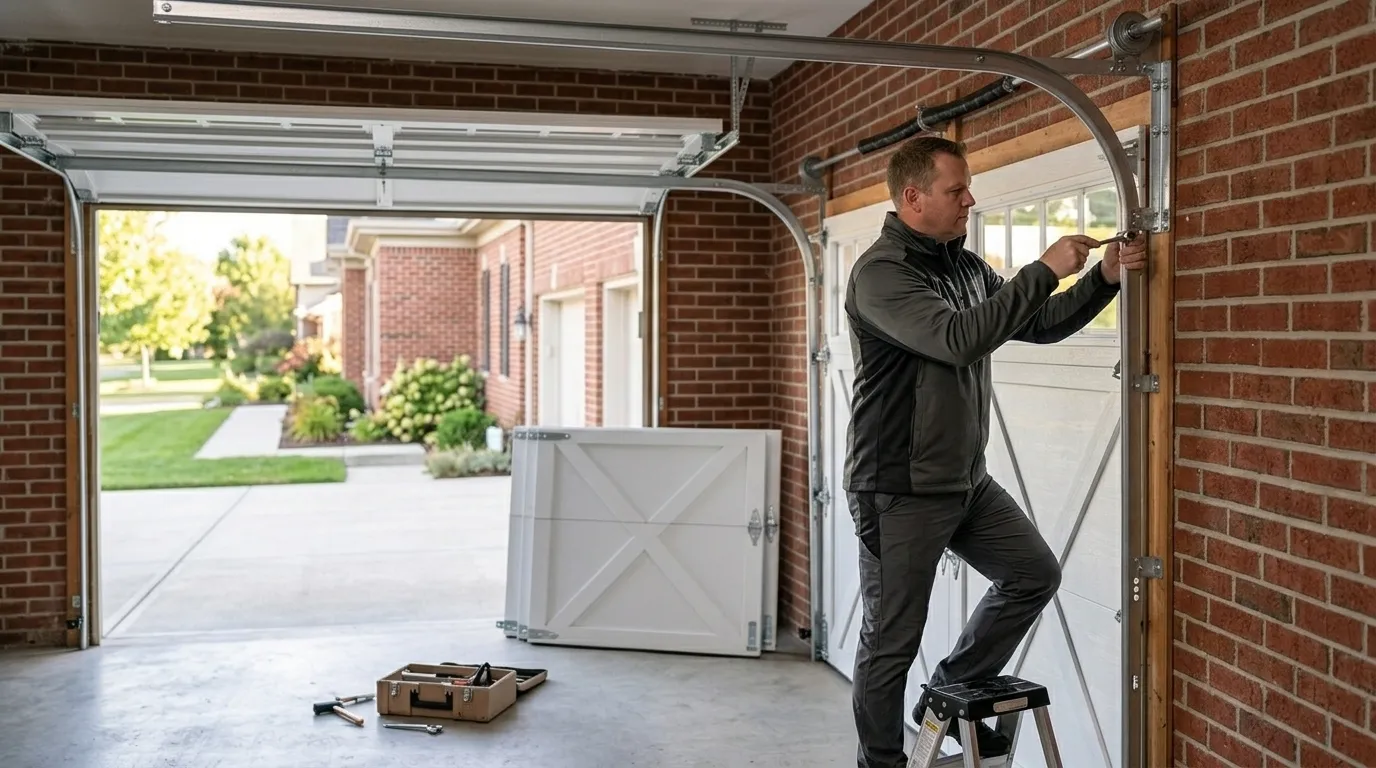
Most of the off-track calls we take in Lansing trace back to the same thing: a roller that's worked loose from a bent section of track, usually after the door's been forced through the last few inches by hand or by an opener that kept pulling after the door caught. Once one roller jumps, the door racks sideways in the frame, and what looks like a simple fix turns into a door hanging on two cables instead of tracking straight.
Lansing's housing is newer than a lot of what we see closer into Kansas City. Most homes here went up around 1987, well past the 1973 median for the wider service area, so the doors and track systems are a different generation of hardware - steel sectional doors on roller-track setups rather than the older one-piece doors on side-mounted hardware you find in the earlier-built neighborhoods we cover. That newer hardware is more forgiving in some ways, but the galvanized track brackets from that era corrode and loosen at a predictable rate, and a loose bracket is often the real reason a door came off track in the first place, not the roller itself.
What Causes It Around Here
Cold winters do their part. The service area sits in a severe cold climate band, and ice buildup in the bottom track is a common trigger - the door tries to close on a track that's got a half-inch of ice in the channel, a roller skips, and the door binds. That's a shared risk across the whole area, not unique to Lansing, but paired with the late-80s hardware here it plays out in a specific way: the roller brackets on doors from that build era are lighter-gauge steel than what you'd find on newer installs, and they flex under ice load instead of holding the roller in the channel.
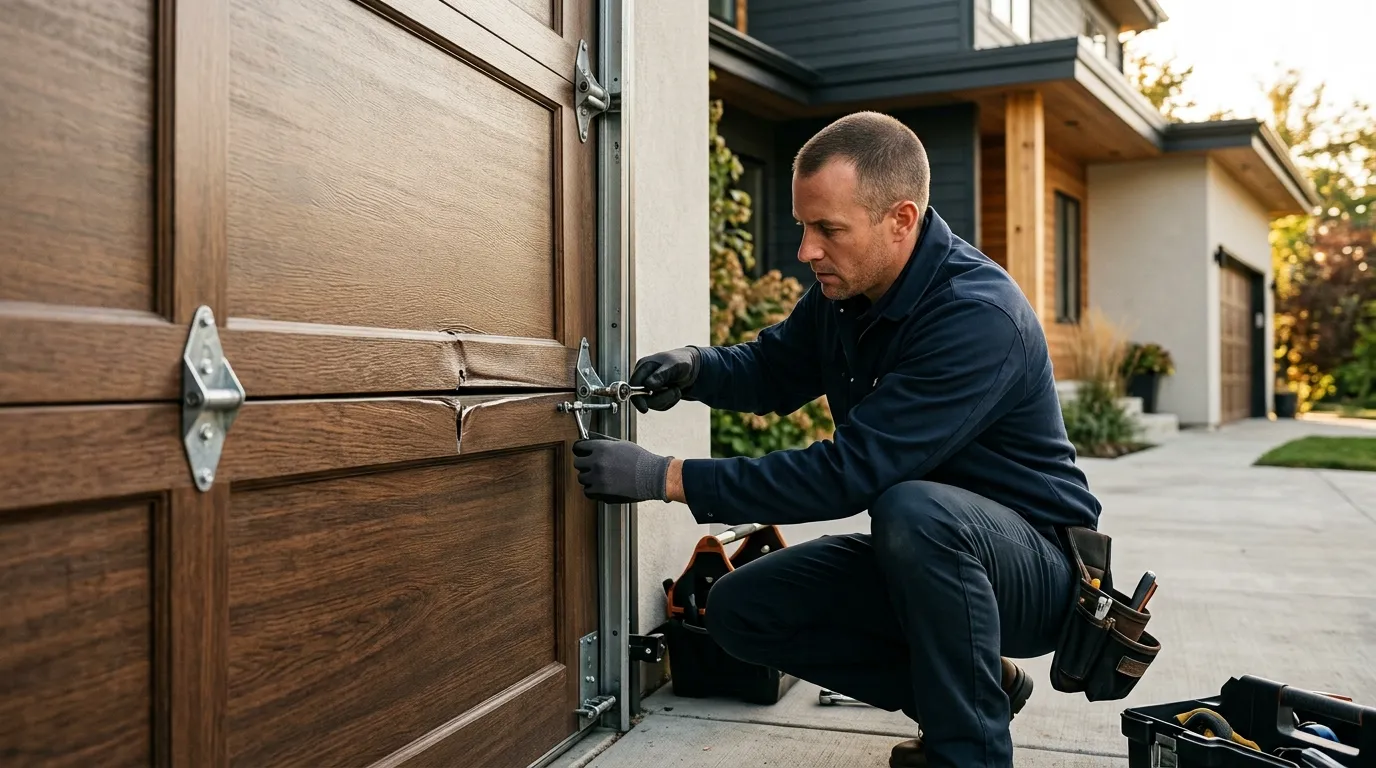
The other common cause is a door that's been hit - a car bumper, a bike, a basketball backboard swung too wide - which bends the track enough that the door rides up over it instead of through it. With Lansing's household income running higher than the area median at $100,871, we also see more double-wide insulated doors, which are heavier and put more sideways load on the track when something knocks it out of line even slightly.
Can You Do This Yourself
If the door popped off track but the cables are still on the drums and the springs look intact, some homeowners can walk the door back onto the track themselves - it's mostly a matter of working the roller back into the channel by hand while someone holds the door steady. That's about the limit of what's reasonable to do alone.
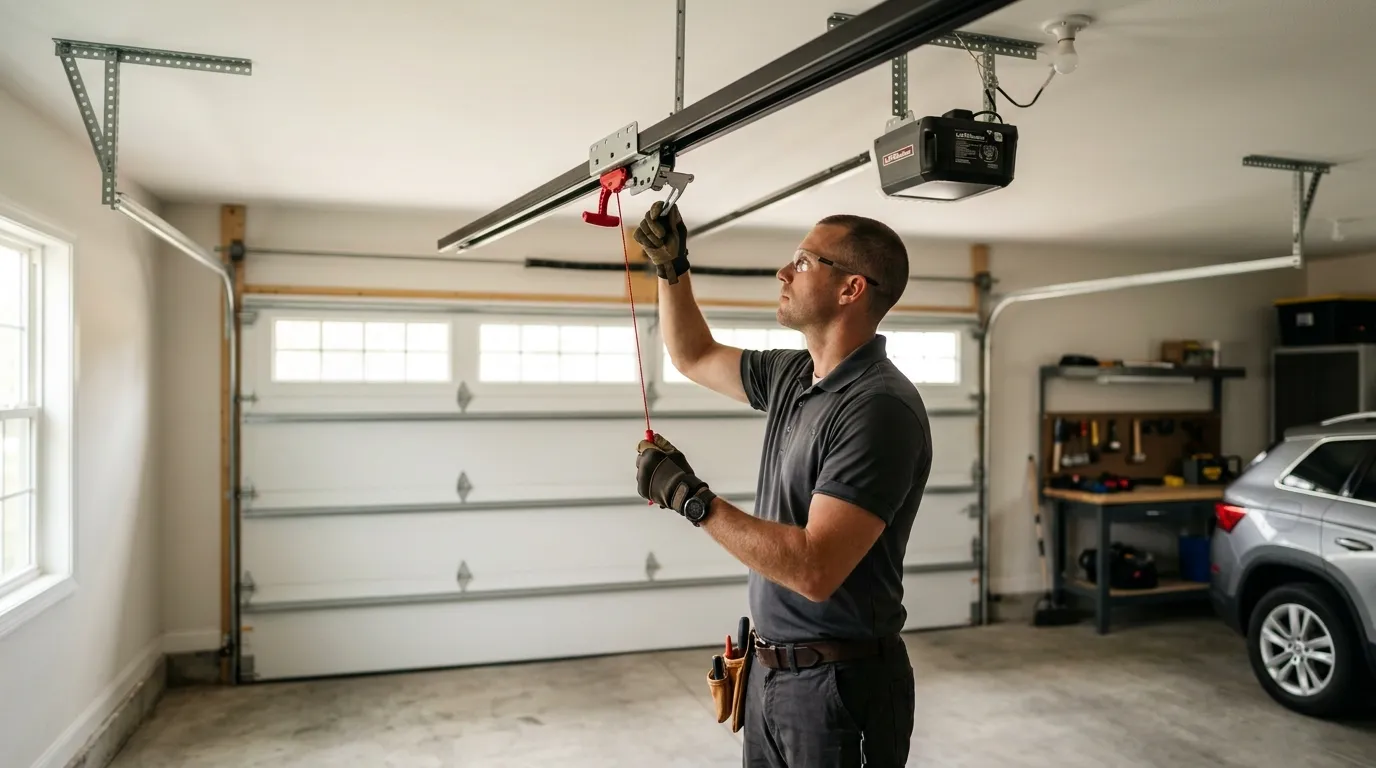
We don't recommend going further than that without the right clamps. If a cable has come off, if a spring is involved, or if the track is visibly bent, that's not a job to push through with a ladder and a screwdriver. Torsion springs under load can cause real injury, and a door that looks stable can still be one wrong move from dropping. Call it in at that point rather than making the track damage worse trying to force the door back into line.
Getting It Booked In
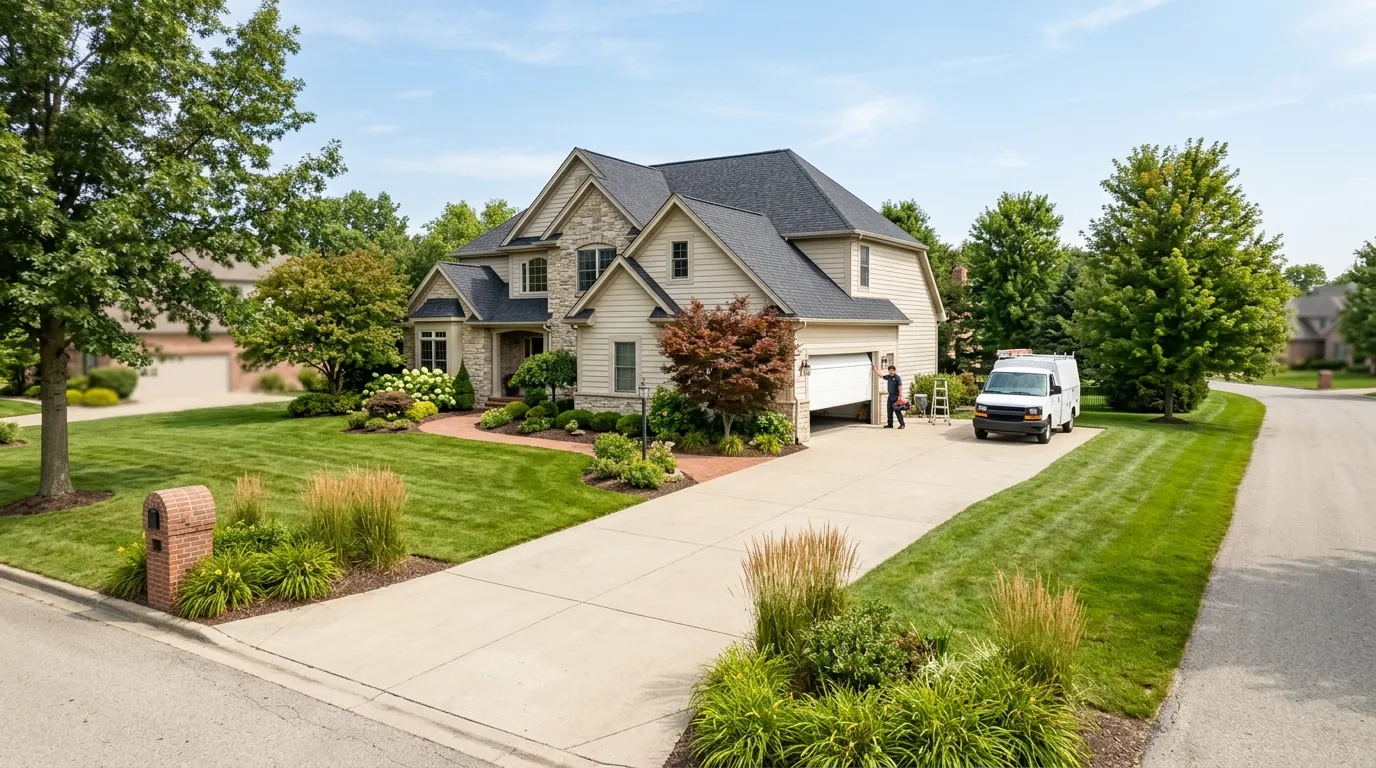
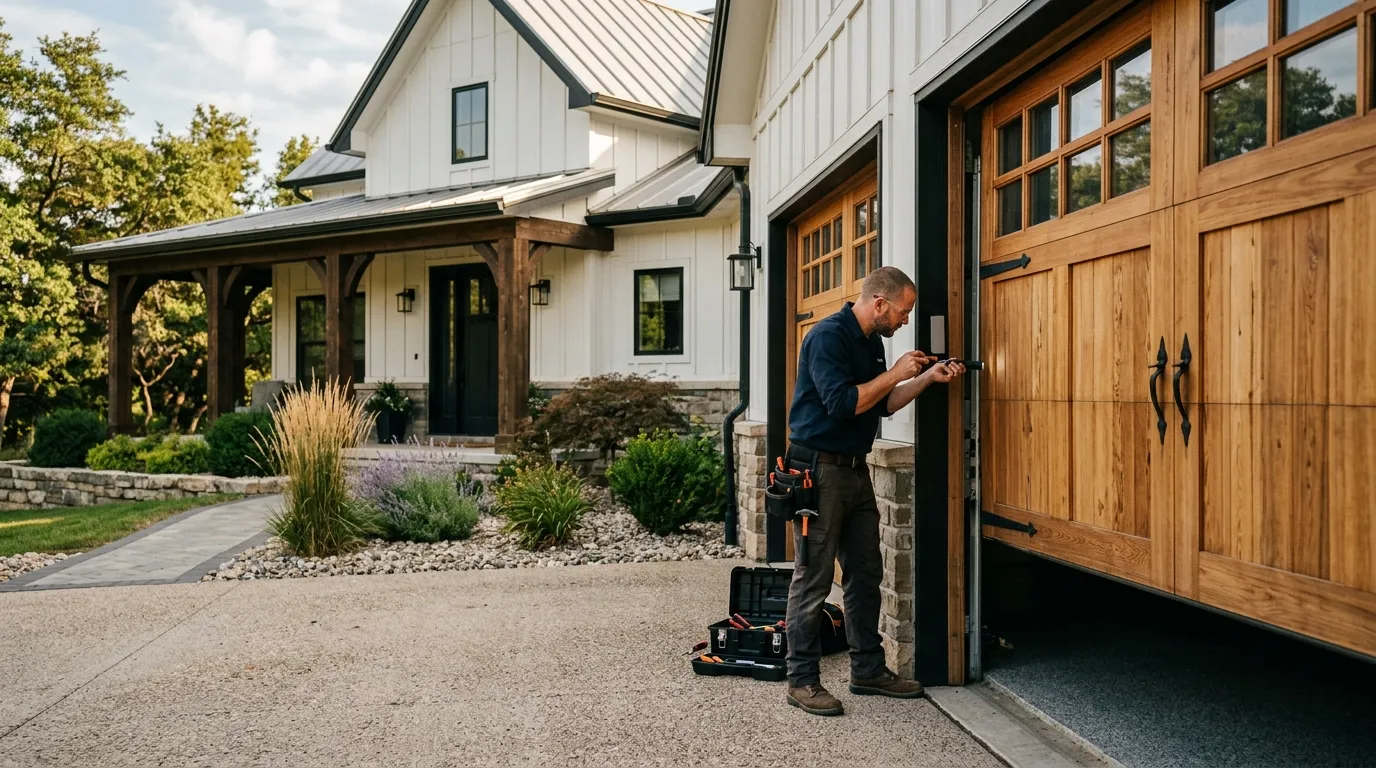
We come out to Lansing from Kansas City, so we schedule the visit around the drive - it's one of the longer stops on our service area map at about 12 miles out, so having a clear description of what's happening (door off on one side, both sides, cables loose, track visibly bent) helps us bring the right parts the first time instead of a second trip. You can see the rest of what we cover in the area on our Lansing service page.
If your issue turns out to be broader than the track - opener trouble, a cracked panel, springs that need replacing along with the track - that's covered on our general off-track and garage door repair page for the Kansas City area, which goes into the full range of what we handle beyond this one fault.