Time on the Job
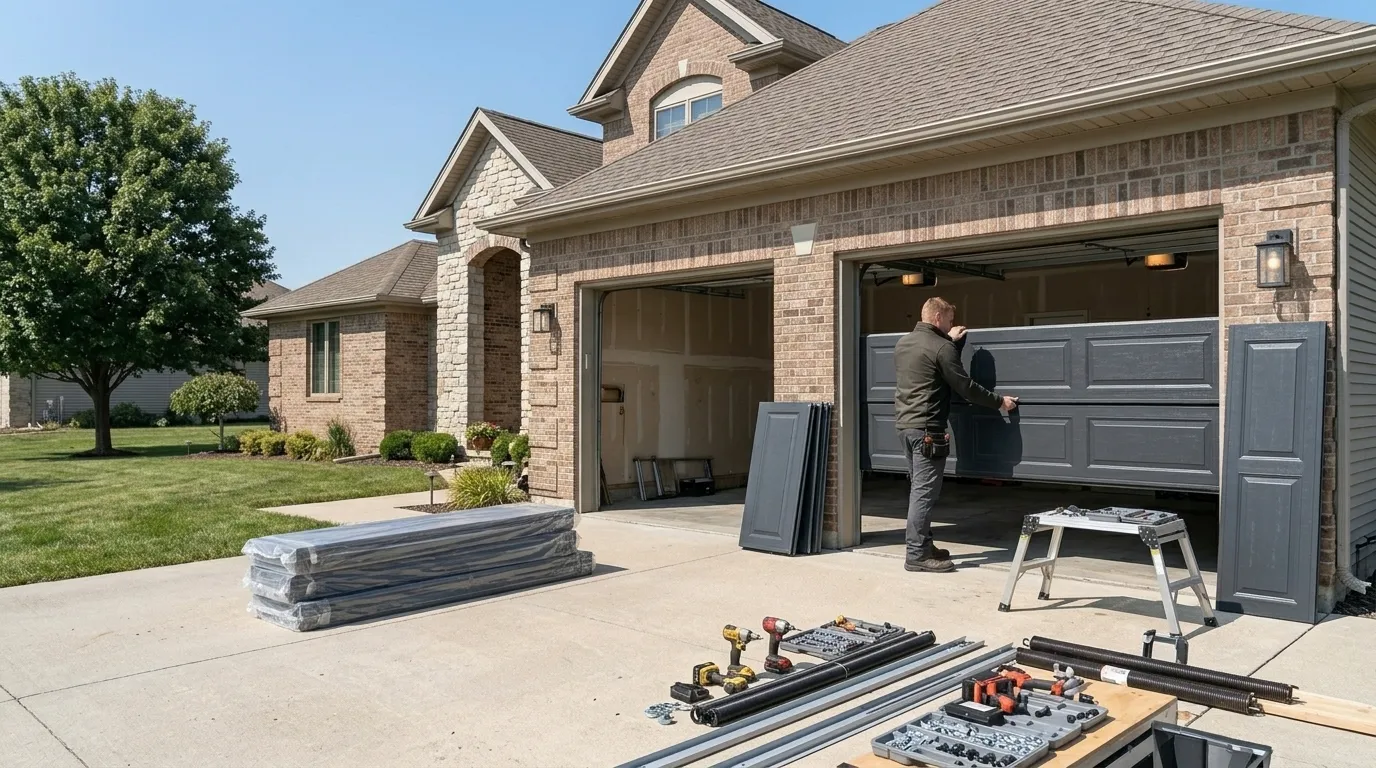
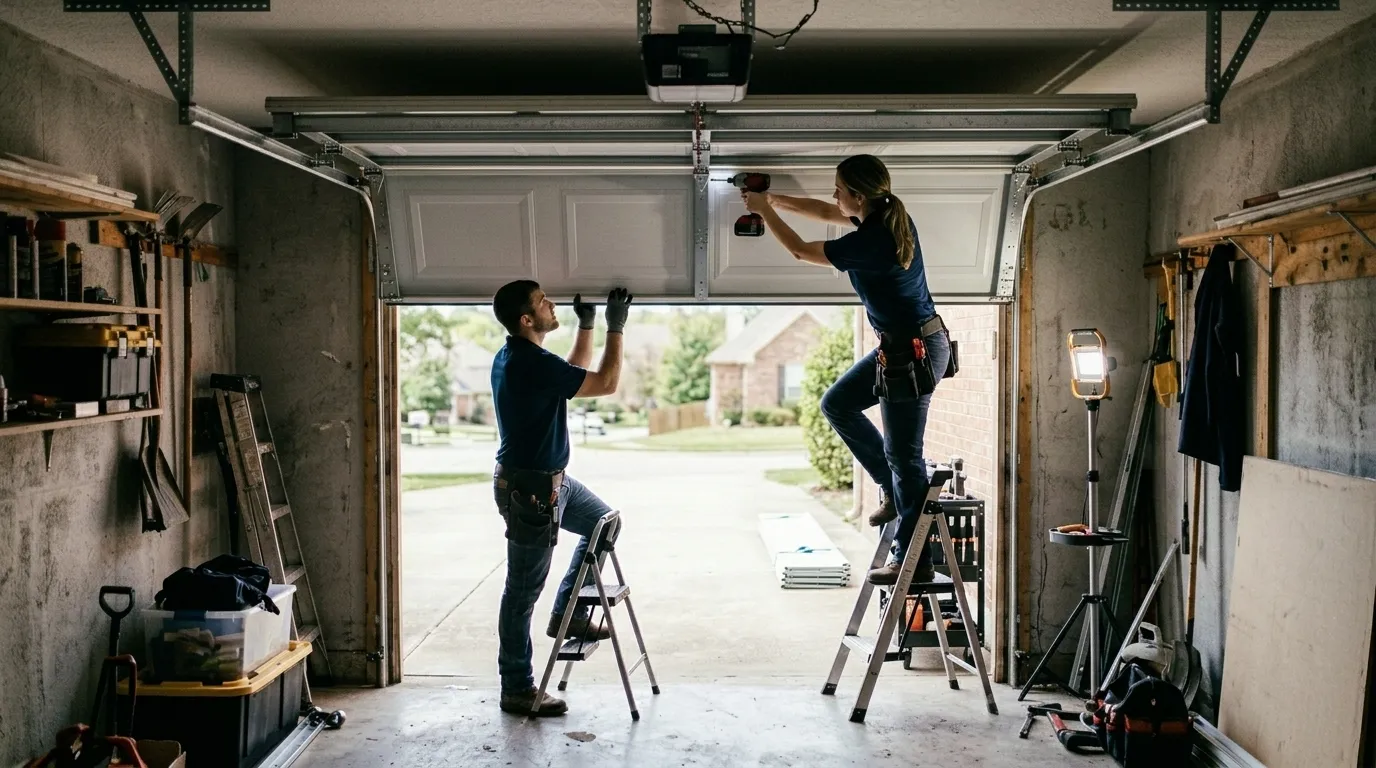
Lansing's houses cluster around a 1987 build year, which puts a lot of openers here at close to forty years old if nobody's swapped them out. That's the piece that's easy to miss: the door itself might've been replaced once, but the opener bolted to the ceiling joist is very often the original unit from the builder, especially in a town this size where a lot of houses haven't turned over hands more than once or twice. Chain-drive openers from that era used steel gears in some models and nylon in others, and either way, forty years of use wears the drive mechanism down to metal-on-metal noise before anyone calls. We come out from Kansas City, about 12 miles, and the calls we get from Lansing skew toward openers that have simply run out of years rather than ones with a fresh fault. That distinction matters for how we quote the job - a worn-out unit isn't a quick part swap, it's a full replacement conversation.
What Causes It Around Here
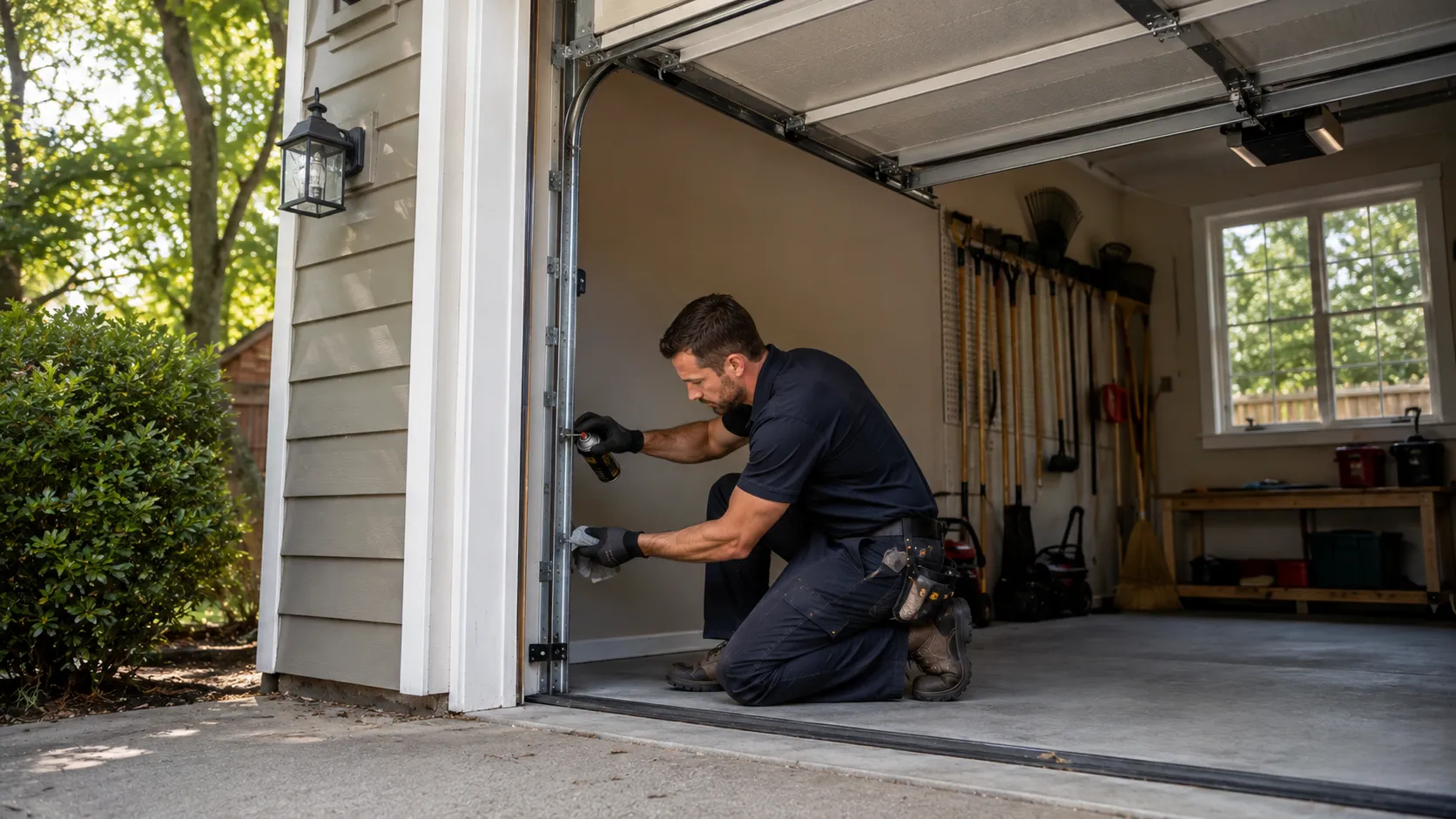
Kansas City sits in a cold-severe climate band, and Lansing shares that weather. Winter cold makes grease inside an opener's gearbox stiffen up, which puts extra load on the motor every time it starts a lift cycle. On an opener already thirty-plus years old, that's often the difference between it starting sluggish and not starting at all on a January morning. The other common cause we see on original-era units is the capacitor or logic board simply failing from age - these parts weren't built to last four decades, and nobody expected them to. Add in worn drive gears from all those winter starts, and you get the two most common calls out of this housing stock: a motor that hums but doesn't move the door, and a door that opens fine on manual pull but won't respond to the wall button or remote at all.
Can You Do This Yourself
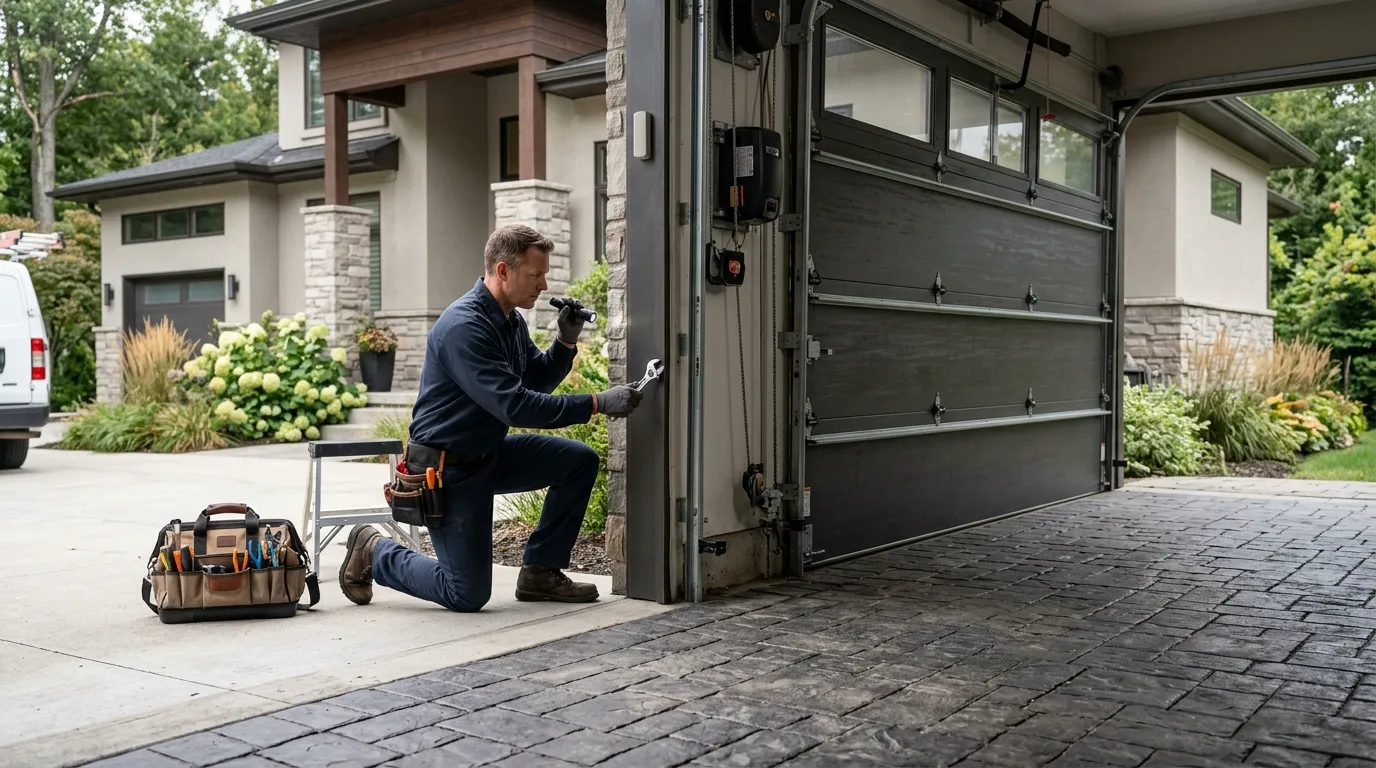
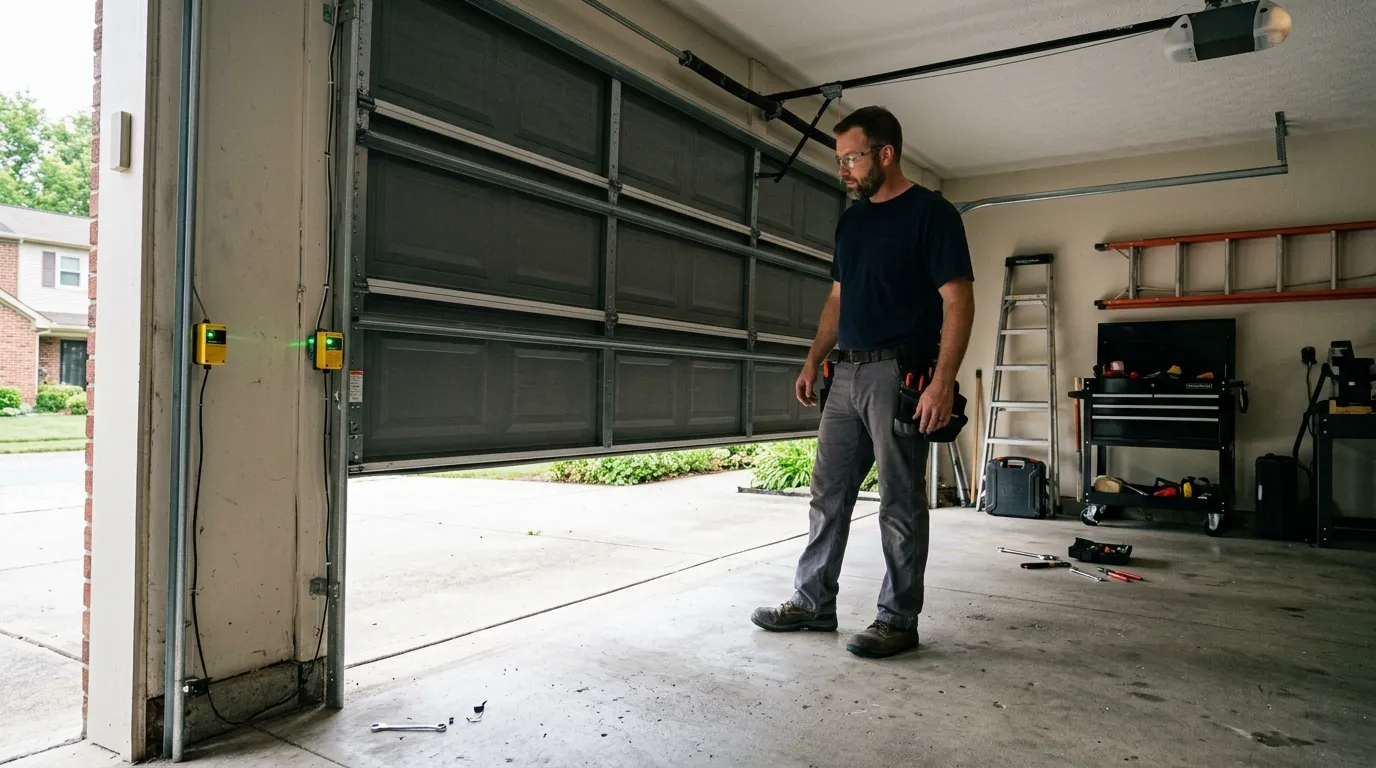
Testing whether your opener's dead is simple: pull the manual release cord and see if the door moves freely by hand. If it does, the problem is electrical or in the drive train, not the door or springs, and that's useful to know before you call anyone. Swapping remote batteries or reprogramming a remote is also something most homeowners can do with the manual, if you still have it. Where we'd tell you to stop is anything involving the logic board, the motor housing, or the travel limit switches - those carry line voltage and on an opener old enough to be original to a 1987 build, the wiring insulation can be brittle enough that opening the housing yourself risks a short or a shock, not just a wasted afternoon.
Getting It Booked In
We run this call out of Kansas City, roughly 12 miles from Lansing, so when you book, tell us the opener's approximate age and whether the door moves by hand when disconnected - that alone tells us whether we're bringing a gear kit or a full replacement unit. With Lansing's household income running a bit above the wider service area, we do see more owners here opt for full opener replacement over patchwork repair once a unit hits the age where boards aren't available, since the math on chasing obsolete parts stops making sense. Either way, we'll give you the real number on-site before we touch anything.