
Time on the Job
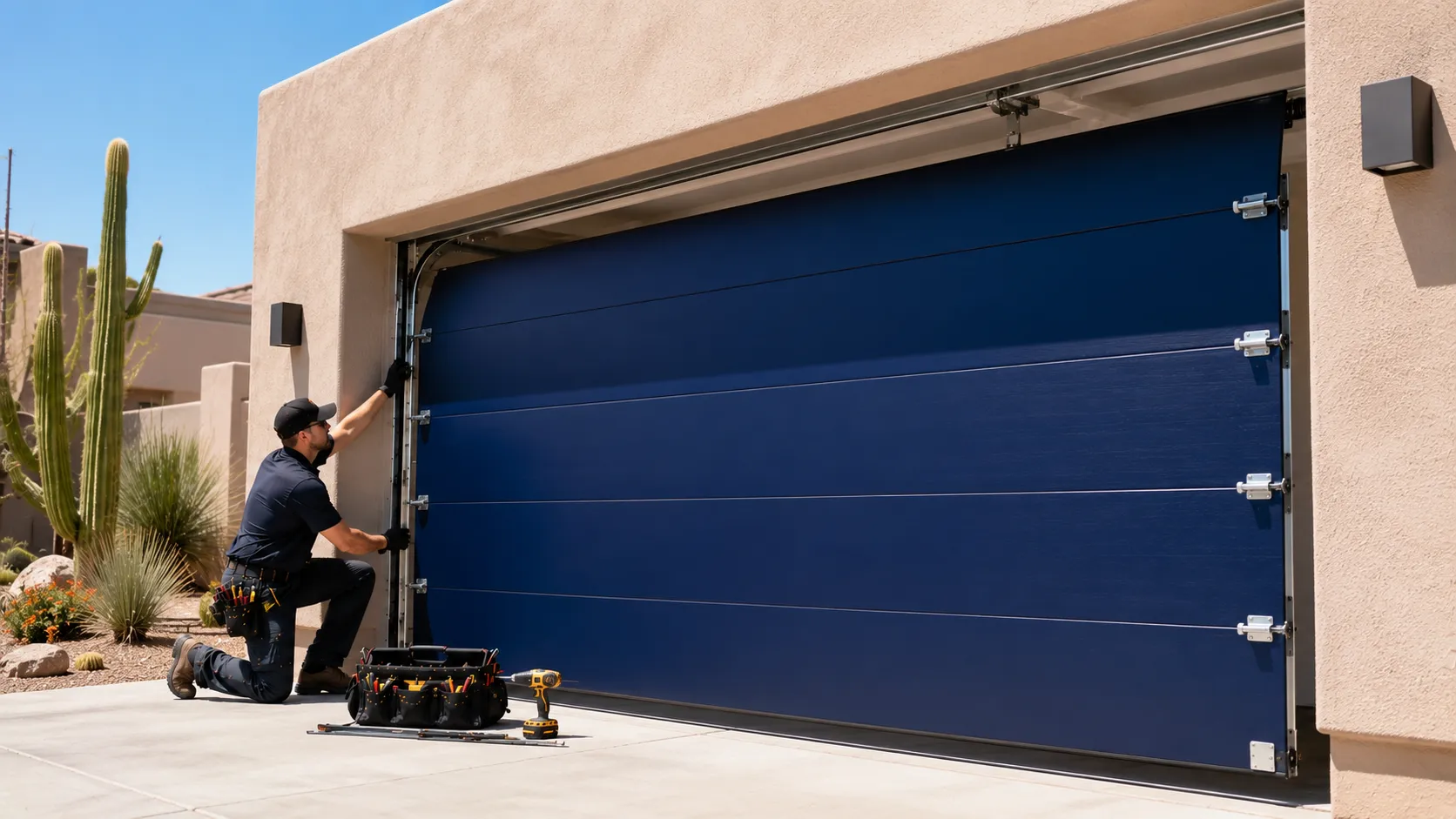
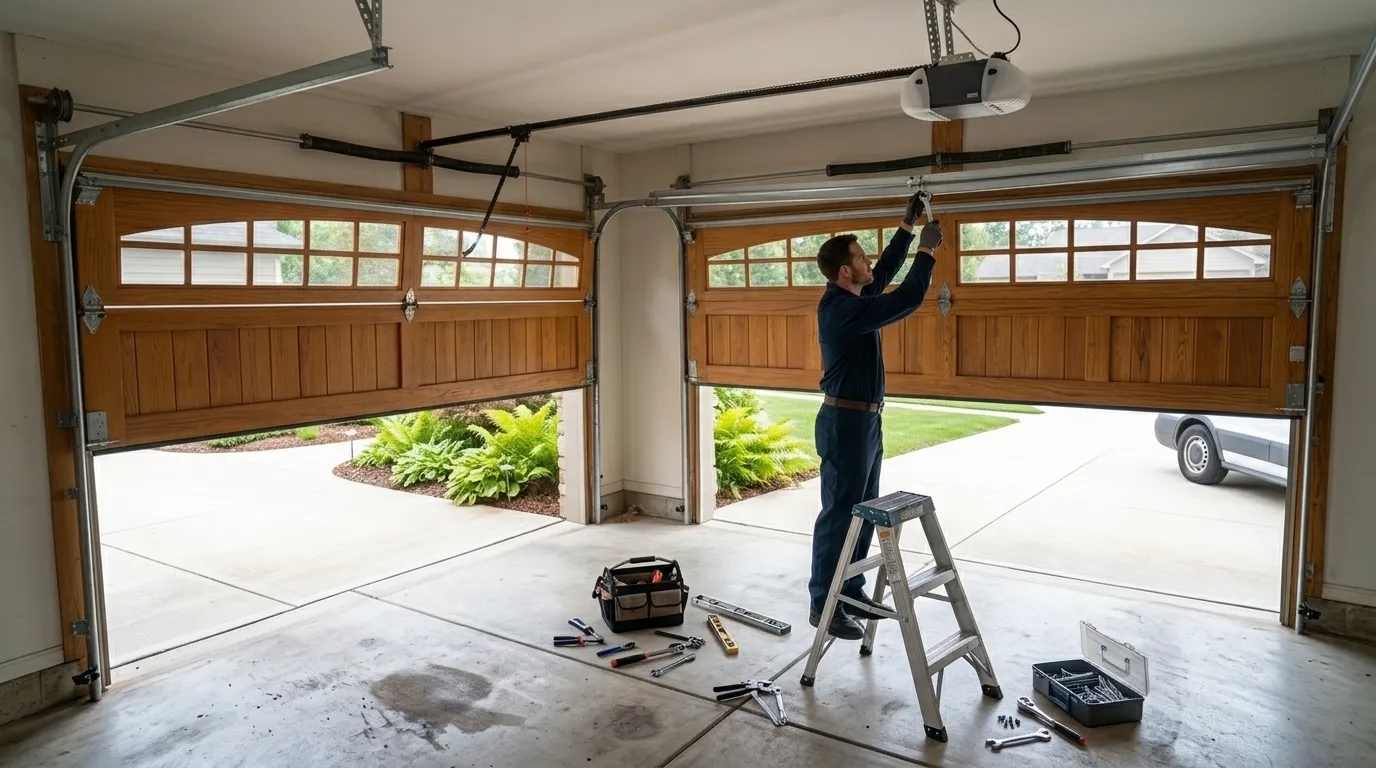
We're coming in from Kansas City, about 17 miles, so we don't pretend to have a truck parked around the corner. What we do have is a decent read on what's likely wrong before we knock on the door, because most of Leavenworth's houses were built around 1969, and that generation of garage doors fails in predictable ways. A torsion spring job on a double door, once we're on site, usually runs under an hour. A full opener swap takes longer, mostly because we're pulling old wiring and mounting brackets that were never meant for a modern unit. We'd rather tell you the real window up front than promise something we can't back from across town.
The Complications
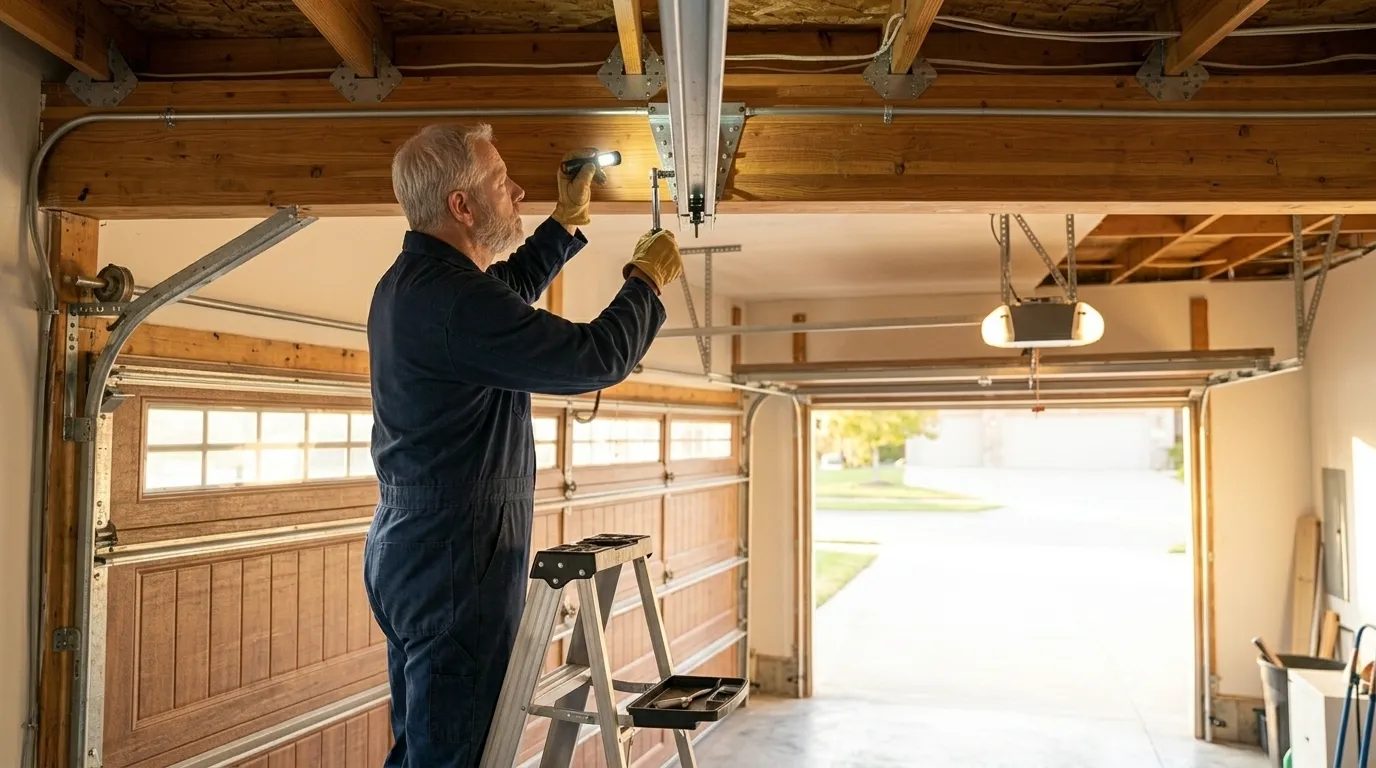
At a median household income of $71,239, most Leavenworth homeowners aren't looking to gut and replace a door that's basically sound. That number matters because it sets the repair-or-replace line lower than it would in a wealthier suburb - a $400 spring and roller job makes sense here far more often than a $2,000 full replacement, and we say so when it's true. The complication shows up on doors built to the 1969-era standard: steel that's thinner than what's sold now, hardware sized for openers half the horsepower of today's units. Swapping in a modern 1/2 HP opener onto 1969 framing without reinforcing the header is how you get a door that runs but shakes the wall doing it. We check that before we hand you a bill, not after.
Getting It Booked In
Since we're driving out from Kansas City rather than working out of a Leavenworth yard, book a service call rather than expecting a same-hour drop-in. Tell us the door's symptom - won't close, opener runs but door doesn't move, spring snapped and it's stuck - and we'll bring the right parts on the truck instead of guessing on site. For houses in this 1969-median build range, we usually already know the torsion size and track gauge before we arrive, which cuts the visit down. If your address falls outside what we cover from Kansas City, check the area page before you call.
Can You Do This Yourself
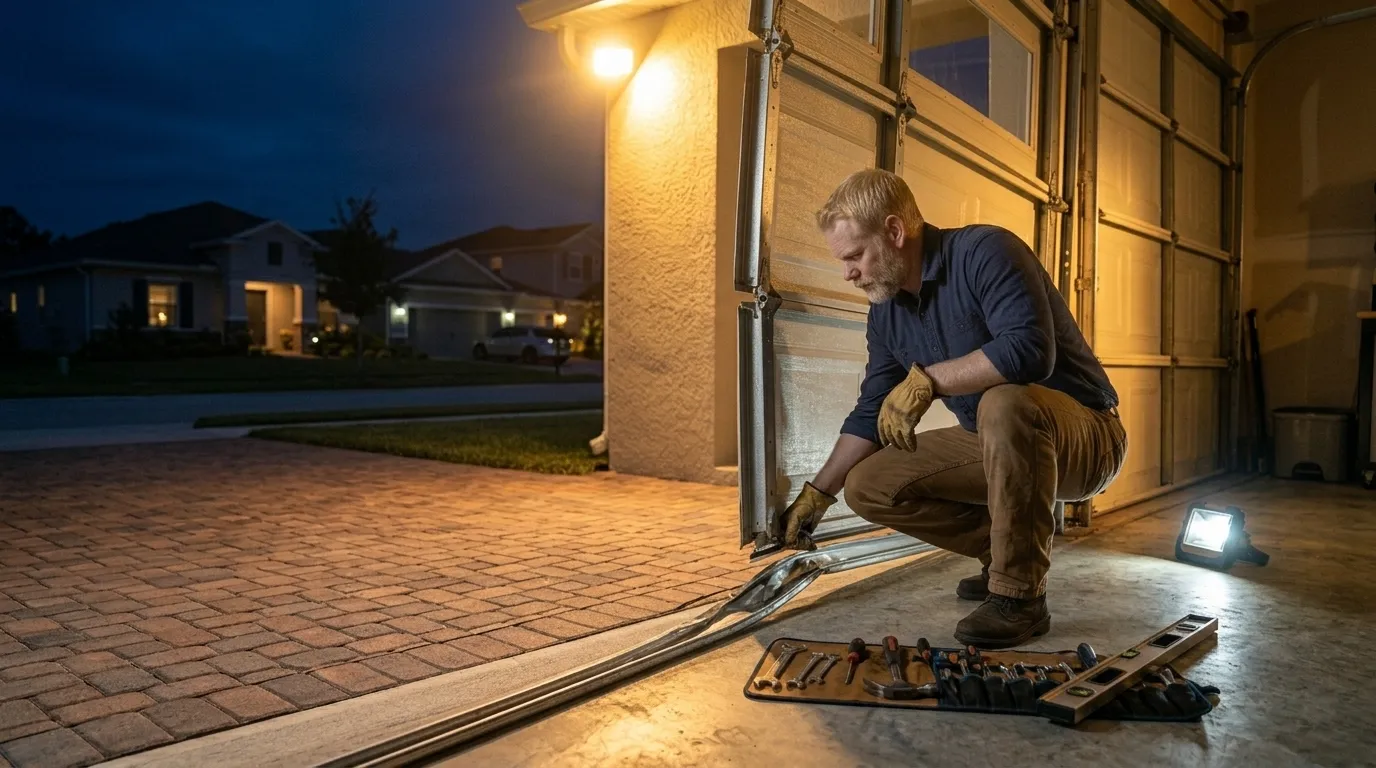
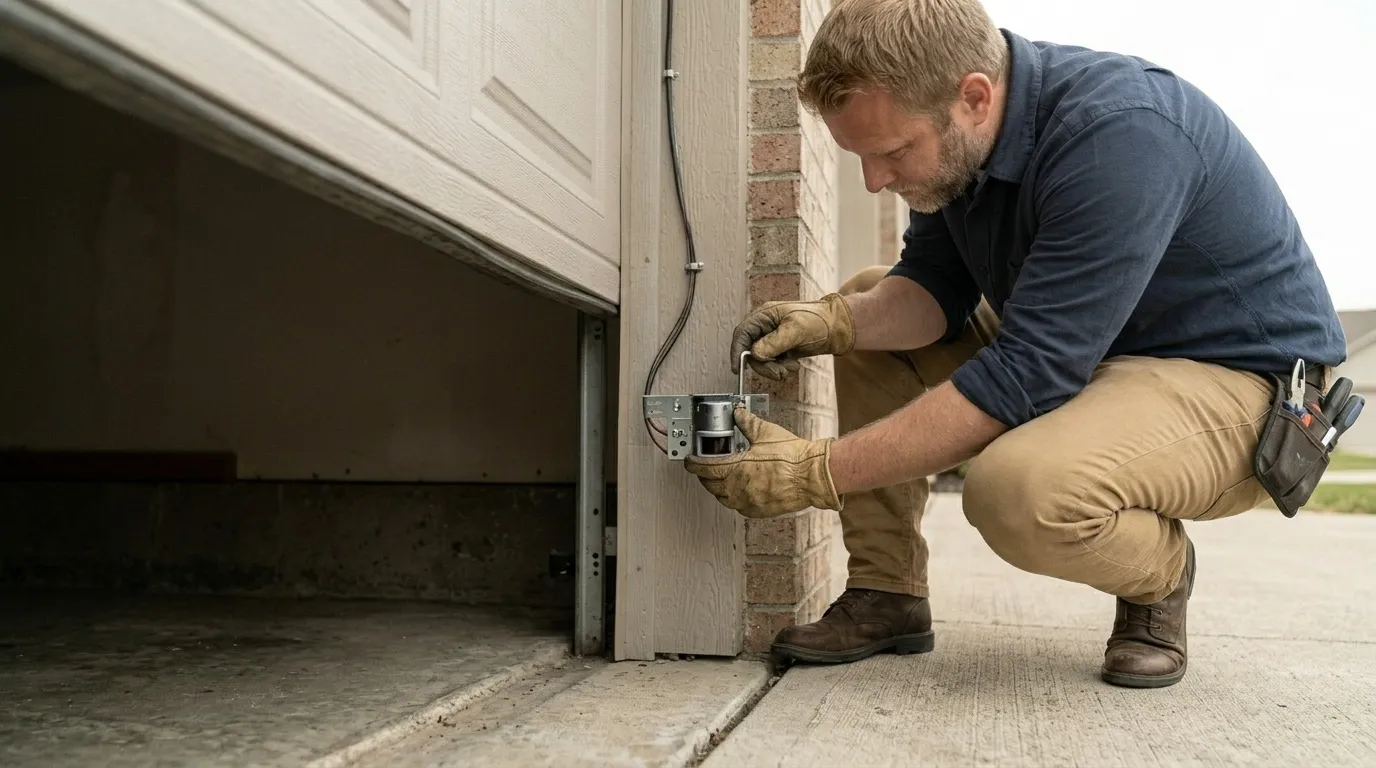
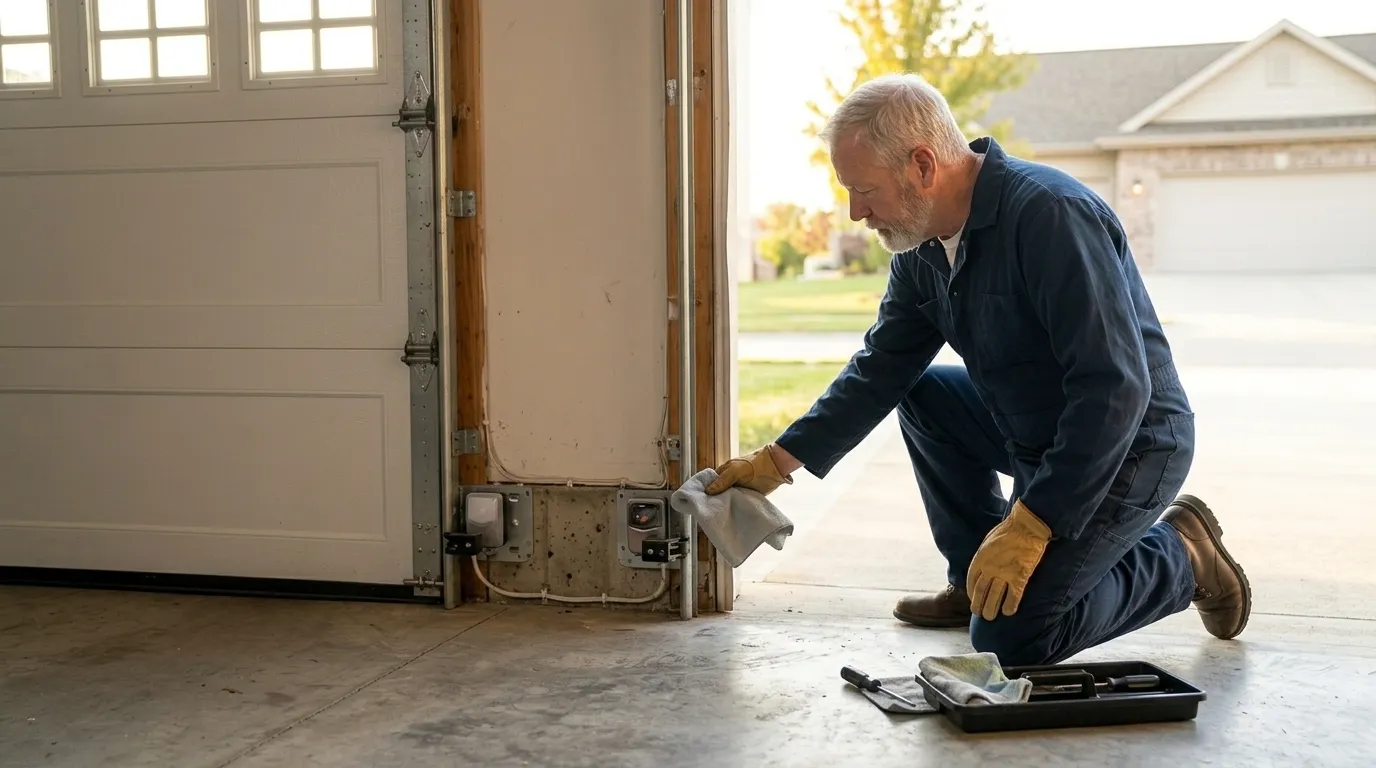
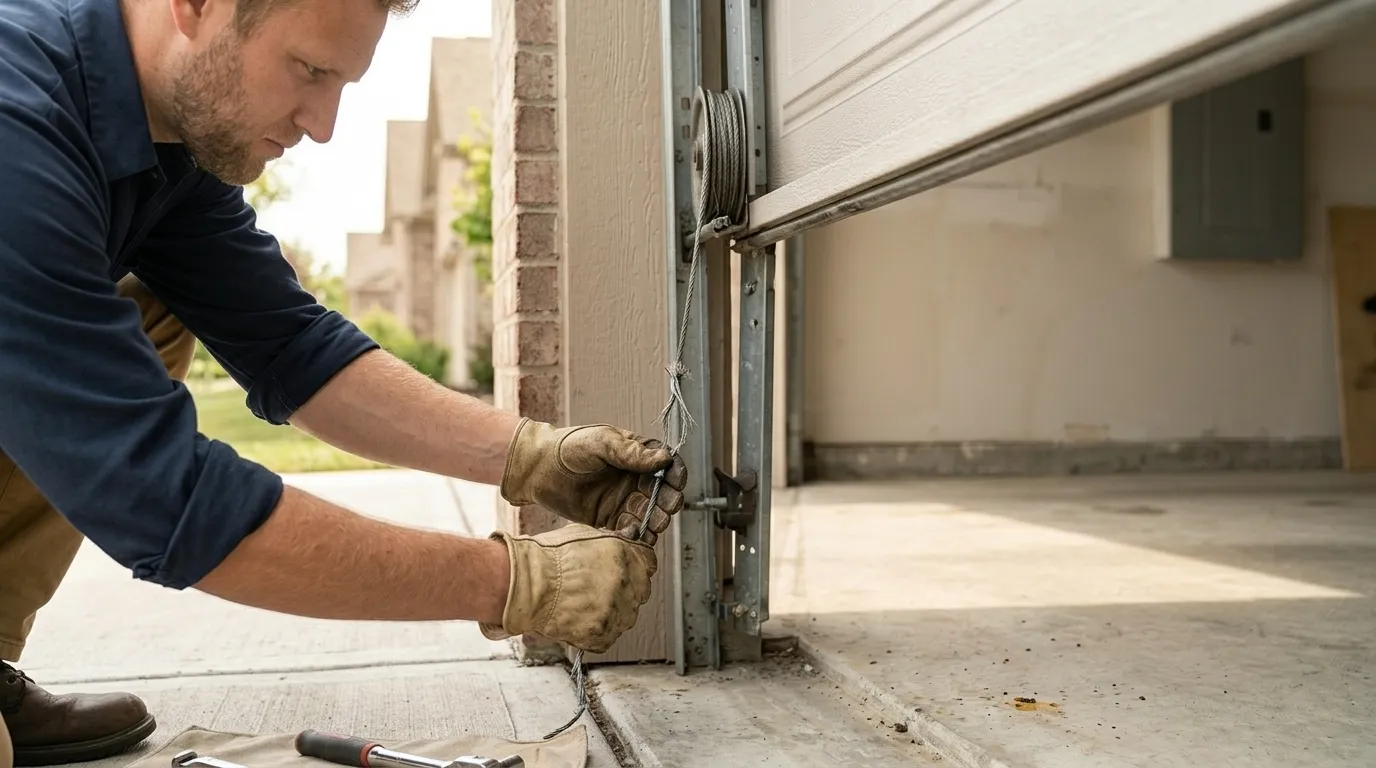
A torsion spring is under enough tension to break a wrist or worse, and that's true no matter how old your door is or how many YouTube videos you've watched - leave that one to us. Where you can help yourself: a door that's gone off track from a bumped car, or a sensor that's just dirty or knocked out of alignment, is often a five-minute fix with no tools beyond a rag and a level eye. If the door in your 1969-era Leavenworth house is sagging on one side and the track's pulling away from the framing, that's a structural call, not a DIY afternoon - the wood behind that track has 50-plus years on it and doesn't always hold a new screw the way it should.