Time on the Job
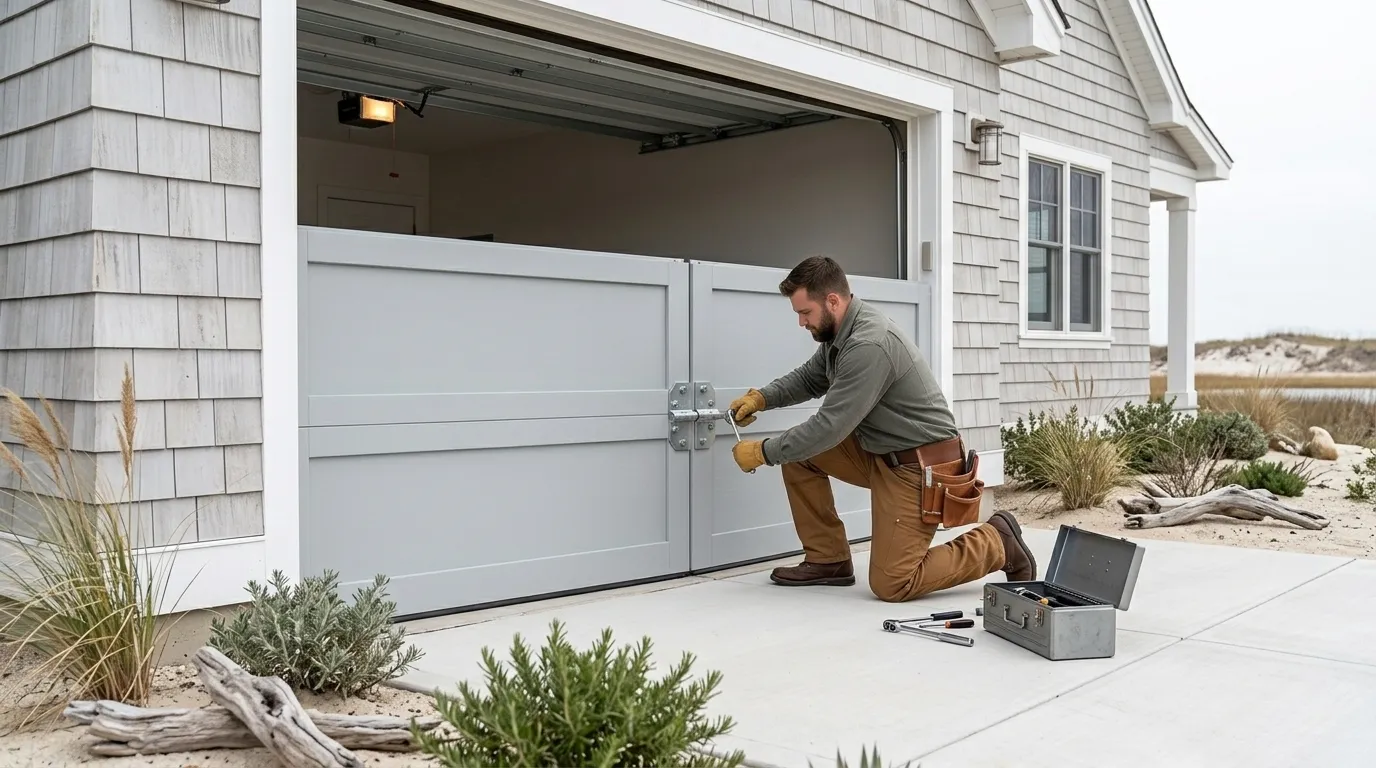
Leavenworth sits about 17 miles from our shop in Kansas City, which is the first thing that shapes how a panel job here actually runs. That's roughly a 25 to 30 minute drive each way depending on traffic on the connecting highways, so a straightforward single-panel swap on a door where we already know the make and section size gets handled in one visit. A job where a panel is dented on a door built before section sizing was standardized, or where we need to special-order a matching color and profile, means a second trip after parts come in. We don't dress that up: driving the distance twice for one job is baked into how we schedule Leavenworth work, and we tell you upfront whether your door is a one-visit or two-visit repair before we load the truck, not after we've already made the drive once.
The Complications
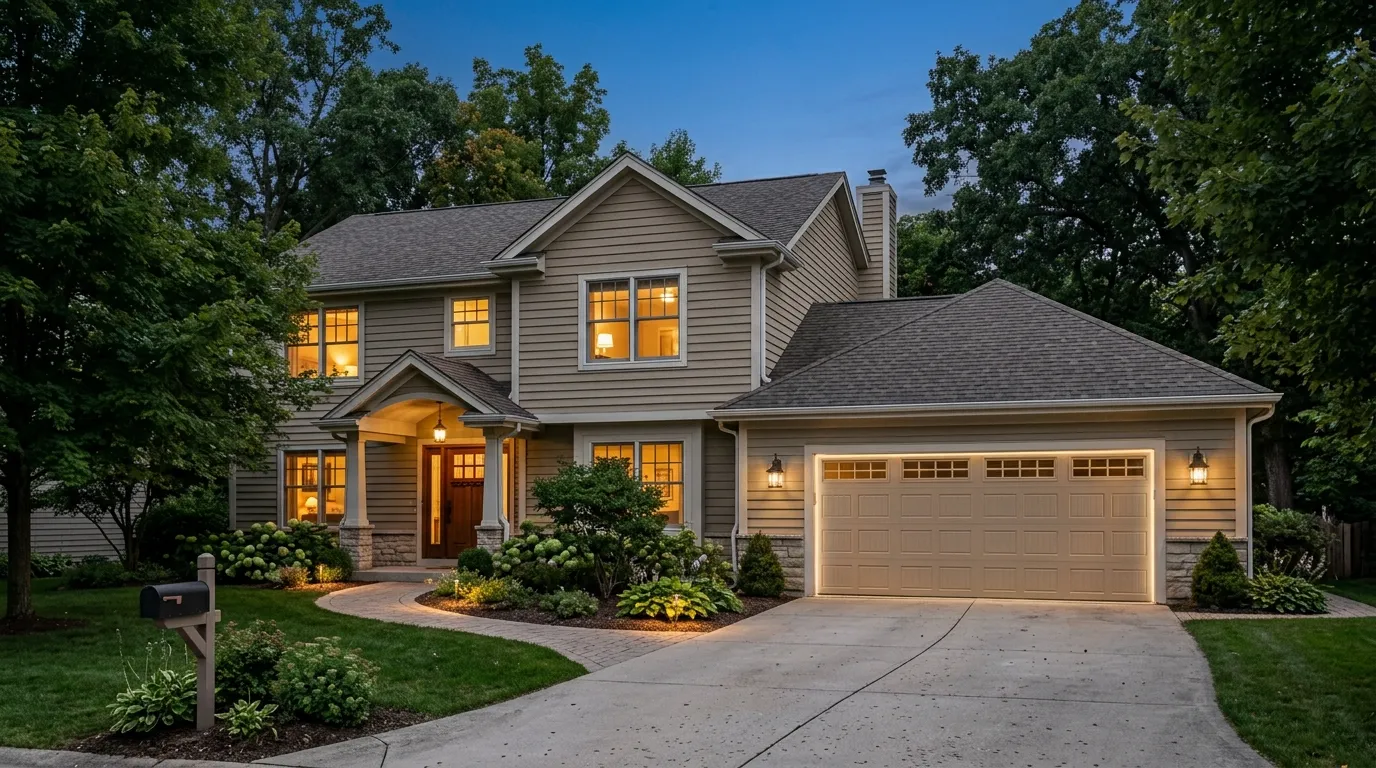
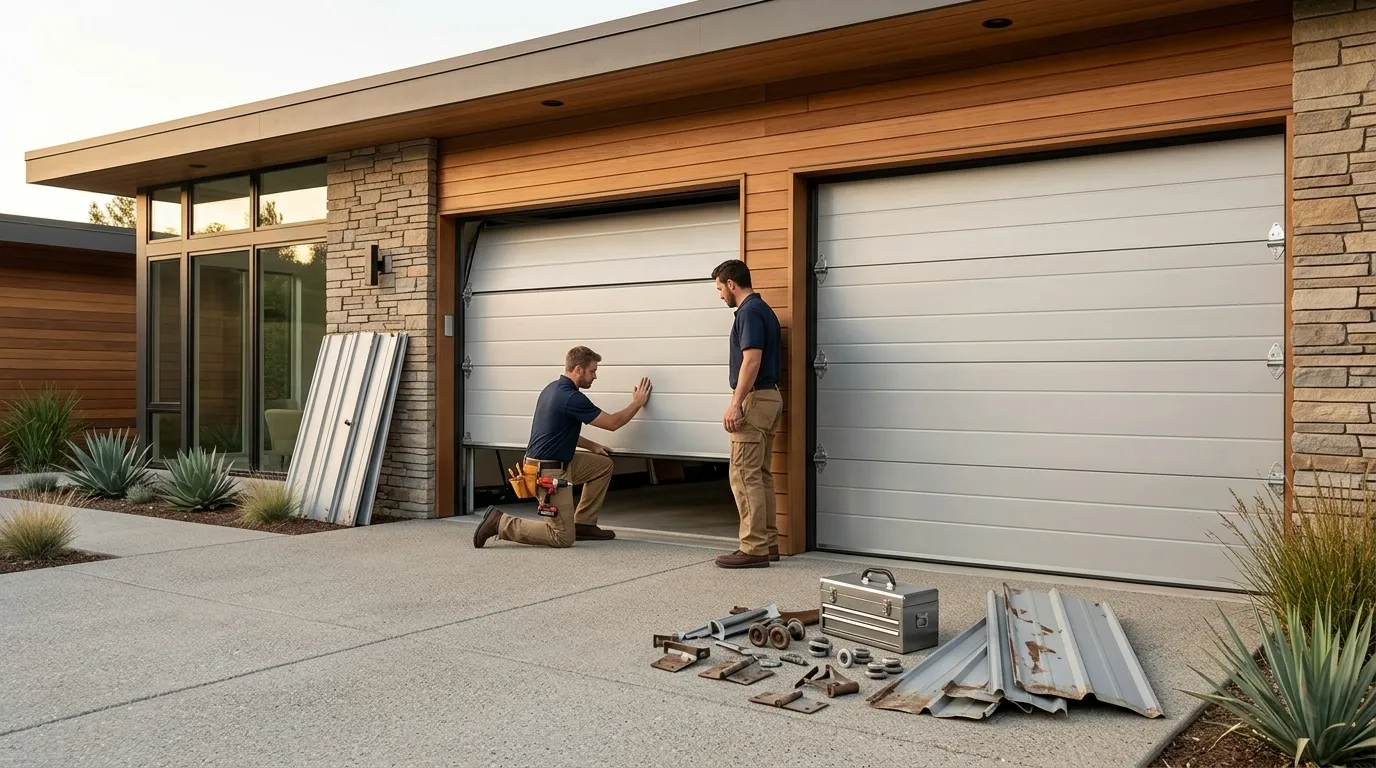
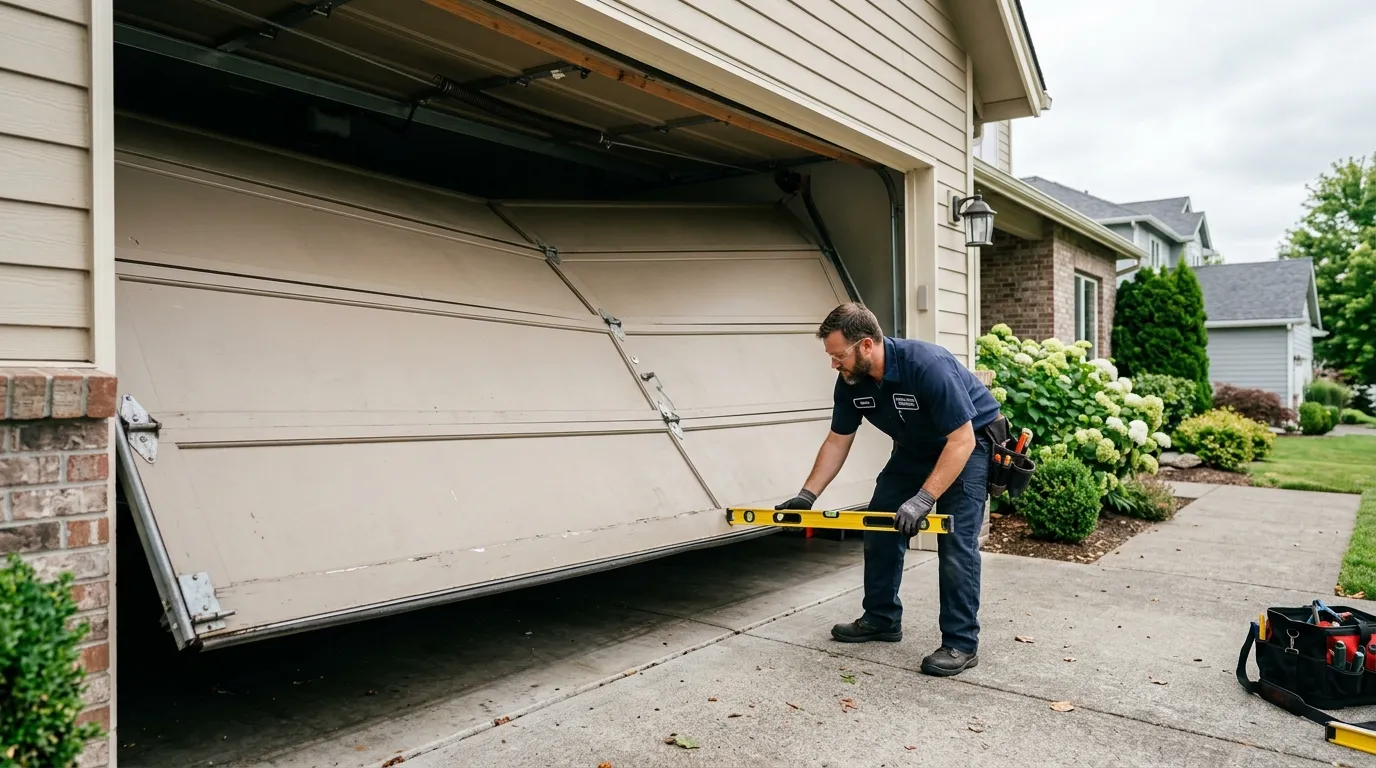
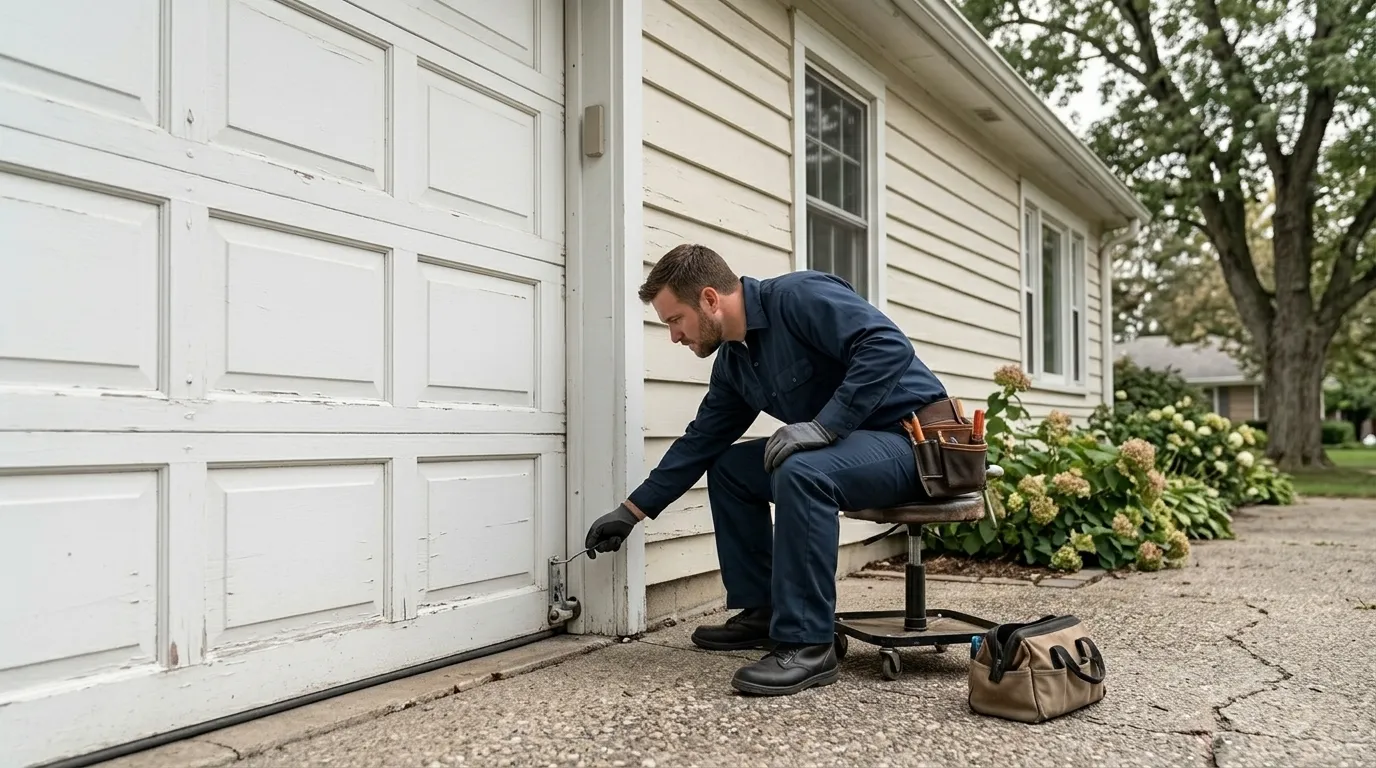
Most houses on this side of Leavenworth went up between 1950 and 2004, with the bulk of the stock centered around 1969. That matters for panel work because doors from that era were built to section widths and mounting patterns that don't always match what's on the shelf today. A single warped or dented panel on an older door frequently can't be ordered on its own - the section height, the hinge spacing, or the track profile is close enough to a modern door to be maddening but not close enough to bolt in without adjustment. This area also sits in a full winter climate, and steel panels that have taken years of freeze-thaw cycling tend to have rust starting at the bottom corners even before an impact cracks them. That combination - an older section profile plus corrosion already working on the metal - is why a panel job on a 1960s or 1970s door around here often turns into a two-panel or full-door conversation once we're standing in front of it, not a quick bolt-on.
Getting It Booked In
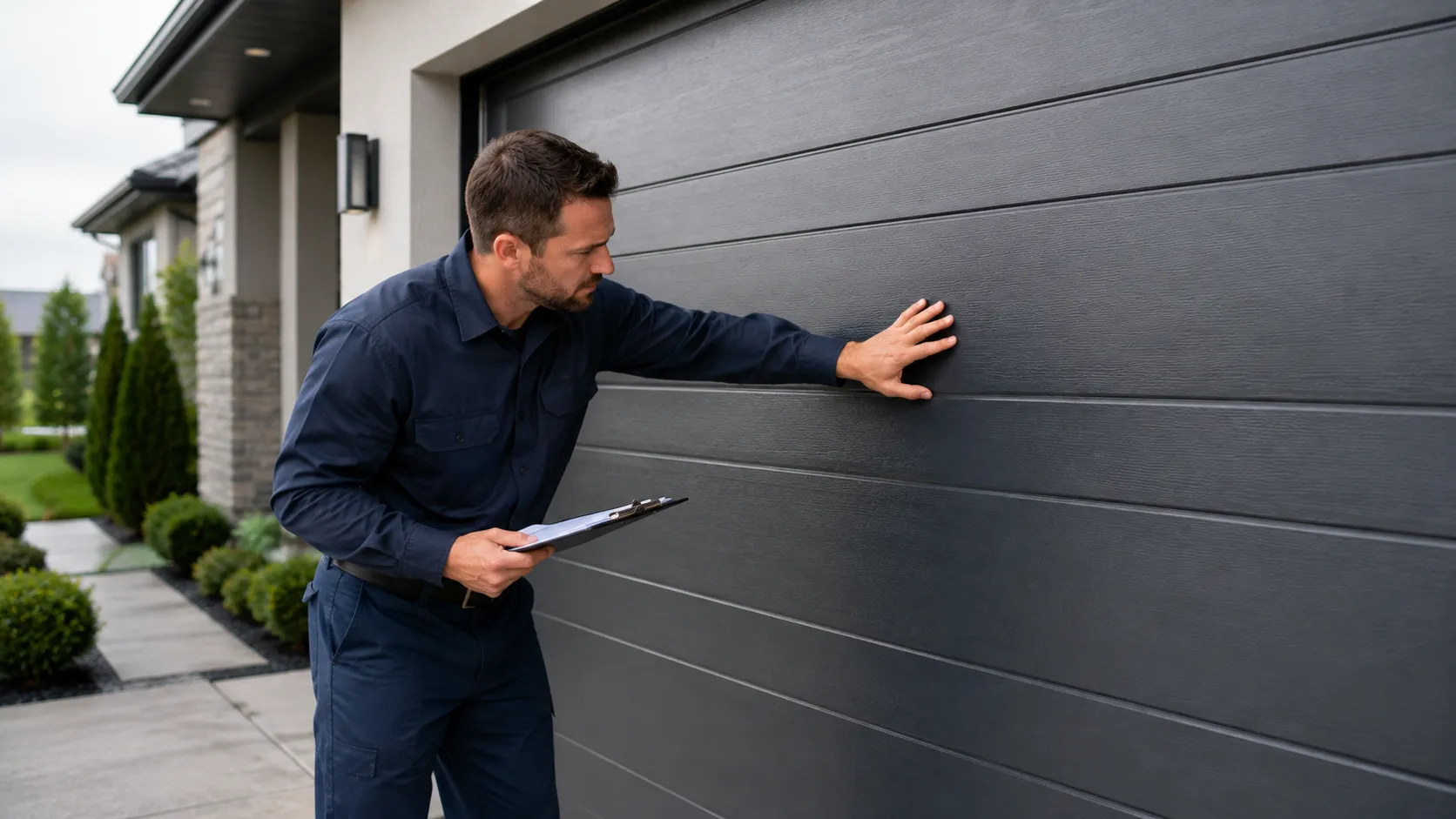
Because we run out to Leavenworth from Kansas City rather than out of a local branch, booking works best when you can tell us the make of the door, roughly how old the house is, and send a photo of the damaged panel when you call. That lets us check stock on the exact section before the truck leaves, instead of making the drive twice just to find out the part's on back order. You can see the rest of what we cover in the area on our Leavenworth service page, and if the damage turns out to need more than a panel - a bent track, a cracked stile - that's a different job with different parts, and we'll say so before we start billing for one. For a broader look at what a panel job involves, our Kansas City panel replacement page covers the general process.
Can You Do This Yourself
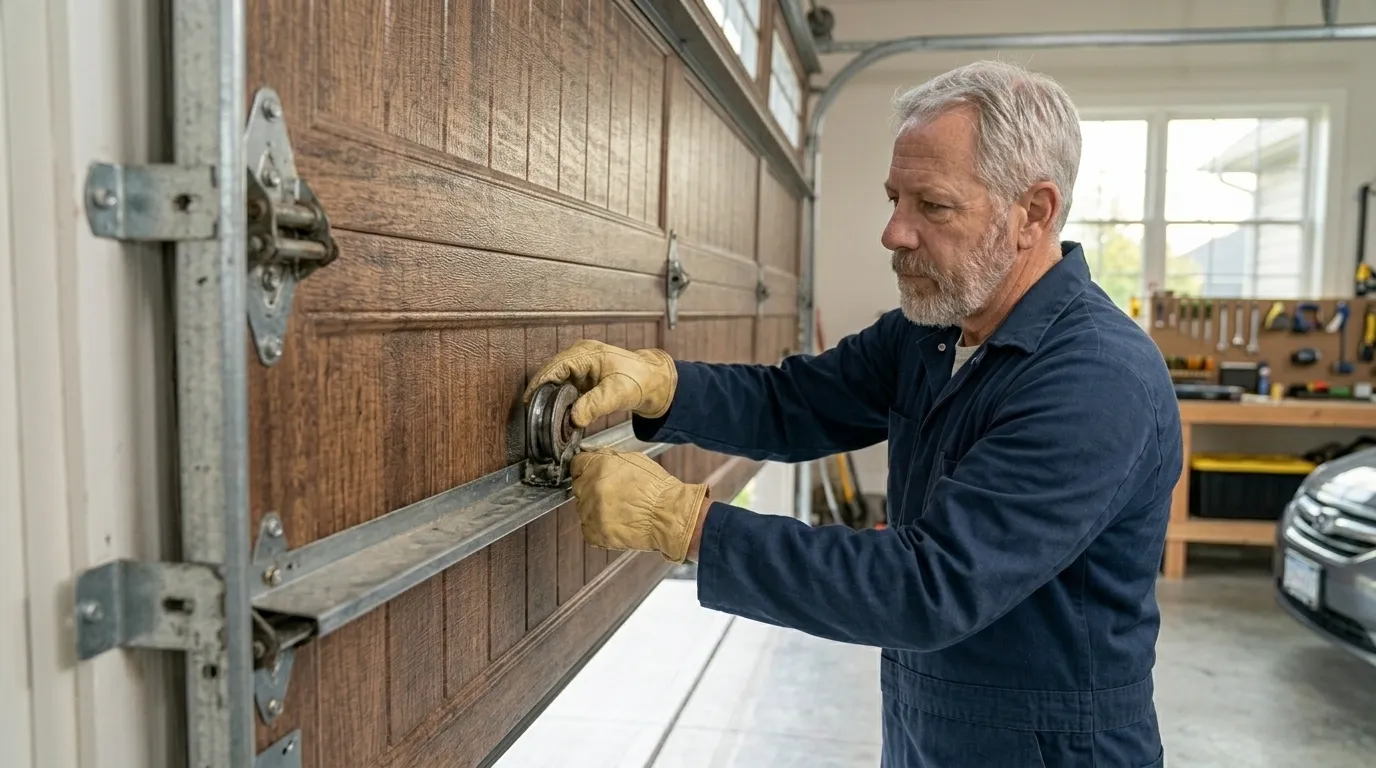
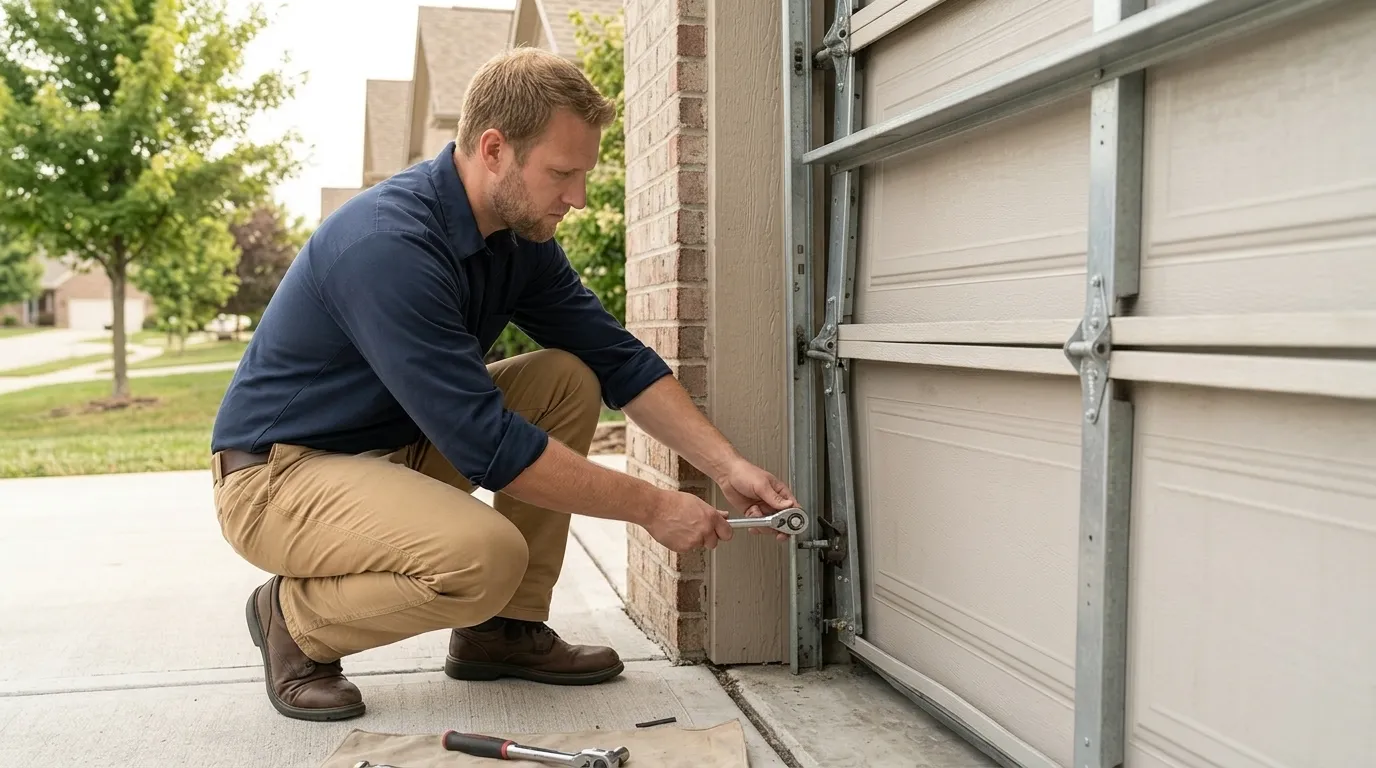
A single panel on a lightweight aluminum or vinyl door is within reach for a homeowner with clamps, the right fasteners, and a way to support the door while it's off track - assuming the replacement panel is still made and sized right. Steel sectional doors are a different matter. The panels are heavier, the hardware that ties them to the track and to each other is under spring tension even with the door 'off,' and a section that doesn't sit flush throws the whole door out of alignment, which then eats a roller or a hinge inside a season. If your door is older than the mid-1990s, which describes a lot of the housing stock built up around this area, we'd rather you call and ask what the part number situation looks like before you buy anything, than have you order the wrong panel and get stuck with a return.