Time on the Job
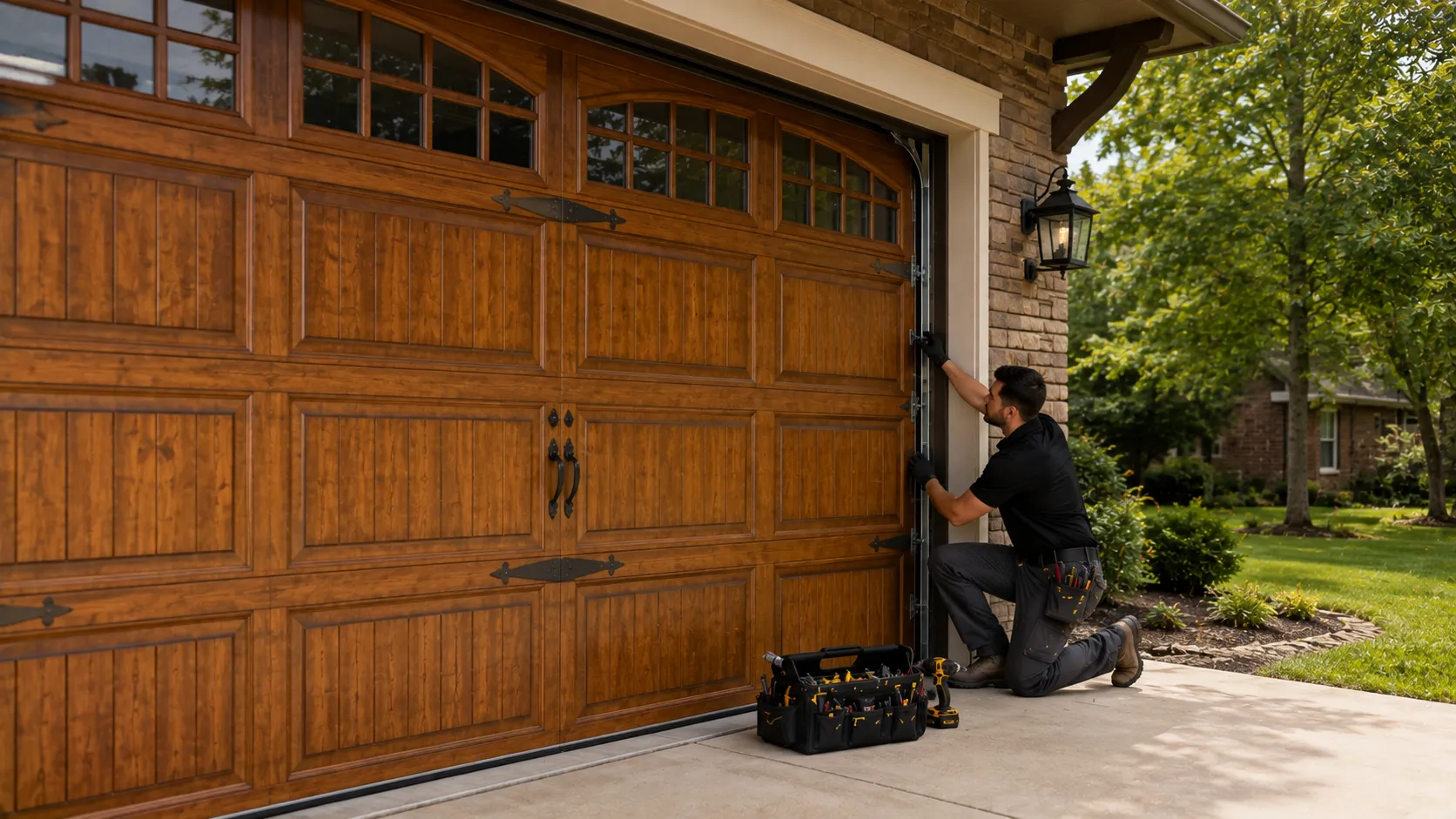
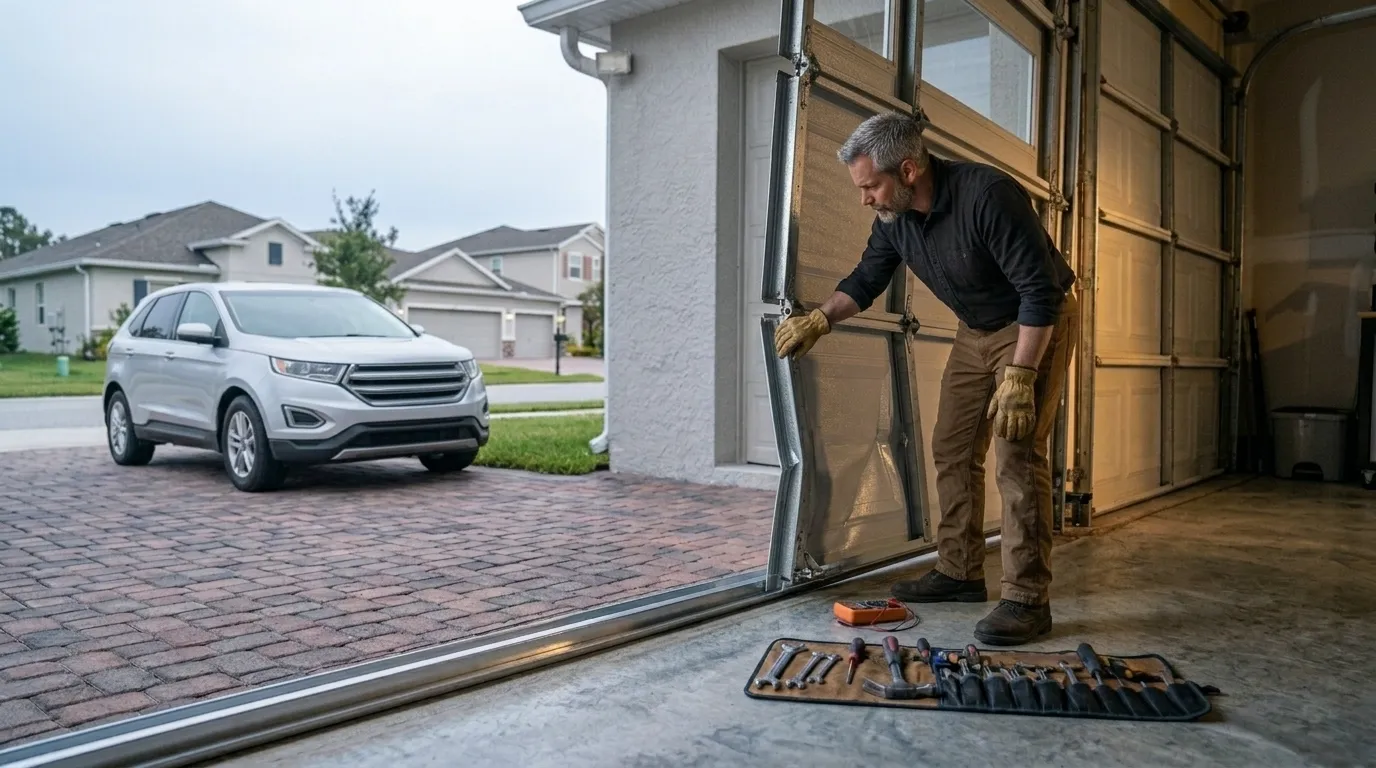
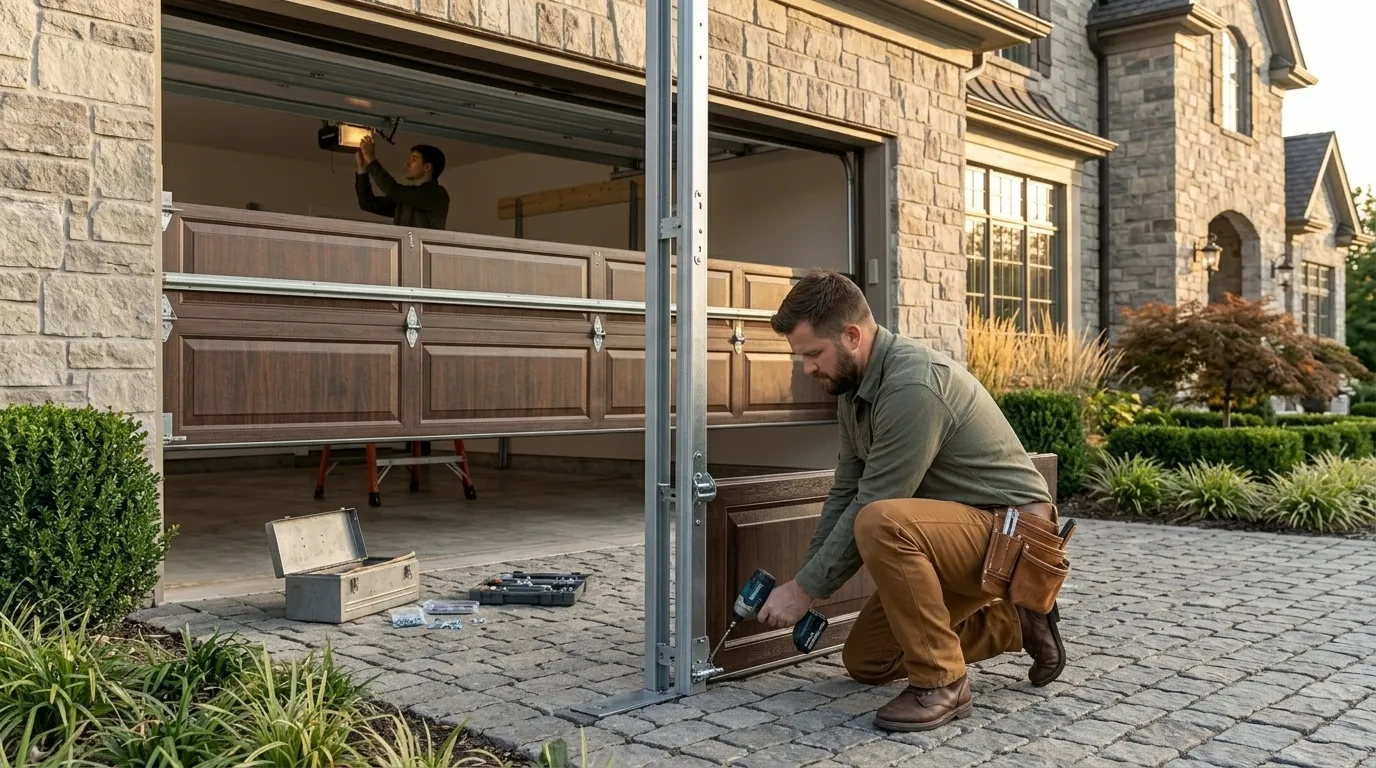
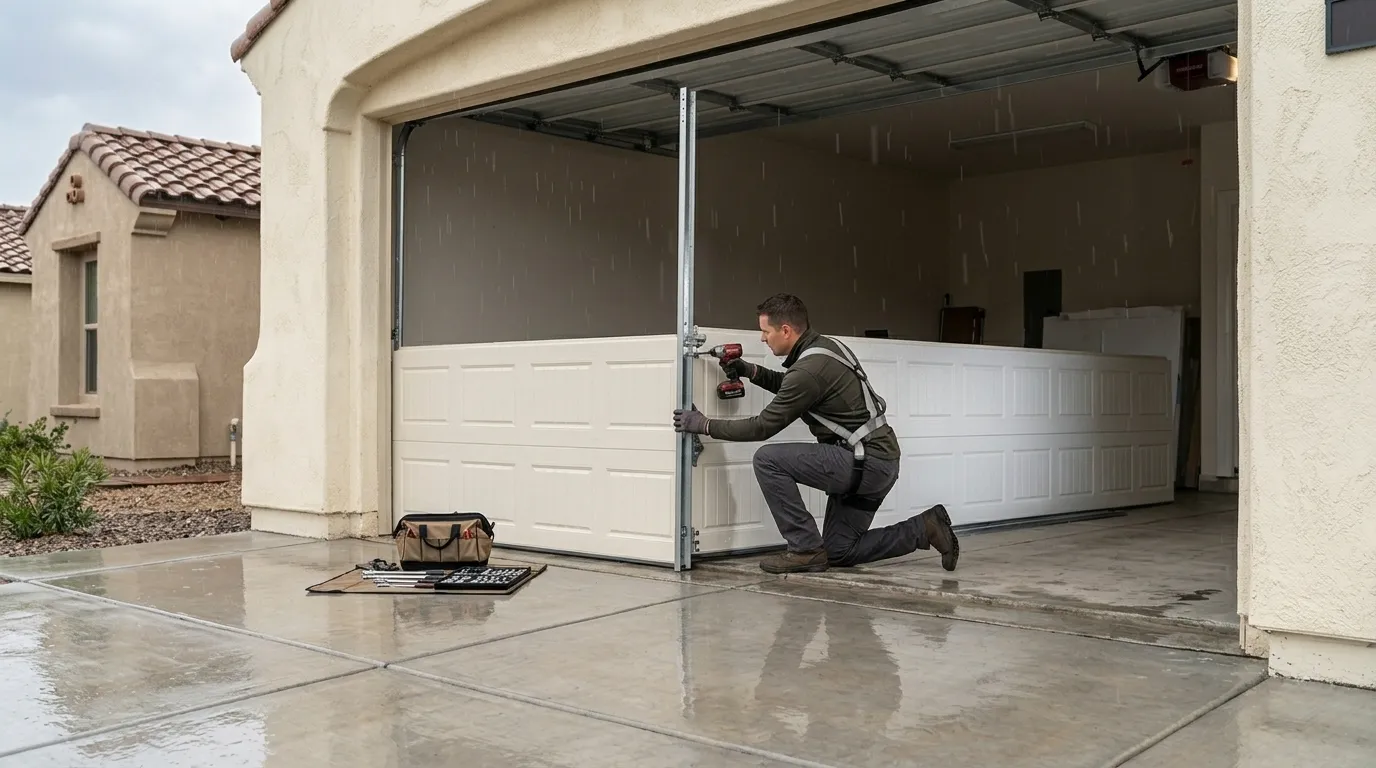
We come out to Leavenworth from Kansas City, about 17 miles each way, so we're not sitting on your street waiting for the phone to ring. That means we ask a few questions before we load the truck: is the door still moving at all, is it leaning in the opening, are the cables still on the drum. A door that's fully derailed on one side and jammed against the frame needs a different set of tools than one that just popped a roller out of the track and is otherwise hanging straight. Knowing which one you've got before we drive out saves everybody time.
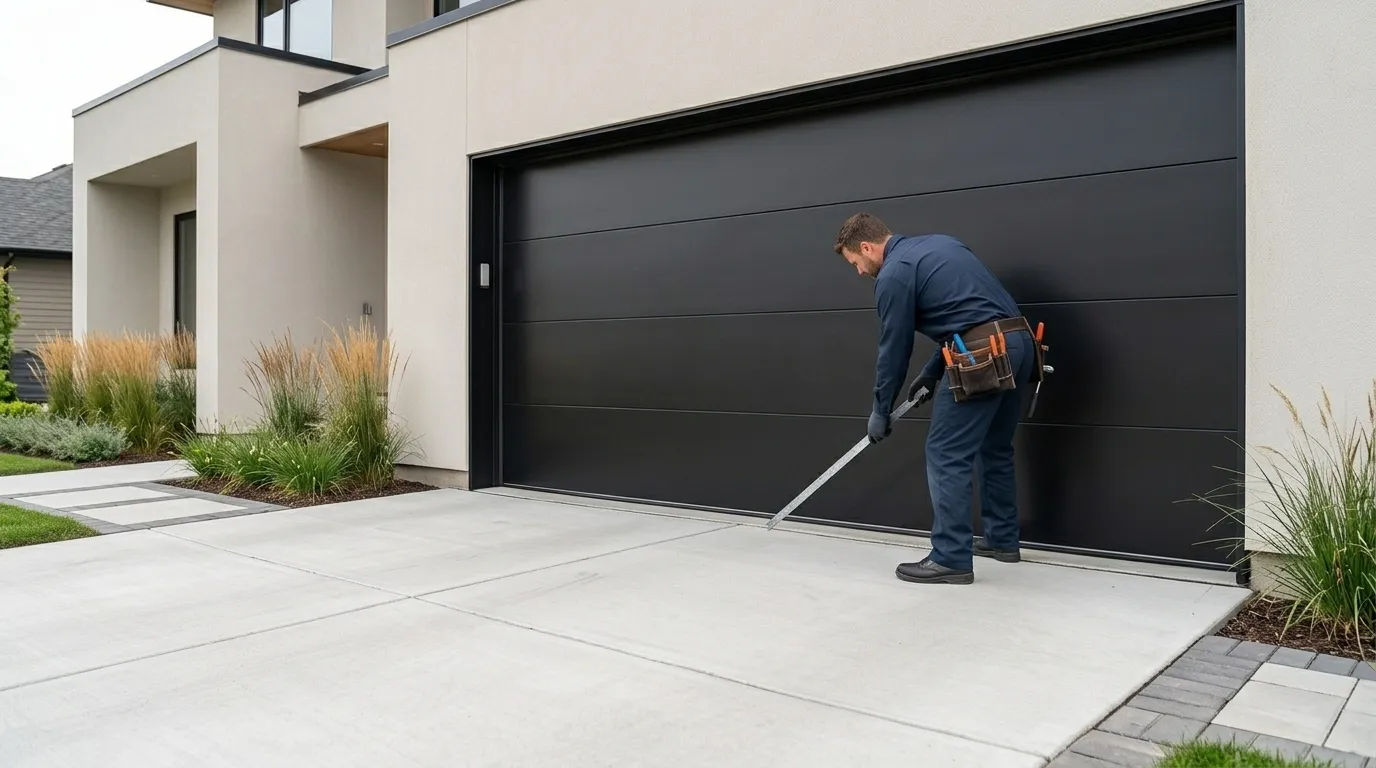
Most of the doors we see on these calls are original or close to it - steel panel doors from an era when a single-layer door on a 16x7 or 9x7 opening was standard, no insulation layer, running on track that was sized for a lighter roller than a lot of openers push through it today. That combination is exactly what jumps track when a cable frays or a bottom bracket works loose. We're not guessing what we'll find when we get there; we're bringing parts for what that generation of door and track actually needs.
The Complications
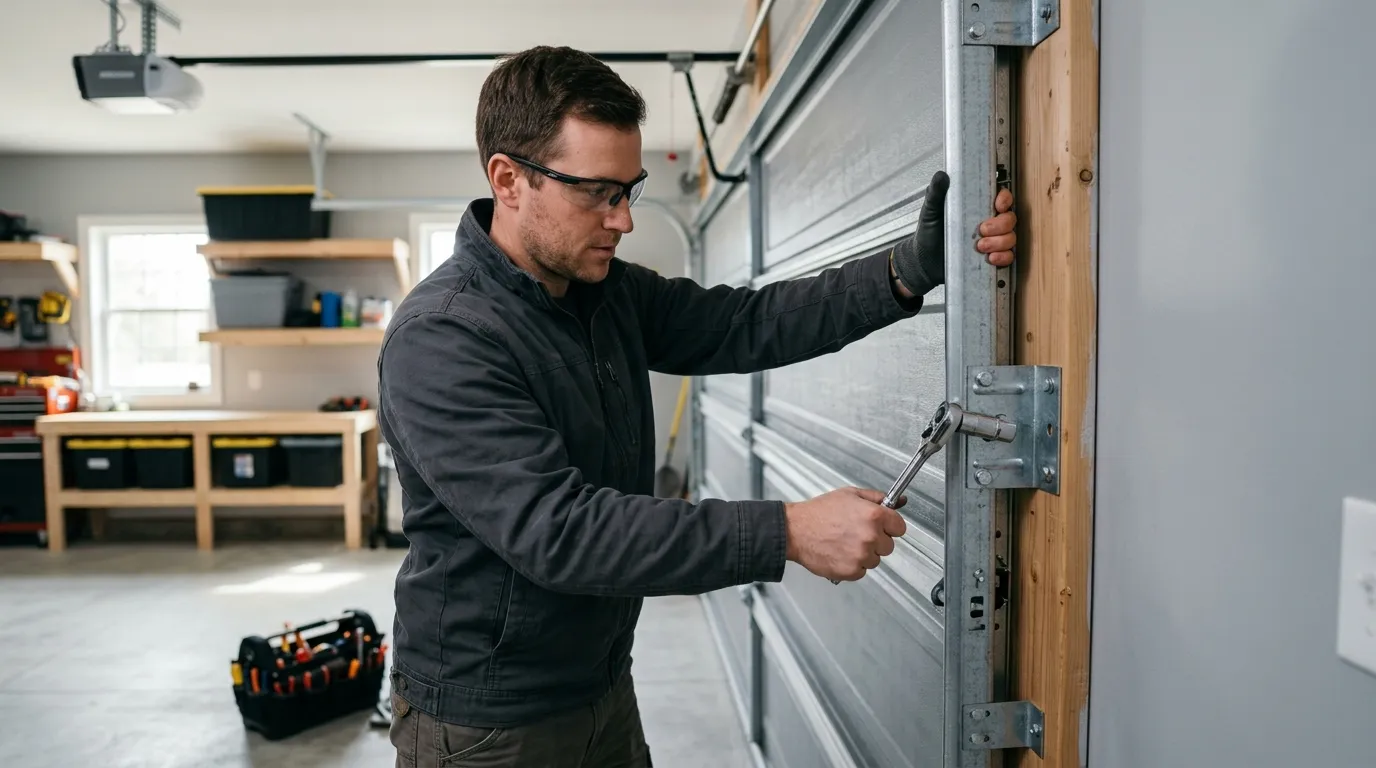
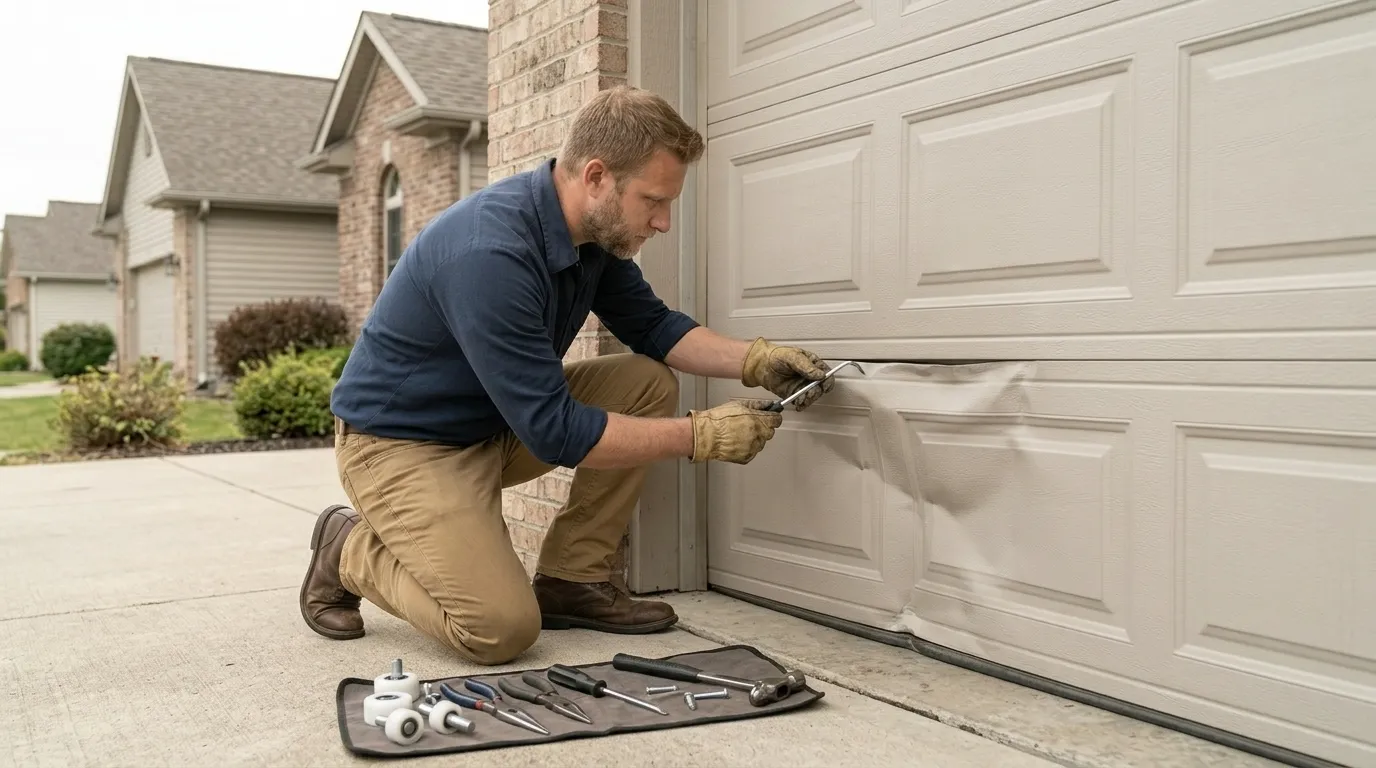
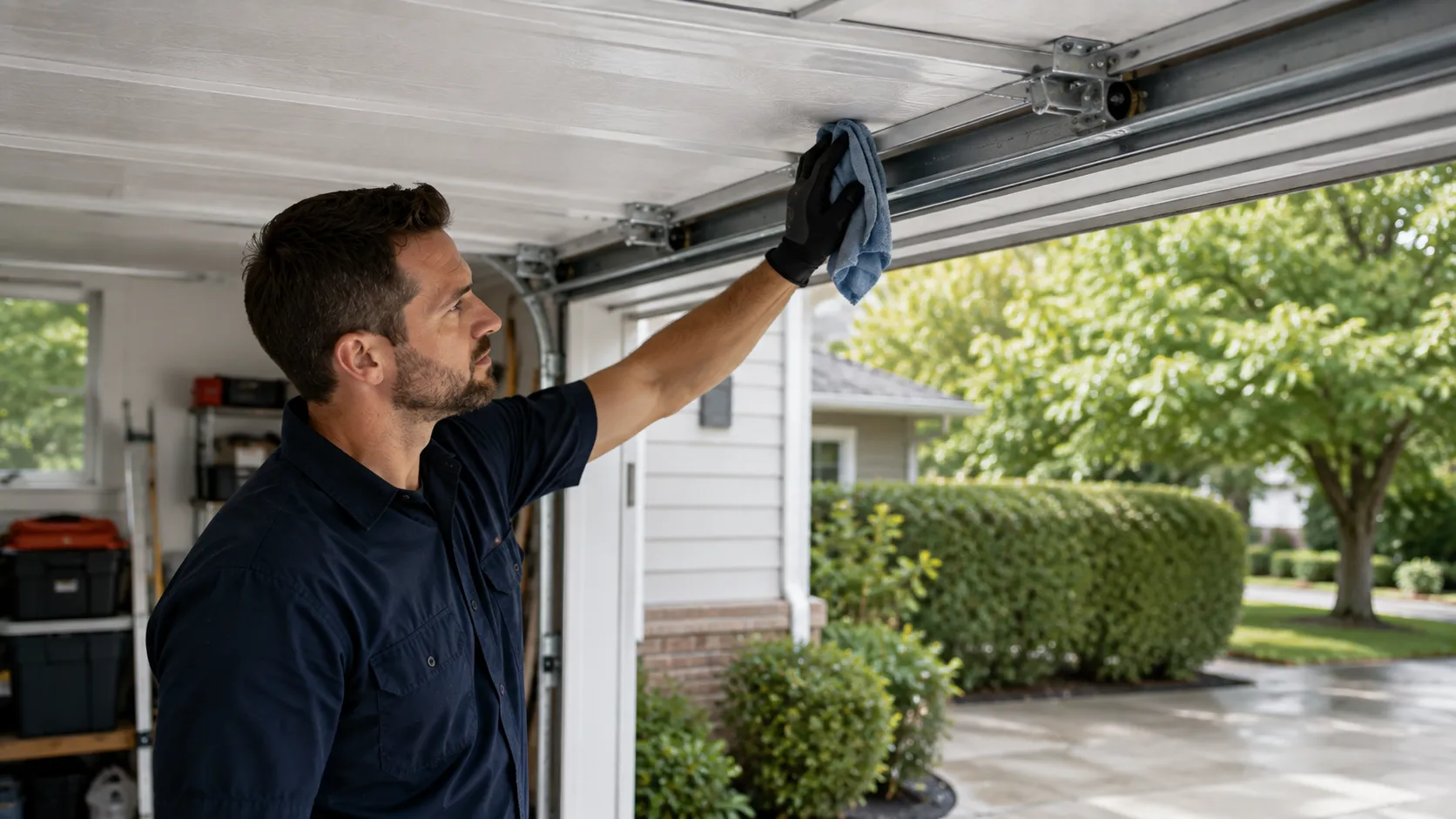
A door built to a 1969 spec doesn't fail the same way a 2005 door does. The track gauge is narrower, the roller stems are usually shorter, and the horizontal track brackets were often fastened with lag screws straight into framing that's had fifty-plus years to shift. When one side of that track walks even a quarter inch out of parallel, the rollers start climbing the flange instead of riding in it, and eventually one jumps clean out.
The complication isn't the jump itself - it's what caused it. Sometimes it's a broken cable that let one side of the door drop faster than the other. Sometimes a bottom roller bracket has rusted and bent. Sometimes the track itself is bowed from a door that's been run off-balance for months. We don't put a door back in a bent track and call it fixed - we tell you when the track needs to come off and get straightened or replaced, because forcing rollers back into bad track just buys you the same call again in a few weeks. That's the honest limitation here: sometimes the cheap fix isn't the right fix, and we'll say so before we do the work, not after.
Getting It Booked In
Call us and describe what the door's doing - whether it's off the track on one side or both, whether it still opens partway, whether the opener is still trying to run it. That tells us what to load before we head out from Kansas City. We'll give you a window, not a vague someday, and we'll call ahead before we're close.
If you're not sure whether what you're looking at is off-track, a broken cable, or something else in the hardware, describe the symptom rather than diagnosing it yourself over the phone - a door that's silent and won't budge is a different call than one that's grinding and crooked. You can see more on what we cover in the area at our Leavenworth service page.
Can You Do This Yourself
If the door is only slightly off track and still under some control - not swinging loose, not under spring tension you can feel pulling on it - you can sometimes walk it back into the track by hand with the opener disconnected. That's the extent of what's reasonable to try alone.
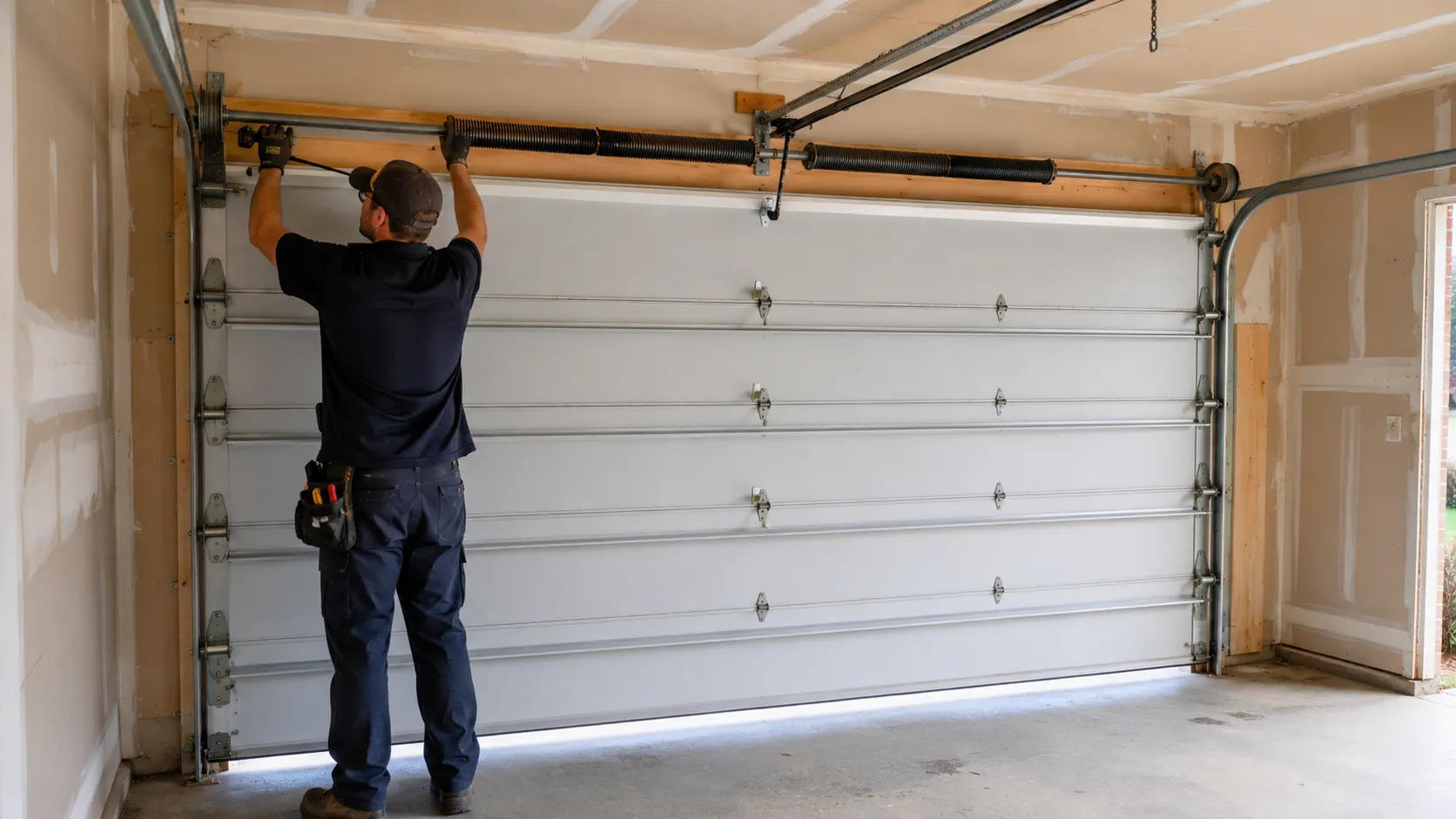
If a cable's broken, if the door is hanging unevenly, or if you can see the torsion spring has let go, stop. That door is under real force and it doesn't care whether your fingers are in the way. This is one of those repairs where the tool you're missing usually isn't a tool at all - it's knowing how much tension is still in that spring before you touch anything. We'd rather talk you out of it on the phone than patch you up after.