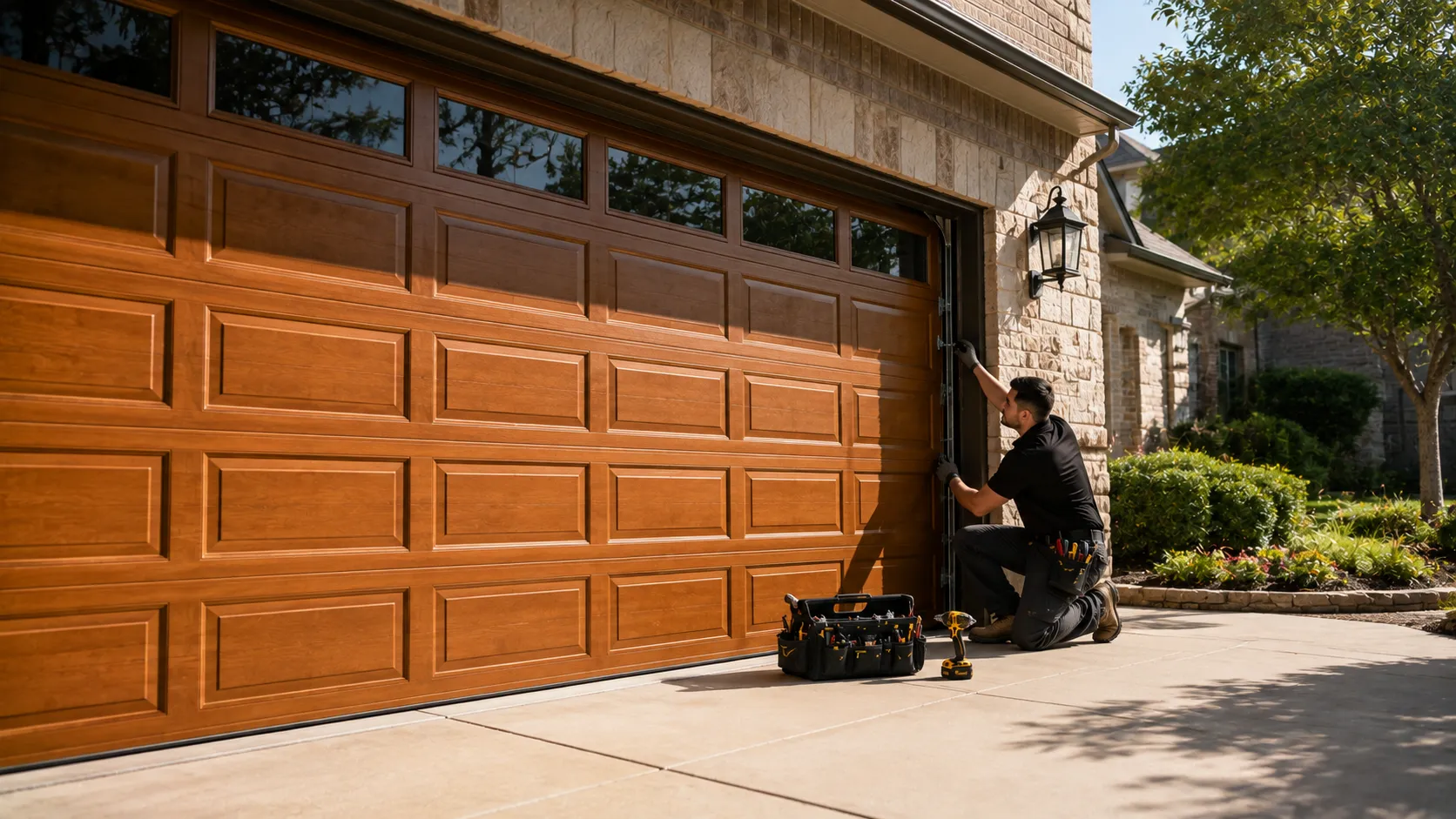
How We Fix It
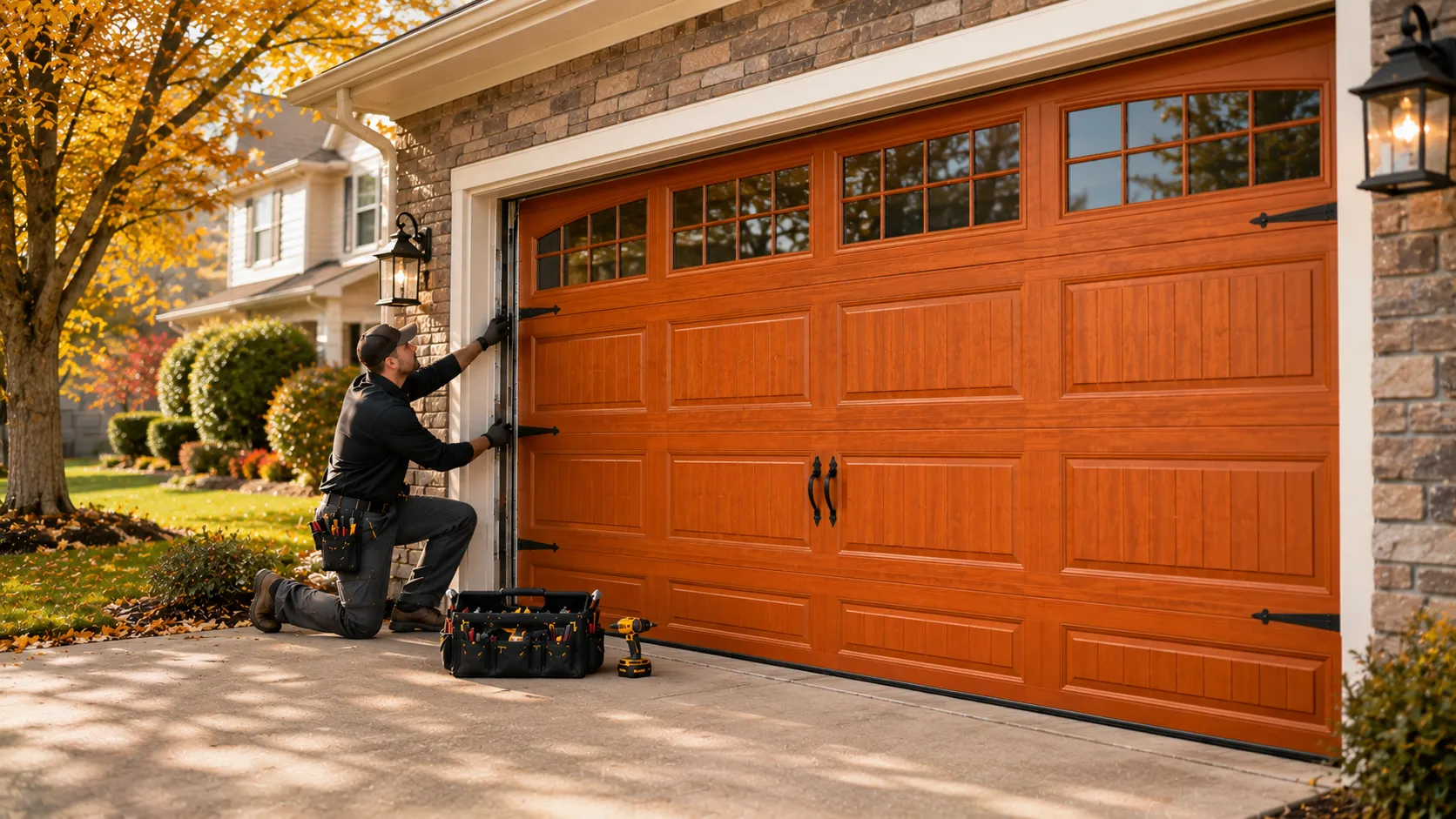
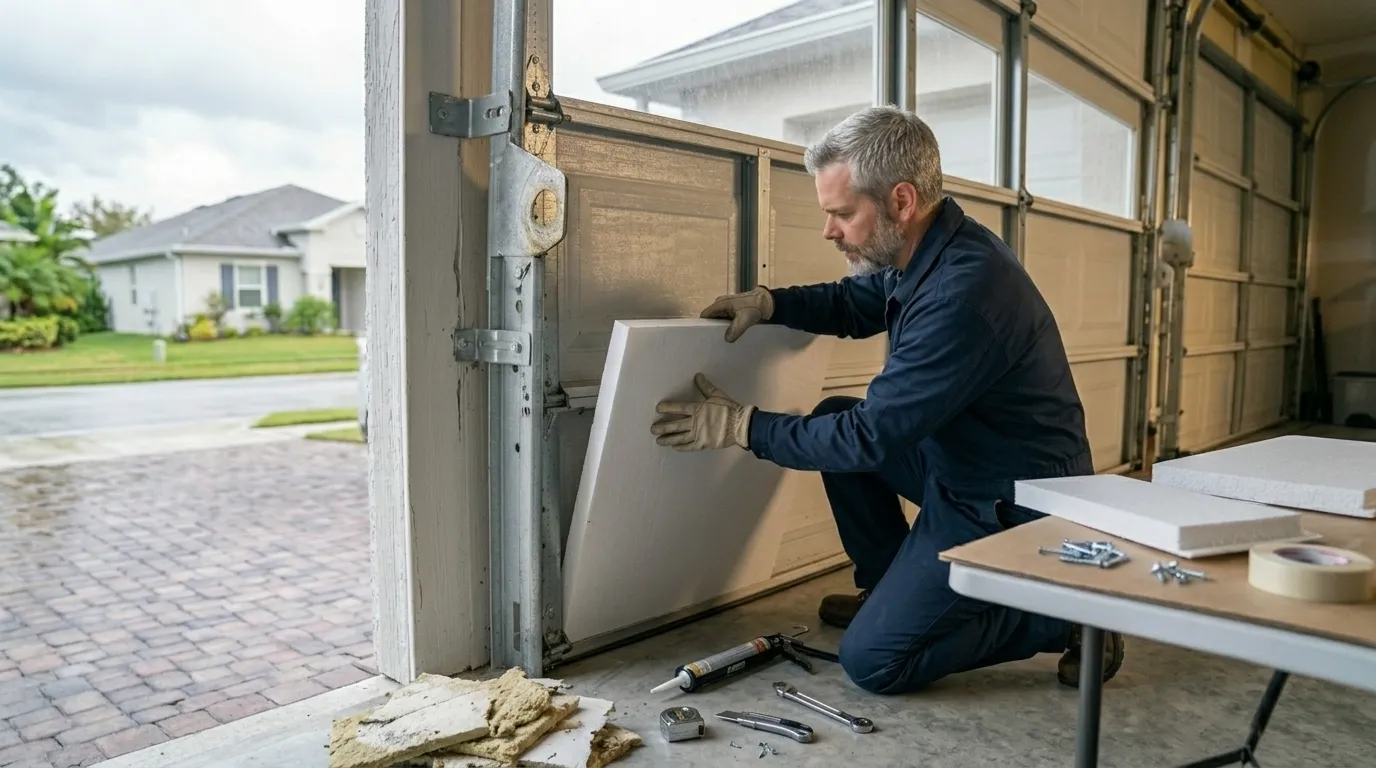
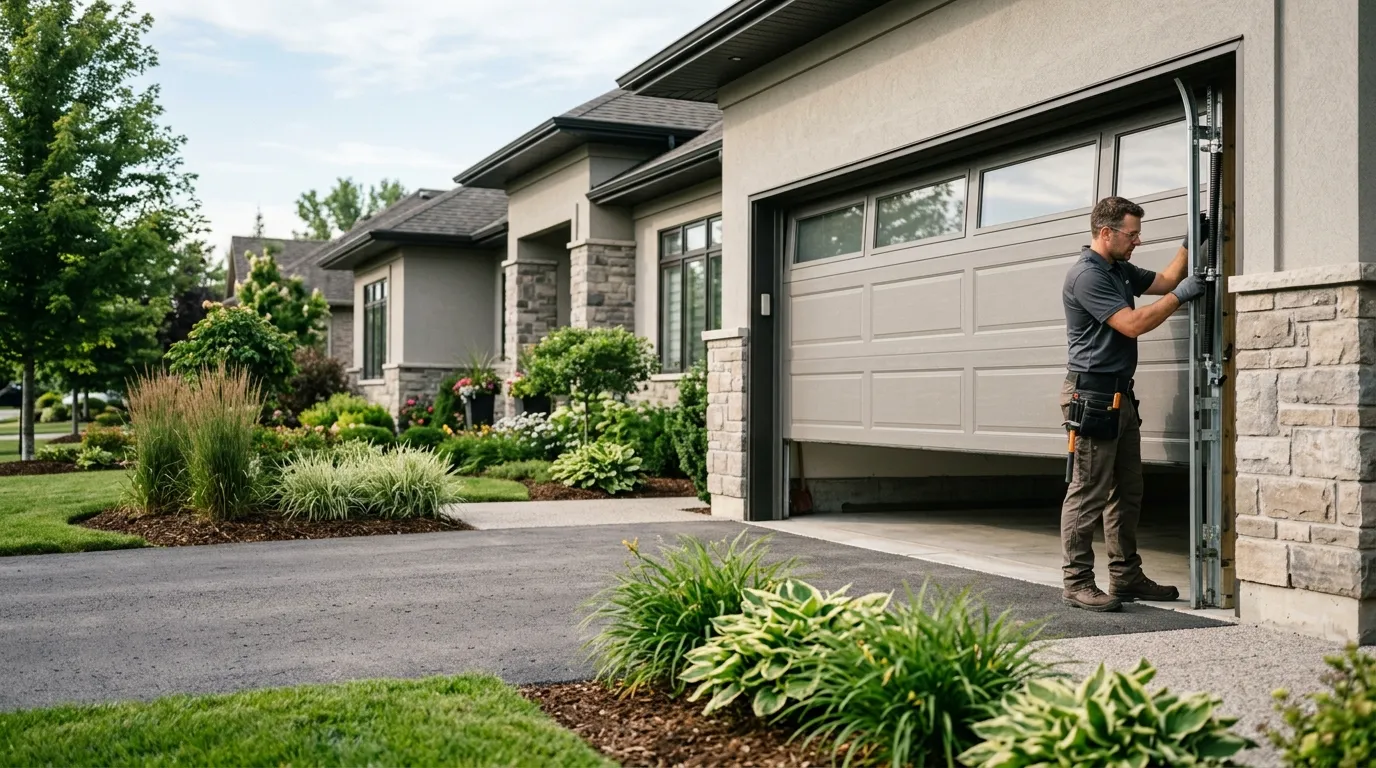
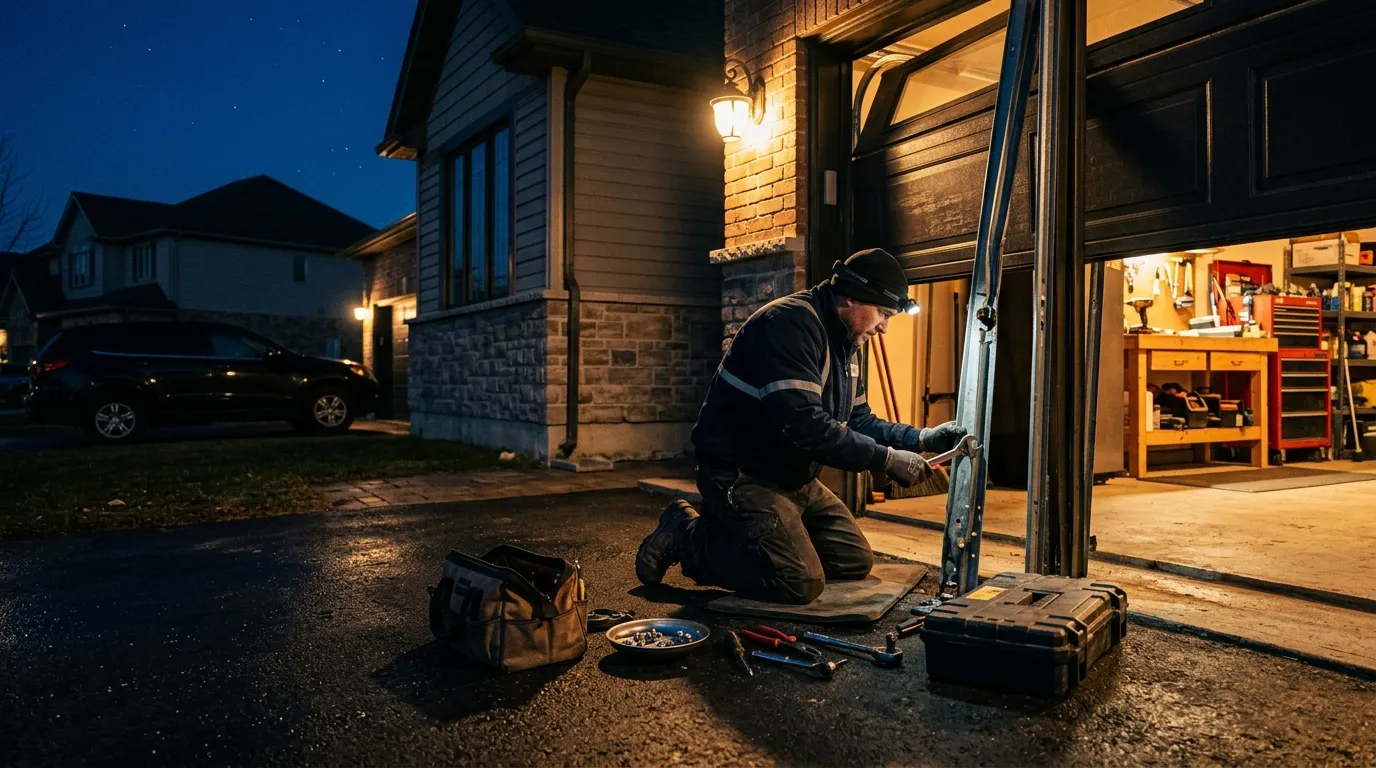
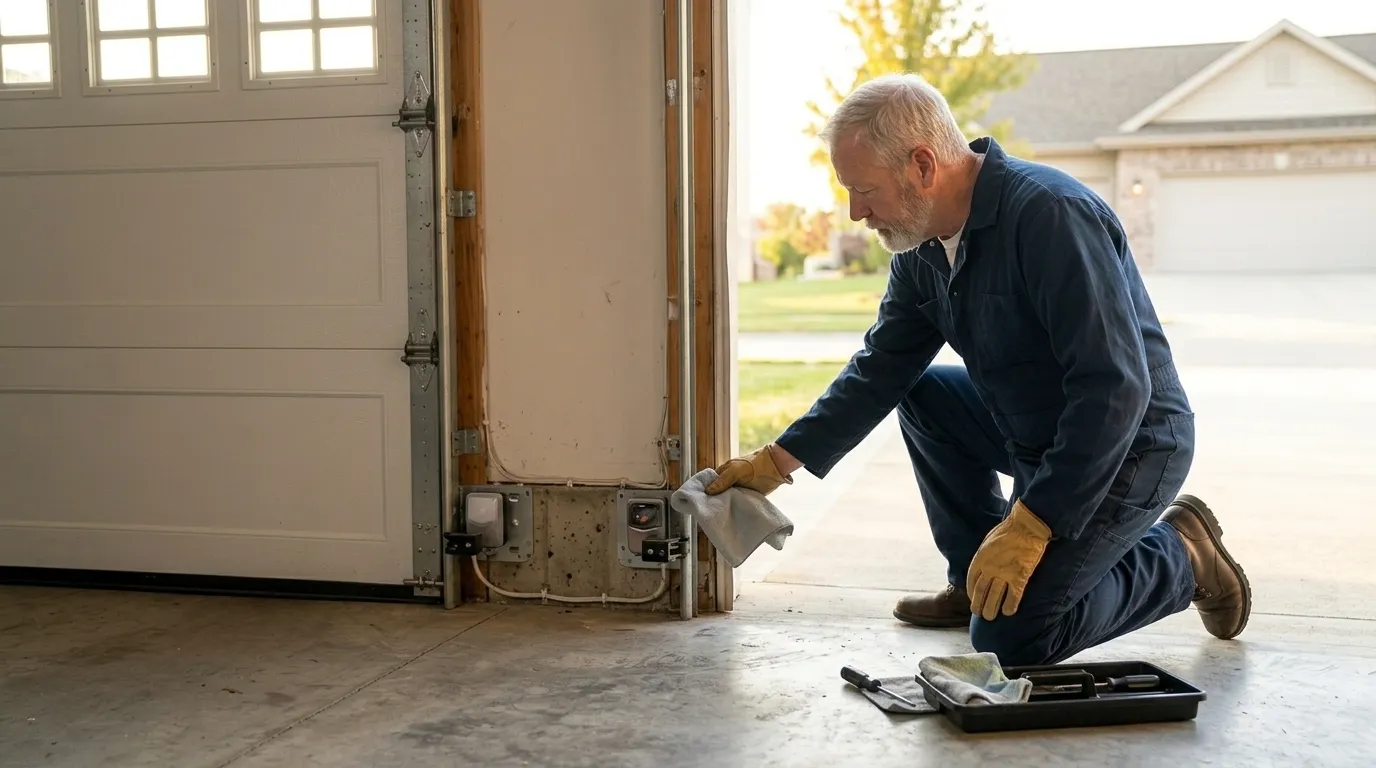
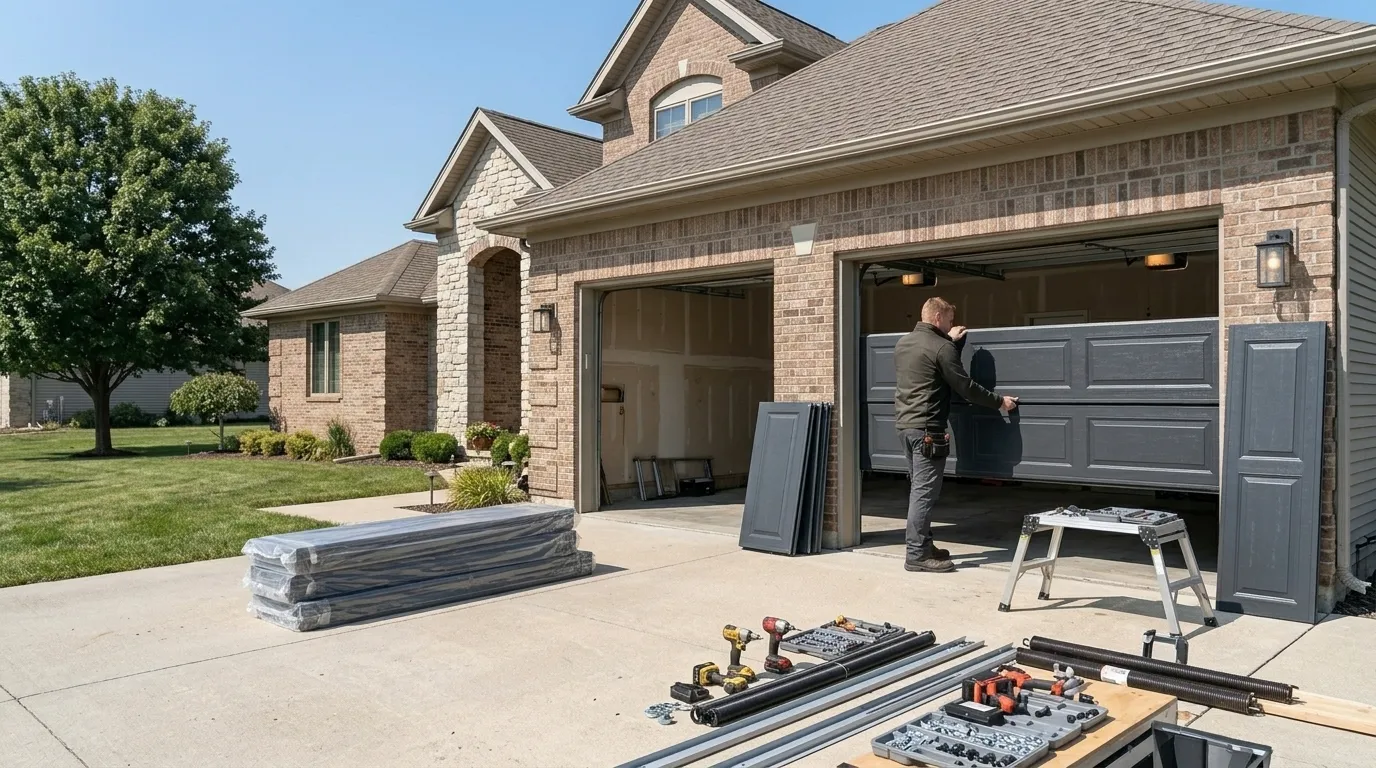
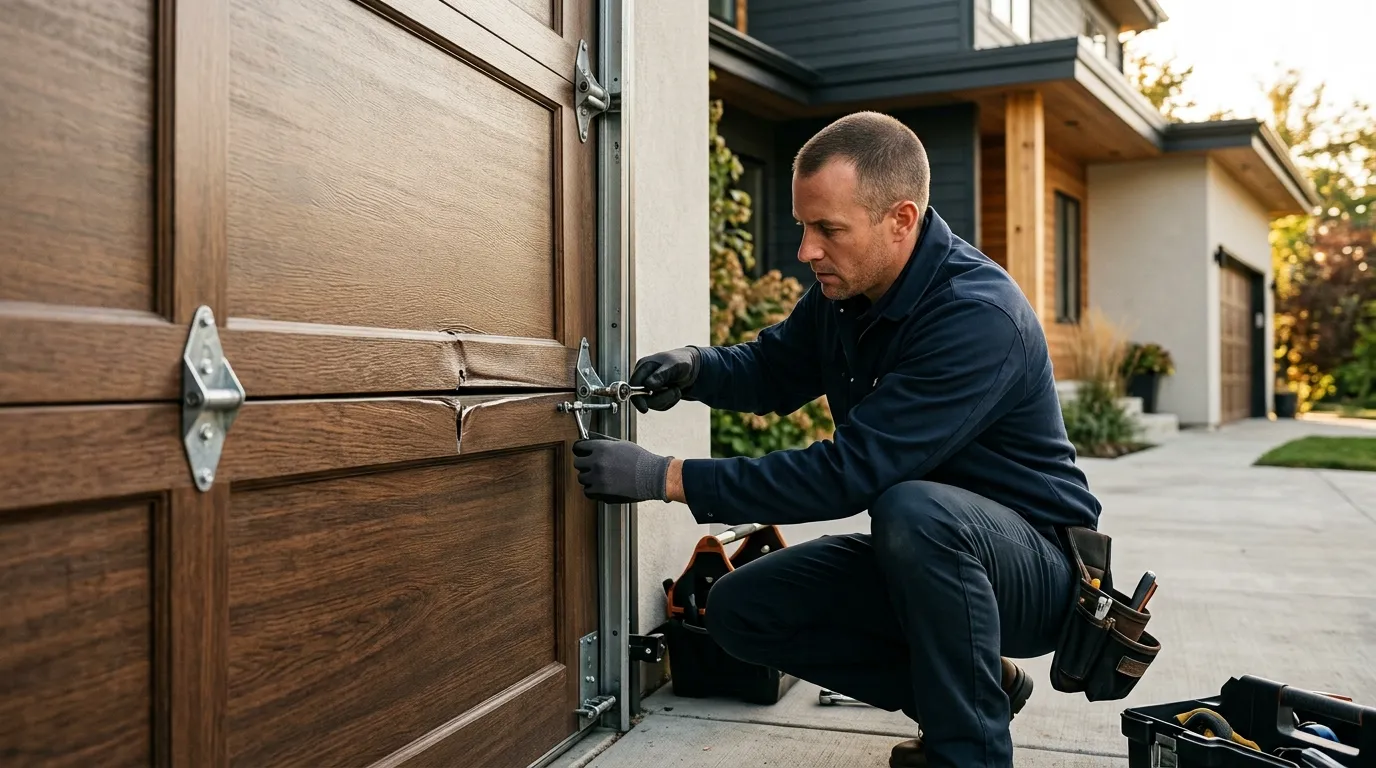
Most Leawood houses were built after 1989, which put them past the era of narrow wood panel doors and into wider steel and aluminum sectional units - often 16 feet across for a two-car opening, sometimes with insulated cores and window inserts built into the top section. When one panel gets creased by a car bumper or caved in by a wind-driven branch, we don't tear the whole door out. We pull the fasteners holding that section to its neighbors, unhook it from the end hinges and rollers, and slide in a replacement sized to match - same width, same insulation rating where we can get it. On a two-car door that's usually one or two sections, not the full run. We check the track and rollers on either side of the repair too, since a bent section often means the roller stem on that side took a hit as well, and leaving that alone just cracks the new panel again in a season.
Getting It Booked In
We work out of Kansas City and cover Leawood as part of the run out to this side of the metro, about 16 miles from our shop. Because we're not based in Leawood, we schedule the visit around the parts - we need to know the door's brand, width, and panel style before we load the truck, so a quick photo of the damaged section and the door's data plate (usually inside on the top bracket) saves a wasted trip. Once we've confirmed the part is a stock match or ordered in, we set a day and come out.
Parts We Carry
We stock common panel widths and styles that fit the steel and aluminum sectional doors typical of homes built from the late 1980s onward - the door type you'll find on most Leawood garages rather than the older wood-panel doors common in first-ring KC suburbs. Insulated sections with a matching window layout are the trickiest to match exactly; if your door has a discontinued window pattern or a custom color, that part may need to be special-ordered from the manufacturer, which adds lead time we don't control. We'll tell you upfront if your door falls into that category rather than quote a same-week fix we can't deliver.
Can You Do This Yourself
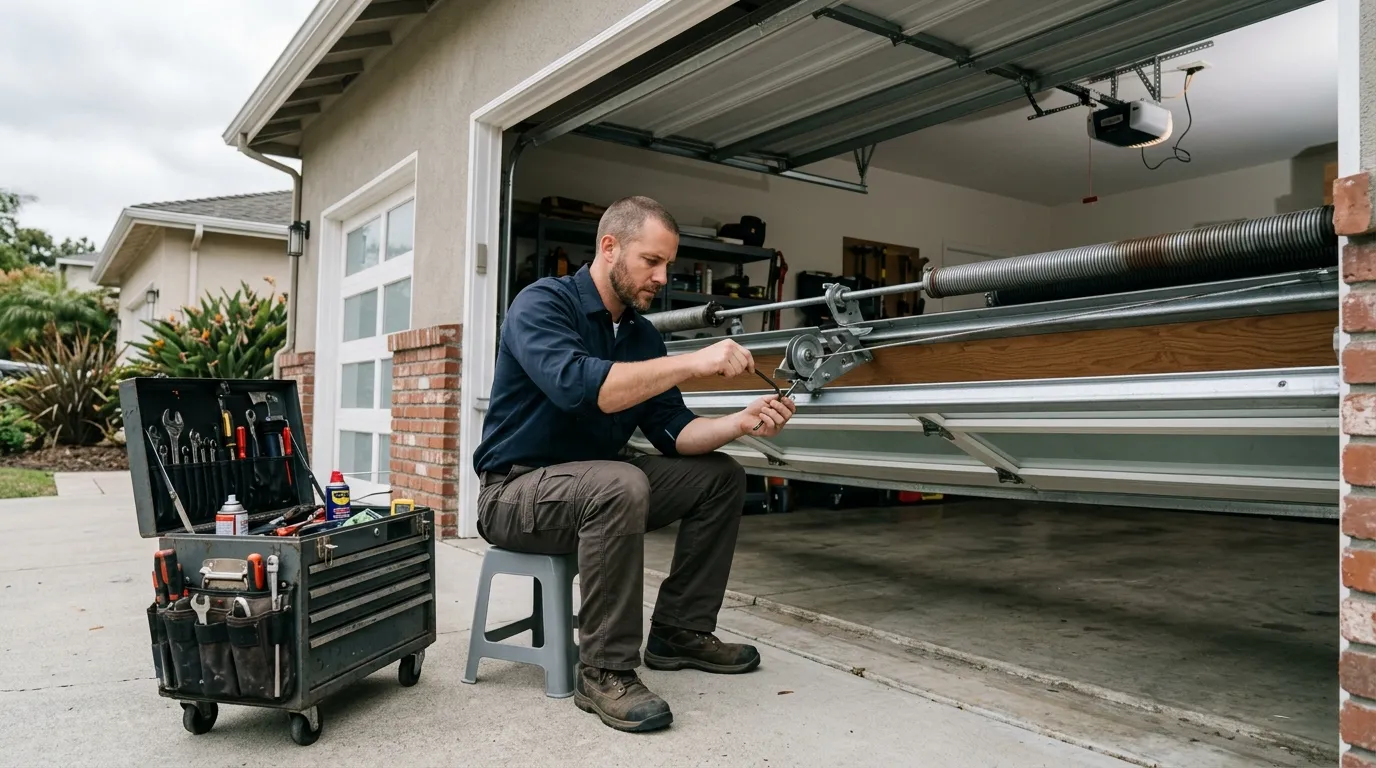
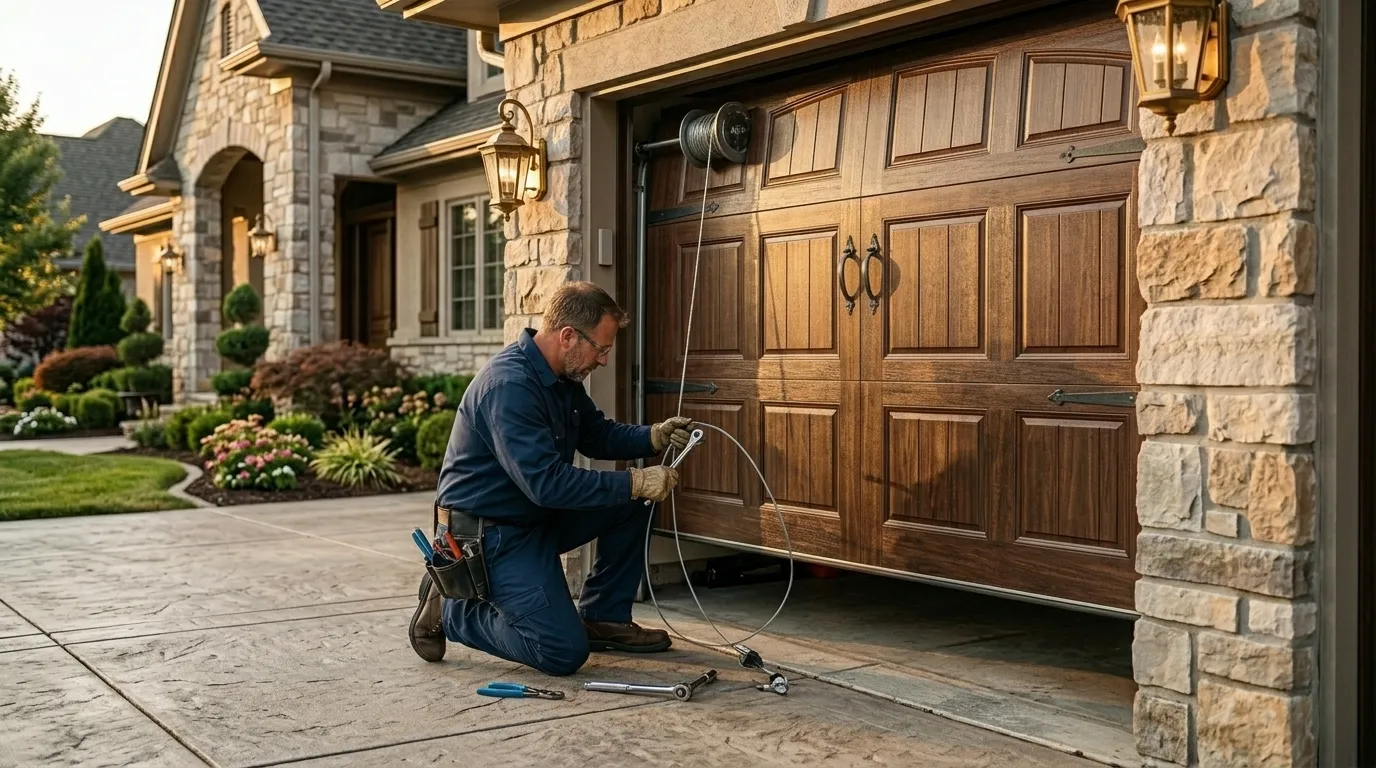
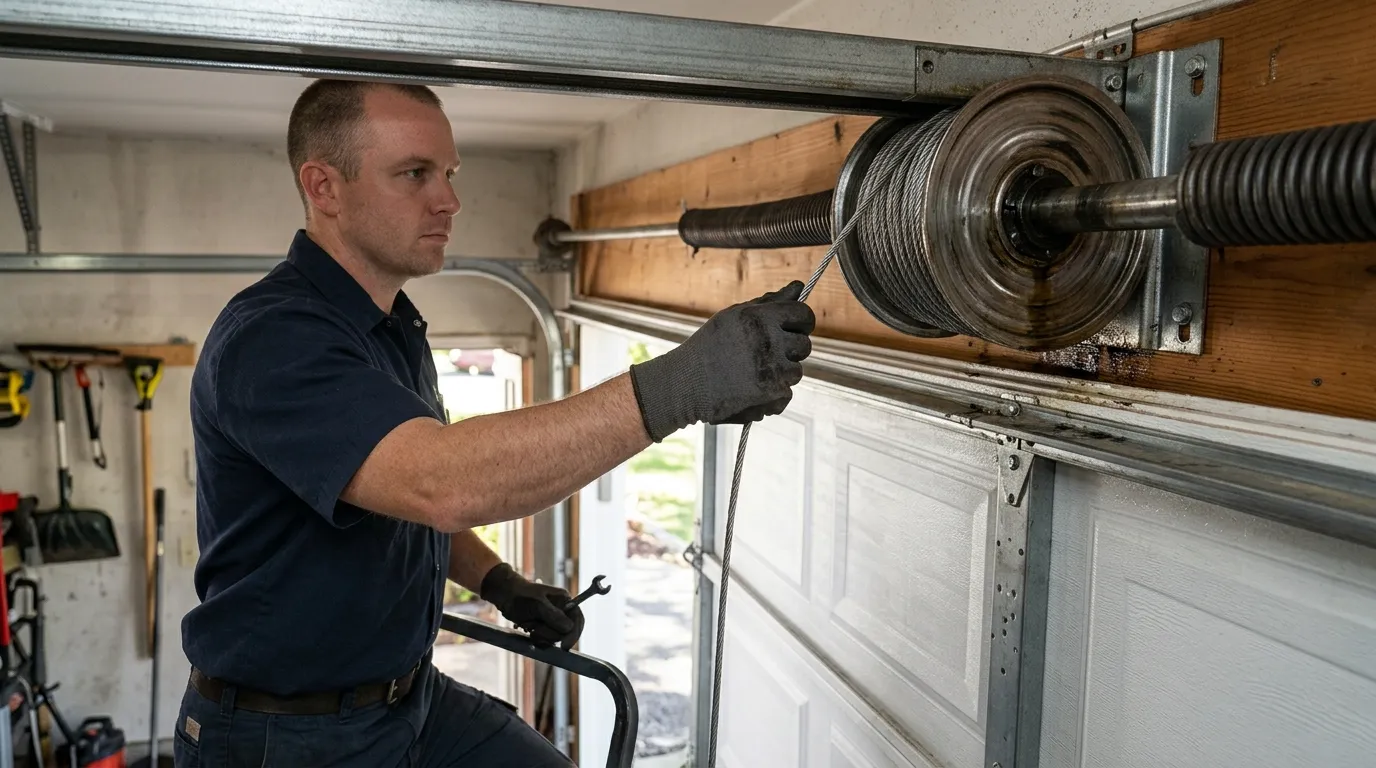
Swapping a single panel isn't a bad DIY candidate if the door is unplugged from the opener and you're working with the track disconnected - the section itself just unbolts from its neighbors. Where people get hurt is the spring system: if the damage is anywhere near the bottom bracket or the cables, don't touch it, because that's where stored tension lives. We'd also say skip the DIY route if your door is older and the manufacturer no longer makes a matching panel - at that point you're better off pricing a full door replacement than hunting for a discontinued part, and we'll tell you straight if that's where your door is.