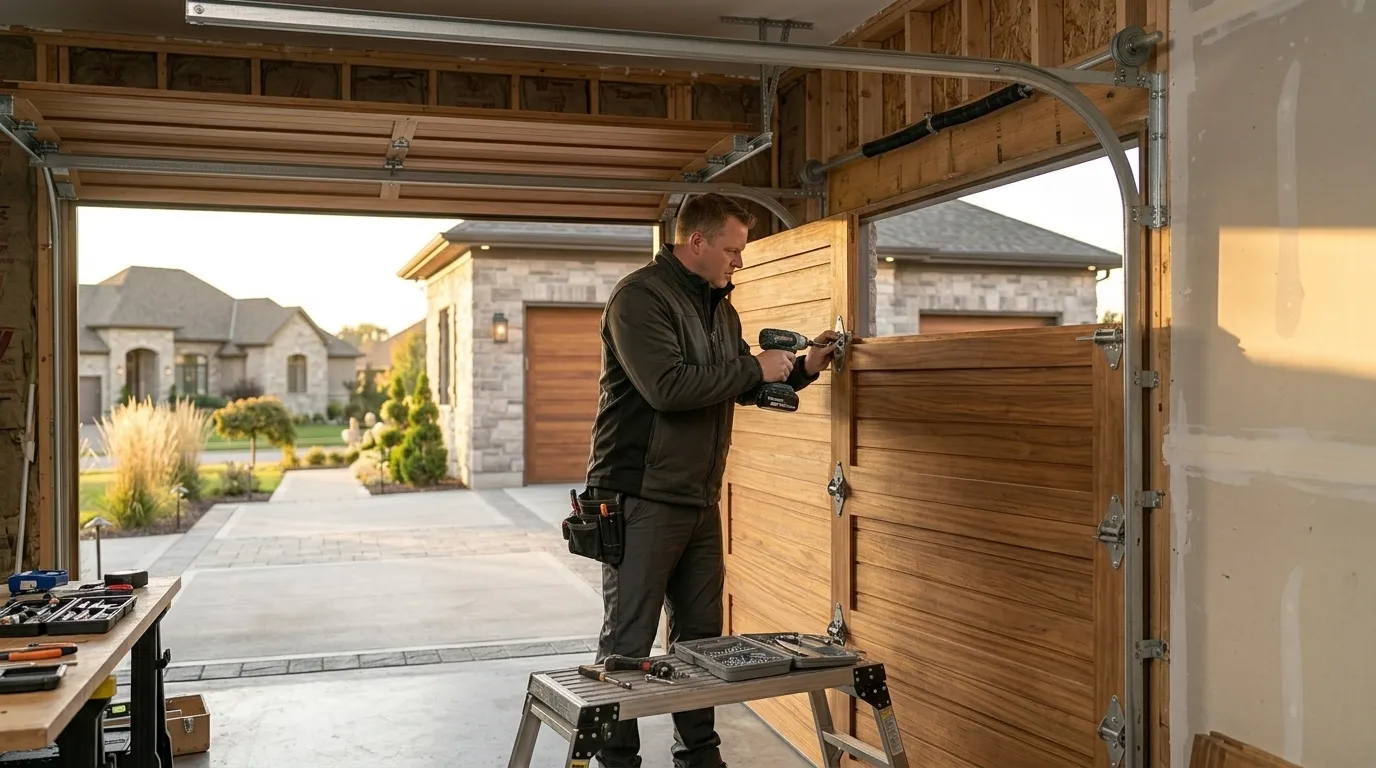
Parts We Carry
Basehor is younger than most of the towns we cover out of Kansas City - the median home here was built around 2004, a good three decades newer than the 1973 median across the wider service area. That matters for cables because newer subdivisions tend to run wider garages: two-car openings at 16 feet wide instead of the older 9-foot single bays, and taller 8-foot sections instead of 7. A wider, taller sectional steel door carries more weight per side, which means longer lift cables and, on a lot of these builds, a heavier-gauge galvanized or nylon-coated cable than what you'd find on a 1970s door half the size.
We carry standard 1/8-inch and 3/32-inch aircraft cable in the lengths that match 8-foot double doors, along with the drums and end fittings that pair with them. What we don't stock on the truck is anything custom - if a door here was built with a non-standard track height or an odd cable routing from a builder-grade kit, that part gets ordered and the job takes a second visit. On a door this size, we'd rather order the right cable than force a shorter one to work.
How We Fix It
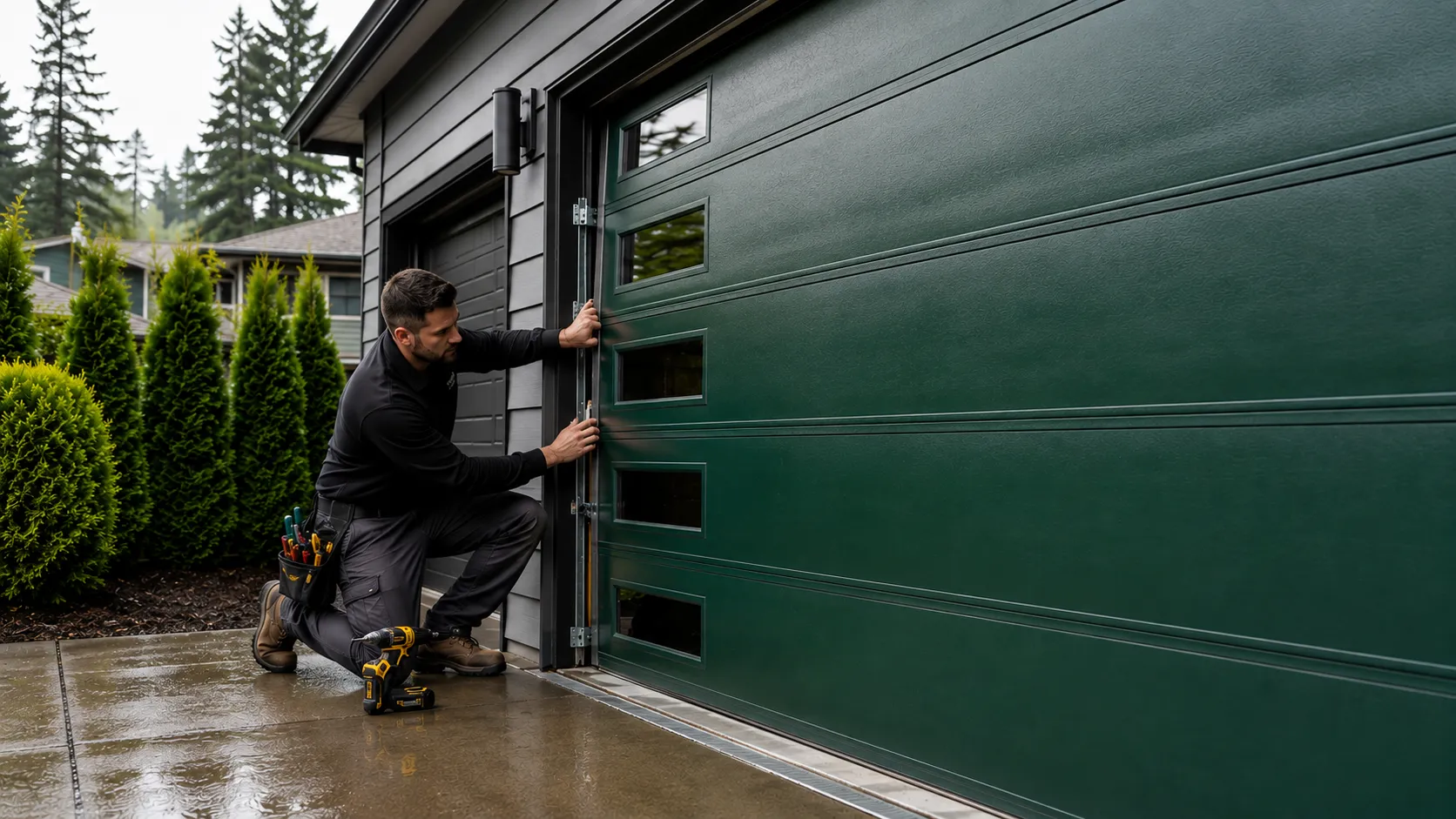
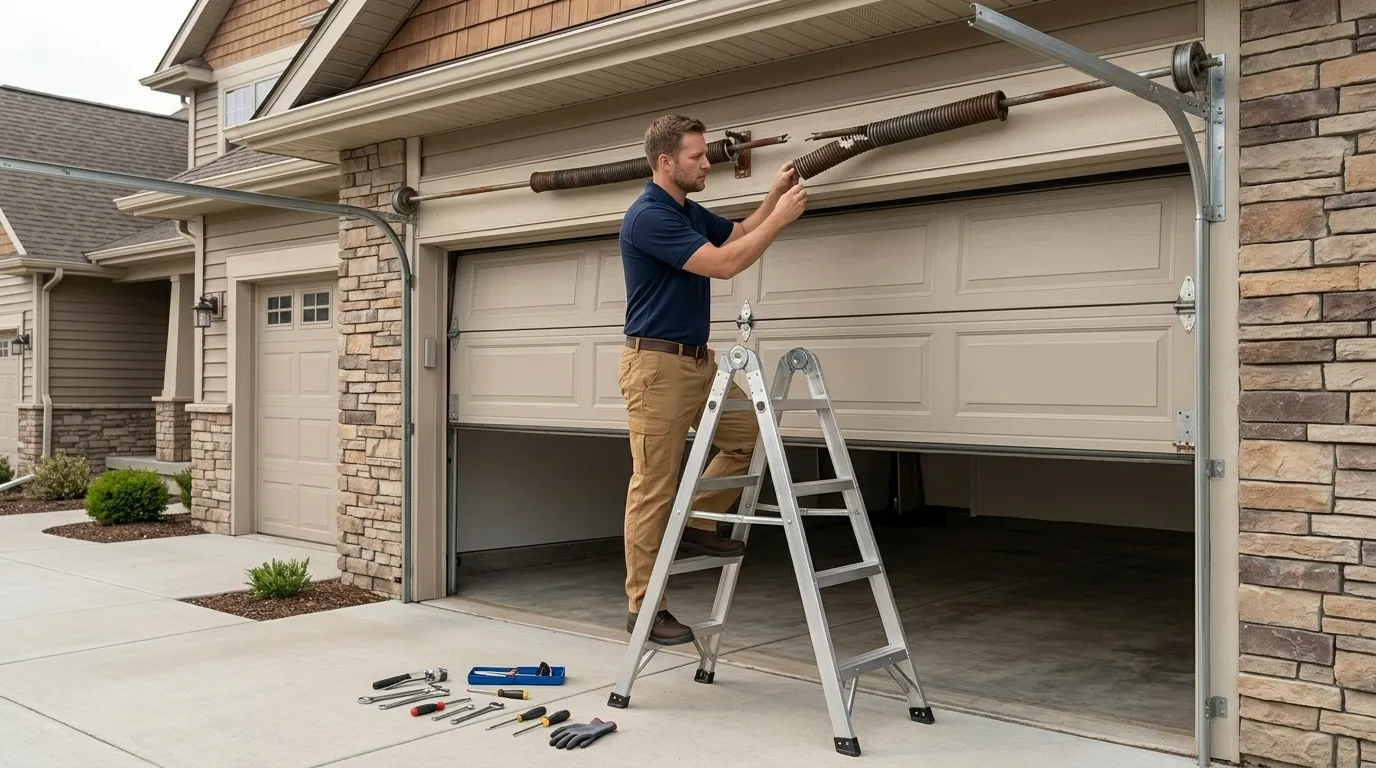
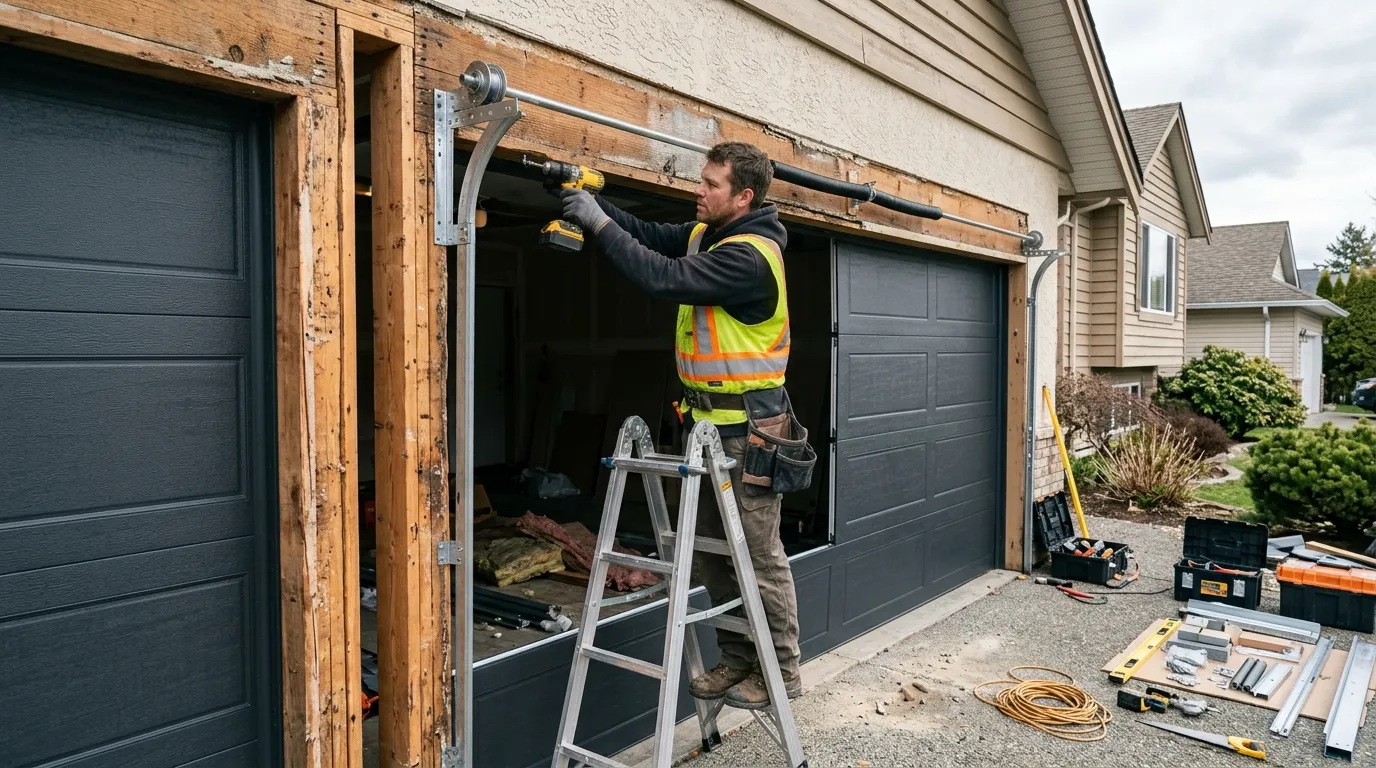
A snapped cable on a wide double door doesn't look like a snapped cable on a narrow one - the door usually racks sideways in the track instead of dropping straight, because the working cable on the other side is still under tension pulling that corner up. First thing we do is release spring tension safely, because on an 8-foot door built after 2000 you're almost always dealing with torsion springs sized for the extra weight, not the older extension-spring setups.
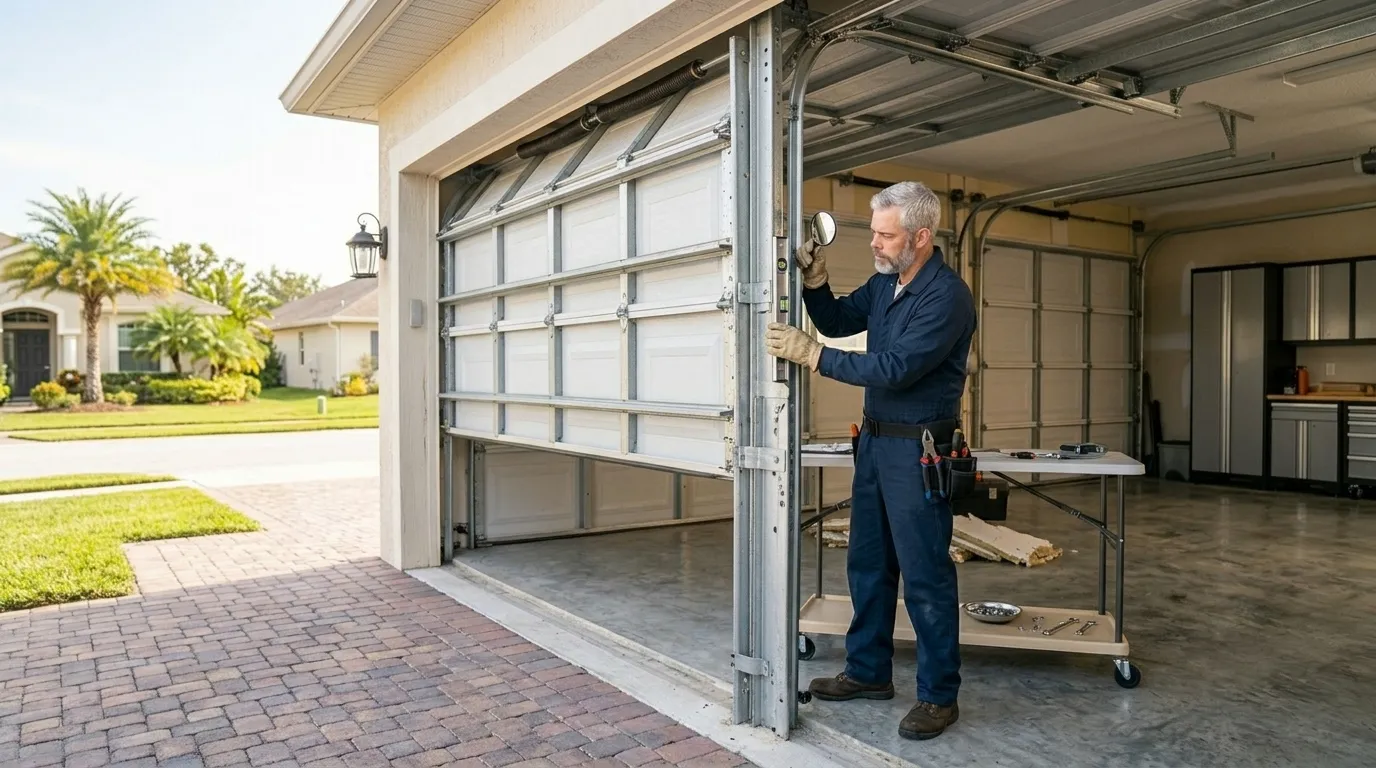
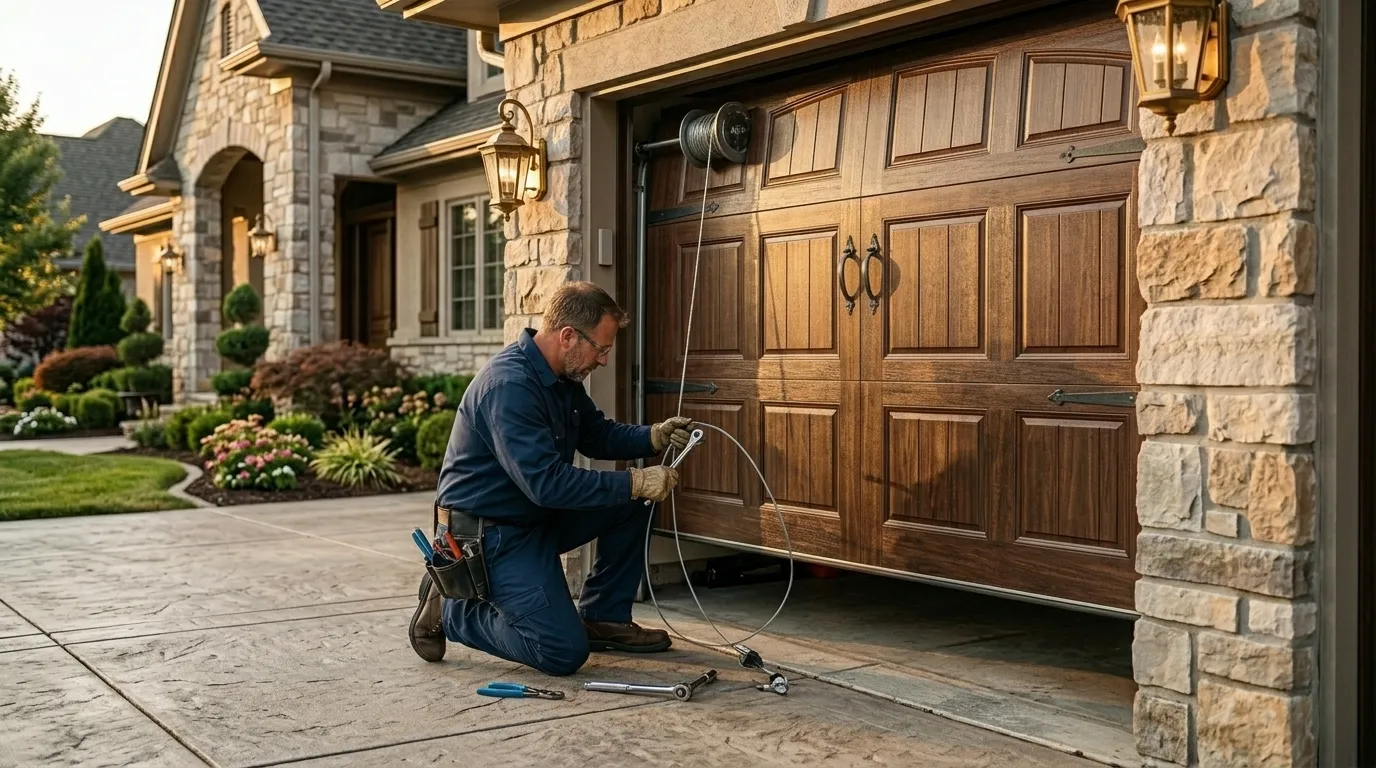
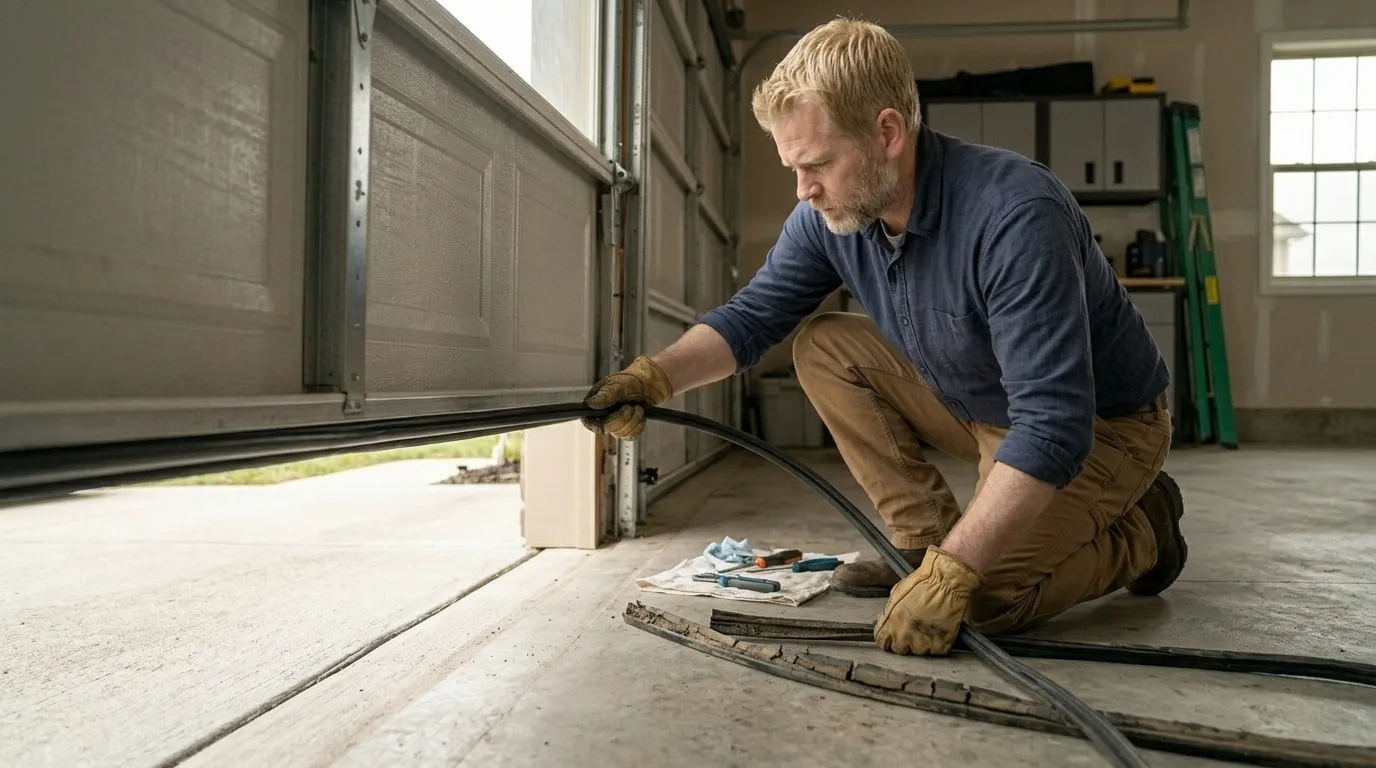
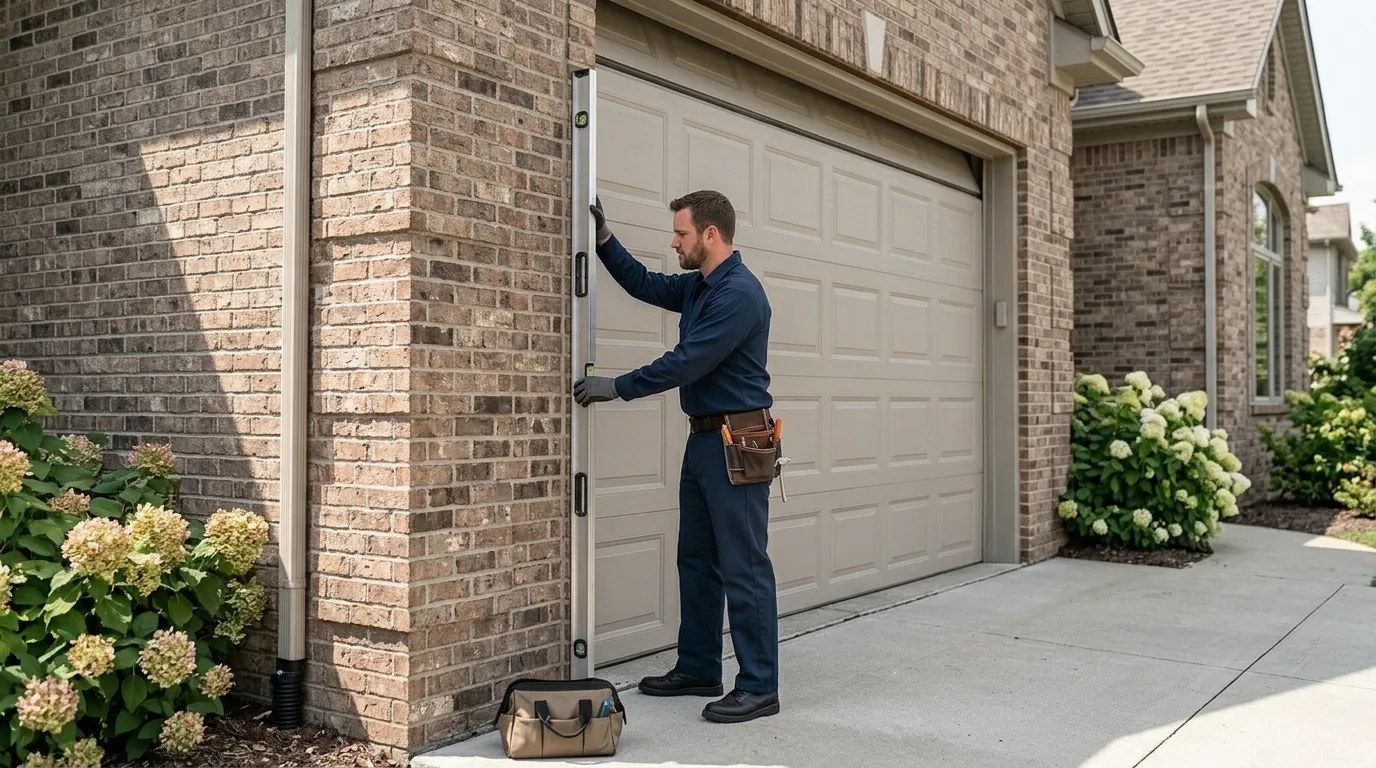
Once tension is off, we pull the old cable, check the drum and the bottom bracket it's fastened to for wear, and run a new cable matched to the door's actual width rather than a generic length. On a 16-foot double door that's a longer run than most trucks carry pre-cut, which is why we measure before we cut. We test the balance afterward by hand - a door this size should hold at any point in the track without the opener fighting it. If it doesn't, something else besides the cable is off, and we say so before we close the ticket.
The Complications
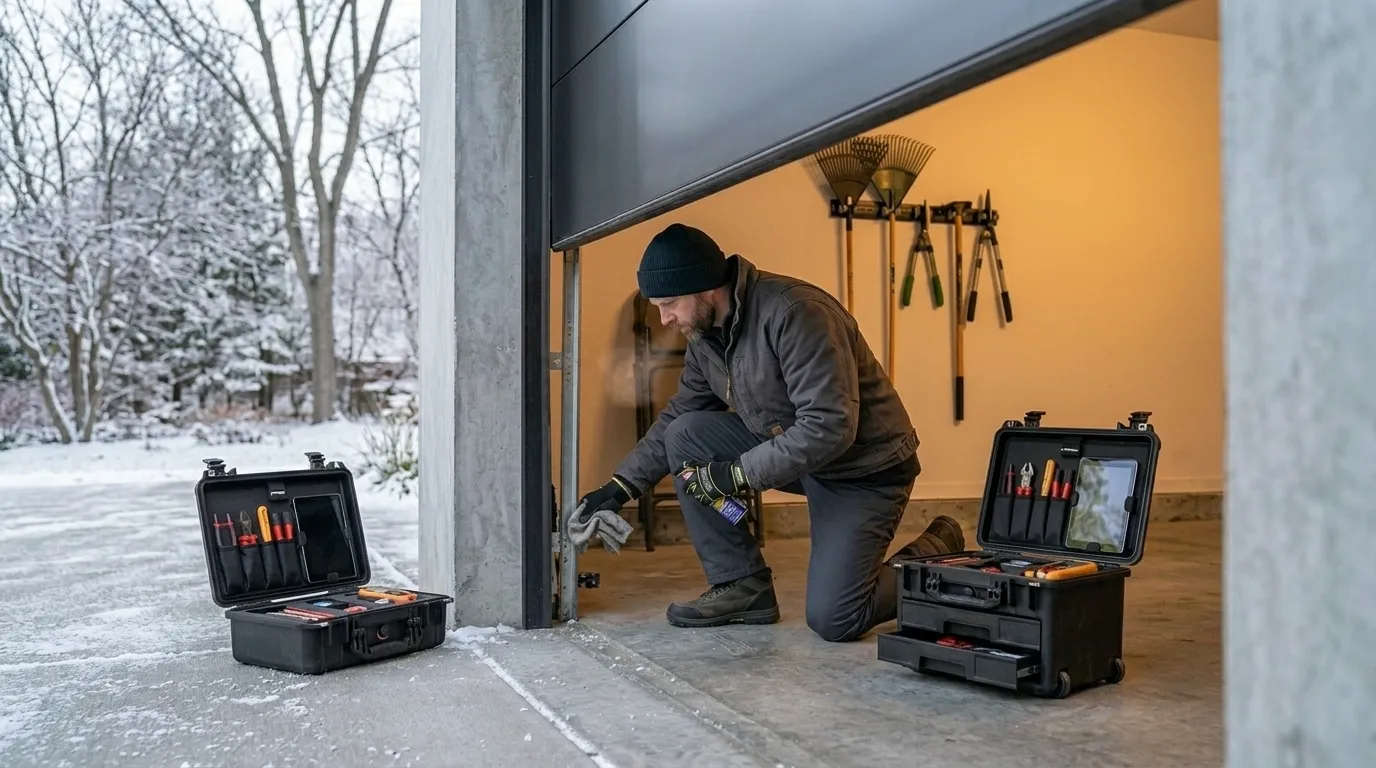
Kansas City winters are cold enough that steel cable and lubricant both stiffen, and Basehor sits in that same cold-severe climate band as the rest of the metro - it's not a local quirk, it's a regional one, but it shows up on these newer doors in a specific way. Builder-grade lubricant from a 2000s-era installation tends to gum up faster in real cold than the heavier grease we use, so a cable that looks worn might actually be a cable fighting dried-out lubricant on the drum.
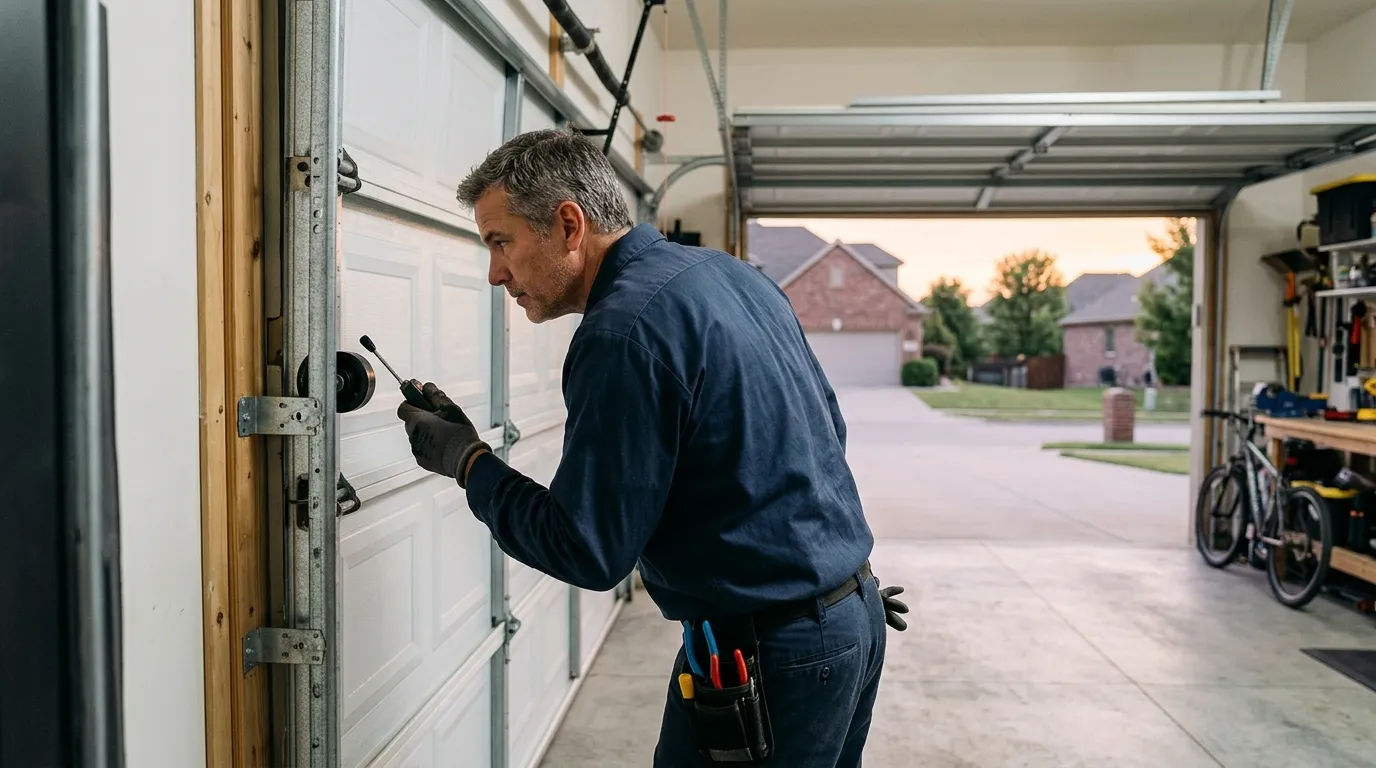
The other complication is size. A cable failure on a wide double door puts more load on the remaining hardware while it's unbalanced, so we check the opposite-side cable, the rollers, and the bottom brackets before calling the job done - not because the fix requires it, but because a door this size under uneven load for even a day can wear a second part prematurely. If we find that's already happened, we'll tell you before doing anything, since replacing a second cable on the same visit is cheaper than a second trip.