Parts We Carry
Basehor sits at the newer end of the housing stock we work across - the broader service area runs 1950 to 2004, and Basehor's median build year lands right at that 2004 mark. That means most garage doors out here are still on their original springs, cables, and rollers. Nobody's opener has failed twice yet. When a homeowner calls us for a new install, it's usually not because the old door wore out piece by piece - it's a dented panel, a door that's never matched the house, or a buyer who wants a wider two-car opening than the builder put in.
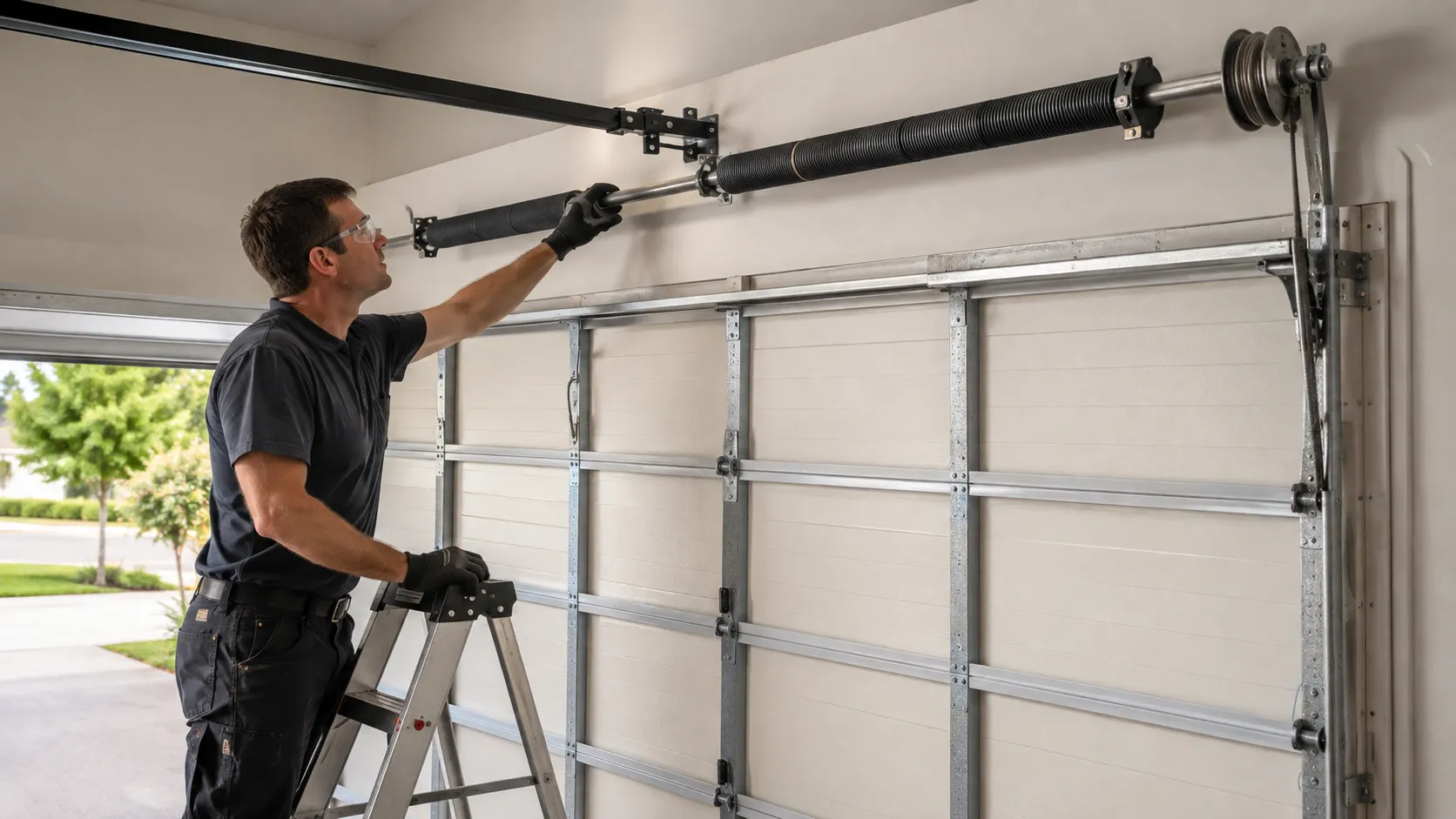
We carry insulated steel sections in widths that fit both the standard single and the wider double openings common in newer construction, along with torsion springs sized to the heavier insulated panels. For a climate that runs cold and severe here, we default to doors with a real thermal break - foam-filled, not just a steel skin - since single-layer doors on an attached garage let cold air into the house wall you're trying to keep warm.
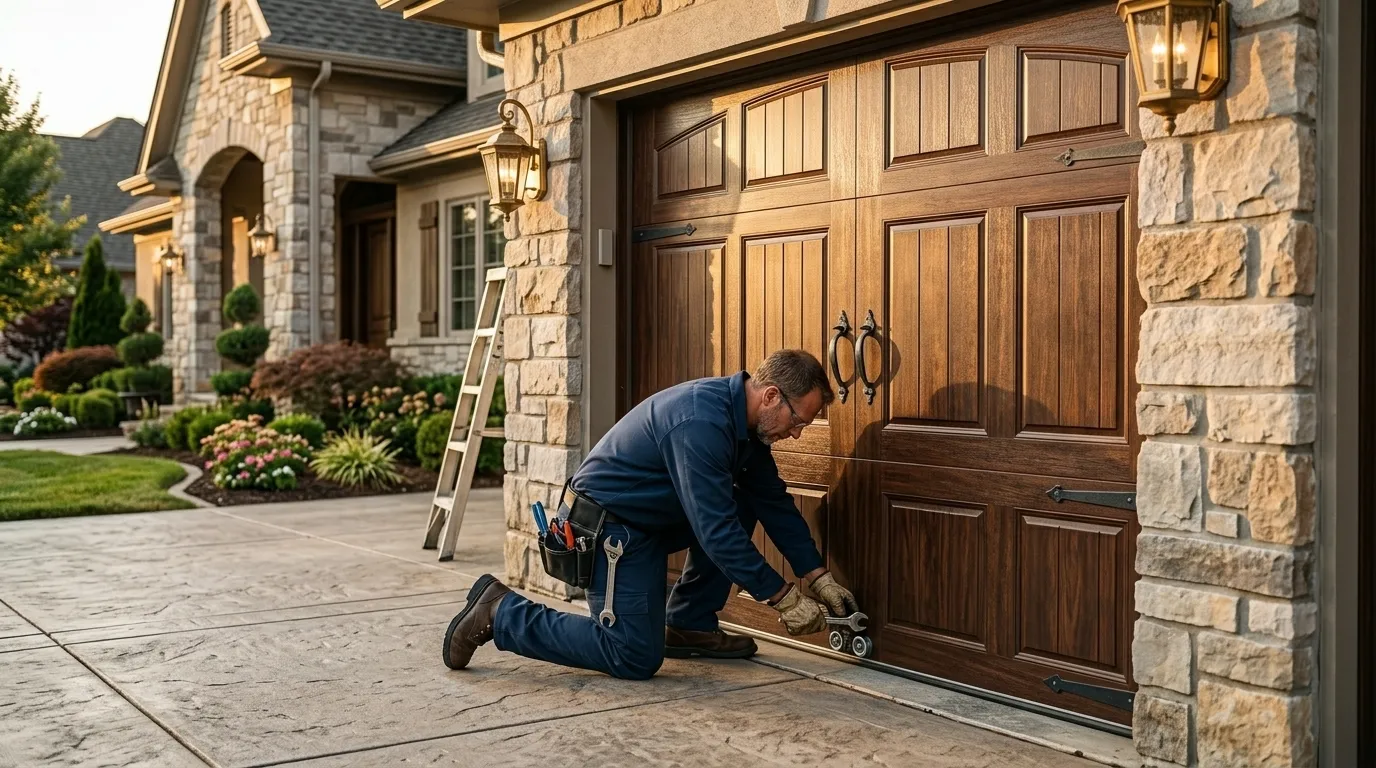
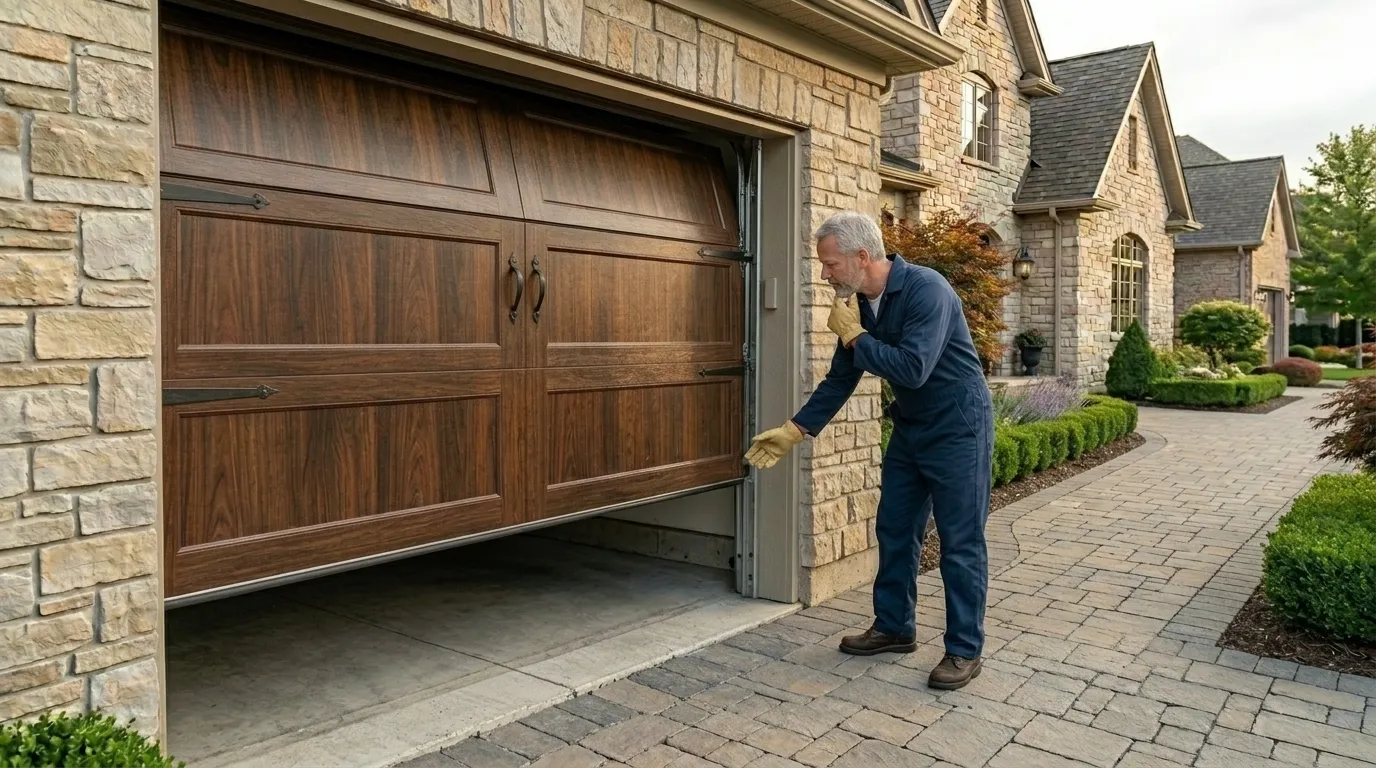
One limit worth saying plainly: we don't stock every custom window-insert pattern or a full range of wood-look finishes on the truck. If you want a specific look, we order it, and that adds lead time beyond a straight swap.
How We Fix It
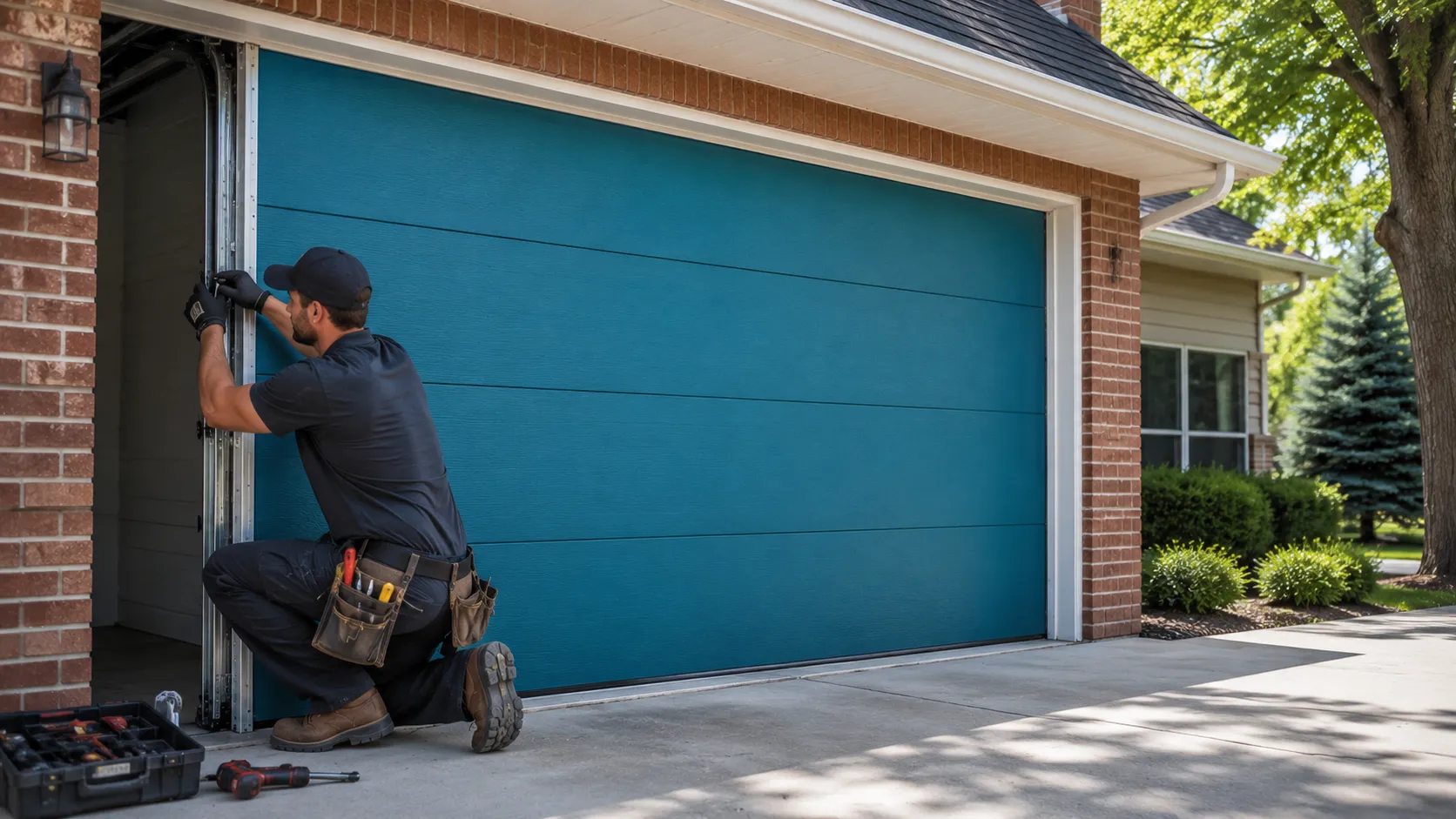
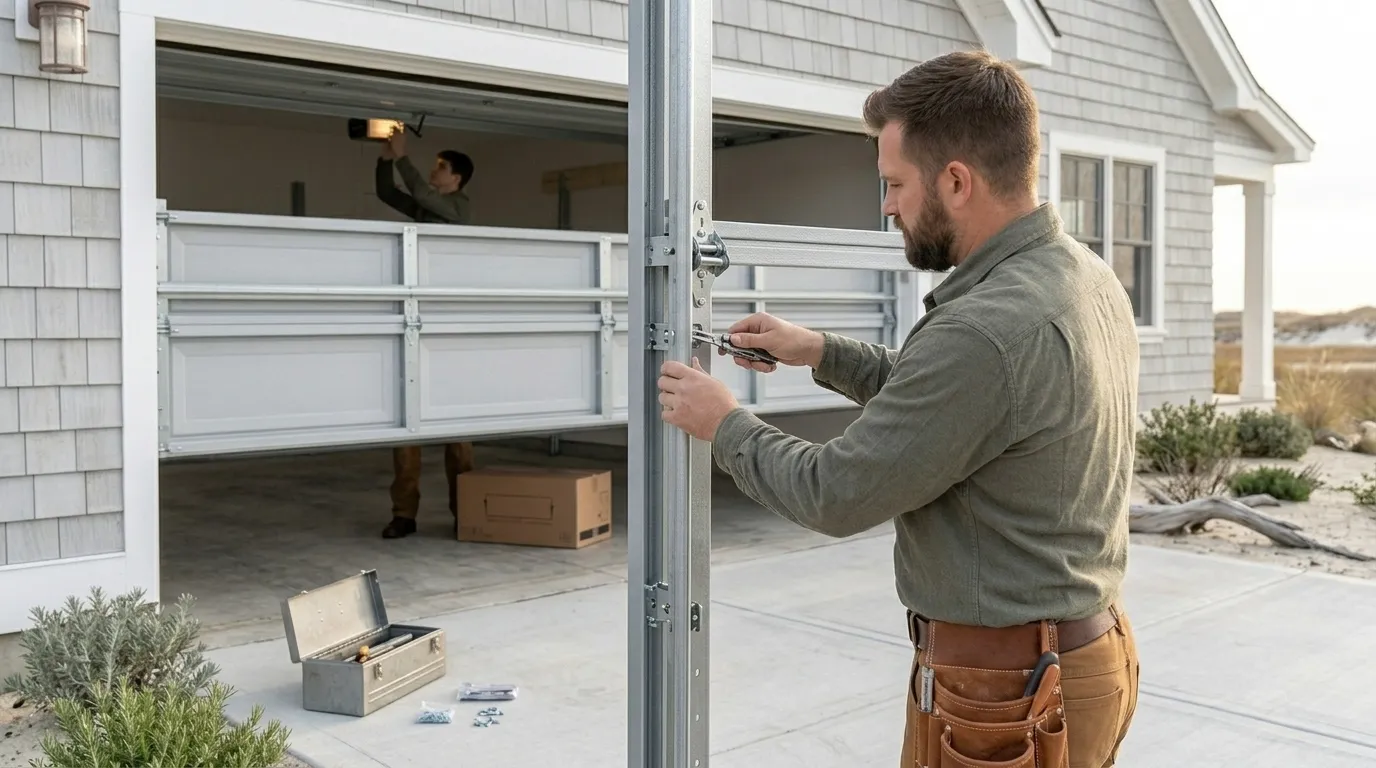
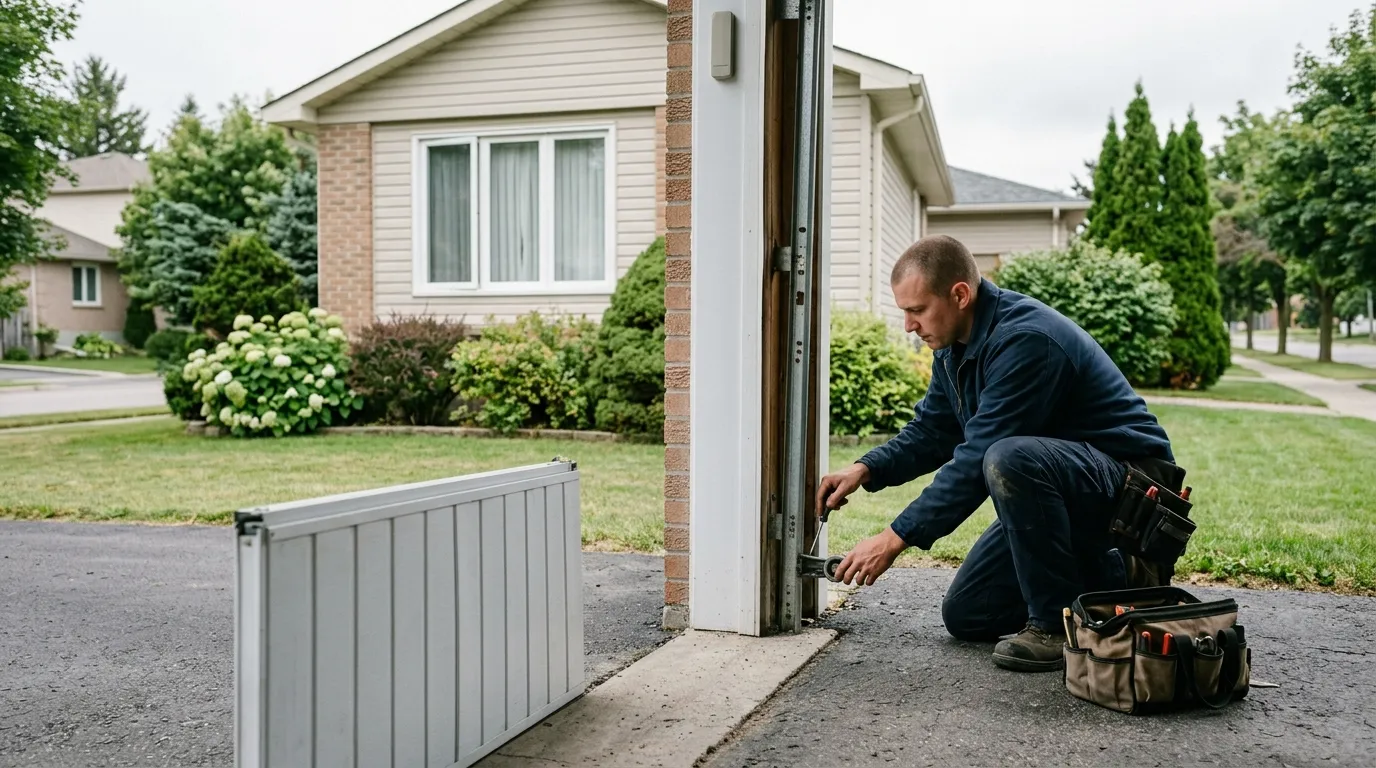
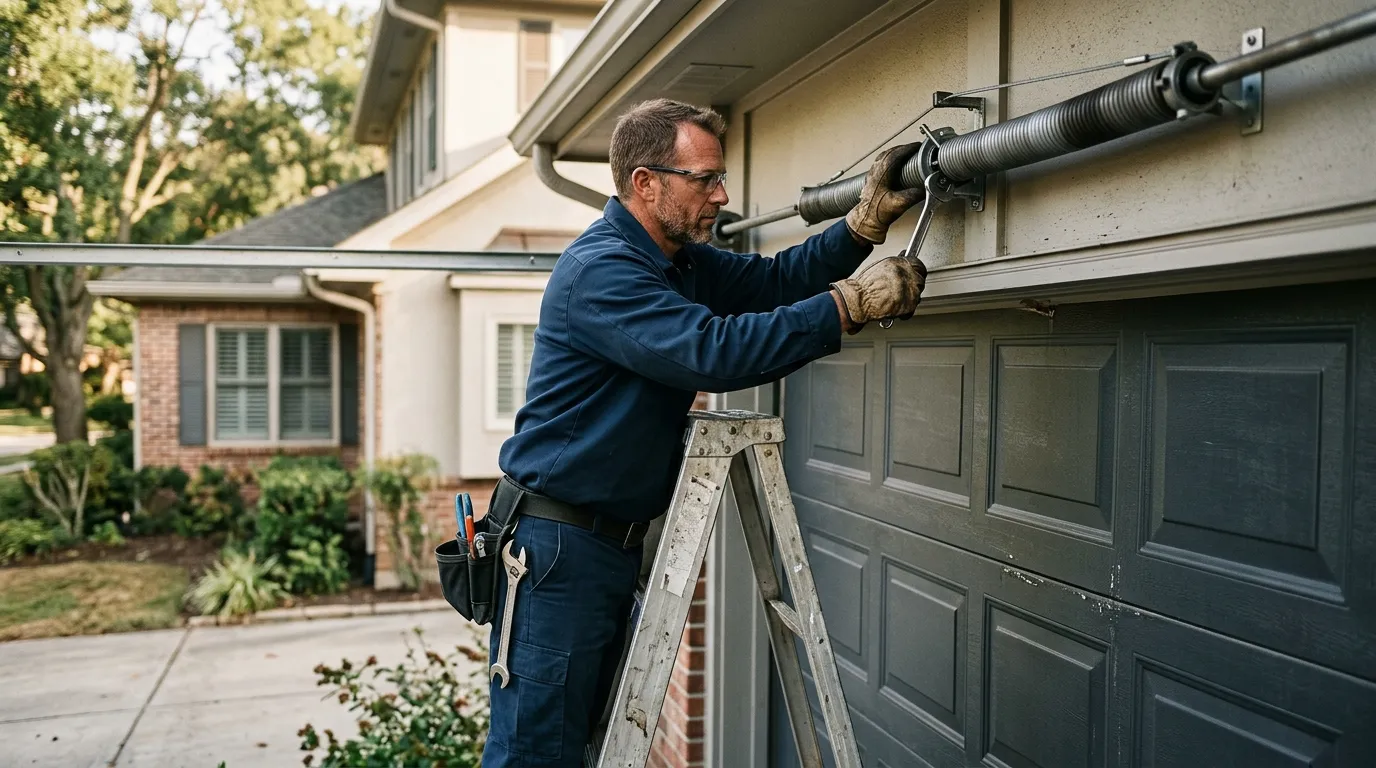
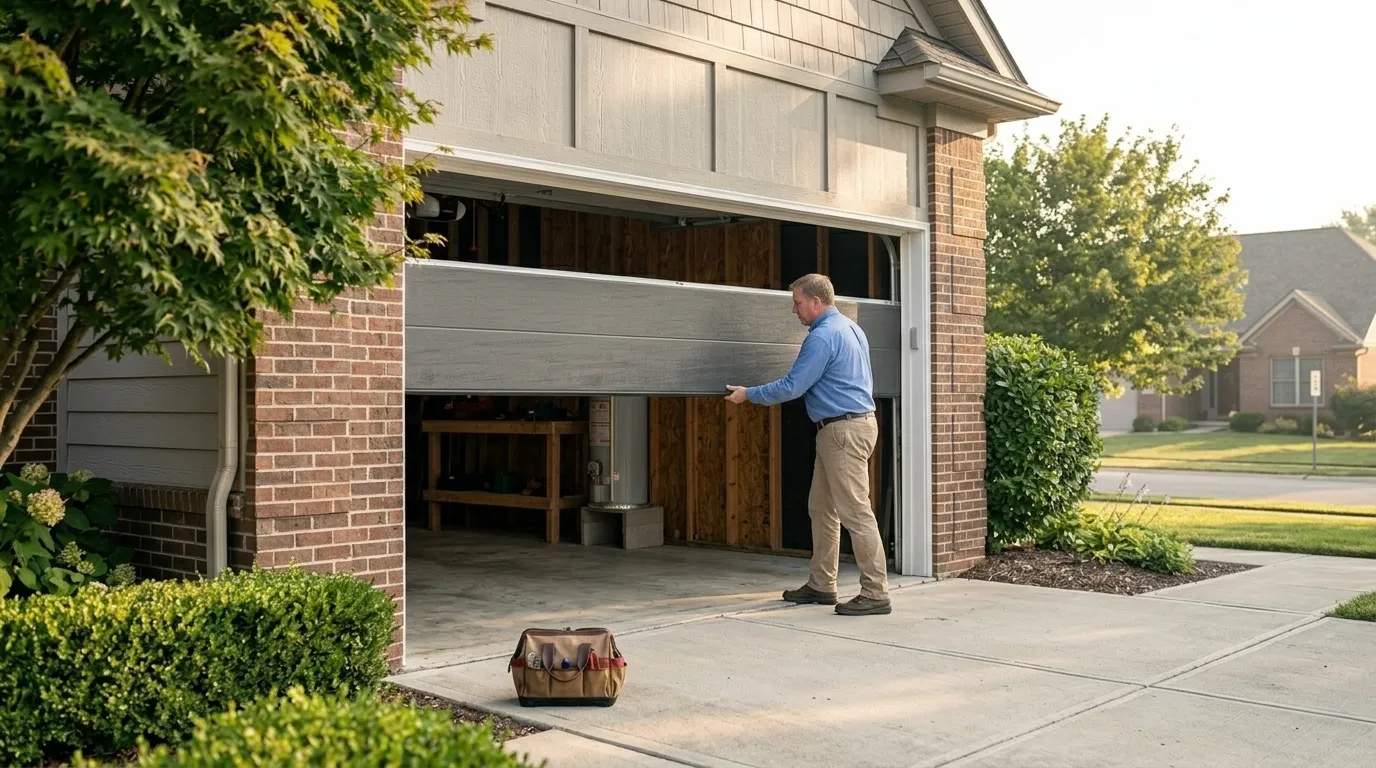
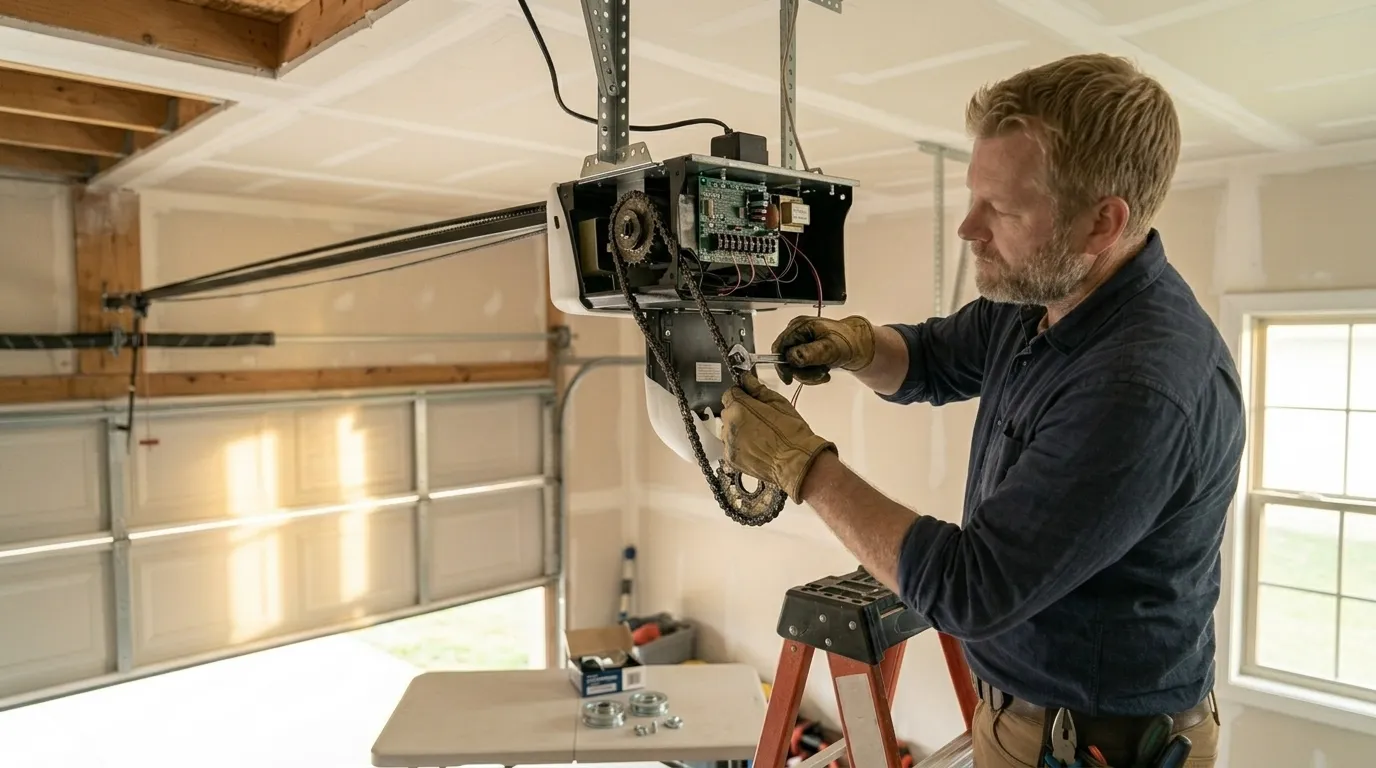
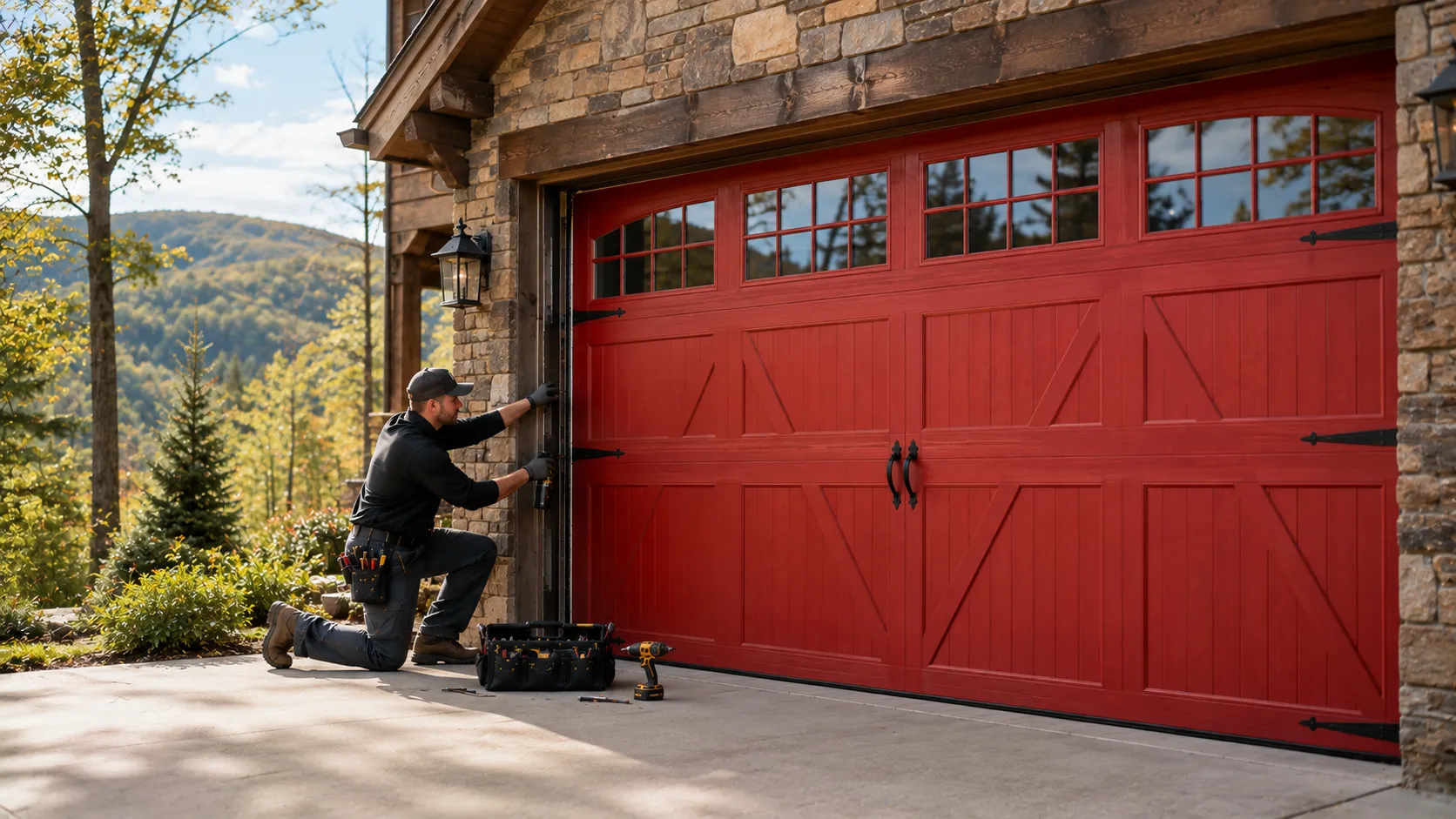
Coming from Kansas City, we drive the roughly 10 miles out to Basehor already knowing what we're going to find on a house from the early 2000s: a steel door, probably still on its factory torsion spring, an opener close to its first or second belt or chain replacement. We size the new door to the existing opening, check the header and track clearance against the opener's travel, and swap the whole assembly in one visit - old panels, track, and springs out, new door, new springs matched to the door's actual weight, hardware torqued to spec.
Because Basehor construction skews newer than a lot of the towns we cover, we're not usually fighting a rotted jamb or an opening that's shifted out of square from decades of settling. That's a real difference from work in the older pockets of the service area. It means install day tends to go the way it should on paper - measure, order the right door, hang it - with less of the framing correction that eats a morning on a 1960s house.
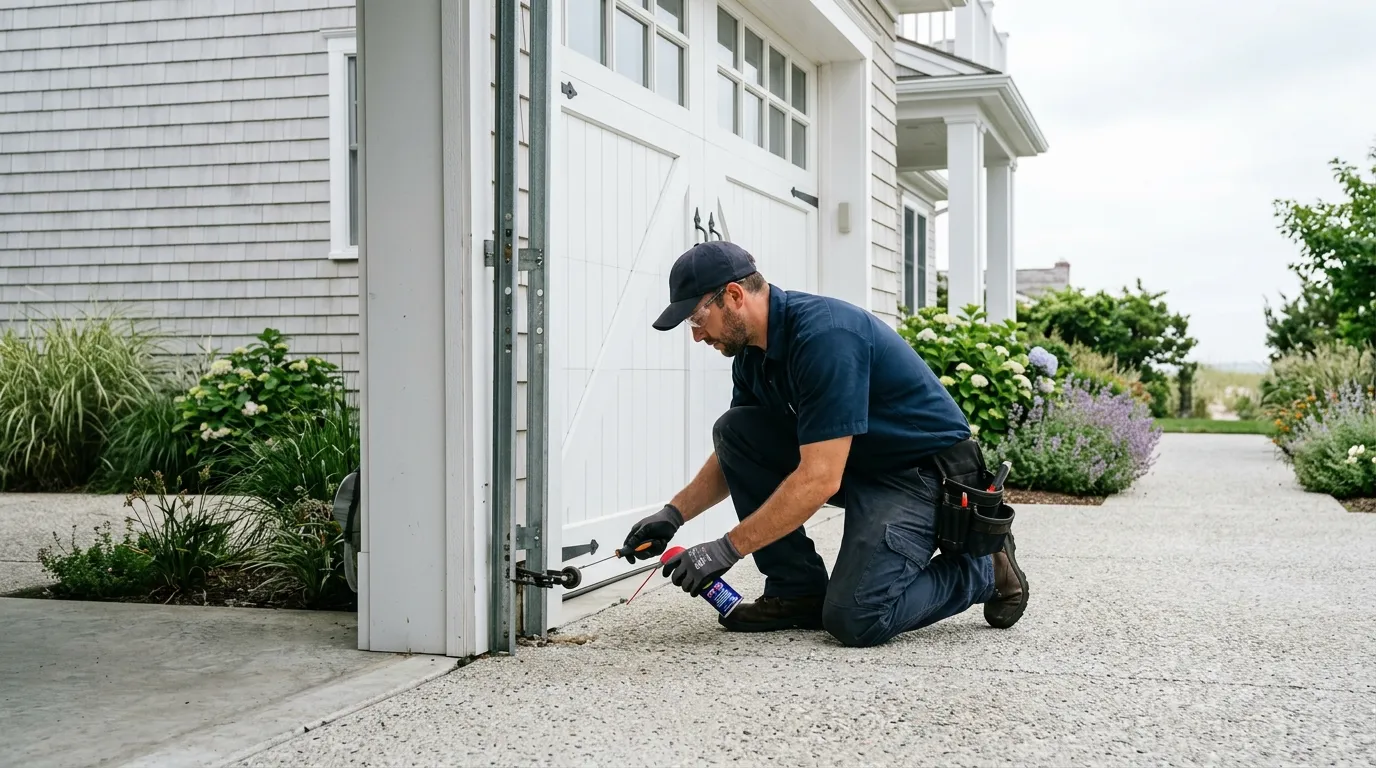
We test balance with the opener disconnected, run it through a full open-close cycle with the opener attached, and check the auto-reverse safety sensors before we leave.
The Complications
The complication in Basehor isn't old hardware - it's the cold. Doors here get insulated seriously because the climate band is cold and severe, and an attached garage without a real thermal break drags down the temperature of whatever room shares its wall. We size weatherstripping and bottom seals for that, not for a mild-winter town.
Household income in this part of the service area runs well above the wider region's median, and we see that reflected in what people ask for - insulated glass inserts, quieter belt-drive openers, finishes that match a newer build rather than a repaint job. None of that changes the mechanics of a proper install, but it does change what we quote.
The other complication is simpler: a 2004-era opening was built to 2004-era code and framing standards, which is generally square and true. If your house is one of the older outliers in the area, that assumption doesn't hold, and we check before we cut anything.