Can You Do This Yourself
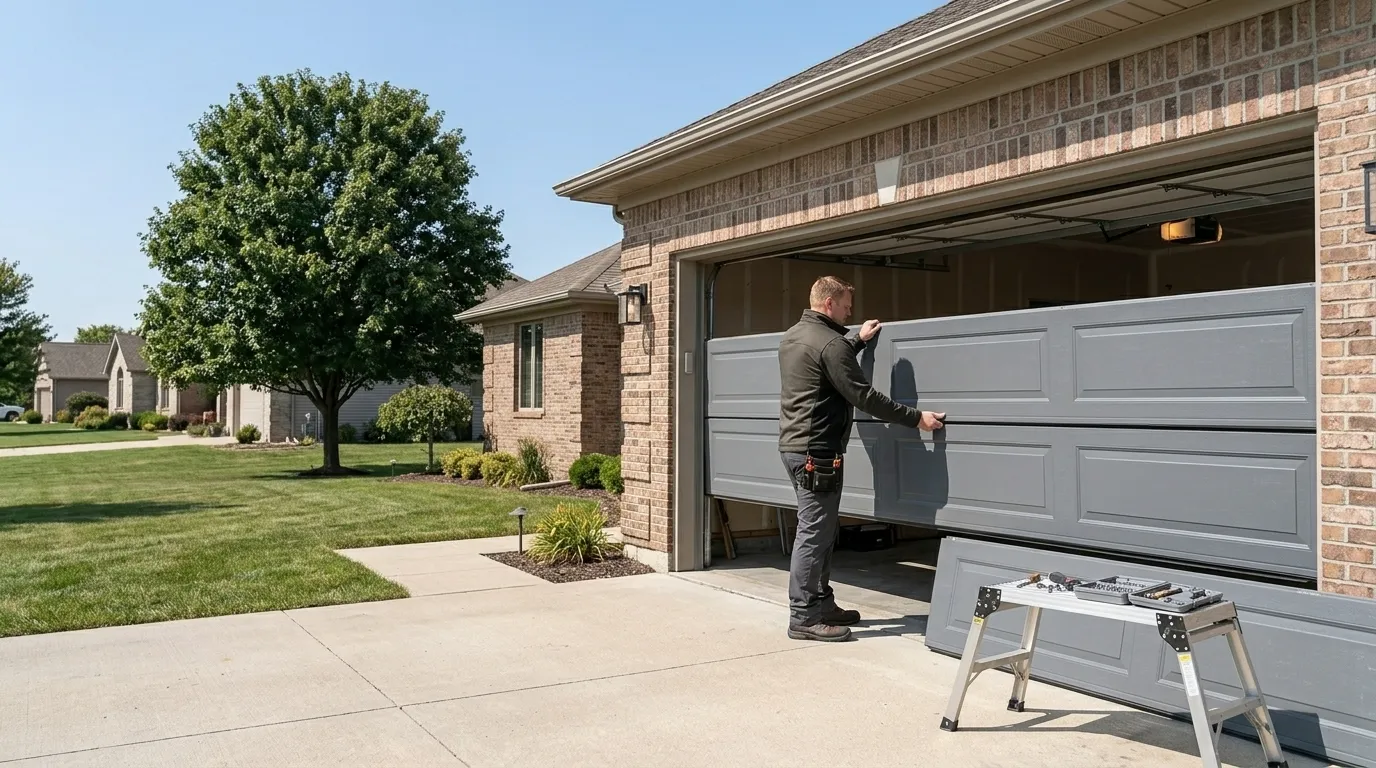
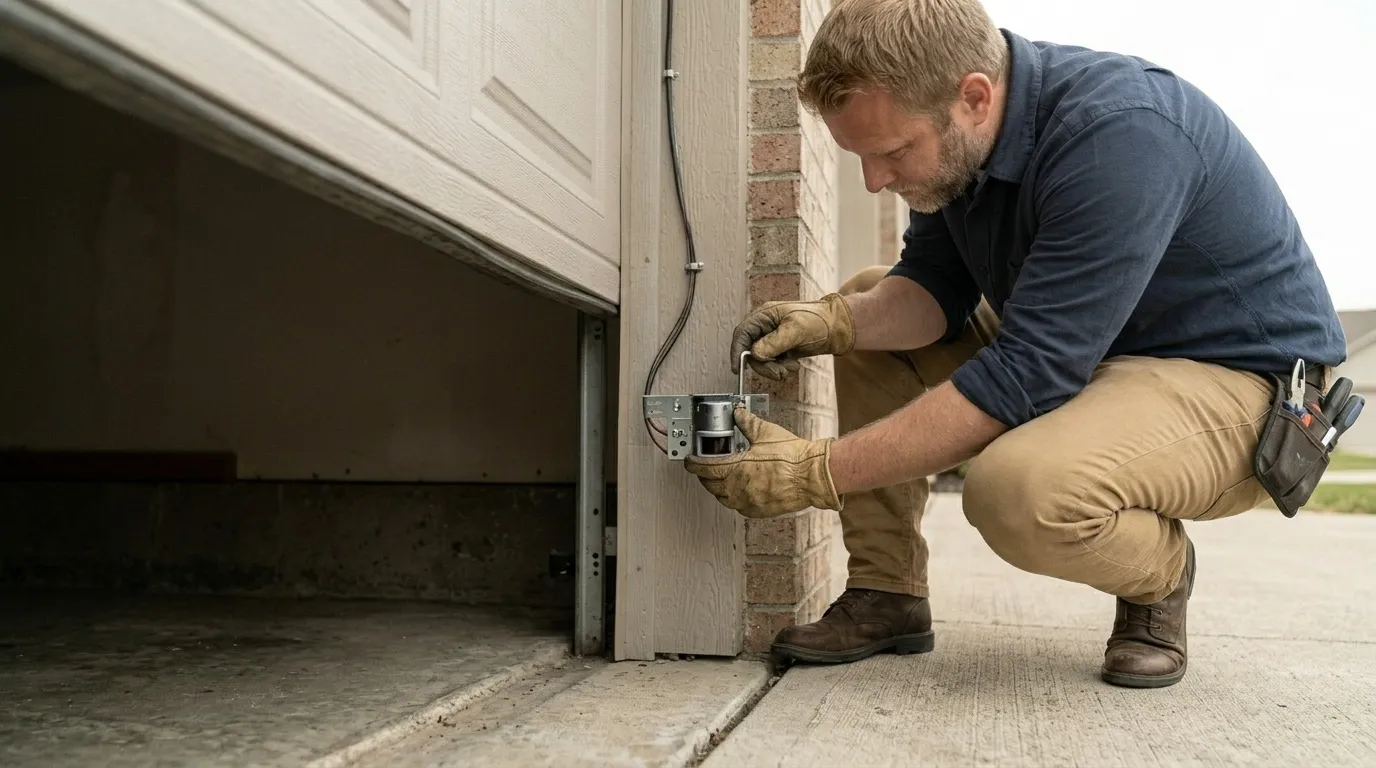
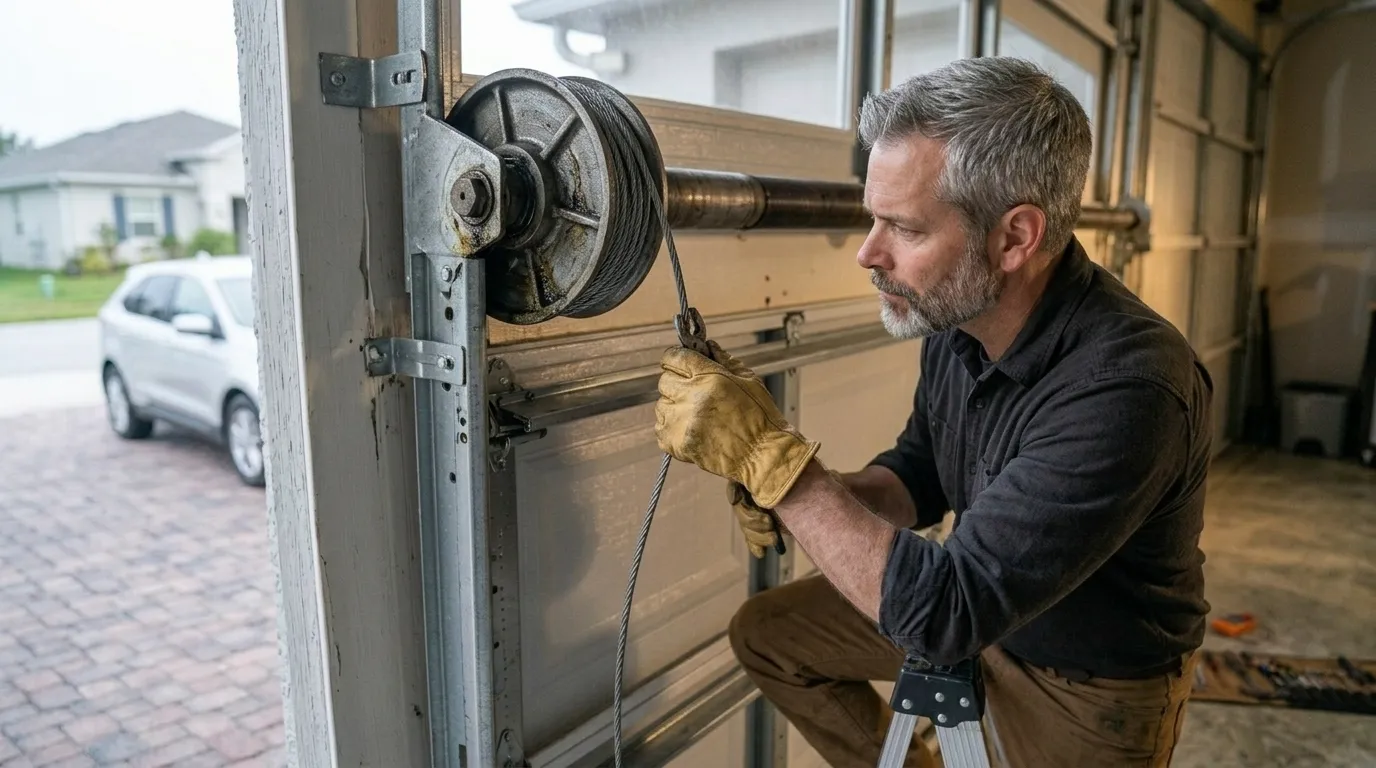
Mission Hills sits about 10 miles from our shop in Kansas City, and the houses here went up around 1953 on average - a good two decades before most of the wider service area, where the median build year runs closer to 1973. That gap matters more than it sounds. A door and opener installed on a 1953 house has usually been replaced once or twice already, but the framing, the header clearance, and sometimes the track mounting still follow older conventions. If you're comfortable with a multimeter and you know which way a torsion spring is wound, you can swap a broken cable or reseat a roller yourself. What you should not touch is a wound spring, a cable under tension, or anything bolted to a bent or rusted track. On a house this age, the bracket holding that track may not be the bracket a 2020s door kit expects, and forcing a modern part onto old hardware is how people get hurt. If the opener is original or close to it, call rather than guess.
The Complications
With roughly 1,286 households in Mission Hills and a housing stock centered on the early 1950s, the failures we see skew toward age rather than volume - this isn't a subdivision full of identical builder-grade doors from the same year. Torsion springs on houses this old have often been re-wound or replaced with a mismatched size at some point, which throws off the balance and makes the opener work harder than it should. Cold-climate swings (this whole region sits in a severe cold band) shrink and crack rubber seals and stiffen old grease in bearings that haven't been serviced in years. On a higher-income street where the door itself may have been upgraded but the opener wiring wasn't, we sometimes find a newer panel bolted to 1953-era track hardware that was never meant to carry it. None of that is visible from the driveway, which is why a phone diagnosis on a house this old is a guess, not an answer.
How We Fix It
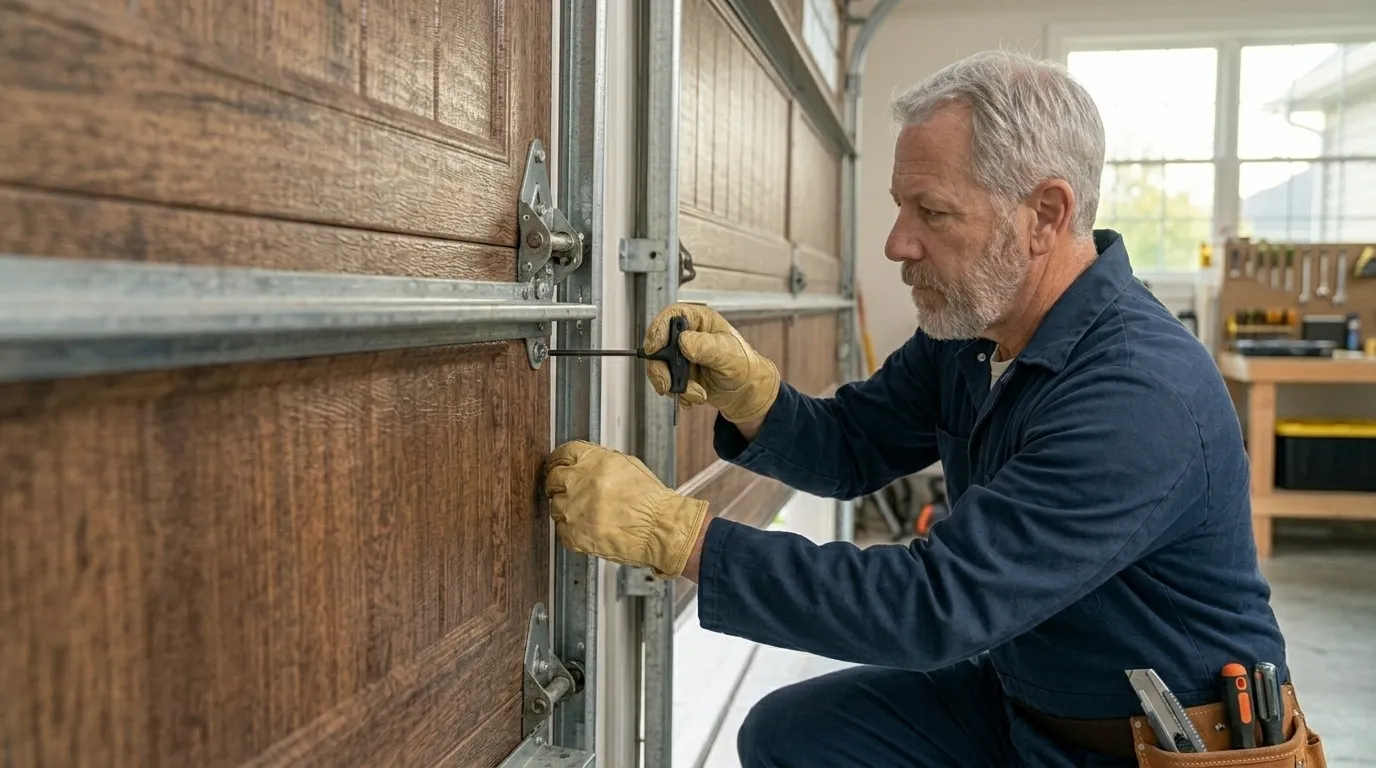
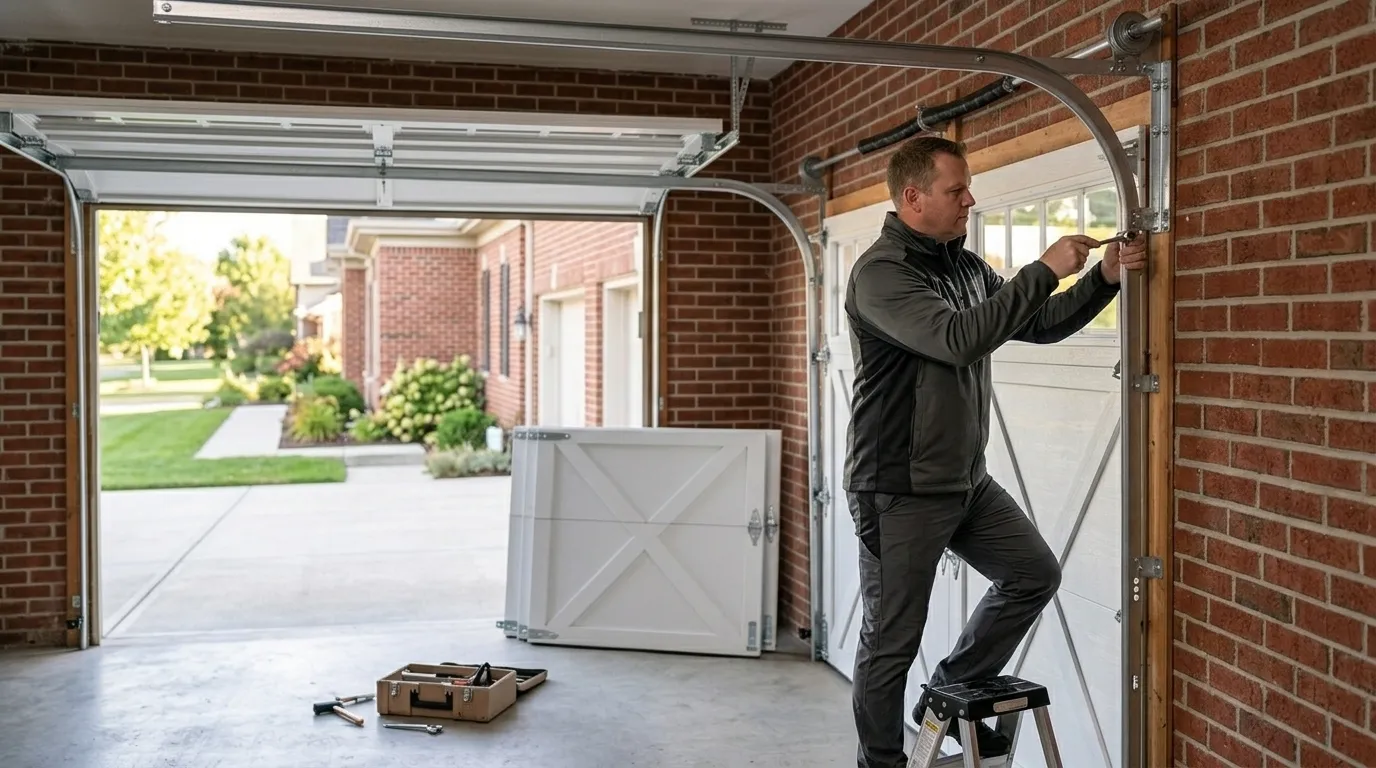
On original or early-replacement hardware from a house this old, we start by checking the spring size against the door weight rather than assuming the last person got it right. A mismatched torsion spring is the single most common thing we find on 1950s-era Mission Hills doors, and it's usually why the opener strains, the door drifts open on its own, or the remote works but the motor sounds like it's fighting something. We rebalance or replace the spring to match the actual door, not the one that happens to be hanging there. Track alignment gets checked next since older mounting brackets shift over decades of freeze-thaw cycles that come with a severe cold climate. If the opener itself is original, we'll say so plainly and give you the choice between a repair that buys a few more years and a replacement that stops the callbacks - we don't push either one on you.
What Causes It Around Here
Two things drive most of the calls out this way: house age and winter. A 1953 build year means the garage door has likely been through at least one full replacement cycle already, and whatever hardware is underneath it - track brackets, header mounts, even the framing around the opening - may still be original to the house. Layer a severe cold climate on top of that, and you get seals that crack, steel that contracts and pulls fasteners loose, and grease that stiffens up on cold mornings, all landing hardest on parts that were already decades old. We don't see the boom-era subdivision failures common in newer parts of the wider area; we see older, individually-aged hardware, which is a different diagnosis every time.