Can You Do This Yourself
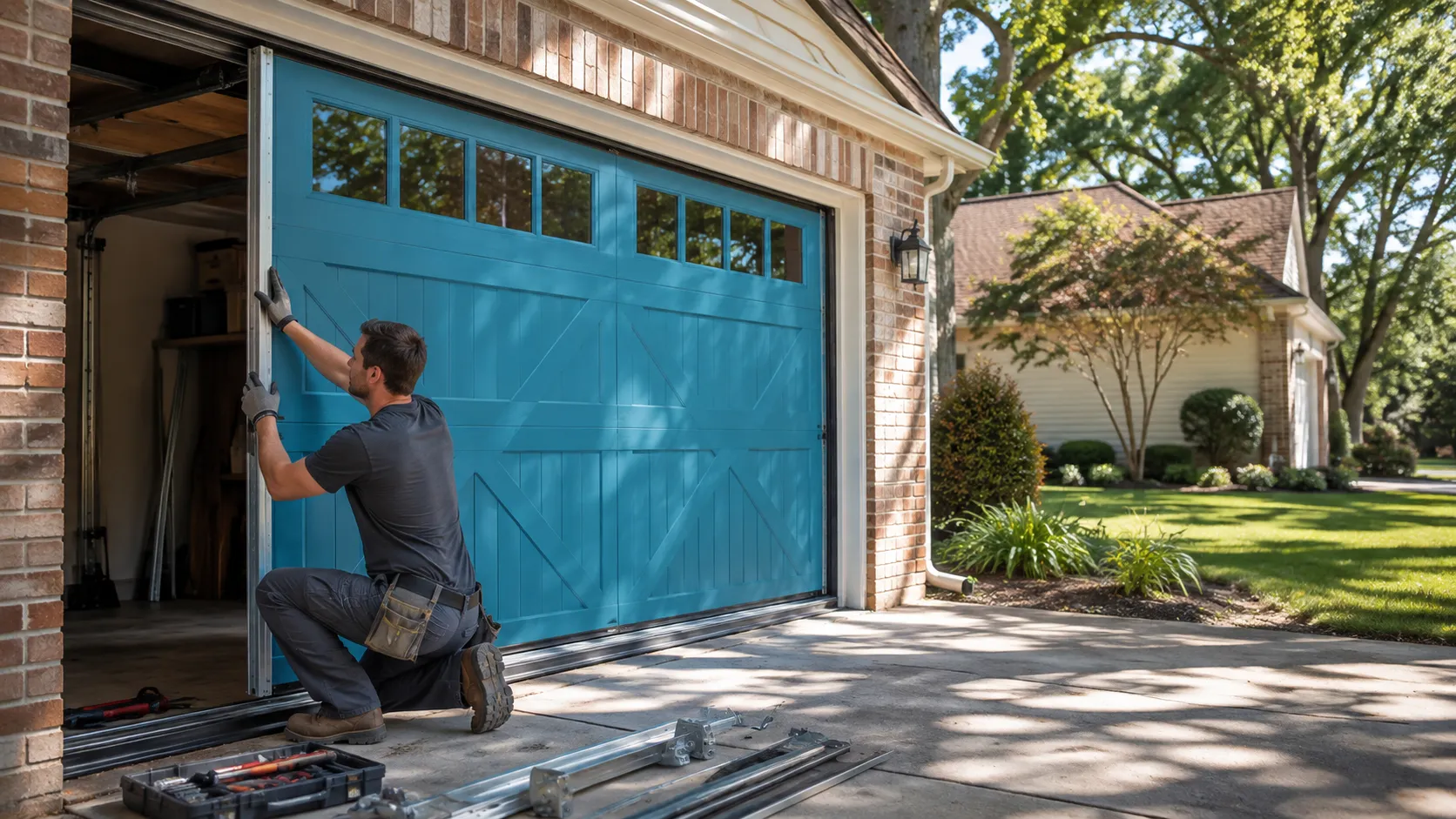
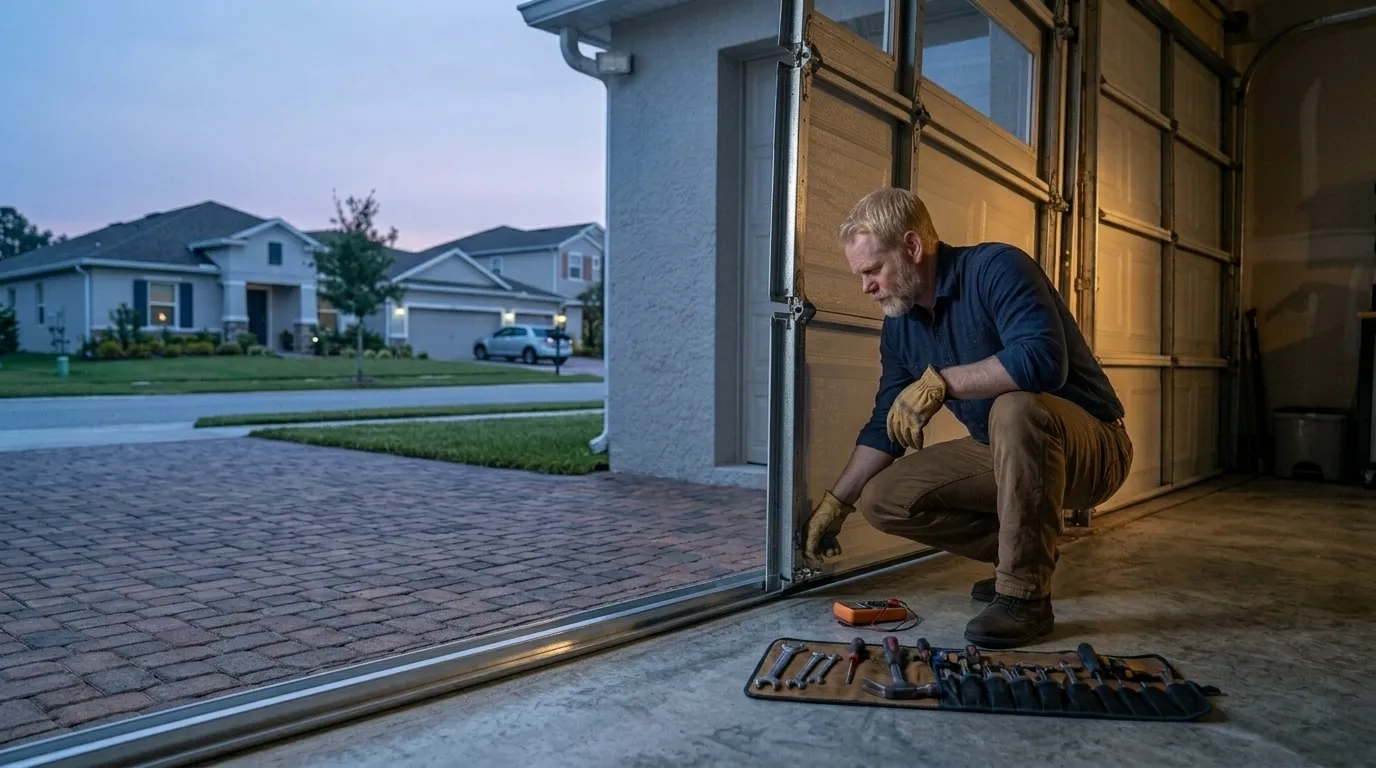
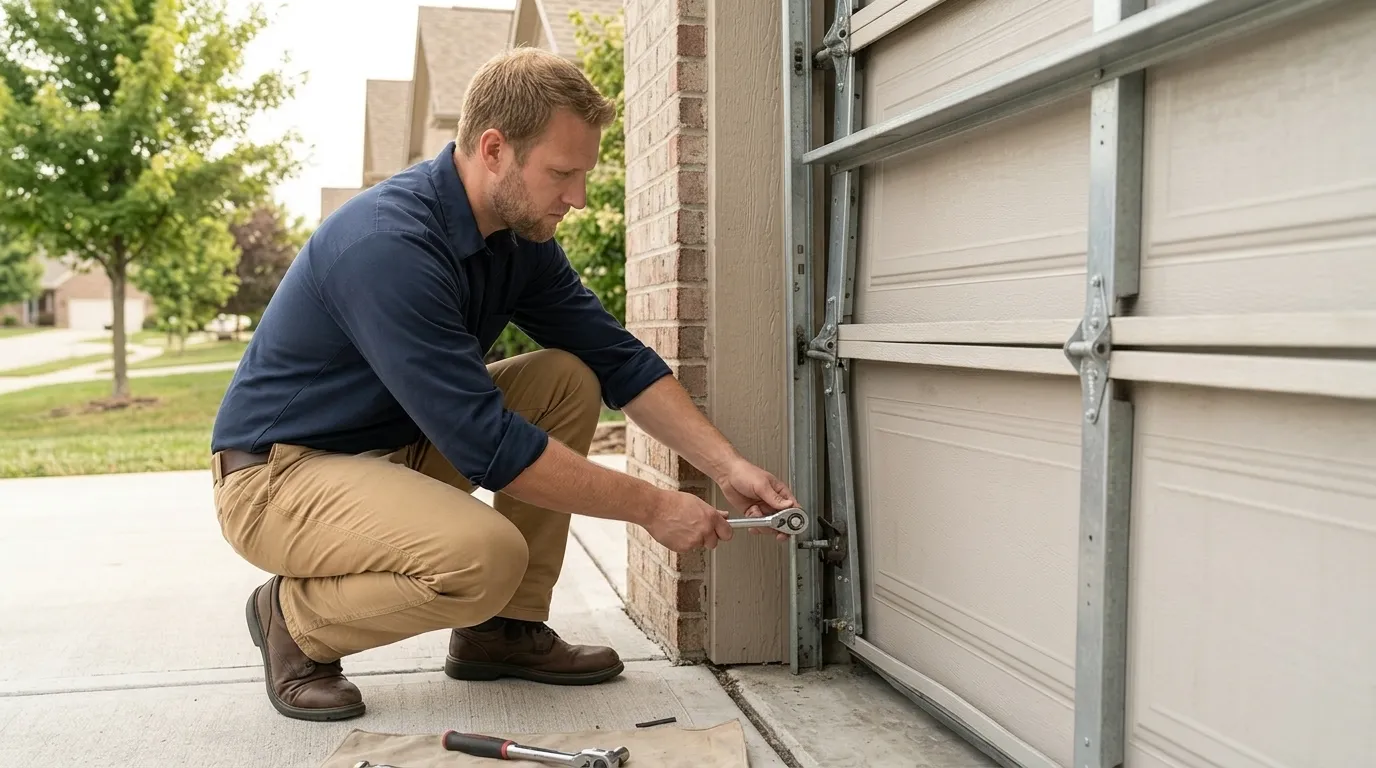
Swapping a roller looks simple on a video: pull the retainer, slide the roller out of the track, drop a new one in. On a door with balanced spring tension and a track that hasn't shifted, that's roughly true. The trouble in Mission Hills is that a lot of these doors are original to houses built in the early 1950s, and the track brackets on hardware that old are often bent, rusted at the mounting bolts, or spaced to a track width nobody sells rollers for anymore. Pull the wrong roller on a door like that and the whole section can drop out of the track while you're standing under it. If your income allows you to replace a door outright rather than nurse original hardware, that's worth weighing before you start pulling bolts yourself. We're not going to tell you it's impossible - we're telling you the failure mode here isn't a stripped screw, it's a section falling.
The Complications
The median household income across this part of the service area sits around $89,385, but Mission Hills runs well above that - median income here is over $250,001. That number matters for one reason: it changes where the repair-or-replace line falls. On a door that's original to a house built around 1953, a roller job is cheap relative to the value of the property it's attached to, which means most owners here choose to fix rather than let a marginal door limp along. The complication is finding parts. Steel rollers sized for 1950s track gauge aren't stocked at most supply houses, and nylon rollers - the quiet, common replacement now - won't always fit a bracket built for the older steel style without also swapping the bracket. That's two parts instead of one, and it changes the estimate.
How We Fix It
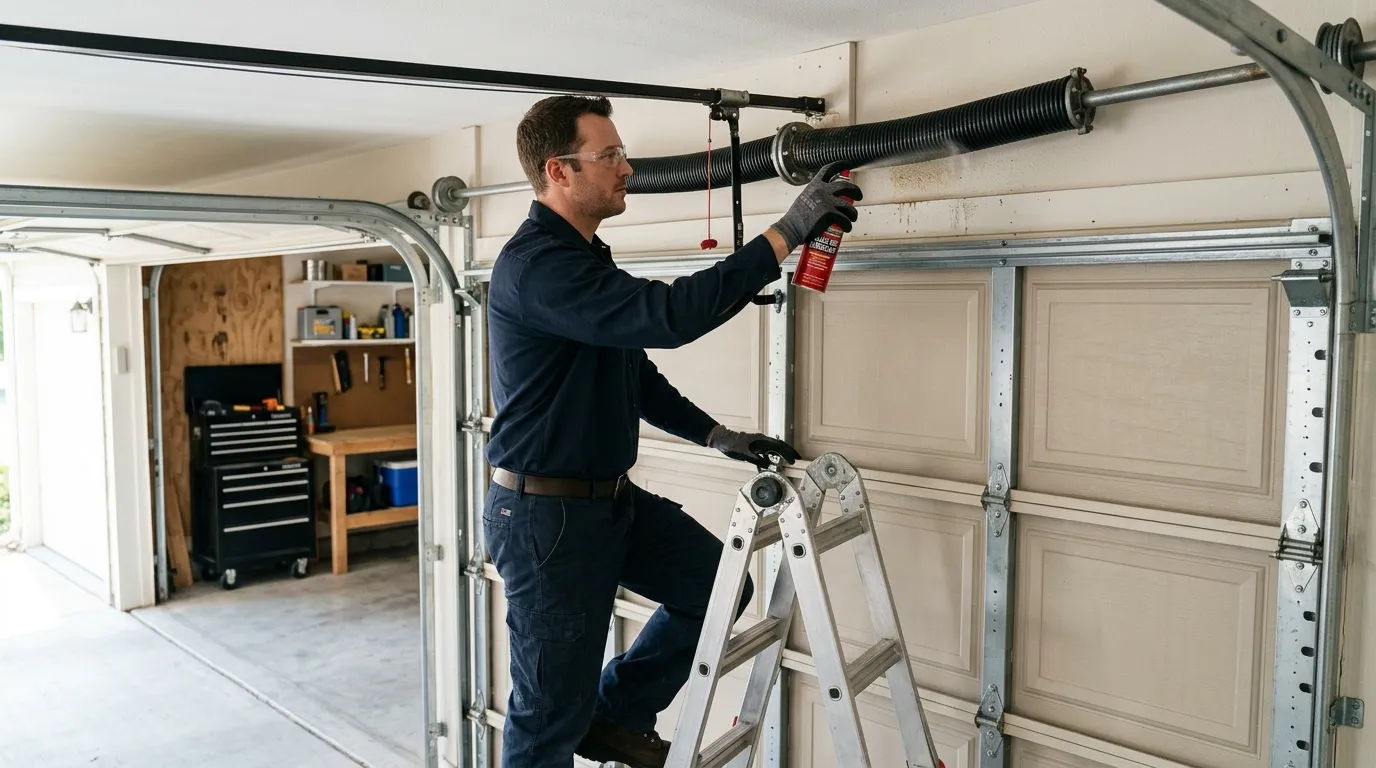
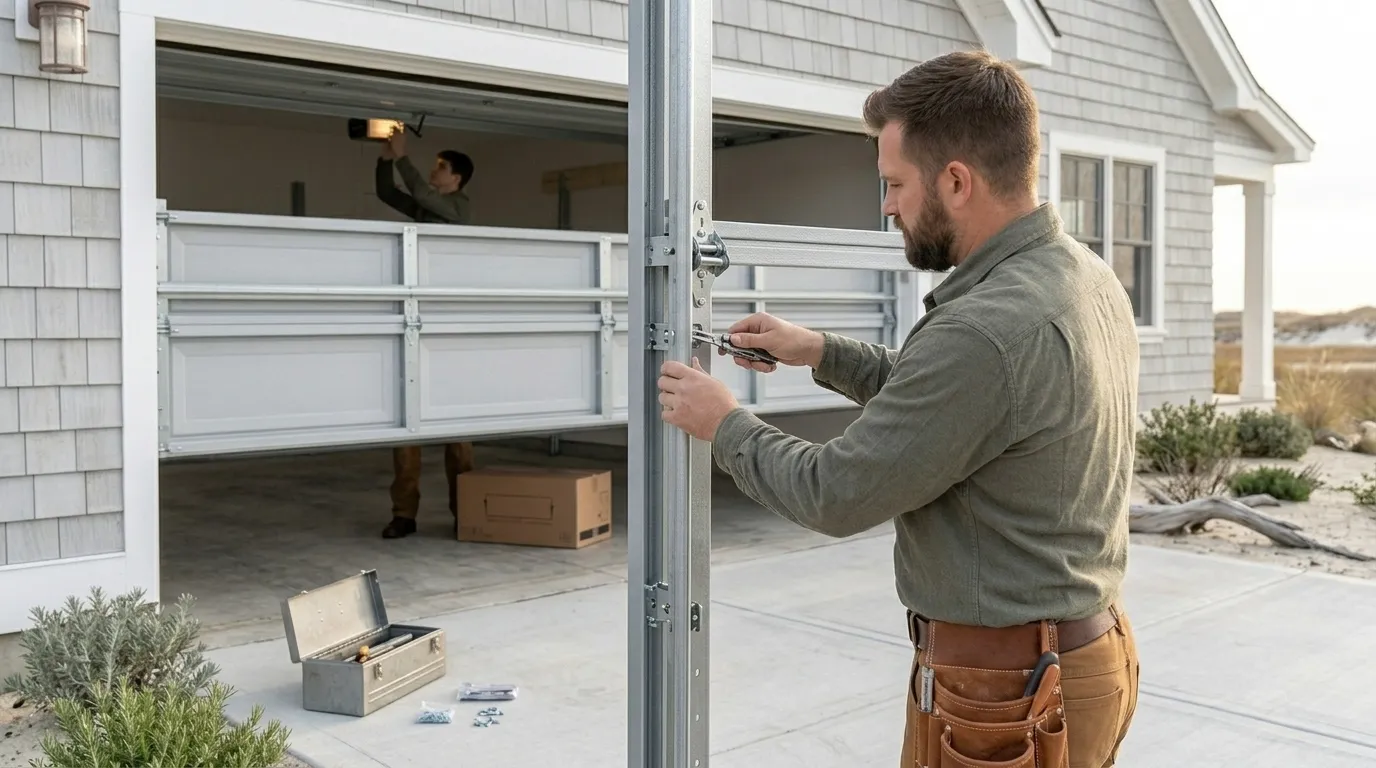
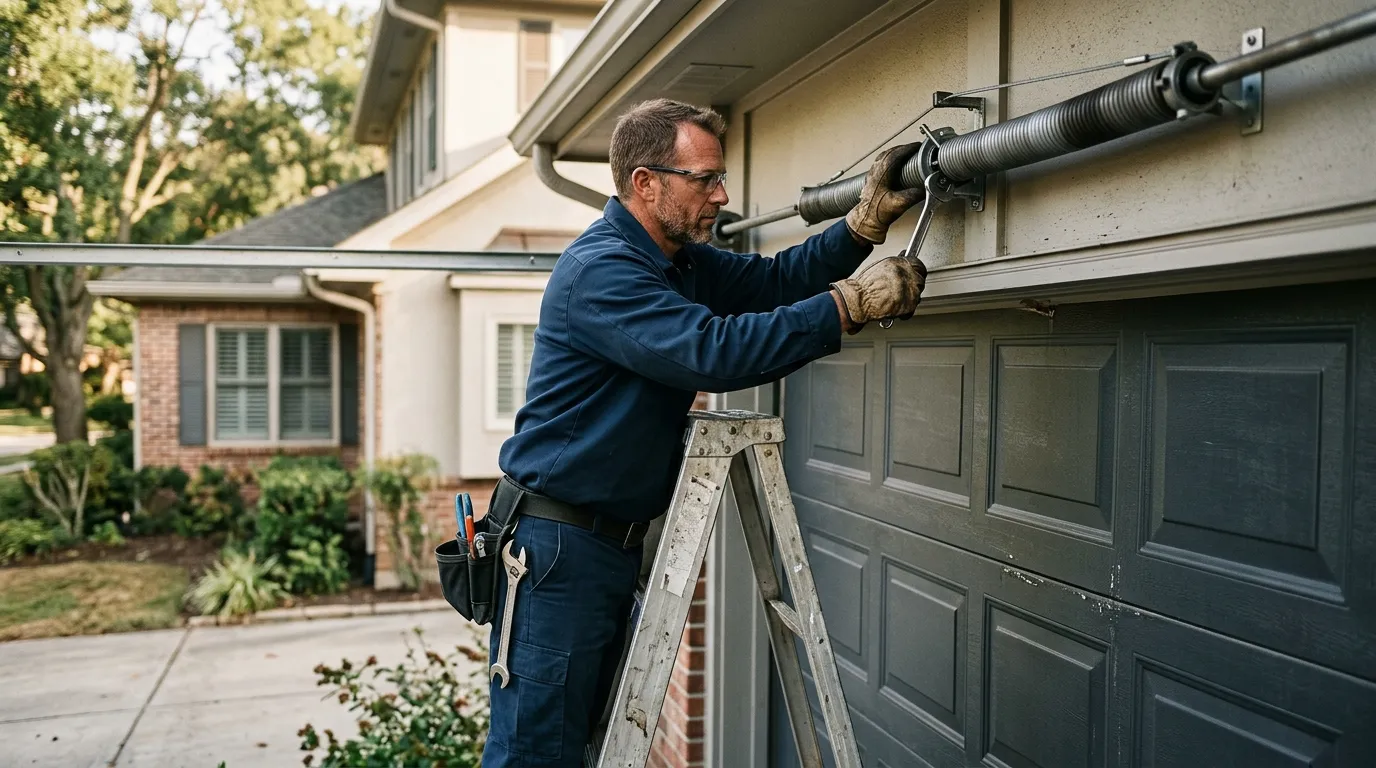
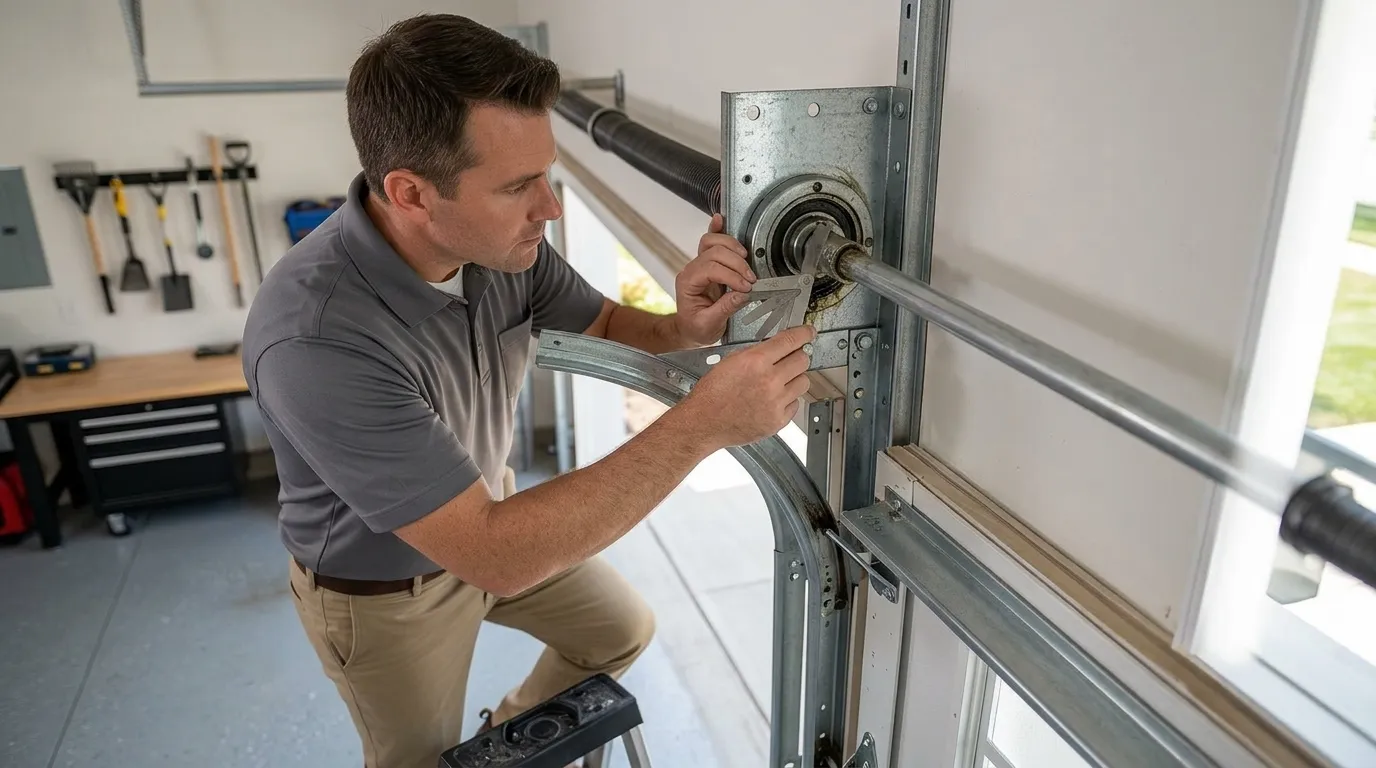
We back the springs off tension first - never pull a roller with the door under load. Then we run the door open by hand to check every roller and bracket, not just the one that's grinding, because a door old enough to be original to a 1953 build usually has more than one roller near the end of its life even if only one is loud. We replace rollers in sets on a track that old rather than one at a time; mixing a fresh nylon roller with three worn steel ones just moves the noise and the wear to whichever roller is left. If a bracket is bent past squaring back, we replace the bracket, not just the roller riding in it. Then we re-tension the spring, run the door a dozen cycles, and check it holds level.
What Causes It Around Here
This area sits in a severe cold climate band, and steel rollers - common on doors this old - stiffen and bind in low temperatures faster than the nylon rollers used on newer installs. That binding is what grinds down the roller stem and eventually the track itself. Add in decades of use on hardware from a house built around 1953, and you get rollers worn oval instead of round, which is what causes the door to hop or shudder partway through its travel instead of running smooth.