Can You Do This Yourself
Some of it, yes. If the opener runs but the door won't move, check the wall switch battery, the sensor eyes at the bottom of the track, and whether the manual release cord got bumped. Those three things fix a surprising number of "my opener died" calls for free.
What you shouldn't touch is anything involving the drive gear inside the motor head or the logic board. On a house built around 1953, which describes a lot of Mission Hills, that motor head has likely been swapped once or twice already, and the replacement unit may not match the original mounting bracket or the travel limits set for that door. Guessing at limit switches on a mismatched unit is how people strip a gear or drop a door on a car.
We're honest that a battery swap or a sensor wipe-down isn't a call for us. But once you're inside the motor housing, or the door reverses randomly, or it opens partway and stalls, that's not a five-minute fix, and it's not worth risking a hand or a windshield to find out the hard way.
The Complications
Mission Hills sits about 10 miles from our Kansas City base, which isn't far, but it changes how a call gets scheduled here compared to a job five minutes from the shop. We batch this side of the service area rather than sending a truck out for a single quick fix, so the appointment window tends to run a bit wider than it would closer in.
The other complication is the housing stock. With a median build year around 1953, a lot of these garages were framed for doors and openers that don't exist anymore. Some houses have had two or three opener generations installed on the same bracket points, and the bracket itself has usually loosened or cracked wood underneath from decades of vibration. That's not something you spot until the cover panel comes off.
We don't stock every discontinued drive unit on the truck. If your motor head is an older chain-drive model that's been out of production a while, sourcing the exact replacement can add a day or two versus a same-day job.
How We Fix It
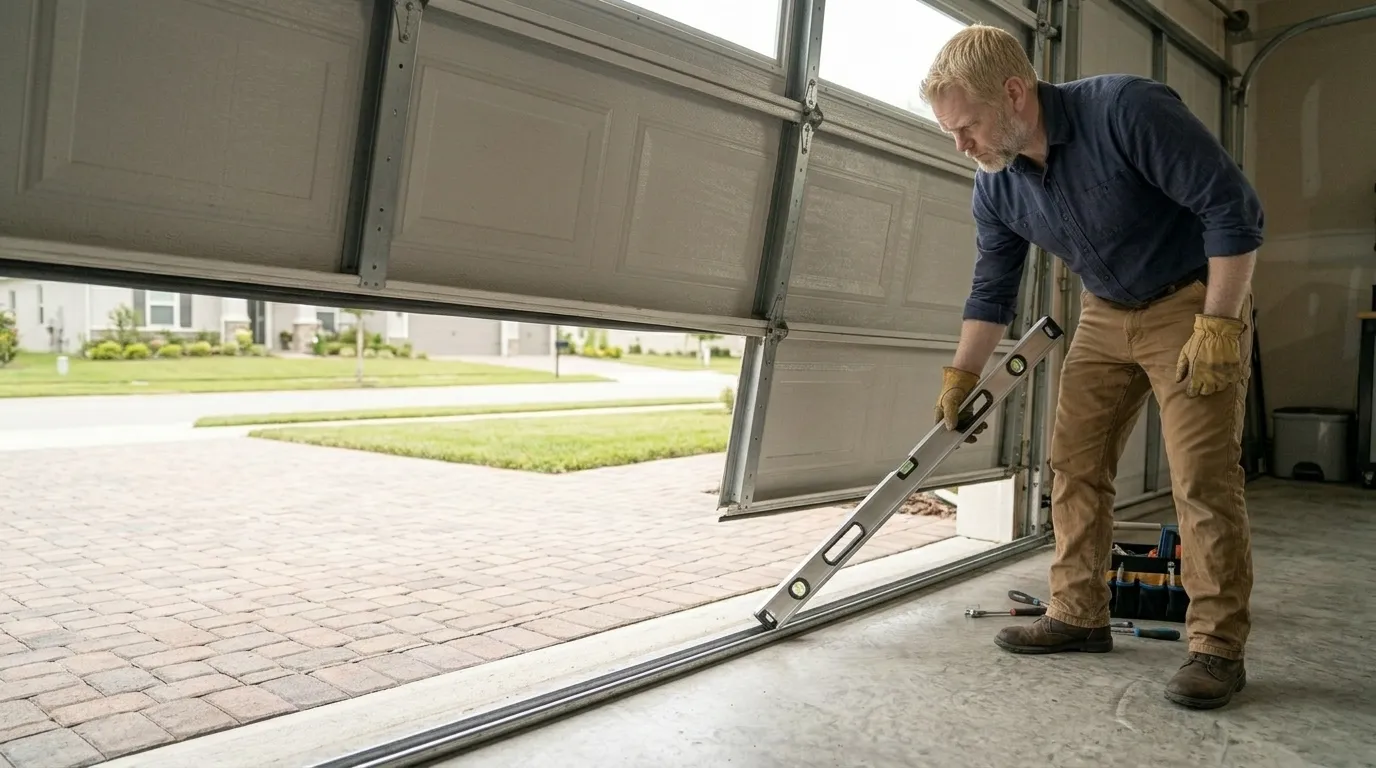
Most opener calls break down into a handful of actual problems: a stripped drive gear, a failed logic board, worn-out limit switches, or a motor that's simply run its life out. We test the unit under load first, not just with the door empty, because a motor that seems fine on an empty door can be masking a spring that's doing none of the lifting anymore.
If the fix is a part swap - gear kit, circuit board, sensor pair - we do that on-site and test full cycles before we leave. If the motor itself is dead and it's an older chain-drive model with no parts support left, replacement is the honest call rather than nursing a unit that'll fail again in a month. We'll say so plainly instead of billing you twice.
What Causes It Around Here
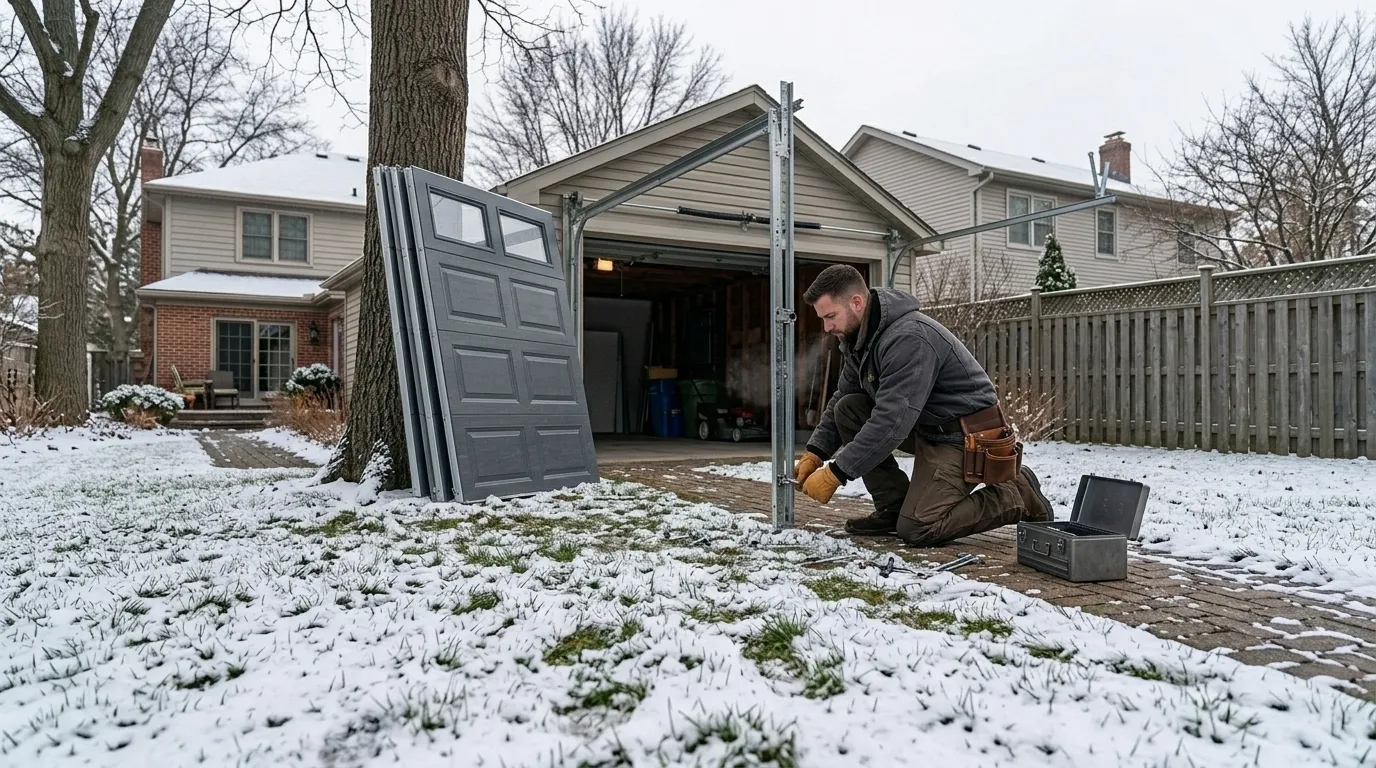
The service area sits in a cold-climate band with real winter severity, and that matters more for openers on older houses than people expect. A motor that's fine in October can struggle to pull a door through a frozen or gummed-up track in January, and the strain shows up first in the gear or the board, not the motor itself.
On houses from the early 1950s, garages were often built a bit shallower and less insulated than what came later, so the opener sits in a colder space than a newer build's would. Combined with original hardware that's outlived several owners, that's a common pattern here: an opener that's technically still running but has been overworking a stiff, cold door for years before something finally gives.