Can You Do This Yourself
Mission Hills is a small place - around 1,286 households total, which means the panel jobs here don't stack up the way they do in bigger parts of the service area. That also means when a panel goes, it's usually a one-off, not a pattern repair crew has seen ten times that week on the same street.
Swapping a single steel panel on a sectional door is doable if you can find the exact match. That's the catch. Homes here were built around 1953, well ahead of the 1950-2004 range that covers most of the service area, so the door and panel sizing often predates the standard modern sectional dimensions. A panel bought off a shelf at a box store rarely lines up with the hinge spacing or track width on a door that old.
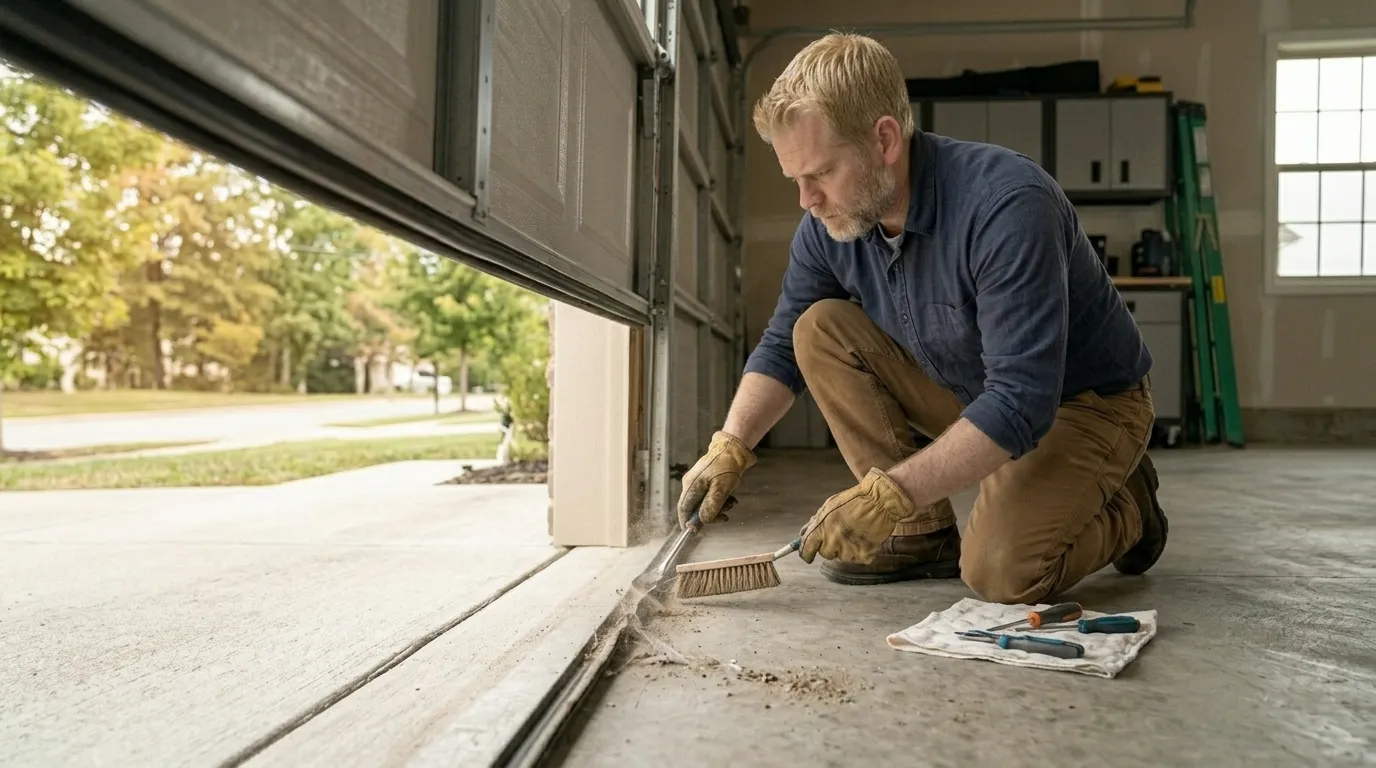
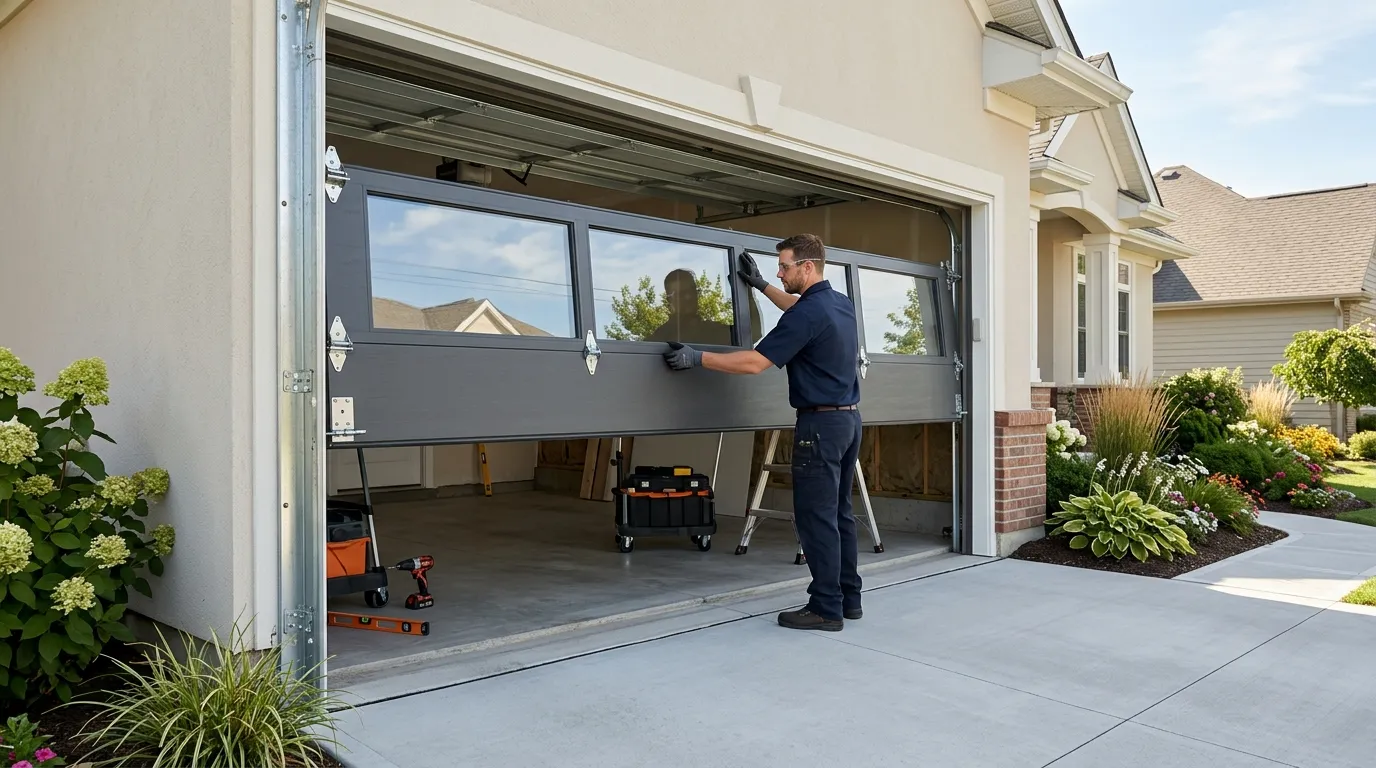
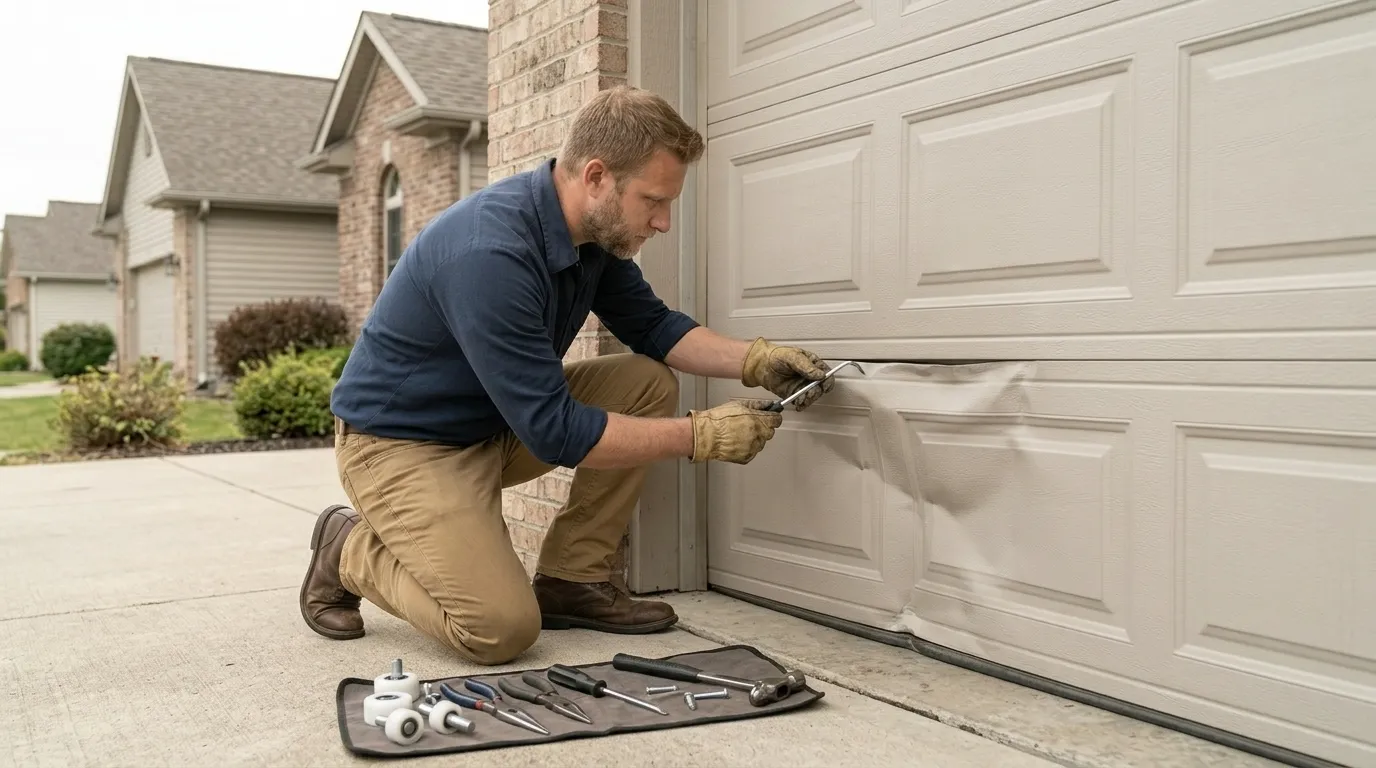
If you've already got a replacement panel in hand and the door is a common size, you can do it with basic hand tools - nut driver, clamps, a second set of hands to hold the section square while you bolt it in. What trips people up is the end stile alignment. Get that off by even a little and the door binds in the track on the very next cycle. If you're not sure the panel is a true match, don't force it on.
The Complications
The complication with a house built in 1953 isn't the panel itself - it's finding one that fits. Sectional doors from that era in this part of Kansas came in dimensions that manufacturers stopped standardizing on decades ago. A single replacement section ordered without matching the exact model number can be off by fractions of an inch that don't show until the door's cycling under spring tension.
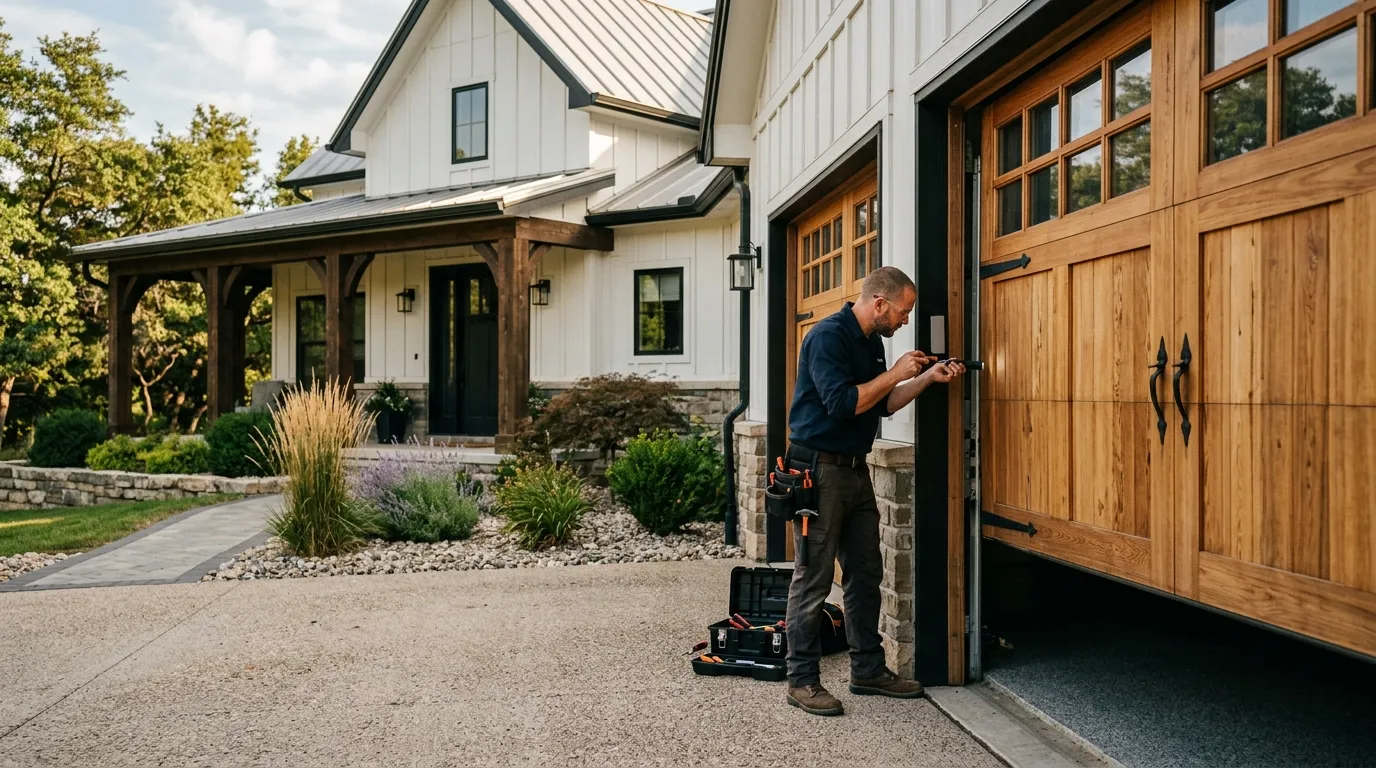
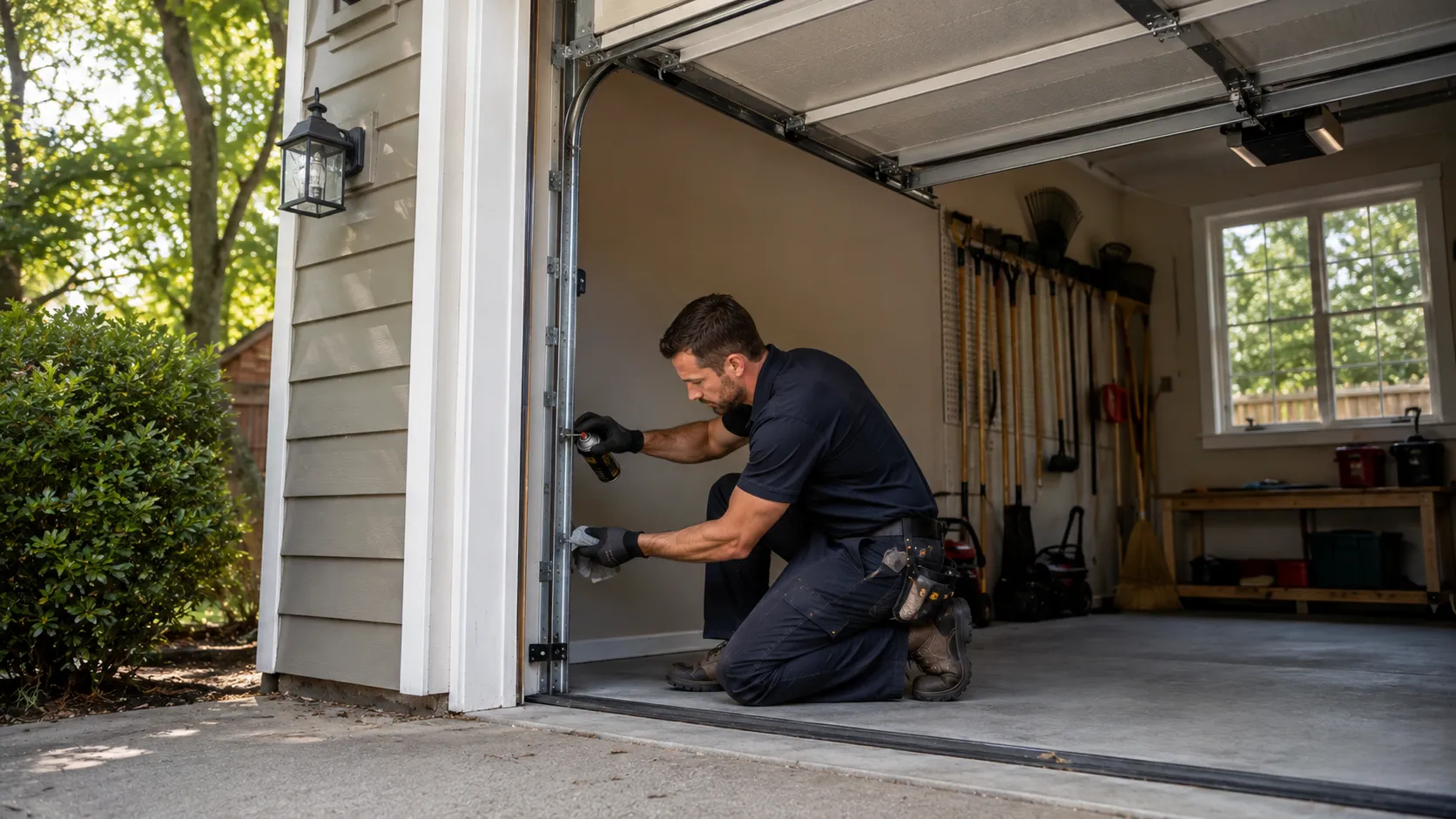
There's also the hardware underneath. Original hinges and rollers on a door this old are often riveted rather than bolted, and swapping in a new panel section means dealing with hardware that wasn't designed to come apart cleanly. We've seen stiles crack when someone forces a mismatched panel into place and torques the hinge bolts to compensate.
One honest limitation: if the exact panel profile for a 1953-era door isn't available from a supplier, full replacement of the door is usually the better call than trying to force-fit a near-match panel. We'll tell you that up front rather than sell you a patch job that won't sit right.
How We Fix It
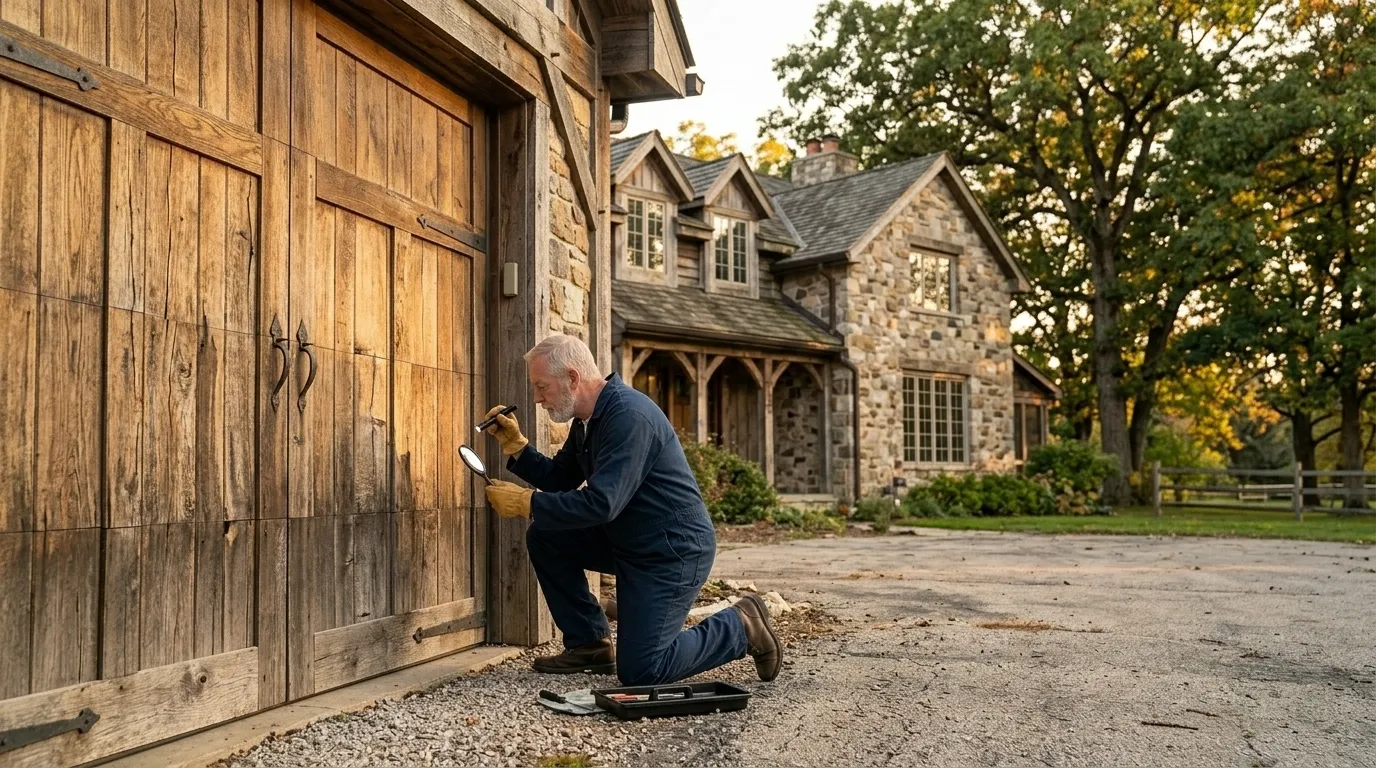
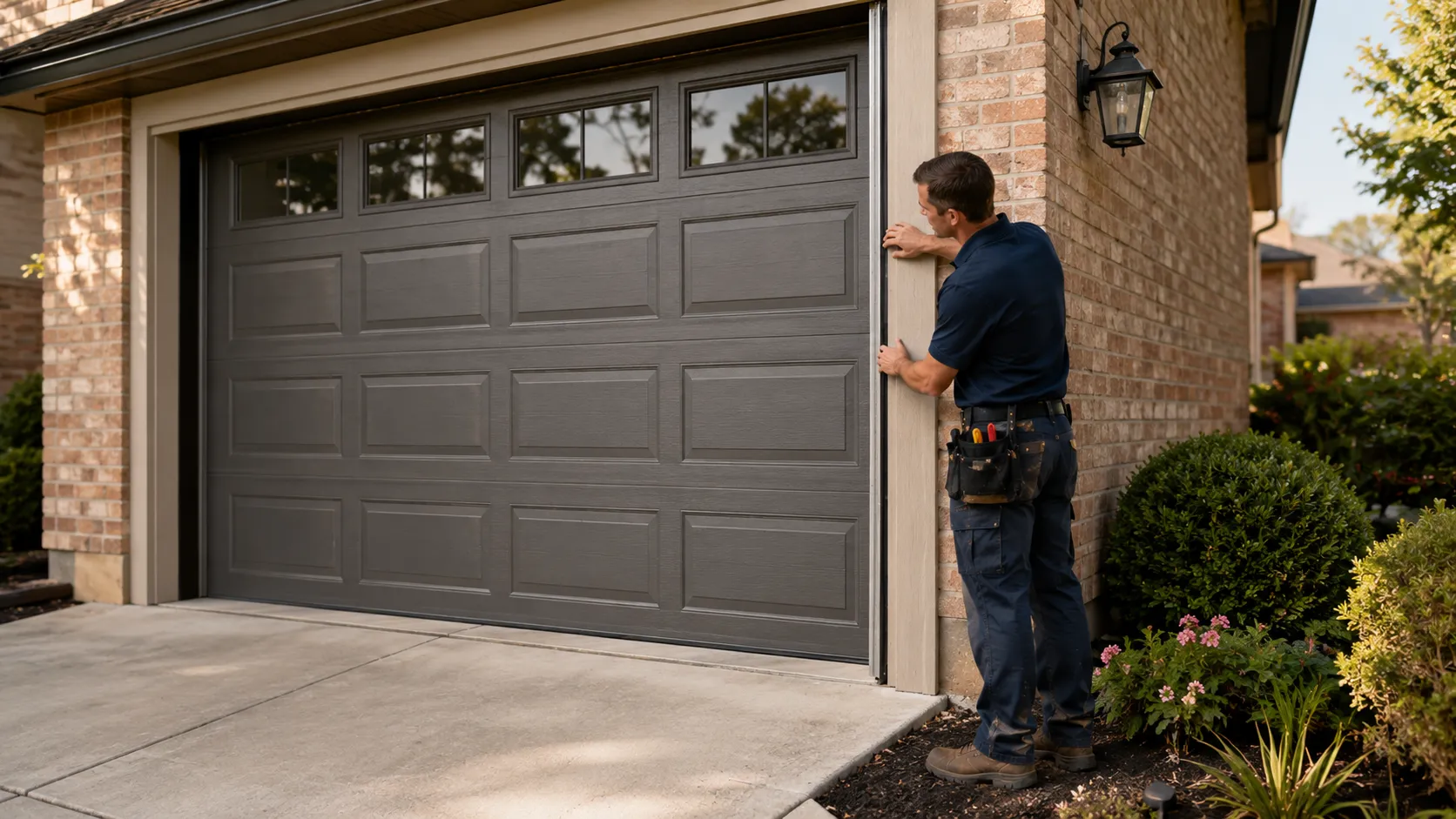
First step is always confirming the panel matches before anything gets unbolted - pulling the old section off a working door with no replacement on hand just leaves you with a bigger hole. We measure stile height, section width, and hinge spacing against what's actually available from suppliers.
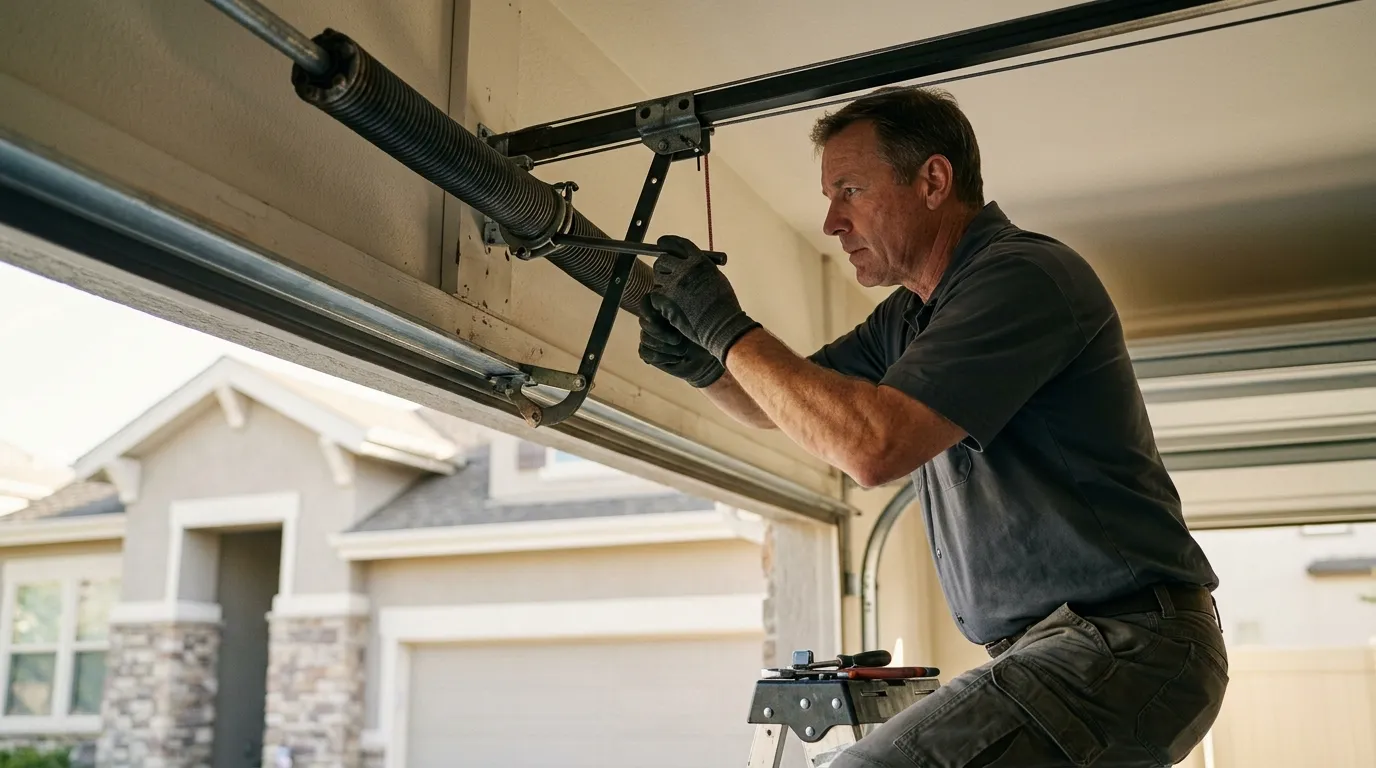
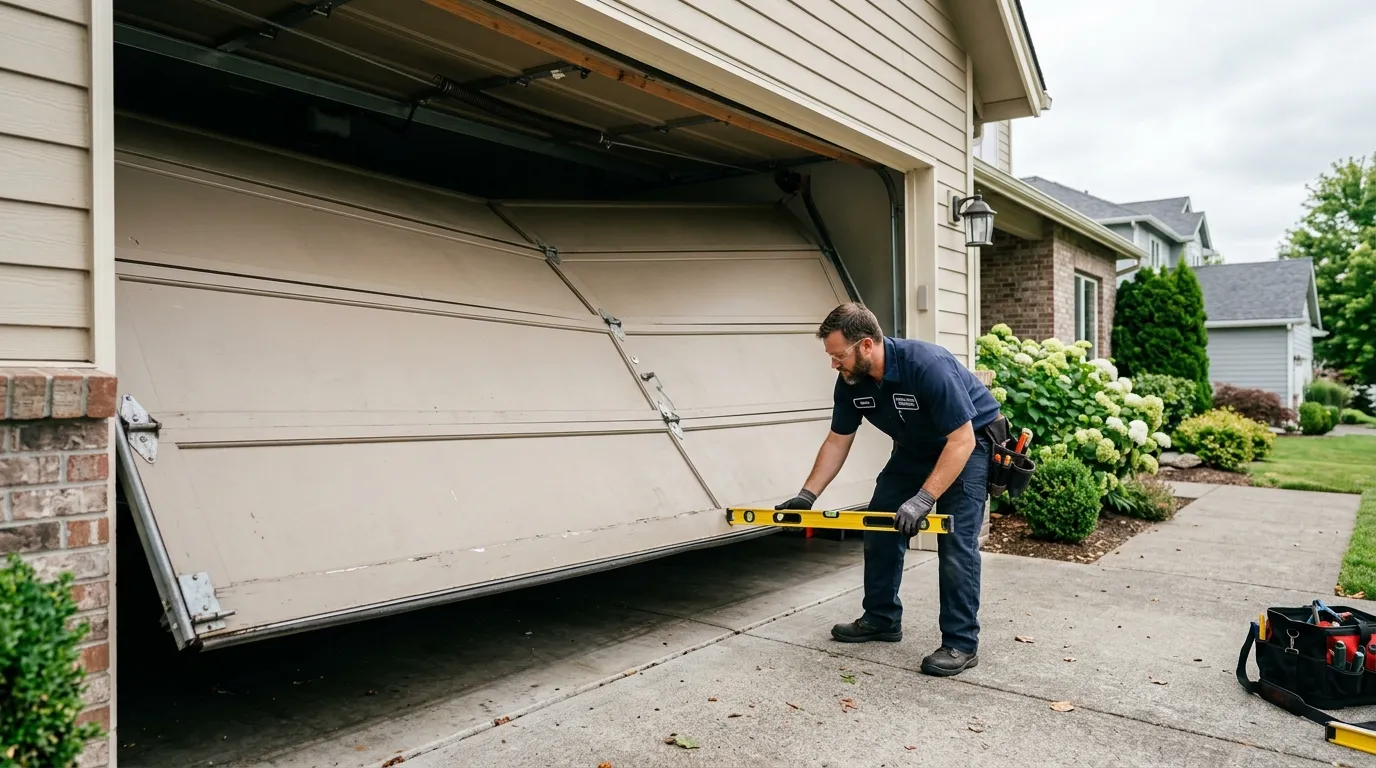
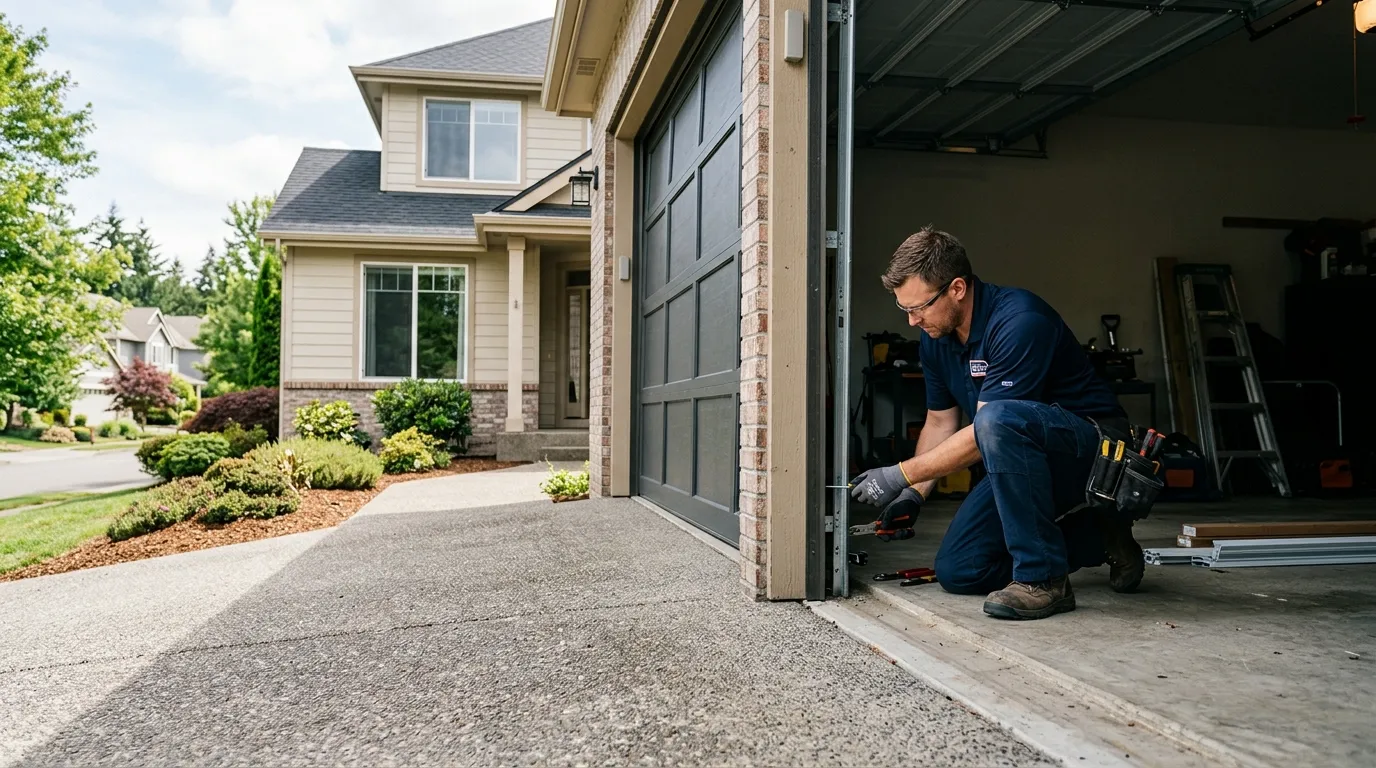
If it's a clean match, the swap itself is straightforward: disconnect the spring tension safely, unbolt the damaged section, remove without disturbing adjacent panels, and bolt the new one in with the same hinge pattern. We check the track alignment after, since a bowed or dented panel often means the door's been running slightly out of true for a while and that needs correcting too, not just papering over with a new section.
If the panel can't be matched - which happens more with the older stock common around here - we'll walk through the actual door replacement option instead of installing a section that won't sit flush.
What Causes It Around Here
Most of the damage we see on panels here comes down to the age of the stock. Doors going up in 1953 predate a lot of the galvanized coatings and reinforced stile designs that came later in the broader 1950-2004 build range across the service area. Steel panels from that era corrode from the inside at the bottom section first, especially where they sit closest to grade, and that weakens the panel enough that a minor bump - a car bumper, a dropped ladder - puts a dent clean through instead of just denting the surface.
Winter is the other factor. This area sits in a severe cold climate band, and repeated freeze-thaw cycling works on any existing weak point in an older panel - rust seams, prior dents, loose seams at the corners. A panel that's been slowly failing all fall can finally give during the first hard freeze when the steel contracts and the door's cycling under full spring load.
We don't see much impact damage from storms here specifically - it's more wear accumulating on older material than any single event.