Time on the Job
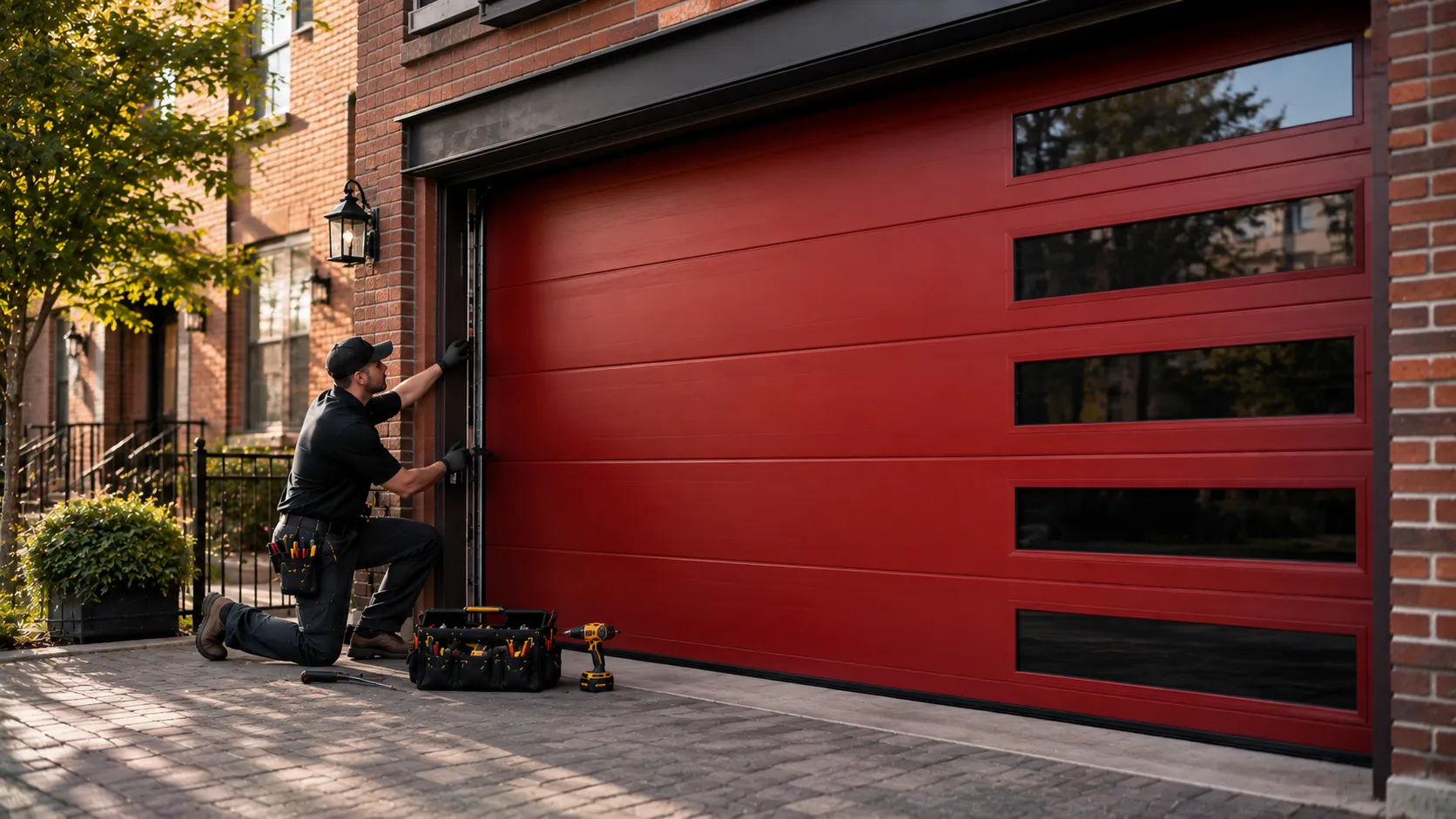
A cable job on a standard double door, once the truck is on site, is usually the fastest fix in the trade - cut the old cable, seat the new one on the drum, reset the drum tension, done. Roeland Park adds a wrinkle the newer suburbs don't: with median household income here at $89,385, most owners are weighing a $150-200 cable job against a full door swap, and on a house from 1950 that math tips toward repair almost every time. Replacing a door on a house that age usually costs more than the opener and hardware combined are worth saving on their own, so the cable - a $30-40 part - is the cheap half of the system. The slow part of the visit isn't the cable, it's figuring out why it snapped. On a door this old the drum, the track, and the spring cones have usually never been swapped, so a tech spends real time checking whether the cable failed on its own or whether it's a symptom of a track that's been slowly bending out of true for decades.
Can You Do This Yourself
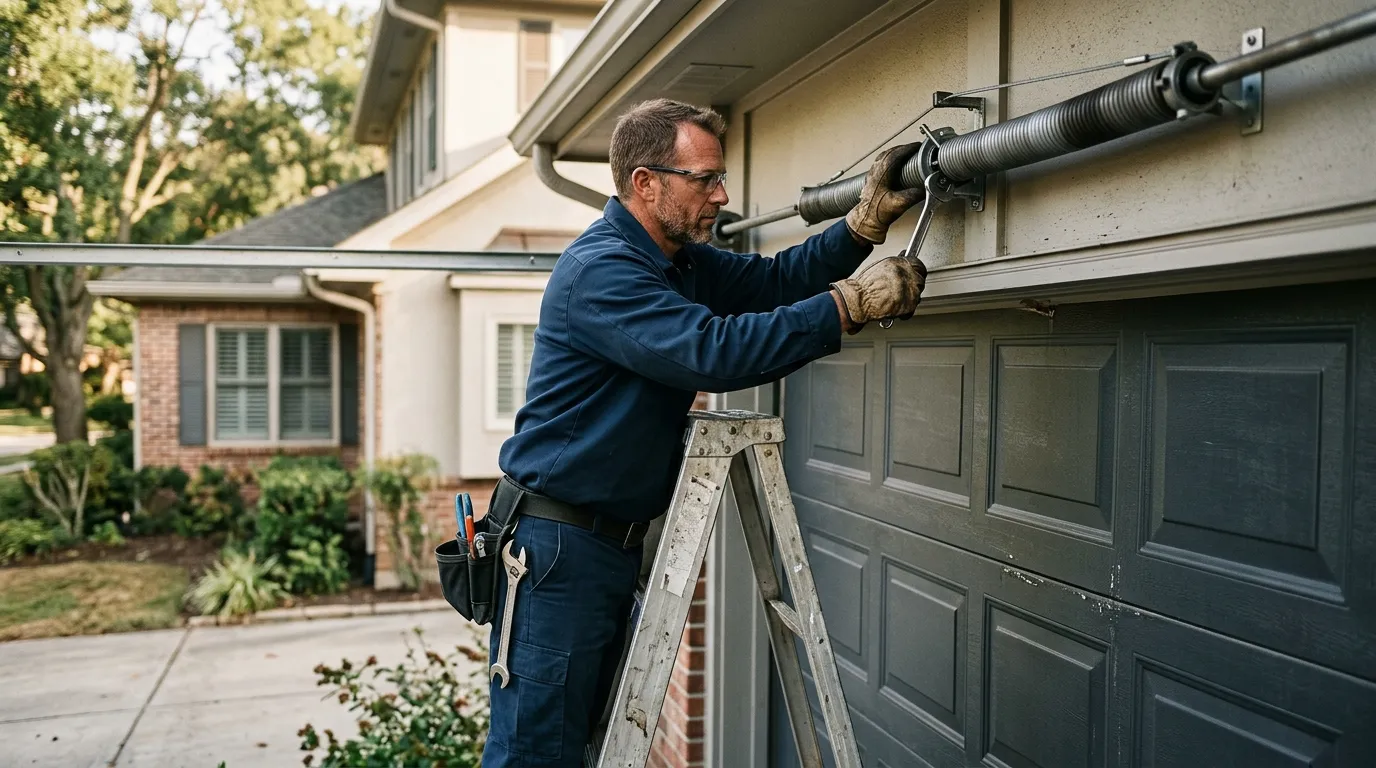
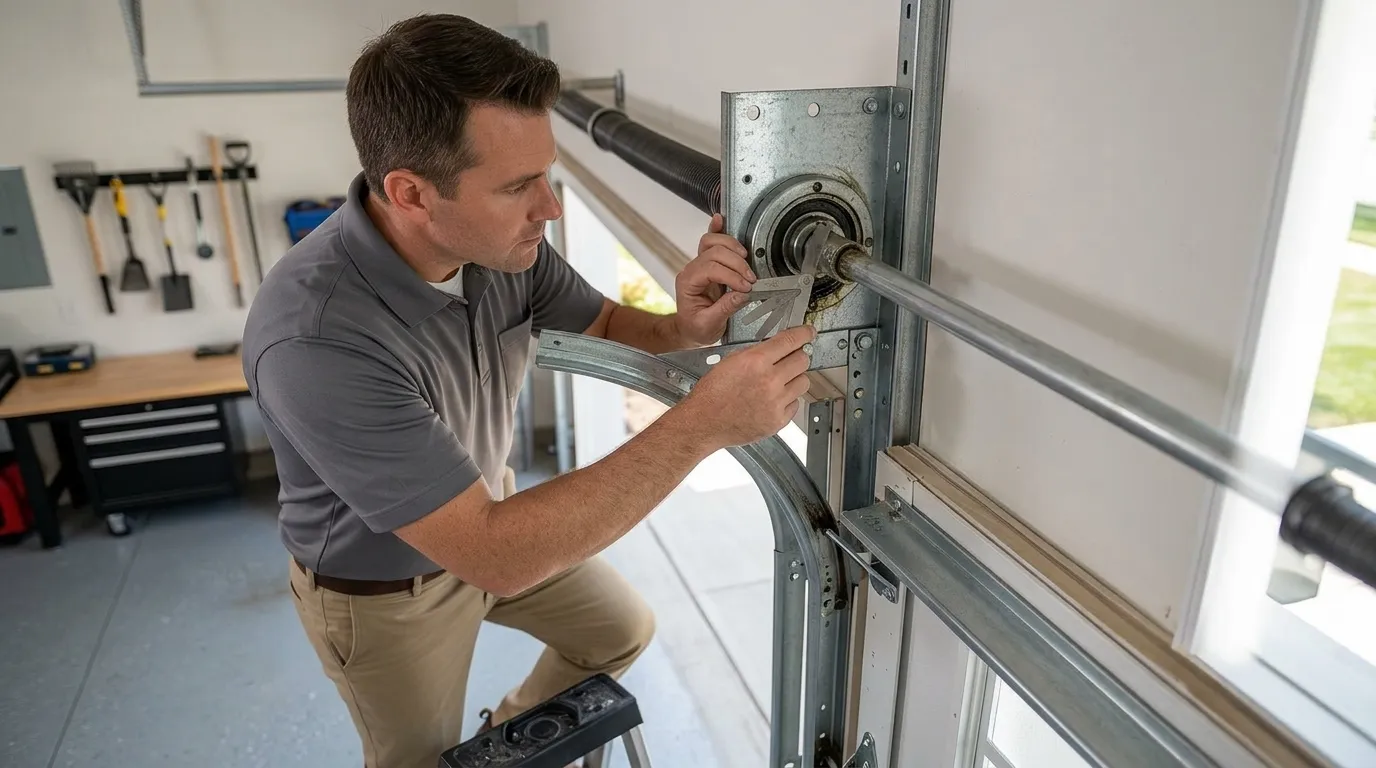
A garage door cable runs under real tension, wound tight around a drum that's held in place by a torsion spring doing the actual lifting work. If you unwind or unclip that setup wrong, the spring lets go with enough force to break fingers or worse. This isn't a job for a Saturday with a socket set, and on a house from around 1950 like most of Roeland Park's stock, you're also dealing with hardware and mounting brackets that may not match anything sold today. A tech carries stock that fits both the old and current sizing; a homeowner buying a cable off a shelf often finds it's the wrong length or the wrong drum pitch for what's actually on the wall. What you can safely do yourself: look at the cable before you call. If one side is frayed, kinked, or has visibly unwound from the drum while the other side looks fine, that's useful information to give the tech on the phone, and it can save a diagnostic trip.
Getting It Booked In
We run out of Kansas City and cover Roeland Park as part of the regular route, about 8 miles out. That's close enough that a cable call here isn't a special trip, but it does mean we schedule it with the other stops on the truck that day rather than treating it as a standalone dash across town. When you call, tell us which side of the door the cable let go on and whether the door is stuck up, stuck down, or hanging crooked - that tells us what to load on the truck before we leave, which matters more here than on a newer door, since older drums and tracks aren't always the same size as what's standard today.
The Symptom
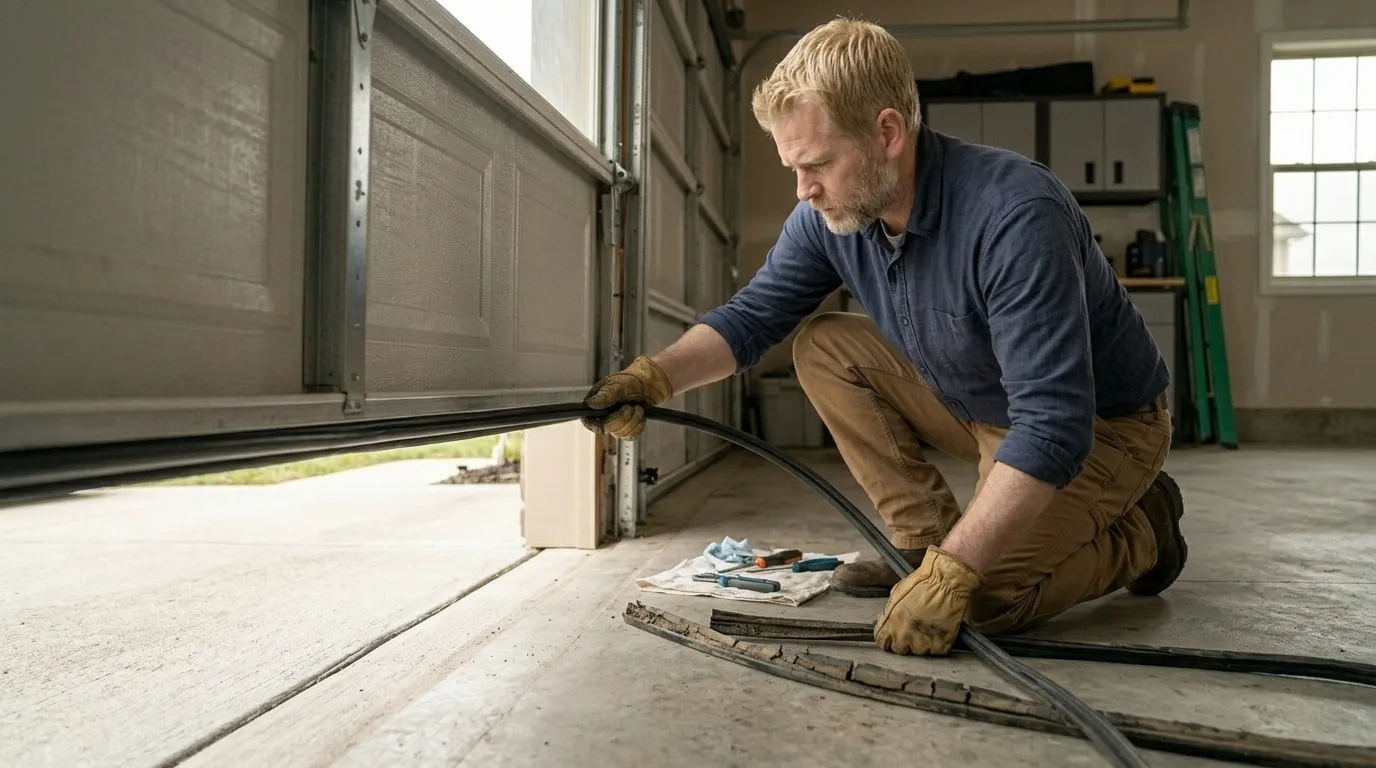
A snapped cable almost always announces itself the same way: a loud bang, then the door drops on one side, sitting crooked in the opening with one corner low and the opposite corner still roughly level. If you were mid-cycle when it happened, the door may stop dead and refuse to move at all, with the opener straining or reversing. Don't force it by hand and don't run the opener again to see if it clears - a door hanging on one cable can come off the track fully with the next pull. If both cables look intact but the door still won't sit level, that's usually not a cable problem at all; it's more likely a spring or a track issue, and worth saying so when you call, since it changes what gets loaded on the truck.