Serving Kansas City, KS & nearby
(913) 442-7958
Kansas City, KS

Panel Replacement for Roeland Park's 1950s Doors

Roeland Park homes date to 1950 on average, older than most of the KC-area stock we cover. That means panel sizes and hardware that don't match today's stock parts.

Panel Replacement for Roeland Park's 1950s Doors
Kansas City, KS
8 services
7 service areas
Diagnosis first, then the fix

Time on the Job

Roeland Park's houses have a median build year of 1950 - that's earlier than most of the areas we cover out of Kansas City, where the broader service territory runs closer to 1973. A door install crew working a 1950 build is dealing with an opening that's had seventy-plus years to settle, and in a lot of cases a panel set that's never been touched since the original install. When we get called out here, the first question isn't "what panel do you want" - it's "what's actually holding the current one on," because on a house this age the hinges, the end stiles, and sometimes the track brackets are original hardware nobody's serviced. Swapping one bent panel on a door like that isn't a ten-minute job; we're checking whether the rest of the section can even take new fasteners without stripping. On a newer door, panel swaps are fast because everything's standard. On a 1950-era opening, we're often matching a section width or a hinge spacing that isn't sold anymore, which changes the time estimate before we've touched a tool.

Can You Do This Yourself

A single bottom panel on a newer steel door, with common hardware, is something a handy homeowner can reasonably attempt - order the matching panel, swap the hinges over, done. Roeland Park's older stock makes that harder. If your door dates anywhere near that 1950 median, the panel dimensions and hinge spacing may not match anything currently manufactured, which means the "just order a replacement panel" plan often doesn't work at all. We've seen homeowners order a panel that's close enough on paper and then can't get the hinge bolts to line up because the stile thickness is off by a fraction of an inch. That's not a DIY problem, that's a sourcing problem, and it usually ends with either a full custom section or a decision to replace more than the one panel. If your door is a straightforward newer sectional and only one panel's dented, doing it yourself is fine. If it's older hardware, get someone to look at it before you order anything.

The Complications

The complication in Roeland Park isn't the labor, it's the parts. A door built to match a 1950-era opening isn't stocked the way a 2010s door is. If one panel's cracked and the rest are sound, we sometimes have to special-order a section, which takes longer than a same-week swap on a newer door. There's also a cost math problem: once you're paying to source one custom or hard-to-match panel, replacing the whole door often runs close to the same price as fixing just that one section, especially on a door this old where the rest of the hardware is on borrowed time anyway. We'll tell you straight when that's the case rather than sell you a patch job that won't hold. The honest limitation here: we don't stock obsolete panel profiles on the truck, and if your section is a genuine oddball we may need a few days to get the right piece rather than showing up with it same-visit.

Getting It Booked In

We run out of Kansas City to cover Roeland Park and the rest of the area, about 8 miles out, so a panel job here gets scheduled as a routed visit rather than a same-hour drop-in. That's worth knowing if you're trying to plan around a specific day. Tell us the door's approximate age when you call - if it lines up with that 1950-ish build era common to Roeland Park, we'll bring measuring tools and expect to be sourcing rather than swapping off the shelf. If you already know the section width or have a photo of the hinge pattern, that saves a visit. We'd rather ask the right questions up front than show up with the wrong panel twice.

The Symptom

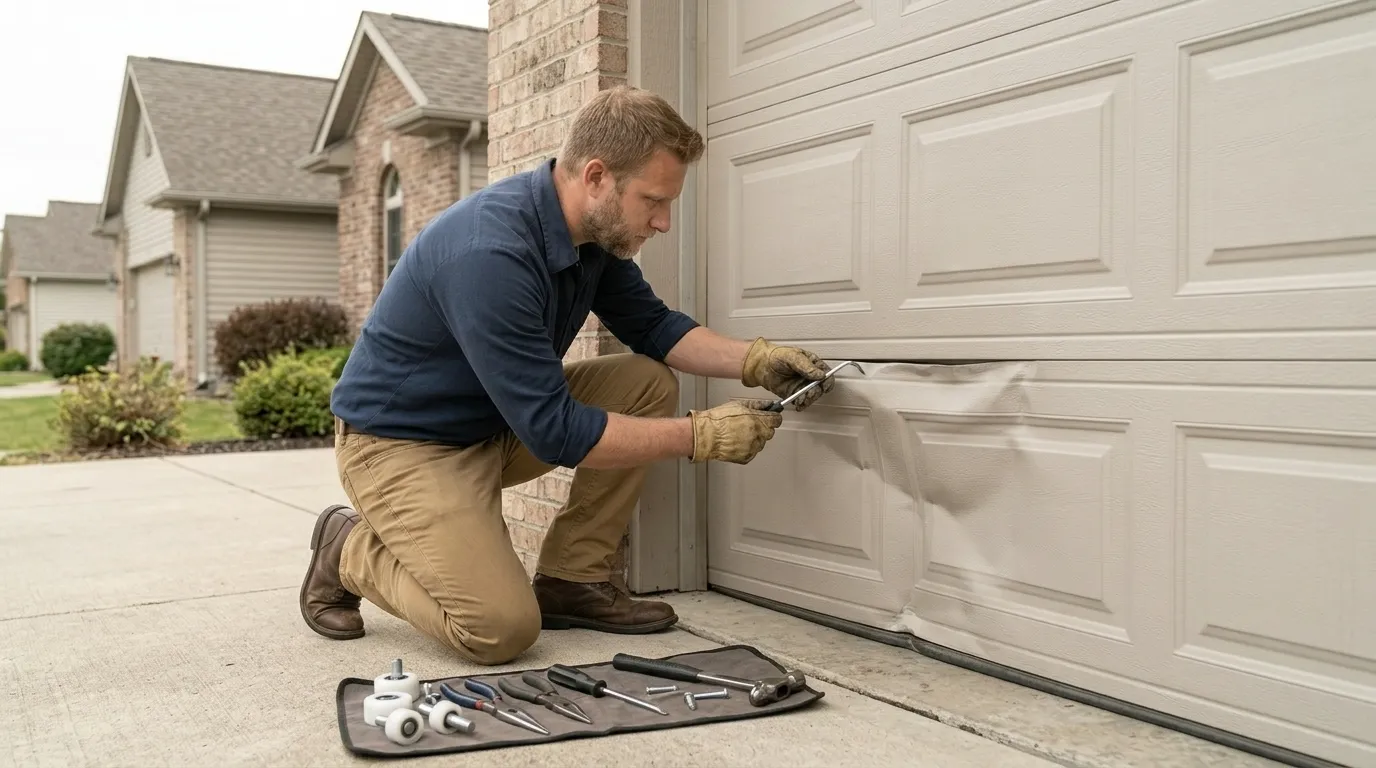
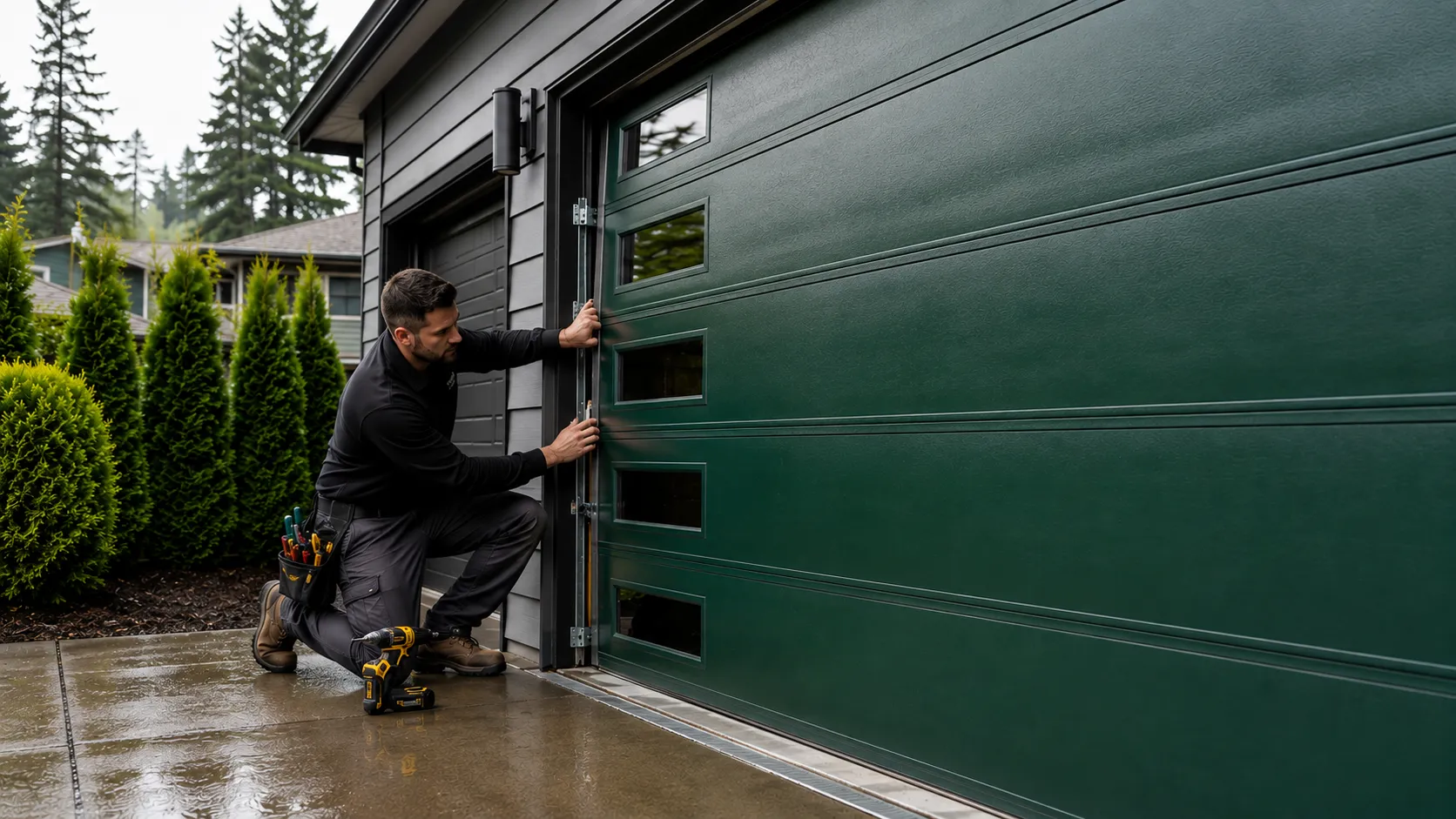
Most panel calls here start the same way: a section that's caved in from a car bumper, a basketball, or just decades of expansion and contraction in a Kansas winter, and the door either won't seal at the bottom or is dragging against the track on one side. On a house built around 1950, that caved panel is frequently the first thing to fail because the steel gauge used decades ago is thinner than what's made now, and it's been flexing with every open-close cycle since before the current owner bought the house. Sometimes it's not impact damage at all - it's just fatigue cracking along an old seam that was never designed to flex this many thousand times.
What Causes It Around Here

The severe cold winters this region gets put real stress on steel panels, and older gauge steel from a 1950s-era door handles that stress worse than current material. Metal contracts in cold, and a panel that's already thin from age can crack at a seam or buckle where a hinge bolt has worked its hole loose over the decades. Combine that with a household income figure for the area around $89,385 - which tells us most owners here can afford a proper fix rather than a patch, and usually choose to - and what we see is fewer bandaid repairs and more owners opting to replace the whole panel set once one section goes. It's less about weather events and more about seventy years of freeze-thaw cycling on hardware that was never built to last this long.

How it works

From “it’s stuck” to “it’s fixed”

Tell us what’s wrong - Kansas City garage door service

Tell us what’s wrong

Describe the symptom - won’t open, loud bang, opener runs but the door won’t move.

On-site diagnosis - Kansas City garage door service

On-site diagnosis

A technician tests the door under power and by hand and finds what actually failed.

Clear, up-front plan - Kansas City garage door service

Clear, up-front plan

You get the fix that’s needed and what drives the cost - before any work starts.

Repaired & tested - Kansas City garage door service

Repaired & tested

The repair is done, the door is set true and tested, and the work area left clean.

Serving Kansas City, KS - tell us what your door’s doing and we’ll take it from there.

How we work

What to expect

Diagnosis firstEvery visit starts by finding what actually failed - not a pre-written parts list.
The right part for the doorSprings and openers matched to the door’s weight and age, so the fix holds up.
Straight answersWhen a repair makes more sense than a replacement - or the reverse - you hear it plainly.
Clean, careful workTension released safely, hardware set true, the door tested under power before we leave.
152,933
Residents in Kansas City
8Garage door services
7Neighborhoods & suburbs
KSServing Kansas City, KS
Questions

Frequently asked

Straight answers about garage door repair in Kansas City. Still unsure? Ask us directly.

Is my Roeland Park door old enough that panels won't match anymore?

If your house is anywhere near the area's 1950 median build year, there's a real chance the panel dimensions or hinge spacing are non-standard. We measure on site before ordering anything, because guessing based on age alone isn't reliable enough.

Can you fix just one panel or do I need a whole new door?

Depends on what we find. If the rest of the door and hardware are sound, we replace just the damaged section. On older doors here, sourcing that one section can cost close to what a full door costs, so we'll walk you through both options honestly.

How fast can you get to Roeland Park?

We work out of Kansas City, about 8 miles away, and route Roeland Park jobs as scheduled visits rather than same-hour calls. Tell us your door's rough age when you book so we bring the right tools.

Why do panels crack in winter specifically?

Steel contracts in cold weather, and older, thinner-gauge panels flex more under that stress than newer material. A seam or hinge point that's already fatigued from decades of use is where it usually gives first.

Ready to get your garage door sorted?

Tell us what it’s doing and where you are in Kansas City - we’ll take it from there.

Request a QuoteCall