Time on the Job
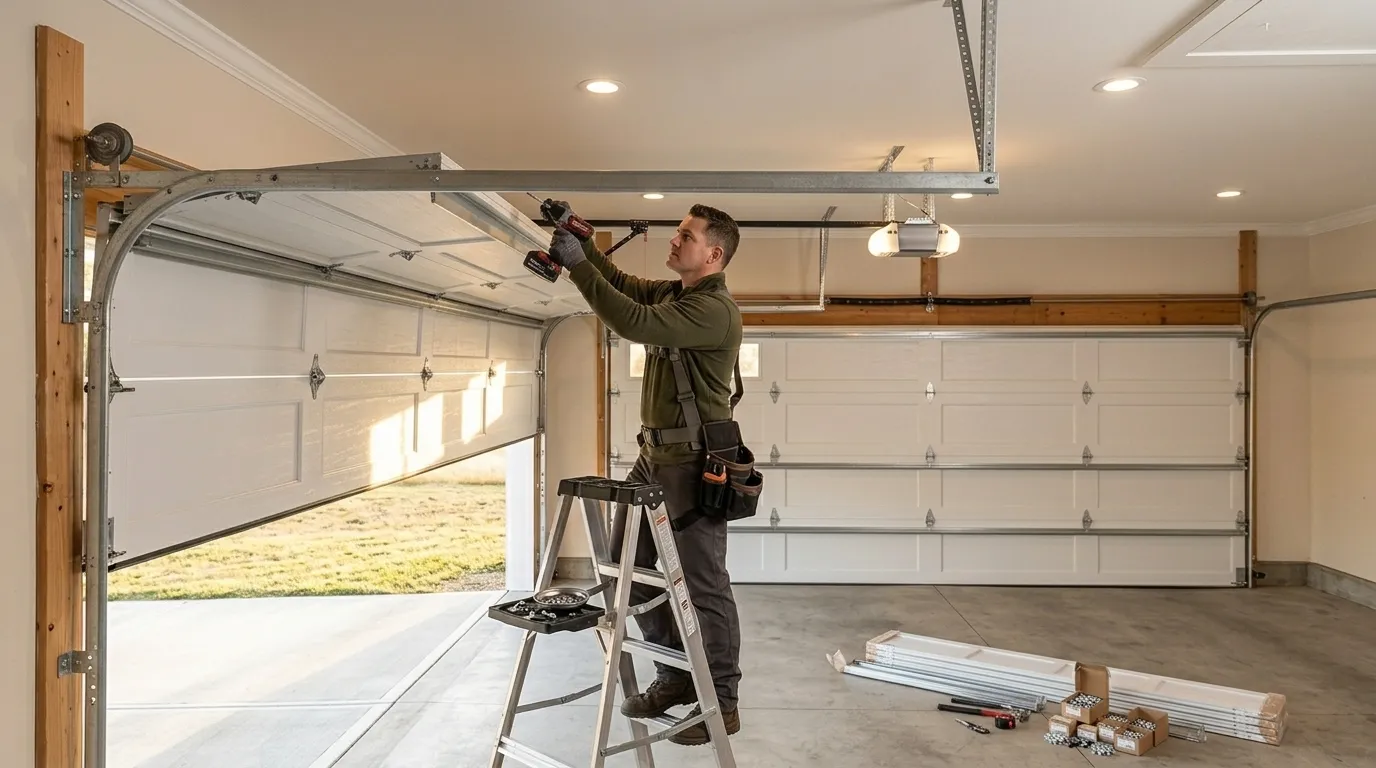
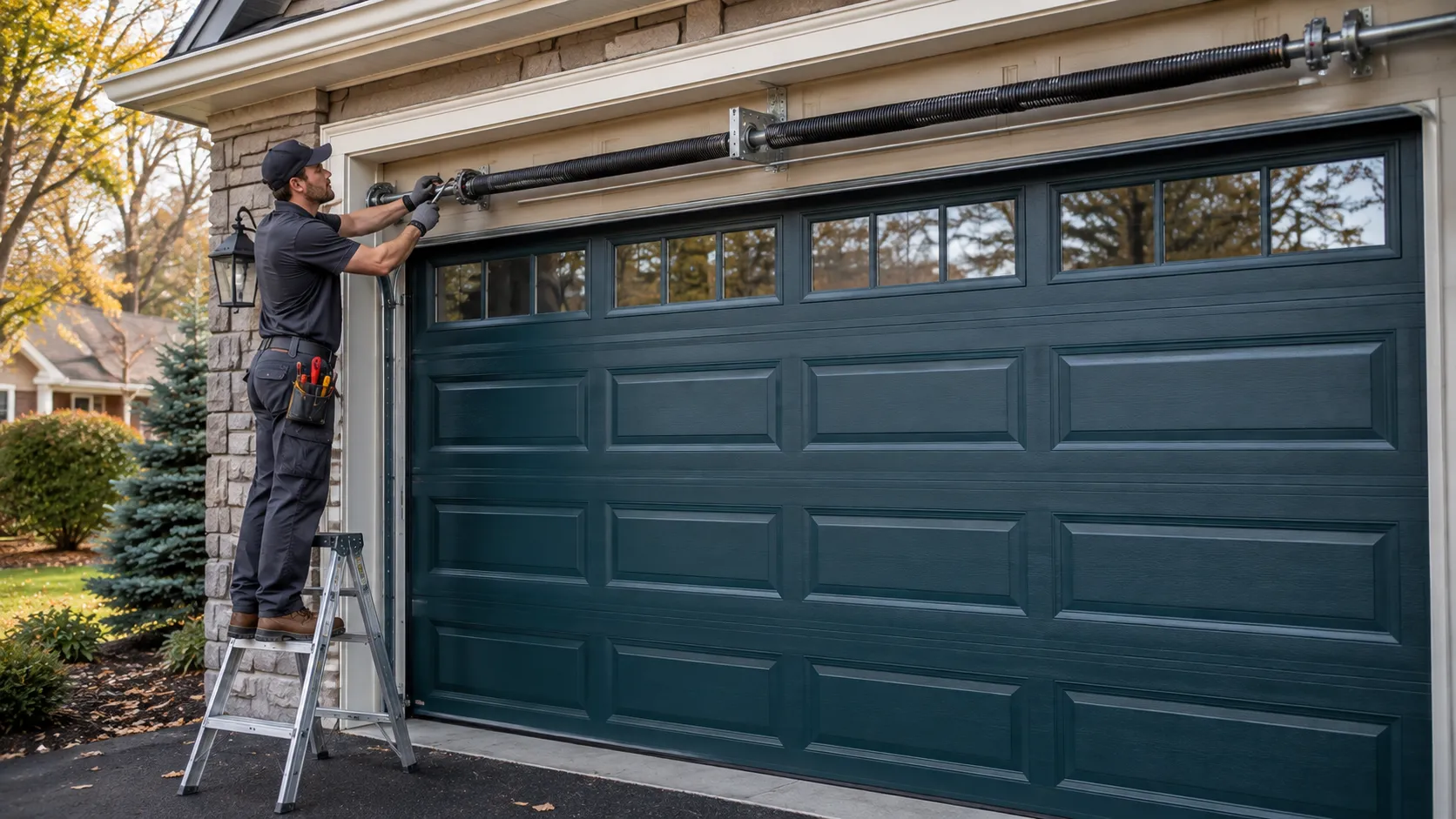
Kansas City's housing stock, taken as a whole, runs newer than what you'll find in Roeland Park - the wider service area's median build year lands around 1973, but Roeland Park itself centers closer to 1950. That's not a small gap. A door and track system built into a house from that era has usually been replaced once, sometimes twice, by whoever owned it before you, and the replacement isn't always a matched set. We've found tracks bolted to jamb brackets that were never meant to carry the roller size on the door now hanging in them. An off-track call in a 1950s house often isn't just "put the door back on the track" - it's figuring out why the track and door stopped agreeing with each other in the first place. That diagnosis step takes longer here than it does on a door installed new in the last fifteen years, and we budget the visit accordingly rather than rushing to reset rollers that will just walk off again next week.
Can You Do This Yourself
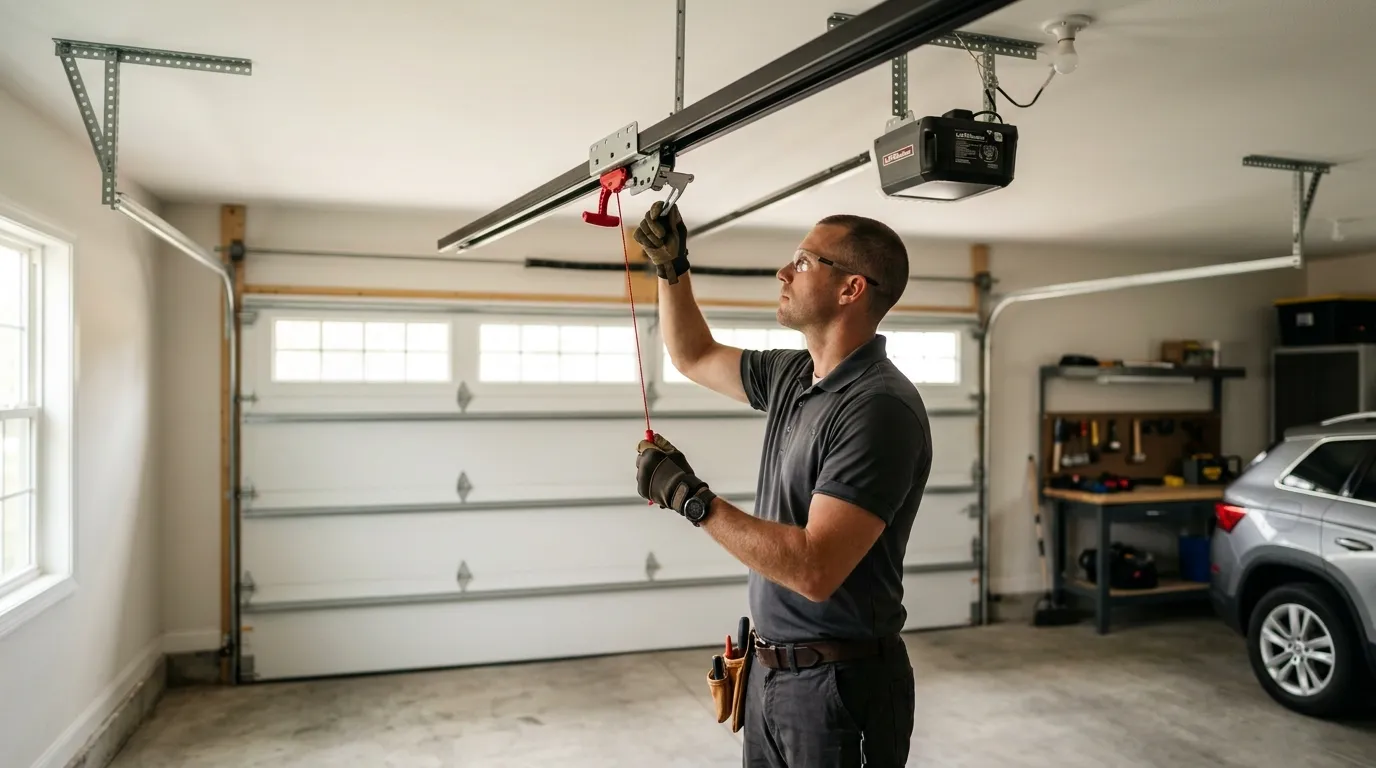
If a roller has simply popped out of the horizontal track and the door is still square in the opening, you can sometimes walk it back in by hand with the door manually lifted a few inches - no power to the opener, and only if the cables are still under tension and intact. That's the limit of what's reasonable to try alone. If the door is racked (one side higher than the other), if a cable has come off a drum, or if the track itself is bent or pulled away from a bracket, stop. On a house with older, mismatched hardware - which describes a lot of Roeland Park stock - a bent track is frequently masking a bracket that's pulled loose from aging wood behind the drywall, and forcing the door back onto a bent rail under spring tension is how people lose fingers. We won't talk you through that part over the phone, and we wouldn't ask a customer to.
Getting It Booked In
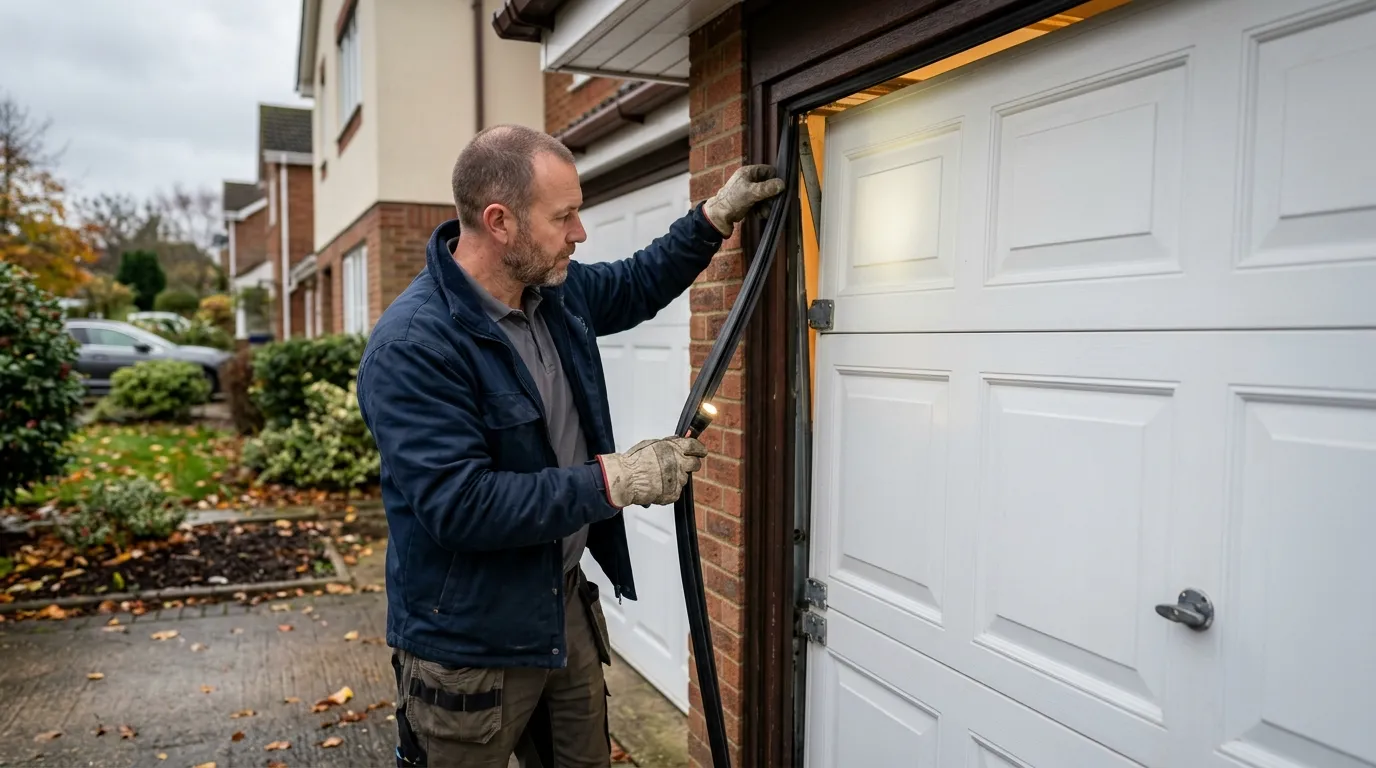
We run out of Kansas City, and Roeland Park sits about 8 miles out, so a truck heading your way is a short trip, not a special dispatch. When you call, tell us whether the door is still in the opening or has come out of the track entirely, and whether you can see a bent rail or a bracket pulled away from the frame - that tells us whether to bring extra track stock. We don't quote a fixed response window for this area since we're traveling in from the city rather than working out of a local yard, but we'll give you a straight answer on timing when you call rather than a vague estimate.
The Symptom
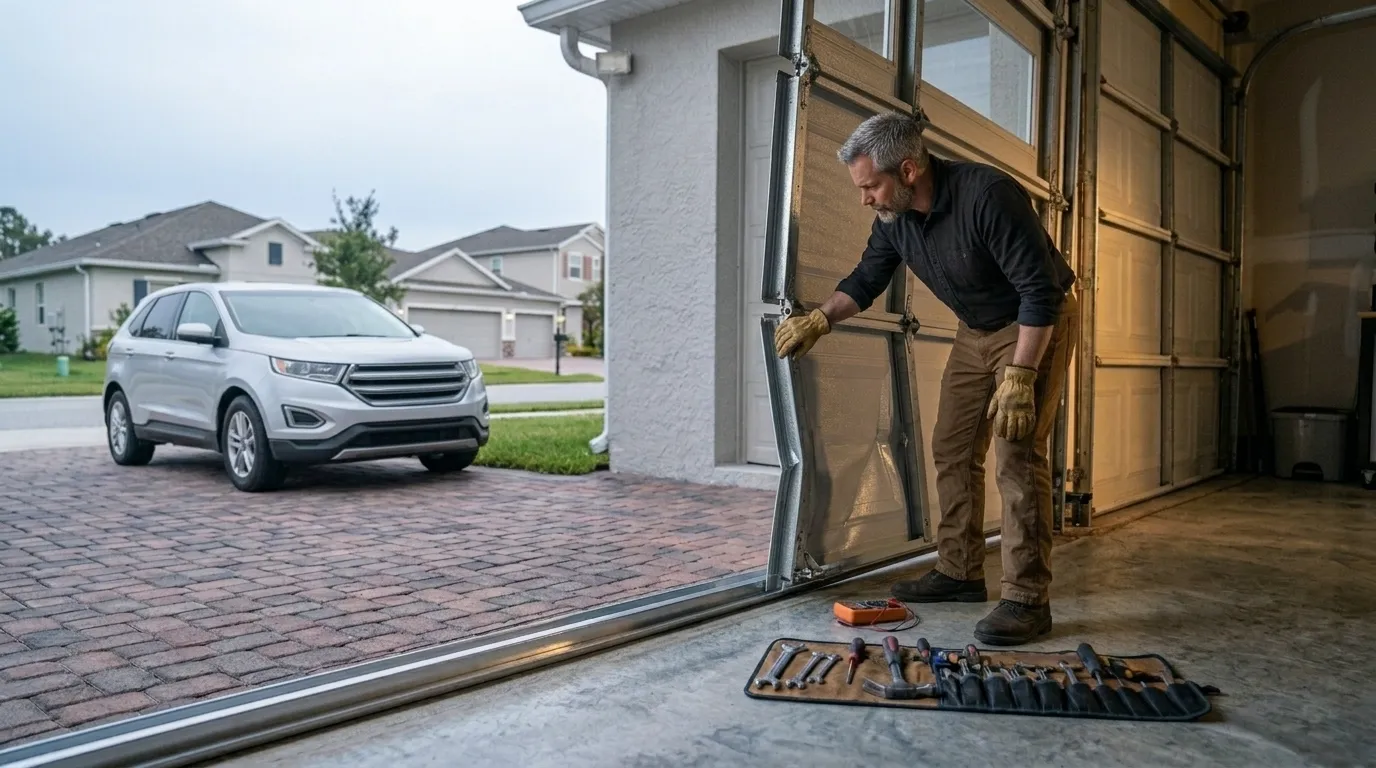
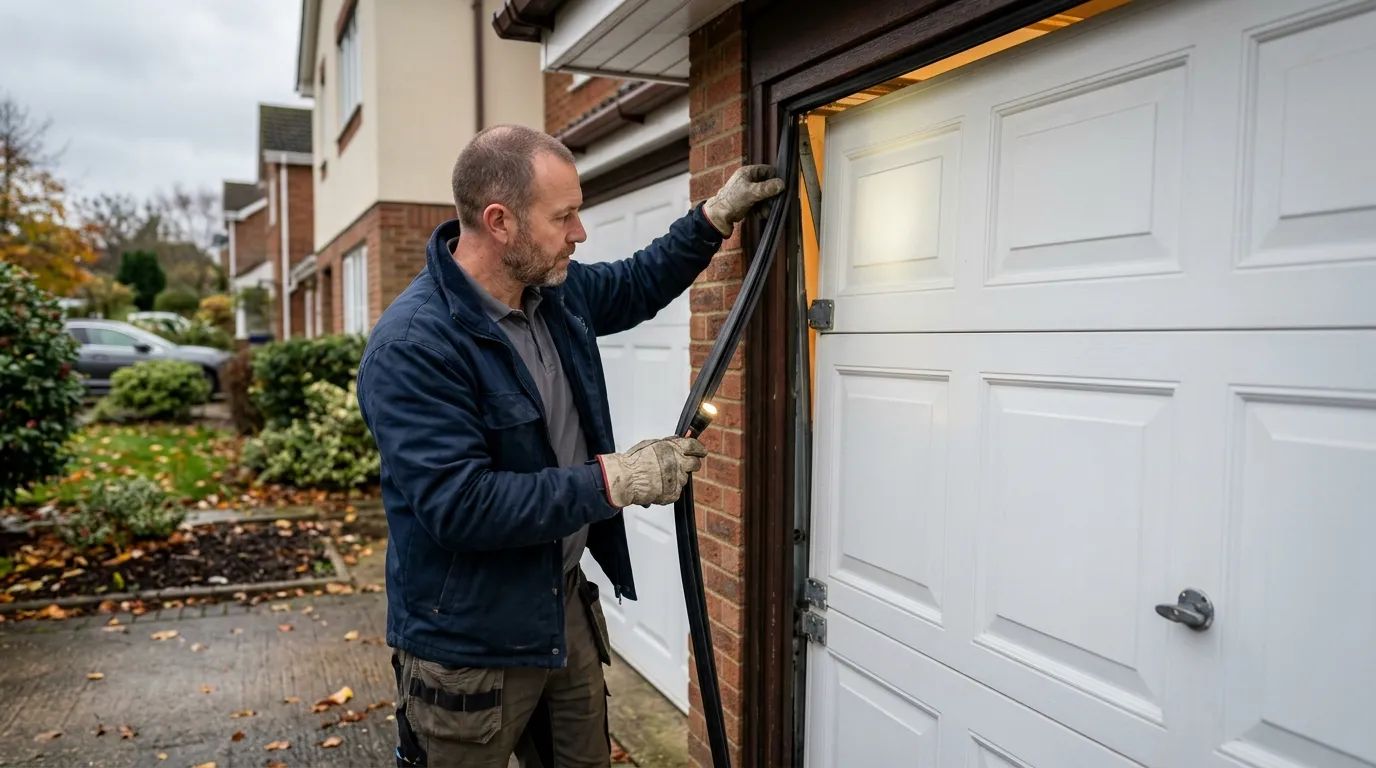
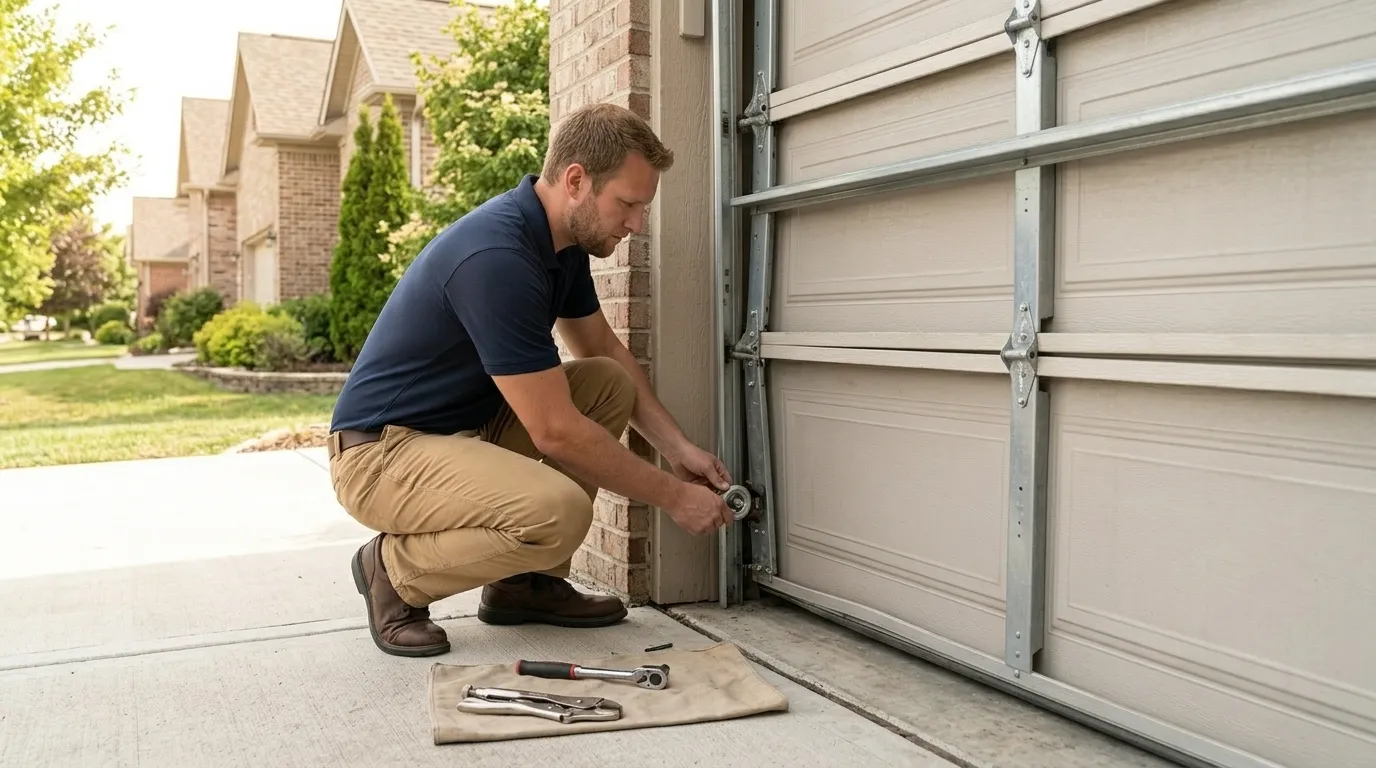
Most off-track calls start the same way: the door stops mid-cycle, hangs at an angle, or a roller is visibly outside the track channel on one side while the other side still looks fine. Sometimes there's a bang first - a cable slipping a drum or a bracket letting go - and sometimes it's quiet, just a slow lean that gets worse each time the door runs. On the older stock common in Roeland Park, we also see doors that run fine going down but bind and pop a roller on the way up, which usually points to a bent section of vertical track rather than anything wrong with the opener. Don't keep running the opener once you see the lean; each cycle works the roller further out and turns a track repair into a track-and-bracket repair.